 Sudden Valley Siding
 Why Roofs Around Alger Wear Differently
Homes in and around Alger sit in a stretch of Whatcom County where three things gang up on a roof at once: salt-laden air moving in off the water, long stretches of driving rain, and shaded, moisture-holding conditions that keep moss and algae active for most of the year. None of these are dramatic on their own, but together they shorten the useful life of a roofing system that wasn't specified with them in mind. A roof that would hold up fine in a dry inland climate can start showing granule loss, soft decking, or moss intrusion here years ahead of schedule.
That's the real argument for treating "new roof installation" as a local decision, not a generic one. The materials, ventilation approach, and flashing details that make sense for this area aren't exotic — they're just chosen and installed with the local weather pattern actually in mind, instead of defaulting to whatever's fastest to install.
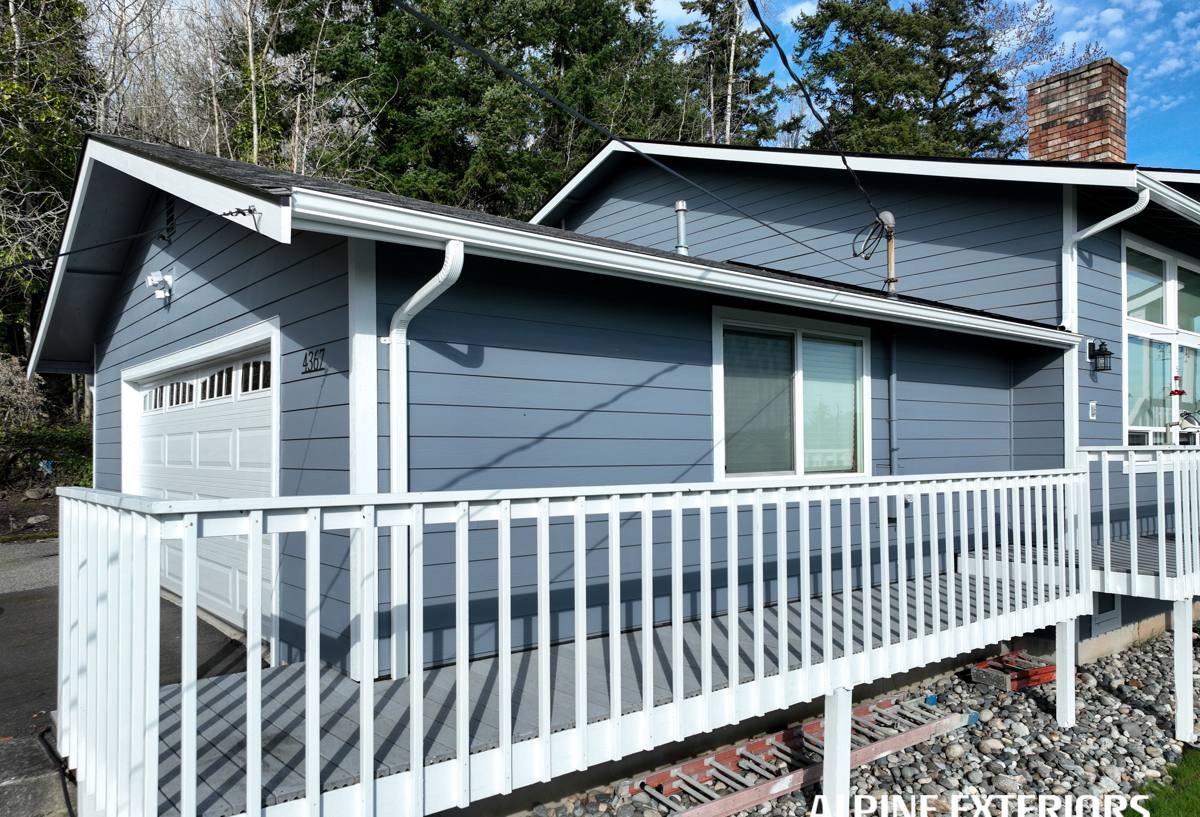
What Alger's Climate Actually Does to a Roof
Salt Air
Proximity to saltwater accelerates corrosion on any exposed metal — fasteners, flashing, drip edge, and vent housings. Roofing hardware that isn't rated for coastal exposure can start rusting and staining well before the shingles or panels themselves are due for replacement. This is one of the most common causes of premature-looking roof failure that actually has nothing wrong with the roofing material itself.
Driving Rain
Wind-driven rain doesn't just fall straight down — it gets pushed sideways and upward under laps, around penetrations, and into any gap in the flashing detail. A roof here needs underlayment and flashing choices that assume water will be tested from more angles than a calm-weather installation would ever see.
Moss and Algae Season
Shaded roof sections, north-facing slopes, and areas near tree cover stay damp longer through the year, which gives moss and algae more time to establish. Once moss gets a foothold under shingle tabs or panel seams, it holds moisture against the roofing material and can lift edges, trapping water where it shouldn't be.
What a Correct New Roof Installation Actually Involves
A proper installation is not just laying new material over what's already there. It's a sequence of decisions, each of which matters more in this climate than in a milder one.
- Tear-off and deck inspection: Old roofing comes off so the deck underneath can be checked for soft spots, rot, or delamination — problems that are common under roofs that have been dealing with sustained moisture.
- Deck repair before anything goes back down: Any compromised sheathing gets replaced. Installing new roofing over a weak deck just hides the problem for a while.
- Ice-and-water shield at vulnerable points: Eaves, valleys, and penetrations get a self-adhering waterproof membrane, not just standard felt, because these are the spots where wind-driven rain and moss-related water intrusion cause the most damage.
- Synthetic underlayment across the field: A durable, water-resistant underlayment across the whole roof gives a second line of defense if wind ever drives moisture past the surface material.
- Corrosion-resistant flashing and fasteners: Metal components are chosen with coastal exposure in mind, not just cost.
- Balanced ventilation: Intake at the eaves and exhaust at the ridge, sized to the attic, so moisture doesn't get trapped inside the roof assembly.
- Final detail work: Proper nailing pattern, correct exposure, sealed penetrations, and a clean valley and edge finish — the parts that are easy to rush and hard to inspect later.
Roofing Material Options for Alger Conditions
There isn't one "correct" roofing material for every home — it depends on budget, roof pitch, shade exposure, and how long the homeowner plans to stay in the house. Here's an honest comparison of the main options we install in this area.
| Material | How It Handles This Climate | Maintenance Reality | Typical Lifespan Here |
|---|---|---|---|
| Architectural asphalt shingle | Good performance with proper underlayment and ventilation; algae-resistant shingle lines reduce staining | Periodic moss/debris removal on shaded slopes | 20-30 years |
| Standing seam metal | Sheds driving rain very well, minimal seams for water to find; needs coastal-rated fasteners and coatings | Low; occasional inspection of fastener condition | 40-50+ years |
| Synthetic/composite shingle | Resists moisture absorption better than wood; holds up well in shaded, damp areas | Low to moderate | 30-50 years |
| Cedar shake | Traditional look, but absorbs moisture and is more prone to moss colonization in shaded, damp spots | Higher; regular treatment and moss management needed | 20-30 years with upkeep |
We'll walk through these trade-offs against your roof's actual sun and shade exposure rather than recommending the same product for every house.
A Note on Cedar Shake
Cedar shake is a beautiful, traditional roofing choice, and we're glad to install it when a homeowner wants that look. Our honest professional standard is to flag that in a shaded, damp climate like this one, shake requires more diligence — proper spacing for airflow underneath, and a homeowner willing to keep up with moss control — to get a full service life out of it. That's not a knock on the product; it's a maintenance conversation worth having up front.
How Our Installation Process Works
- On-site roof assessment: We look at the current roof, deck condition, ventilation, flashing details, and any shaded or moss-prone areas specific to your property.
- Material and ventilation plan: We recommend a system based on your roof's slope, shade exposure, and how long you want to go between re-roofs — not a one-size answer.
- Written estimate: Scope, materials, and cost factors laid out clearly before anything is scheduled.
- Tear-off and deck repair: Old material removed, deck inspected and repaired as needed.
- Waterproofing and underlayment: Ice-and-water shield at eaves, valleys, and penetrations, then underlayment across the full roof.
- Installation: Material installed to manufacturer spec with corrosion-resistant fasteners and flashing appropriate for coastal exposure.
- Ventilation check: Intake and exhaust confirmed balanced for the attic space.
- Final walkthrough: We review the finished roof with you, including care recommendations specific to your property's shade and exposure.
Ventilation and Moisture Management
Ventilation is one of the most overlooked parts of a roofing job, and it matters more here than in a dry climate. If warm, moist air from inside the home gets trapped in the attic, it condenses against the underside of the roof deck — and that moisture, combined with the area's naturally damp air, can lead to rot and mold that has nothing to do with how good the shingles or panels are. A correctly balanced system pulls fresh air in at the eaves and pushes moist air out at the ridge, keeping the whole assembly dry from the inside as well as the outside.
Cost Factors for a New Roof Installation
Every roof is priced on its own specifics, but these are the factors that most often move the number up or down for homes in this area.
| Factor | Why It Affects Cost |
|---|---|
| Roof size and pitch | More square footage and steeper slopes mean more material and labor time |
| Deck condition | Rotted or soft sheathing found during tear-off requires repair before installation continues |
| Material choice | Asphalt, metal, and composite options carry different material and labor costs |
| Layers of existing roofing | Multiple old layers add tear-off time and disposal cost |
| Ventilation upgrades | Adding or correcting intake/exhaust ventilation is worth the added cost long term |
| Access and roof complexity | Valleys, dormers, and tree cover affect both labor time and staging |
We'll give you a written, itemized estimate so you can see exactly what's driving the number, not just a bottom-line figure.
Signs an Alger Home May Need a New Roof
- Granules collecting in gutters or at downspouts
- Moss established under shingle edges or in valleys, not just on the surface
- Curling, cracking, or missing shingles, especially on shaded slopes
- Rust staining or corrosion around flashing, vents, or fasteners
- Soft spots or sagging when walked on or viewed from the attic side
- Daylight visible through the roof deck from inside the attic
- Interior water stains on ceilings after heavy or wind-driven rain
Why Hiring a Crew That Already Works This Area Matters
A roofing crew that regularly works Alger and the broader Sudden Valley area already knows which slopes tend to hold moss, how far wind-driven rain typically pushes under an eave in a coastal storm, and which flashing and fastener choices actually hold up against the salt air rather than just looking fine on installation day. That local pattern recognition shows up in the details — where extra waterproofing membrane gets used, how ventilation is balanced for shaded attics, and which materials are worth the added upfront cost for this specific climate. It's the difference between a roof that's technically installed correctly and one that's installed correctly for where it actually sits.
Get a Free, No-Pressure Estimate
If your roof is showing its age or you're planning ahead for a replacement, we're glad to come take a look, walk you through what we see, and put together a straightforward written estimate — no pressure, no obligation. Use the form below to get started.