 Sudden Valley Siding
 Storm Damage Roof Repair for Silver Beach Homes
Silver Beach sits close to Lake Whatcom, tucked into a stretch of Whatcom County where weather off the water and weather off the surrounding hills seem to meet at the roofline. When a windstorm rolls through, homes here take it from more than one direction at once. That's a different situation than a roof repair on a flat, open lot, and it's why storm damage repairs in this pocket of Sudden Valley need someone who understands how wind, rain, and tree cover actually interact with a roof here — not a general contractor working from a checklist written for somewhere else.
This page covers what storm damage repair actually means for a Silver Beach roof, what we look for, and how we handle the job from first inspection to final cleanup.
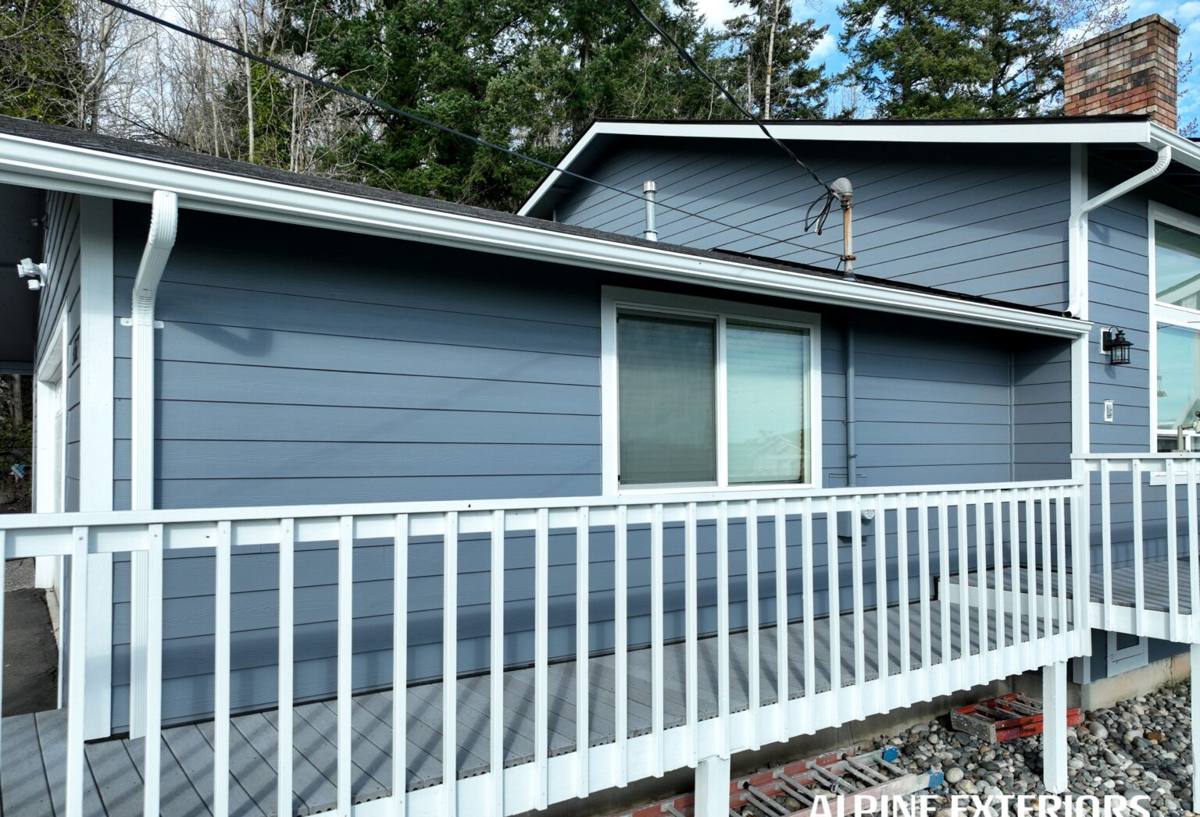
What Whatcom County Storms Actually Do to a Roof
Most storm damage isn't dramatic. It's rarely a roof torn off in one piece. It's usually a handful of smaller failures that, left alone, turn into a much bigger problem over a wet Pacific Northwest winter.
Wind and Debris
Gusts moving across the lake and through the tree line around Silver Beach can lift shingle tabs, crack ridge caps, and drive branches and needles into valleys and gutters. Trees close to a roofline also mean more debris impact during a storm than a home on open ground would see.
Driving Rain
Rain that comes in sideways, not straight down, finds every weak point in a roof system — lifted shingle edges, aging flashing, nail pops — and pushes water underneath instead of over it. That's how a small storm event turns into a slow leak that shows up weeks later as a stain on a ceiling.
The Long Moss Season
Whatcom County's damp, mild climate keeps roofs wet longer than drier regions, and that means moss and algae have a long season to work with. Moss holds moisture against shingles, works its way under tabs, and lifts material away from the deck — which is exactly the kind of weak point storm winds and rain are looking for. A roof with an active moss problem is more vulnerable to storm damage than a clean one, not less.
None of these on their own is usually catastrophic. Together, over a season of repeated storms, they're how a 15-year-old roof develops real problems.
Signs Your Silver Beach Roof Took Storm Damage
Some damage is obvious from the ground. Some isn't visible until someone gets on the roof or into the attic. Here's what we tell homeowners to watch for after any significant wind or rain event:
- Shingles that look curled, cracked, creased, or are simply missing
- Granules collecting in gutters or at the base of downspouts
- Bent, lifted, or missing flashing around chimneys, vents, and skylights
- Dark streaks, moss patches, or soft-looking areas on the roof surface
- New water stains on ceilings or interior walls, even faint ones
- A musty smell in the attic, or visible daylight through the roof deck
- Gutters pulling away from the fascia or sagging with debris
- Sagging spots on the roof plane that weren't there before
If you notice more than one of these, it's worth getting an inspection before the next storm rather than after.
What a Correct Storm Damage Repair Actually Involves
A lot of storm repair work in this region gets done as a quick patch — a few shingles swapped, a bead of sealant, done. Sometimes that's genuinely all a roof needs. But a patch over damage that hasn't been fully diagnosed just hides the problem until the next storm finds it again.
Full Inspection Before Any Repair
We check the full roof plane, not just the spot that's obviously damaged. Wind damage often extends past what's visible from the ground, and one damaged section usually means the surrounding shingles took stress too, even if they haven't failed yet.
Decking Check
If water got past the shingle layer, we check the roof deck underneath for soft spots, staining, or rot before closing anything back up. Repairing the surface over damaged decking doesn't fix the underlying issue — it just buys a little time.
Flashing and Underlayment
Flashing around chimneys, vents, valleys, and skylights fails quietly and is one of the most common sources of storm-related leaks. Underlayment that's torn or displaced needs to be addressed too, since it's the roof's last line of defense if the shingle layer is compromised.
Matching Materials
Where we can match existing shingle color and profile, we do. Where an exact match isn't available — which happens more often on older roofs — we'll be upfront about that before starting, not after.
How Our Process Works
Storm damage repair goes smoother when the process is clear from the start:
- Inspection. We walk the roof (or use a lift/drone when the pitch or access calls for it) and document what we find with photos.
- Honest assessment. We tell you what's actual storm damage, what's pre-existing wear, and what can reasonably wait.
- Written scope and estimate. You get a clear description of the repair before any work starts — no verbal-only promises.
- Repair. We complete the work, matching materials where possible and checking adjacent areas that took related stress.
- Cleanup and final walk-through. Debris, old materials, and nails get cleared from the yard and gutters before we call the job done.
If the damage is tied to an insurance claim, we'll provide the documentation and photos you need to support it. We don't handle the claim itself — that's between you and your carrier — but we make sure you're not walking into that conversation without solid evidence of what happened.
Repair or Replace? What Actually Drives That Decision
Not every storm-damaged roof needs to be replaced, and not every roof is worth repairing again. The honest answer depends on a few factors, laid out below.
| Factor | Leans Toward Repair | Leans Toward Replacement |
|---|---|---|
| Roof age | Under 12-15 years | Nearing or past expected lifespan |
| Damage extent | Isolated to one section or slope | Spread across multiple areas |
| Decking condition | Solid, dry, no rot | Soft spots or rot found underneath |
| Repair history | First or second repair | Repeated repairs in the same areas |
| Moss/algae condition | Minor, surface-level | Established growth lifting shingles |
We'll walk you through where your roof lands on this before recommending either option — a repair that's genuinely enough is always the right call over an unnecessary replacement, and vice versa.
Why a Crew That Already Works Silver Beach Matters
Storm damage repair isn't just about swinging a hammer. It's about knowing what a roof in this specific setting is up against — the way lake-effect wind moves through Silver Beach, how much tree debris a given street typically deals with, and how long moss has usually had to establish itself on roofs in this microclimate versus a drier part of the county.
A crew that already works in Sudden Valley isn't guessing at any of that. We know what a normal amount of wear looks like around here versus what's actually storm-caused, which matters both for getting the repair right and for having solid documentation if you're filing an insurance claim. We're also not driving in from out of the area for a one-time job — if something about a repair needs a second look down the road, we're still local.
Keeping Storm Damage From Coming Back
A repair is only as good as what happens to the roof afterward. A few things that make a real difference in this climate:
- Keep gutters and valleys clear of needles and debris, especially going into fall and winter storm season
- Address moss early — a light treatment is a lot cheaper than the shingle damage it prevents
- Trim back branches that overhang the roofline where it's practical to do so
- Get a roof looked at after any storm with sustained high winds, even if nothing looks obviously wrong
- Don't ignore a small leak — in a climate this wet, small leaks don't stay small for long
None of this prevents every storm from causing damage. It does mean smaller issues get caught before they turn into deck rot, interior damage, or a full re-roof.
Get a Straightforward Estimate
If your Silver Beach roof took storm damage, or you're not sure whether what you're looking at is storm-related or just wear, we're glad to take a look. The estimate is free, there's no pressure attached to it, and you'll get a straight answer about what actually needs to happen — use the form below to get started.