 Sudden Valley Siding
 Roofing Built for How Silver Beach Actually Weathers
Homes around Silver Beach don't fail the same way roofs fail in drier parts of the country. Here, the damage is slow and cumulative: months of driving rain finding their way under lifted shingle tabs, salt-tinged marine air working on exposed fasteners and flashing, and a long, shaded moss season that keeps roof decks damp long after a storm has passed. None of that is dramatic on its own. Over five, ten, fifteen years, it adds up to premature granule loss, soft decking, and leaks that show up far from where the water actually got in.
An asphalt shingle roof installed correctly for this environment behaves very differently from one installed to a generic spec sheet. The difference isn't the shingle brand printed on the wrapper — it's the underlayment, the ventilation, the flashing details, and the attention paid to the parts of the roof that don't get photographed: valleys, penetrations, and the transitions where the roof meets walls, chimneys, and skylights. That's where Silver Beach roofs actually succeed or fail.
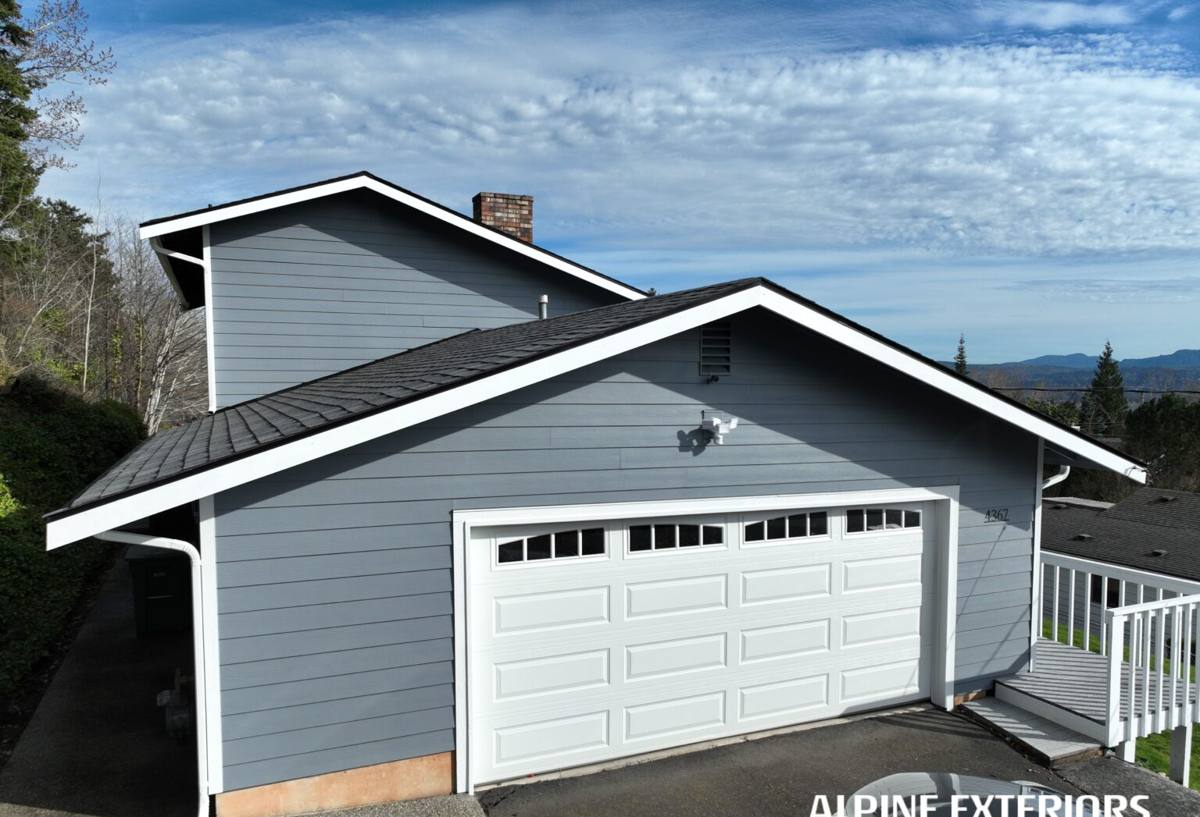
What Whatcom County's Climate Demands From a Roof
Whatcom County sits in a wet, tree-heavy corner of Washington, and neighborhoods near the water carry an extra layer of exposure. Three conditions shape how we spec every asphalt shingle roof we install in this area:
- Driving rain: Wind-driven storms push water sideways and upward under shingle edges, not just straight down. Standard nail patterns and underlayment aren't always enough on exposed slopes.
- Salt-tinged marine air: Homes closer to open water see faster corrosion on exposed metal — nails, flashing, vents — which is why fastener and flashing material choice matters more here than it would inland.
- A long moss and algae season: Tree cover, shade, and persistent moisture create ideal conditions for moss and algae growth on north-facing and shaded slopes for much of the year, not just a few weeks in fall.
A roof spec'd for a dry, open lot in another part of the state simply isn't built for this. We treat Silver Beach roofing as its own category, not a smaller version of a generic install.
Tree Cover Changes the Job
Many Silver Beach properties sit under or near mature trees, which means shade, debris, and moisture retention on the roof deck long after the rest of the neighborhood has dried out. That changes what we prioritize during installation and inspection: valley protection, gutter and edge detailing that actually sheds needle and leaf litter instead of trapping it, and shingle products with better resistance to algae staining.
What a Correct Asphalt Shingle Installation Actually Involves
Asphalt shingle roofing looks simple from the ground, which is part of the problem — a rushed or corner-cut install can look identical to a correct one for the first year or two. The difference shows up later, usually as a leak with no obvious source. A proper installation for this climate includes:
- Deck inspection and repair: Any soft, delaminated, or water-stained sheathing gets replaced before a single shingle goes down. Roofing over a compromised deck just hides the problem.
- Ice-and-water shield at vulnerable points: Eaves, valleys, and penetrations get a self-adhering waterproof membrane underneath the felt or synthetic underlayment — the backup layer that matters when wind-driven rain gets past the shingles themselves.
- Synthetic or felt underlayment across the full deck: A continuous water-resistant barrier, properly lapped, is what keeps a roof dry during the install itself and for the life of the shingles.
- Balanced attic and roof ventilation: Intake at the eaves and exhaust at the ridge, sized to the attic volume, so moisture and heat don't get trapped against the underside of the deck.
- Correct nailing pattern: Manufacturer-specified nail count and placement, not the minimum that will pass a quick glance. Under-nailed shingles are one of the most common causes of wind damage.
- Metal flashing at every transition: Step flashing at walls, counter-flashing at chimneys, and properly formed valley metal or woven valleys — done correctly the first time, since these are the leak points that are expensive to diagnose later.
Why Ventilation Matters More Here Than People Expect
A shaded, moisture-heavy environment like Silver Beach makes attic ventilation a bigger deal than it would be in a drier climate. Poor ventilation traps humid air against the roof deck, which accelerates rot from the inside and can shorten the life of even a well-installed shingle roof. We check and correct ventilation as a standard part of every reroof — not as an upsell, but because skipping it undermines everything else we just did.
Signs a Silver Beach Roof Needs Attention
Because so much of the damage in this climate happens slowly, homeowners often don't notice a problem until it's already inside the house. Worth checking for, or asking us to check for during an inspection:
- Granules collecting in gutters or at downspout outlets — a sign shingles are wearing thin
- Dark streaking or green-black patches, especially on shaded, north-facing slopes
- Curling, cupping, or lifted shingle edges, particularly on the most wind-exposed side of the roof
- Soft spots or noticeable give when walking the roof (we check this, not something to do yourself)
- Rust staining around vent pipes, flashing, or exposed fasteners
- Daylight visible through the attic roof deck, or damp insulation after a storm
- Interior ceiling stains that appear or grow after heavy rain
Any one of these on its own might be minor. Several together usually mean the roof is past routine maintenance and into repair-or-replace territory.
Choosing the Right Shingle for This Environment
Not every asphalt shingle product is a good match for a shaded, damp, salt-air-adjacent lot. We walk homeowners through the real trade-offs rather than defaulting to whatever is cheapest or most common.
| Shingle Type | Best Fit For | Trade-Offs in This Climate |
|---|---|---|
| 3-tab (standard) | Budget-conscious projects, simpler rooflines | Lower wind rating and shorter lifespan; less algae resistance unless specified |
| Architectural (dimensional) | Most Silver Beach homes — better durability and curb appeal | Higher upfront cost, but stronger wind ratings and thicker construction hold up better to driving rain |
| Algae-resistant (AR) granule shingles | Shaded, tree-covered, or north-facing roof slopes | Copper- or zinc-infused granules resist the moss and algae staining common in this area; modest cost premium |
| Impact-resistant shingles | Homes wanting extra durability against wind-driven debris | Higher cost; benefit is more about longevity than climate-specific need here |
For most Silver Beach properties, we lean toward architectural shingles with algae-resistant granules on shaded slopes — it's the combination that best matches what this specific climate does to a roof over time.
Underlayment and Fastener Choices Matter as Much as the Shingle
A premium shingle over cheap underlayment and standard fasteners in a salt-influenced, wet climate is a mismatched system. We pair shingle selection with synthetic underlayment (more tear- and moisture-resistant than old-style felt) and corrosion-resistant fasteners and flashing, so the whole roof assembly ages at the same rate instead of the weakest component failing first.
Our Process, Start to Finish
- On-site inspection: We walk the roof and the attic, not just look from the ground, and document deck condition, ventilation, flashing, and problem areas.
- Written estimate: A clear scope of work and pricing — no vague allowances that turn into surprise change orders.
- Material selection: We go over shingle options, colors, and warranty tiers based on your roof's exposure and your budget.
- Scheduling around weather: Given how much rain this region gets, we plan install windows carefully and stage materials to keep your home protected if weather shifts mid-project.
- Tear-off and deck inspection: Old roofing comes off, the deck gets inspected board by board, and any needed repairs happen before underlayment goes down.
- Underlayment, flashing, and shingle installation: Installed in the sequence and manner outlined above — ice-and-water shield, underlayment, flashing, then shingles.
- Ventilation check and correction: Intake and exhaust balanced for the attic space.
- Cleanup and magnetic nail sweep: Full site cleanup, including a sweep for stray fasteners around the property.
- Final walkthrough: We review the finished roof with you and go over warranty documentation before we consider the job done.
Tear-Off vs. Overlay: Which Makes Sense
Washington building code and manufacturer warranties generally limit roofs to a maximum of two layers of shingles, and most reputable installers — us included — recommend a full tear-off in nearly every case. Overlaying a new layer over old, damaged shingles traps moisture, hides deck problems, and adds weight without solving the underlying issue. In a climate where the roof deck is already fighting moisture from ventilation and tree cover, starting with a clean deck is worth the extra cost. We'll tell you honestly if your specific situation is an exception, but it's rare.
Cost Factors for a Silver Beach Roofing Project
Every roof is different, and we won't quote a number without seeing the roof — but these are the factors that most often move a project's cost up or down in this area:
| Factor | Tends to Increase Cost | Tends to Decrease Cost |
|---|---|---|
| Roof pitch | Steep slopes require more safety setup and labor time | Low-to-moderate pitch is faster and safer to work |
| Layers to remove | Two existing layers means more tear-off and disposal | Single layer or bare deck |
| Deck condition | Rot or soft sheathing requires replacement before roofing | Sound, dry decking found at tear-off |
| Roof complexity | Multiple valleys, dormers, chimneys, skylights | Simple gable or hip roofline |
| Access | Limited driveway or yard access, tree cover requiring extra care | Open, easy staging area |
| Ventilation upgrades | Adding or correcting intake/exhaust venting | Existing ventilation already adequate |
We walk through these factors on-site so the estimate reflects your actual roof, not a generic average.
Why a Crew That Already Works Silver Beach Matters
Lake-adjacent, tree-covered communities like Silver Beach come with practical realities that outside crews often learn the hard way: narrower or shared access roads, homes tucked under mature tree canopy that limits staging space, and — in communities with an HOA or architectural guidelines — approval requirements for exterior changes including roofing materials and colors. A crew that regularly works this specific area already knows to check for those requirements up front, plans material staging around limited access, and understands how tree cover and shade affect which slopes need extra attention for moss and algae resistance.
That local familiarity isn't a marketing point — it's the difference between a project that goes smoothly and one that hits avoidable delays over access, permitting, or a shingle color that doesn't clear a neighborhood review process.
Maintenance That Extends the Life of Your Roof
A correctly installed asphalt shingle roof in this climate can still lose years of life to neglect. Simple, low-cost habits make a real difference:
- Clear gutters and valleys of needles and leaf litter at least twice a year — clogged valleys are one of the most common causes of hidden leaks
- Trim back branches that overhang the roofline to reduce shade, debris, and physical abrasion during wind
- Have moss and algae growth treated before it spreads, rather than after it's covering a full slope
- Schedule a roof and attic inspection every few years, or after any major windstorm
- Address small leaks immediately — in this climate, a small entry point becomes a bigger deck problem faster than in drier regions
Warranty and Workmanship
Manufacturer warranties cover the shingle material itself; workmanship warranties cover the installation. Both matter, and they're not the same thing — a strong material warranty means nothing if the underlayment, flashing, or ventilation was installed poorly. We explain both in plain terms before you sign anything, including what's covered, what isn't, and how to keep the manufacturer warranty valid over time.
If you're weighing a repair, a full reroof, or just want an honest read on what condition your Silver Beach roof is actually in, we're glad to take a look. The estimate is free, there's no pressure, and you'll get a straight answer about what your roof needs — and what it doesn't — before you decide anything. The form below is the easiest way to get started.