 Sudden Valley Siding
 Siding Repair Built for Silver Beach's Water-Adjacent Climate
Homes in Silver Beach sit close enough to the water that the siding takes a different kind of beating than a house a few miles inland. Salt-laden air, wind-driven rain that finds its way under poorly lapped panels, and a moss season that runs longer than most homeowners expect all chip away at exterior materials year after year. A siding repair here isn't just about patching a cracked board — it's about understanding why that board cracked in the first place and making sure the fix actually holds up to the next decade of Whatcom County weather.
We work on homes throughout the Sudden Valley area, and Silver Beach comes with its own set of recurring issues. This page walks through what we typically find, what a repair should actually involve, and why the material and crew you choose matters more here than it would in a drier, more sheltered part of the county.
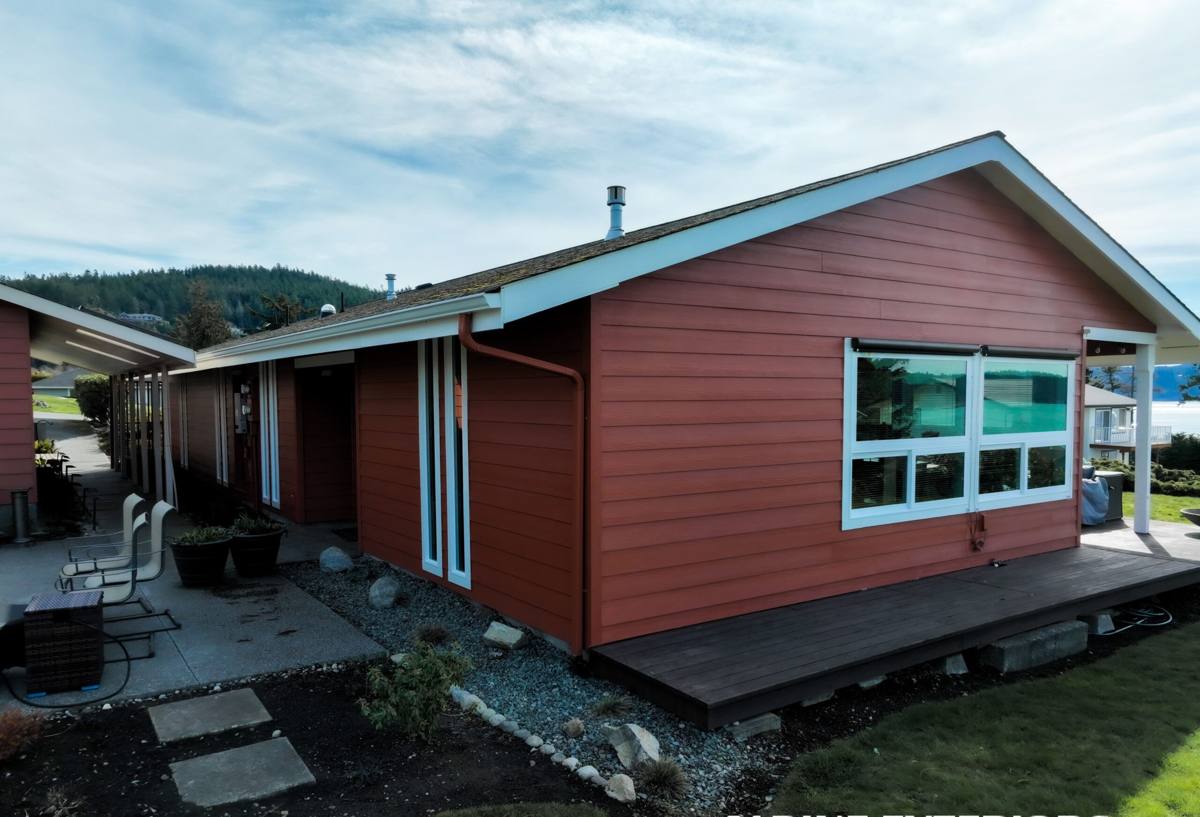
What Silver Beach's Climate Does to Siding
Salt Air and Corrosion
Proximity to water means airborne salt and moisture settle on exterior surfaces more consistently than inland properties experience. This accelerates corrosion on fasteners, trim flashing, and any metal components tied into the siding system. Over time, corroding fasteners loosen their grip on siding panels, which opens small gaps that let water behind the cladding — the actual root cause of most rot we find during repair calls.
Driving Rain
Wind off the water doesn't just bring rain straight down — it drives it sideways, forcing moisture into laps, seams, and butt joints that were never designed to handle horizontal water pressure. Siding installed with tight, correct overlaps sheds this water fine. Siding installed with shortcuts — thin overlaps, missing flashing, caulk used in place of proper detailing — starts failing in exactly these wind-driven conditions.
A Long Moss Season
Whatcom County's wet stretch runs long, and Silver Beach's tree cover and moisture levels give moss and algae plenty of time to establish themselves on north-facing walls and shaded trim. Moss itself doesn't destroy fiber cement, but it holds moisture against the surface for extended periods, which speeds up wear on paint film, caulk joints, and any wood-based trim nearby. On repair jobs, moss buildup is often the visible symptom that gets a homeowner to call — even when the real damage is happening a layer deeper.
Signs a Silver Beach Home Needs Siding Repair
- Soft or spongy spots when you press on siding near the bottom courses or around windows
- Visible gaps or separation at panel seams, corners, or butt joints
- Peeling or bubbling paint, especially on walls facing prevailing wind and rain
- Persistent moss or algae staining that keeps coming back after cleaning
- Rust streaking below nail heads or trim fasteners
- Warping, buckling, or visible waviness in panels
- Interior signs — musty smell, discolored drywall, or bubbling paint on interior walls that share an exterior wall
Any one of these on its own might be minor. Several showing up together, especially on the same wall, usually means water has been getting behind the siding for a while.
What a Correct Repair Actually Involves
A repair that only addresses what's visible from the ground tends to fail again within a season or two. We treat every repair call as an inspection first, repair second:
1. Find the Water Path
Before replacing anything, we trace how water is getting in. That means checking flashing above windows and doors, looking at how siding courses overlap, and inspecting the condition of the water-resistive barrier underneath where panels are pulled back. Replacing a cracked panel without fixing the flashing detail that let water behind it just buys a homeowner a few more years before the same spot fails again.
2. Assess What's Underneath
Once siding is removed from the affected area, we check the sheathing and framing for rot or soft spots. This is the step that gets skipped on quick patch jobs, and it's the difference between a repair that lasts and one that hides a bigger problem behind a fresh coat of paint.
3. Match the Existing Siding
For homes with James Hardie ColorPlus finished panels, we source matching profile and color so the repair blends in rather than standing out as an obvious patch. Because ColorPlus is a factory-applied finish with a consistent color run, matching is far more reliable than trying to field-match a hand-painted product.
4. Correct the Detailing
Proper flashing, correct fastener placement, and appropriate gaps at joints (per manufacturer installation guidelines) go back in before the new siding does. This is the part of the job that actually prevents a repeat call.
Repair or Replace? A Practical Comparison
| Situation | Repair usually makes sense | Replacement usually makes sense |
|---|---|---|
| Damage extent | Isolated to one or two walls or sections | Spread across multiple elevations |
| Siding age | Under 15-20 years, still structurally sound elsewhere | Near or past expected service life |
| Underlying material | Sheathing/framing found intact during inspection | Widespread rot found behind multiple panels |
| Original install quality | Good detailing elsewhere, isolated failure point | Systemic flashing/lapping errors throughout |
| Product on the home | Fiber cement with available color/profile match | Discontinued product, no reasonable match available |
We'll tell you honestly which category your home falls into. There's no benefit to us talking a homeowner into a full replacement when a targeted repair will genuinely hold up — and no benefit to patching over a problem that's going to keep coming back.
Why the Siding Material Matters for Repairs
We install and repair James Hardie fiber cement siding exclusively. That's a deliberate standard, not a limitation, and it matters especially in a climate like Silver Beach's. Fiber cement doesn't absorb moisture and swell the way wood-based products can, and it doesn't corrode the way some metal siding trims can in salt-influenced air. It holds paint and factory finish far longer under wet, moss-prone conditions than primed wood products, which need repainting on a much shorter cycle to stay protected.
That durability is exactly why repair work on Hardie siding tends to stay contained — you're fixing a flashing detail or a damaged section, not chasing rot across an entire wall of failing material. When we do repair work on non-Hardie siding for existing homeowners, we're upfront that the repair may not hold as long, and we'll walk through what a future replacement to Hardie would involve if that's a direction worth considering down the road.
Our Repair Process
- Inspection. We walk the affected areas, check moisture levels where possible, and identify the actual water path — not just the visible damage.
- Written estimate. A clear scope of what's being repaired, what's being matched, and why — no vague line items.
- Repair work. Damaged panels and trim removed, underlying structure checked and corrected if needed, new siding and flashing installed to spec.
- Finish and cleanup. Matched panels finished out, site cleaned, and a final walkthrough so you know exactly what was done and why.
Why Local Experience in Silver Beach Matters
A crew that's worked homes in and around Sudden Valley and Silver Beach already knows which walls typically take the worst of the wind-driven rain, where moss tends to build up fastest, and which original installation shortcuts show up repeatedly in this area. That local pattern recognition speeds up diagnosis and helps us catch secondary damage before it becomes its own separate problem. It also means we're not learning Whatcom County's climate on your dime — we already know what it does to siding here.
Maintaining Siding After a Repair
- Rinse siding periodically, especially north-facing and shaded walls prone to moss
- Keep gutters clear so overflow doesn't run down and pool against siding
- Trim back vegetation that keeps walls shaded and damp
- Check caulking at trim and window joints annually and re-caulk as needed
- Watch repaired areas the first wet season for any signs the fix didn't fully resolve the water path
Cost Factors for Silver Beach Siding Repairs
| Factor | How it affects cost |
|---|---|
| Size of repair area | Larger sections and multiple walls increase material and labor |
| Hidden damage found | Rotted sheathing or framing adds scope once uncovered |
| Color/profile matching | Discontinued colors may require a wider repaint area to blend |
| Access | Second-story or hard-to-reach walls add labor time |
| Flashing/detail corrections | Fixing the root cause, not just the surface, adds some scope but prevents repeat failures |
If you're seeing moss buildup, soft spots, or gaps in your siding, it's worth having it looked at before another wet season sets in. We offer a free, no-pressure estimate for Silver Beach homeowners — we'll tell you honestly whether you're looking at a repair or something bigger, and what it would take to fix it right.