 Sudden Valley Siding
 Siding That Has to Work Year-Round in Silver Beach
Silver Beach homes sit in one of the more demanding microclimates a siding contractor works in around Whatcom County. Between the tree cover ringing Lake Whatcom, the shaded lots common to the neighborhood, and the driving rain that comes through Western Washington for months at a stretch, exterior siding here takes a beating that a drier, sunnier neighborhood never sees. Add in the salt-tinged marine air that moves through the broader region and a moss season that can run from fall into spring, and you have a set of conditions that separates siding that lasts twenty-plus years from siding that starts failing in five.
This page is specifically about installing James Hardie fiber cement siding on Silver Beach homes — not siding in general, and not James Hardie everywhere. The product choice matters, but so does understanding what this particular climate demands from the installation itself.
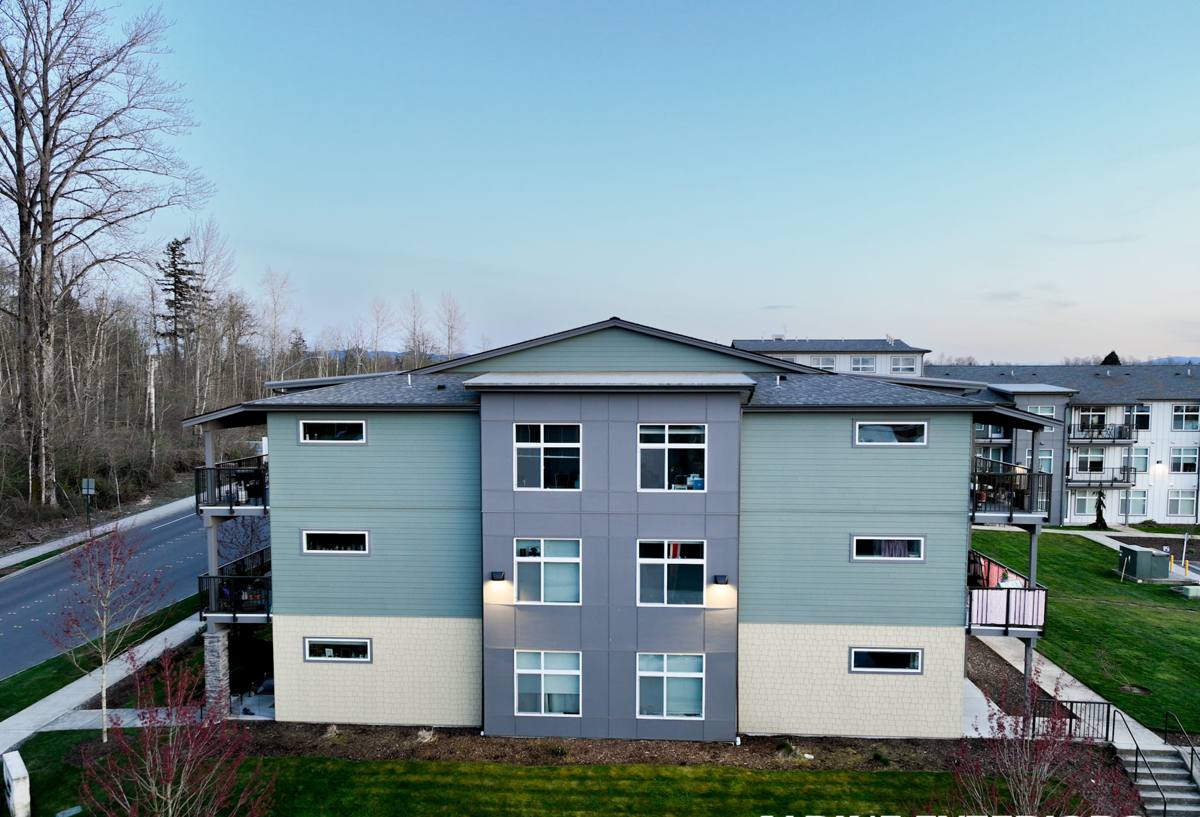
What This Climate Actually Does to Siding
Three things define the Silver Beach exterior environment, and each one attacks siding differently:
- Sustained shade and moisture. Mature tree canopy near the lake keeps many walls damp far longer after a storm than an open, sun-exposed lot would. Slow-drying siding stays wet, and wet siding is where problems start.
- Driving, wind-blown rain. Storms off the Pacific don't just fall straight down here — wind pushes rain sideways into wall assemblies, which means flashing, house wrap, and butt joints matter as much as the siding material itself.
- A long moss and algae season. Constant shade plus moisture is exactly what moss and algae need to establish. Siding that can't shed water quickly, or that traps organic debris in its texture, becomes a growing surface rather than a weather barrier.
None of this is unique to Silver Beach as a name — it's the reality of building close to a wooded lake shoreline in Whatcom County. But it does mean the standard "good enough anywhere" installation approach isn't good enough here.
Why James Hardie Is the Product We Use in This Kind of Environment
James Hardie fiber cement is engineered from portland cement, sand, and cellulose fiber — a composition that doesn't rot, doesn't feed moss the way organic wood fiber can, and doesn't swell and warp the way wood-based products do when they take on moisture repeatedly. For a shaded, damp lot near the lake, that composition is the starting point, not the whole story.
The HZ5 Climate Engineering
James Hardie engineers its products for specific climate zones, and Western Washington falls into the HZ5 category — formulated for regions with significant moisture exposure and freeze-thaw cycling. That's a meaningful distinction from siding sold as one-size-fits-all across the country.
ColorPlus Factory Finish
The ColorPlus finish is baked on at the factory under controlled conditions, rather than field-applied paint drying in variable weather. In a neighborhood where a fresh paint job can face rain within days of application, a factory-cured finish removes that variable entirely and holds color and sheen far longer under constant damp exposure.
What a Correct Installation Actually Involves Here
Buying the right product and installing it wrong produces the same failures as buying the wrong product. In a climate like this, the details below are where jobs succeed or fail:
Water Management Behind the Siding
Every wall needs a weather-resistant barrier and properly lapped flashing at windows, doors, and every horizontal transition, installed so water is directed out and down — never trapped behind the siding. On shaded, slow-drying walls, a flashing mistake that would take years to show up on a sunny lot can cause damage in a single wet season here.
Clearance and Ventilation
James Hardie's installation specifications call for minimum clearances from grade, roofing, and decks so the siding isn't sitting in standing water or trapped moisture. On lots with heavy shade and slower air movement, we don't treat these clearances as guidelines — they're the difference between siding that dries out between storms and siding that never fully dries.
Joints, Fastening, and Caulking
Butt joints need to be back-flashed or properly treated per manufacturer spec, fasteners need to be the correct type and driven correctly (not overdriven, which cracks fiber cement), and caulking needs to be used only where it belongs — not as a substitute for correct flashing.
Painting and Field Cuts
Any field-cut edge needs to be sealed to match the factory-finished surface, particularly important where ColorPlus panels are trimmed to fit around windows or corners on a custom home layout.
Material Comparison for a Shaded, High-Moisture Lot
| Factor | James Hardie Fiber Cement | Vinyl Siding | Wood / LP-Type Products |
|---|---|---|---|
| Moisture behavior | Dimensionally stable; doesn't rot or swell | Doesn't rot, but can warp and gap over time in temperature swings | Absorbs moisture; prone to swelling and rot if exposure is prolonged |
| Moss/algae resistance | Non-organic composition, sheds water well when installed to spec | Resistant to organic growth but seams and laps can trap debris | Wood fiber content can support organic growth in constant shade |
| Fire resistance | Non-combustible | Combustible, can deform under heat | Combustible |
| Finish durability | Factory-cured ColorPlus finish | Color molded through, but can fade or chalk | Field-applied paint or primer, needs more frequent recoating |
| Installation sensitivity | Moderate — correct flashing/clearance critical | Lower — but expansion gaps matter | High — moisture management is critical to longevity |
We install James Hardie exclusively, and for a Silver Beach lot in particular, its moisture stability and non-organic composition are the qualities that matter most given what these walls face for most of the year.
Our Process for a Silver Beach Job
A siding job in this neighborhood follows the same core steps as anywhere, but we adjust the emphasis based on what we know about the site conditions before we ever pull siding off the wall.
- On-site assessment. We look at tree cover, sun exposure on each wall, existing moisture or moss patterns, grade clearance, and any current siding damage before quoting the job.
- Removal and sheathing inspection. Once old siding comes off, we check sheathing for rot or soft spots — common in older homes near the lake where prior siding may have trapped moisture for years.
- Weather barrier and flashing install. This is the step that determines how the home performs in year ten, not just year one.
- James Hardie installation to manufacturer spec. Correct fastening, clearances, and joint treatment throughout.
- Final detailing. Caulking, touch-up on field cuts, and a walkthrough so you understand what maintenance (if any) the finish requires going forward.
Questions Worth Asking Any Contractor Bidding This Job
- Will you install the weather barrier and flashing to manufacturer spec, or just re-side over what's already there?
- What clearance will the siding have from grade, roofing, and decking on my specific lot?
- Are you a James Hardie-certified installer, and can you speak to HZ5 requirements for this region?
- How will field-cut edges be sealed to match the factory finish?
- What does the warranty actually cover, and is it transferable if I sell the home?
Why a Crew That Already Works This Neighborhood Matters
Silver Beach and the broader Sudden Valley area have a fairly consistent building profile — lake-proximity lots, significant tree cover, and homes that see more shade-driven moisture exposure than a typical suburban block. A crew that's worked this specific kind of terrain knows what to check for before starting: where moss tends to build up on older siding, how flashing details typically need to be handled around lake-facing walls, and how long a wall actually needs to dry between rain events before certain steps can proceed. That's not something you get from a crew that mostly works flatter, more open lots elsewhere in the county — the fundamentals are the same, but the judgment calls on-site are different.
Maintenance in a Moss-Prone, Rain-Heavy Environment
James Hardie siding installed correctly is low-maintenance, not no-maintenance. In a shaded, damp environment like Silver Beach, a few practices go a long way:
- Periodically rinse siding (garden hose pressure, not a pressure washer aimed directly at seams) to clear moss spores and organic debris before they establish.
- Trim back vegetation and tree limbs that keep specific wall sections in constant shade and slow drying time.
- Keep gutters clear so overflow doesn't run down and pool against siding at ground level.
- Have caulking and trim checked every few years — caulking is a maintenance item on any siding system, including fiber cement.
Warranty and Long-Term Value
James Hardie backs its siding with a strong, transferable limited warranty — a real factor if you plan to sell the home down the road, since it can be a selling point rather than a disclosure concern. That warranty is tied to proper installation, which is exactly why the flashing, clearance, and fastening details covered above aren't optional steps — they're what keeps the warranty valid and the siding performing the way it's designed to.
If you own a home in Silver Beach and want a straight answer on what your siding needs — whether that's a full James Hardie replacement or just an honest look at what's on the wall now — we're glad to walk the property with you. Reach out for a free, no-pressure estimate using the form below.