 Sudden Valley Siding
 Siding That Has to Work Year-Round in Silver Beach
Homes in Silver Beach sit in one of the more demanding pockets of Whatcom County when it comes to exterior wear. Between salt-laden air moving in off the water, long stretches of driving rain through fall and winter, and a moss season that can run half the year in shaded spots, exterior siding here works harder than it does in drier parts of the state. A siding installation that looks right on day one but wasn't built for this climate usually starts showing problems within a few years — not decades.
This page covers what a correct siding installation looks like specifically for Silver Beach homes: what the climate actually does to different siding materials, what a proper install involves underneath the surface, and how our process is built around the conditions this neighborhood sees every year.
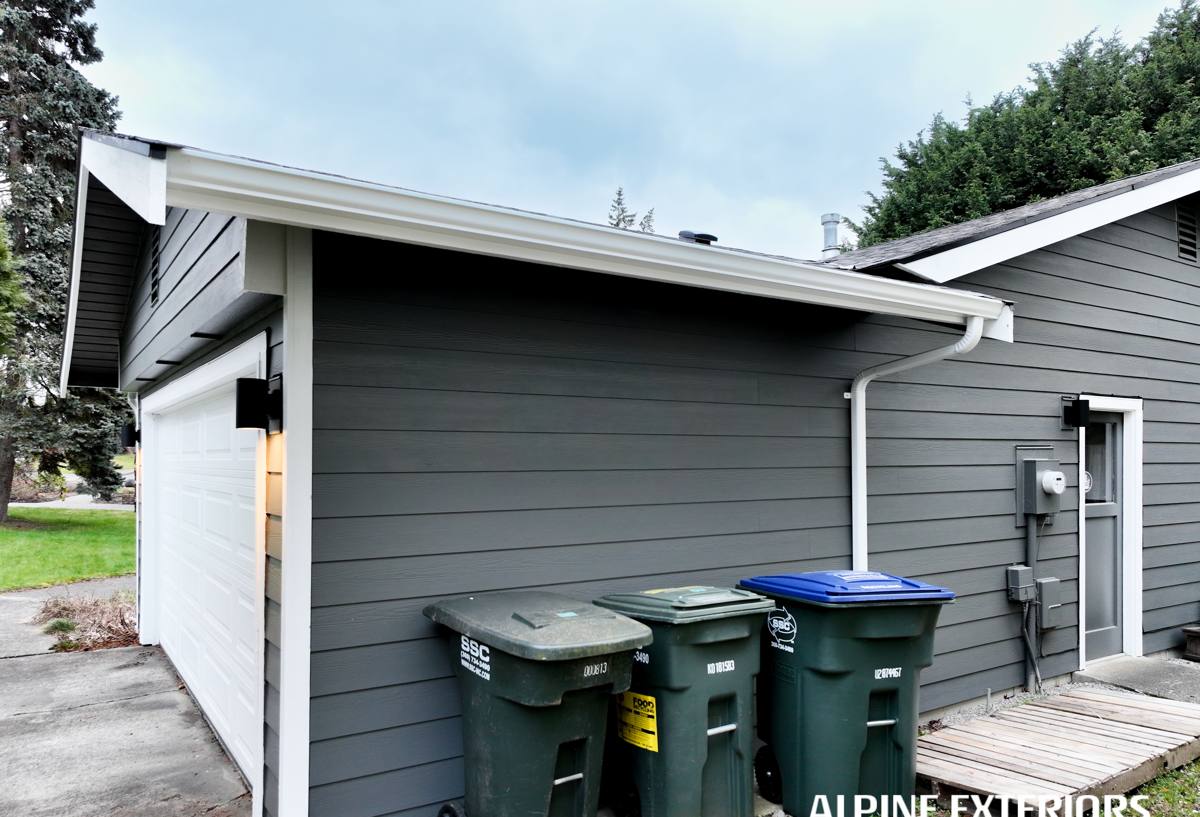
What Silver Beach's Climate Does to Siding Over Time
Every siding material eventually shows its weaknesses somewhere. In Silver Beach, three climate factors do most of the damage, and they compound each other.
Salt Air and Moisture Cycling
Salt-laden air accelerates corrosion on exposed metal fasteners, flashing, and trim, and it also draws moisture into porous or improperly sealed siding surfaces. Materials that rely on paint film or factory coatings to keep water out are especially vulnerable — once that coating is compromised at a cut edge, a fastener head, or a seam, salt-carrying moisture gets underneath and the clock starts running on rot, delamination, or coating failure.
Driving Rain and Wind-Driven Wall Assemblies
Wind off the water pushes rain sideways into wall assemblies far more aggressively than a calm, straight-down rain does. That means laps, seams, and trim intersections that would be marginal in a mild climate are simply not acceptable here. Flashing details, house wrap overlaps, and caulk joints have to be built assuming water will be forced at the wall, not just falling on it.
Moss, Shade, and Trapped Moisture
Tree cover and shaded north-facing walls around Silver Beach hold moisture and support moss and algae growth for much of the year. Moss doesn't just look bad — where it establishes on siding, it holds water against the surface constantly, which is exactly the condition that rots wood-based products and stains or degrades poorly sealed materials. Proper spacing, drainage, and material choice matter more here than in a drier microclimate a few miles inland.
Why We Install Only James Hardie Fiber Cement Siding Here
We standardized on James Hardie fiber cement for every job we take on, including here in Silver Beach, and we don't install vinyl, LP SmartSide, primed wood, or other fiber cement brands. That's not a marketing position — it's a decision based on what actually holds up against salt air, driving rain, and constant damp shade year after year.
Fiber cement is non-combustible and dimensionally stable, meaning it doesn't expand, contract, warp, or absorb water the way wood-based or engineered-wood products can. James Hardie's ColorPlus factory finish is baked on under controlled conditions rather than field-applied, which gives it more consistent coverage and better adhesion than a job-site paint job — an important detail in a climate where coating failure is often the first sign of trouble. Hardie also engineers specific product formulations for different climate zones (their HZ5 and HZ10 lines), so the siding going on the wall is matched to Pacific Northwest moisture conditions rather than a generic national spec.
We're not going to tell you every other product on the market is worthless — vinyl is inexpensive and low-maintenance in mild climates, and engineered wood has real fans. But for a coastal-influenced, high-moisture, moss-prone environment like Silver Beach, we've made the call that fiber cement done to spec is the material we're willing to put our name behind.
What a Correct Siding Installation Actually Involves
Most siding failures aren't material failures — they're installation failures. The siding itself is only as good as what's behind it and how it's fastened, flashed, and sealed. A correct install includes several layers most homeowners never see once the job is done.
Water-Resistive Barrier and Flashing
A continuous, properly lapped water-resistive barrier goes on before any siding. Every window, door, and penetration gets flashed so that water is directed out and down, never trapped behind the cladding. In a driving-rain climate, this layer is doing as much work as the siding itself.
Drainage Space Where It's Needed
On walls exposed to prolonged dampness or shade — common around Silver Beach's tree-covered lots — a drainage gap behind the siding lets any moisture that does get past the surface escape and dry instead of sitting against the wall. This is one of the details that separates a durable install from one that looks fine for a few years and then doesn't.
Fastening and Clearances
James Hardie specifies fastener type, spacing, and penetration depth for a reason — get it wrong and you create weak points where water and salt air attack first. Ground clearance, deck and roofline clearances, and gaps at inside/outside corners all need to follow spec, not just look close enough.
Caulking, Trim, and Paint-Grade Detailing
Joints and trim intersections get sealed with products rated for the exposure they'll see, and cut edges get sealed per manufacturer instructions before installation — a step that's easy to skip and impossible to check once the wall is closed up.
Our Installation Process
- On-site assessment — we look at sun exposure, tree cover, existing moisture or moss issues, and how exposed each wall is to wind-driven rain before recommending a plan.
- Tear-off and sheathing check — old siding comes off and we inspect the sheathing underneath for rot or damage that needs to be addressed before anything new goes on.
- Water-resistive barrier and flashing — installed and lapped correctly at every penetration, window, and door.
- Drainage detailing — added on walls where shade and moisture exposure call for it.
- James Hardie installation to manufacturer spec — correct fastening, clearances, and joint treatment throughout.
- Trim, caulking, and final detailing — sealed and finished so every joint is doing its job, not just looking finished.
- Walkthrough — we go over the finished work with you before calling the job done.
Signs Your Current Siding Is Already Failing
Because siding failure usually starts hidden behind the surface, by the time it's visible the damage has often been building for a while. Watch for:
- Persistent moss or algae staining that comes back soon after cleaning
- Soft or spongy spots when you press on the siding, especially near the bottom courses
- Peeling, bubbling, or chalky paint that keeps recurring in the same spots
- Visible gaps, warping, or buckling at seams and corners
- Musty odors or discoloration on interior walls that back onto exterior siding
- Fastener heads that are rusting, popping, or staining the surface around them
Any of these on their own might be minor. Several together, especially on a shaded or wind-exposed wall, usually means water has been getting behind the siding for some time.
Cost Factors for a Silver Beach Siding Installation
Every home is different, and we don't quote sight-unseen, but these are the factors that most affect the scope and cost of a siding installation in this area:
| Factor | Why It Matters Here |
|---|---|
| Existing sheathing condition | Rot from prior water intrusion (common on shaded, moss-prone walls) may need repair before new siding goes on |
| Home size and wall complexity | More corners, gables, and trim details mean more labor and flashing work |
| Product line and profile | HardiePlank lap, HardieShingle, and HardiePanel carry different material and labor costs |
| Drainage detailing needed | Heavily shaded or wind-exposed walls may warrant added drainage space, which adds labor |
| Trim and accessory scope | Fascia, corner boards, and window trim replacement add to the total project |
| Access and site conditions | Sloped lots and tree-covered properties around the lake can affect staging and labor time |
Why Hiring a Crew That Already Works Silver Beach Matters
Siding installation isn't a one-size-fits-all trade. A crew that mostly works drier inland areas may not default to the drainage detailing, flashing rigor, or moss-conscious planning that a lakeside, tree-covered Whatcom County property actually needs. A crew that already works in and around Sudden Valley and Silver Beach knows which walls tend to hold moisture, how local moss growth behaves through the wet season, and what level of detail actually holds up here — not just what passes a quick inspection.
There's also a practical side: familiarity with local permitting expectations, typical lot conditions, and the realities of working around mature trees and sloped, lake-adjacent properties means fewer surprises and a smoother project from estimate to final walkthrough.
Get a Free, No-Pressure Estimate
If your current siding is showing wear, or you're planning ahead for a replacement, we're happy to take a look and give you an honest assessment — no pressure, no obligation. Use the form below to request a free estimate for your Silver Beach home.