 Sudden Valley Siding
 Building a Deck That Actually Holds Up in Acme
Acme sits in a wooded stretch of Whatcom County along the South Fork Nooksack valley, and that setting shapes what a deck needs to survive. Heavy tree cover means more shade, more standing moisture after a storm, and a longer window each year for moss and algae to take hold on any horizontal surface. A deck built the way a contractor would build one in a dry, open lot doesn't hold up the same way out here. The framing, the fasteners, the decking material, and even the layout all need to account for a climate that stays wet for months at a time.
This page covers what deck building actually involves for homes in and around Acme — not a generic overview, but the specific decisions that determine whether a deck lasts fifteen years or needs major repair in five.
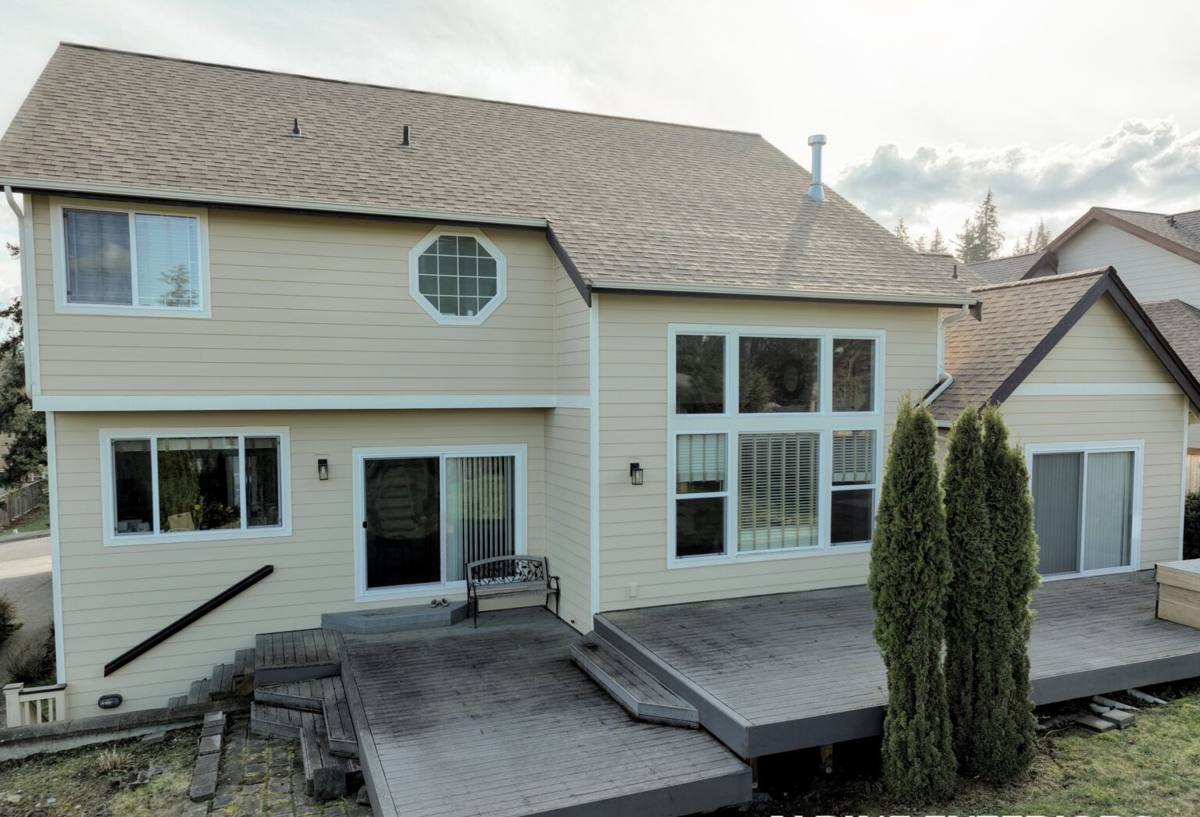
What Acme's Terrain and Weather Do to a Deck
Across Whatcom County — from salt air near the coast to the shaded river-valley lots around Acme — driving rain and a long moss season are the real test of any outdoor structure. A few conditions specific to this area matter most for deck longevity:
- Tree cover and shade. Wooded lots dry out slower after rain. Decking boards and framing members that sit in filtered shade all day stay damp longer than the same materials on an open, sunny lot.
- Ground moisture. River-valley soil holds more moisture through the wet months, which affects how deep and how solid footings need to be, and how much airflow the space under the deck needs.
- Moss and organic debris. Falling needles, leaves, and pollen collect in gaps between boards and around posts. Left alone, that debris holds moisture against the wood and gives moss a place to root.
- Extended wet season. Western Washington's rainy stretch from fall through spring means wood and hardware are exposed to moisture for a much longer share of the year than in drier climates.
None of this means a deck can't be built to last in Acme — it means the details have to be right from the start, because retrofitting a poorly built deck is far more expensive than building it correctly the first time.
What a Correctly Built Deck Involves
Footings and Framing
Everything starts below the surface. Footings need to be sized and set to the depth required for the soil and frost conditions on the specific lot, with concrete piers that keep post bases off wet ground. Framing lumber should be rated for ground contact or exterior exposure where it's close to soil or moisture, and joists need consistent spacing so the decking surface doesn't flex or bounce over time. We also build in airflow underneath the deck — a low, boxed-in understructure with no ventilation is one of the most common reasons framing rots from the inside out in a wet climate.
Ledger Board and Flashing
Where a deck attaches to the house, the ledger board and its flashing are the single most important detail on the entire project. Water that gets behind an improperly flashed ledger board doesn't just damage the deck — it can rot the house's rim joist and sheathing behind the siding, which turns a deck problem into a structural repair. Proper flashing sheds water away from the house at every layer, and it's not a step that should ever be shortcut.
Fasteners and Hardware
In a climate this wet, hardware quality is not optional. Structural connectors, screws, and joist hangers should be corrosion-resistant — stainless steel or a coating rated for exterior and ground-contact use — because standard fasteners will corrode, streak the decking, and lose holding strength well before the wood itself fails. This matters everywhere in Whatcom County, but it's especially important on shaded, slow-to-dry lots where hardware stays damp longer between rain events.
Choosing Decking Material for This Climate
There's no single "best" decking material — the right choice depends on budget, how much upkeep a homeowner wants to do, and how much shade the deck will sit in. Here's an honest comparison of the main options we work with:
| Material | Upfront Cost | Moisture & Moss Resistance | Maintenance | Typical Lifespan |
|---|---|---|---|---|
| Pressure-treated wood | Lowest | Fair — needs sealing to perform well | Annual cleaning and periodic sealing | 15–20 years with upkeep |
| Cedar | Mid-range | Good natural resistance, but surface still needs care | Regular cleaning and refinishing | 15–25 years with upkeep |
| Composite / capped composite | Highest | Best — resists moisture absorption and moss rooting | Periodic washing, no sealing or staining | 25+ years, varies by warranty |
In a shaded, wet setting like Acme, composite decking tends to hold up with the least ongoing effort, since moss and mildew have a harder time gripping a capped composite surface than they do bare or sealed wood grain. That said, plenty of homeowners prefer the look and feel of real wood and are willing to keep up with maintenance — that's a legitimate choice too, as long as the upkeep actually happens. Our role is to lay out the honest trade-offs for your specific lot and budget, not to push one product.
Our Deck Building Process
- Site visit and design. We walk the lot, look at drainage, sun and shade exposure, and how the deck will connect to the house, then talk through layout, size, and material options.
- Permitting. We handle the permit application and drawings required for the project, sized and detailed to meet current building code.
- Site prep and footings. Footings are dug and set to the required depth, with inspections scheduled at the appropriate stage before framing continues.
- Framing. Ledger attachment, flashing, joists, and structural hardware go in first, built to carry the load and shed water correctly.
- Decking, railing, and stairs. Surface material, railings, and any stairs are installed to the design, with attention to board spacing for drainage and airflow.
- Final walkthrough and inspection. We review the finished deck with you, cover basic care for the material you chose, and make sure any required final inspection is complete.
Permits and Whatcom County Code Considerations
Most decks above a certain height or attached to the house require a building permit in Whatcom County, and inspections happen at set points — typically after footings are dug and again once framing is complete. Code also governs things like guardrail height and baluster spacing on raised decks, stair rise and run, and how far a deck can sit from a property line. Skipping permits might save time upfront, but it creates real problems at resale, with insurance claims, and if the work doesn't hold up — an unpermitted deck can end up costing far more to fix or remove than it would have cost to build correctly and permitted from the start.
Moss, Mildew, and Long-Term Deck Maintenance
Whatever material you choose, a deck in a shaded, wet lot needs some routine attention to stay safe and look good. A short seasonal checklist:
- Sweep debris out of gaps between boards regularly, especially in fall when leaves and needles come down.
- Rinse or wash the surface a couple of times a year to remove the film that lets moss and algae take hold.
- Check for soft or spongy spots in wood decking, railings, and stair treads — a sign moisture has gotten into the wood.
- Look underneath the deck occasionally for standing water, blocked drainage, or signs of rot on framing members.
- Reseal or restain wood decking on the schedule the product calls for — don't wait until it's visibly gray and worn.
- Tighten or replace any hardware showing rust streaks or corrosion before it becomes a structural issue.
Catching small problems early — a loose board, a rusting connector, a patch of moss that's starting to hold moisture — is far cheaper than replacing rotted framing later.
Why a Crew That Already Works Acme Matters
Deck building isn't just carpentry — it's building something that has to perform outdoors, year-round, in a specific climate. A crew that regularly works lots around Acme already understands how shade and ground moisture behave here, what footing depths and drainage details actually hold up through a Whatcom County winter, and where moss tends to establish itself first. That local familiarity shows up in decisions a homeowner might never think to ask about — how the framing is ventilated, which hardware grade is worth the extra cost, how the deck is laid out relative to the sun. It's the difference between a deck that needs attention every year and one that quietly does its job for decades.
If you're planning a new deck or replacing one that's showing its age, we're glad to come take a look and talk through what makes sense for your property. Reach out for a free, no-pressure estimate using the form below.