 Sudden Valley Siding
 Building on Yew Street: Windows You Only Get to Install Once
When you're building new on Yew Street, the windows go in as part of the shell, and that's the whole advantage of new construction over a retrofit. But it also means there's no second pass. Whatcom County's marine air, driving rain, and long moss season don't wait for the house to be finished before they start working on the building envelope. A new-construction window is either flashed and tied into the weather barrier correctly the first time, or it becomes a slow leak that shows up in a wall cavity a winter or two later, well after the siding and trim are closed up.
We work new-construction lots around Sudden Valley regularly, and Yew Street is one of the areas we know the terrain, the typical lot orientation, and the local building department's expectations for. That familiarity matters more on window installs than almost any other exterior trade, because window flashing is inspected once and then buried forever.
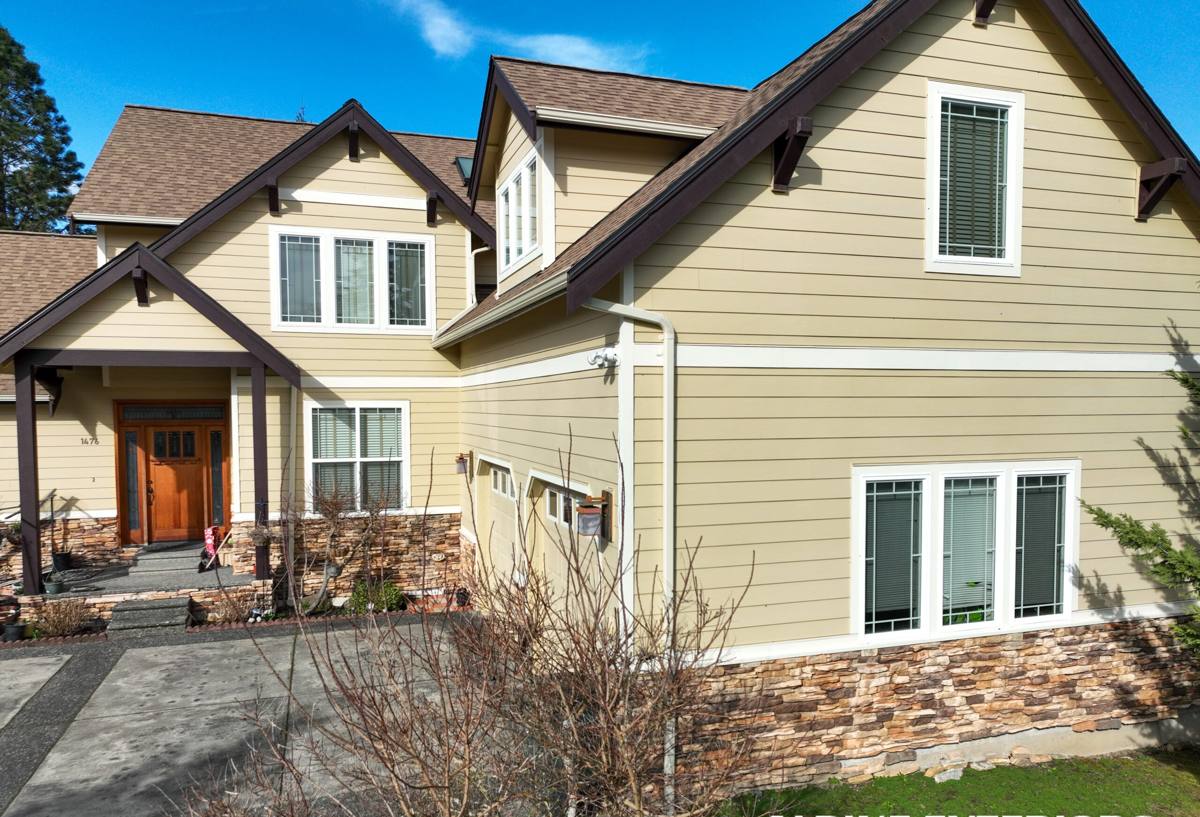
New-Construction Windows Are a Different Product Than Replacement Windows
These are two different jobs, not the same window installed two different ways. A replacement window is built to drop into an existing rough opening, usually without disturbing the surrounding siding or weather barrier. A new-construction window comes with a nailing fin (also called a nailing flange) that fastens flat to the sheathing and gets integrated into the weather-resistive barrier and flashing system before any siding goes on.
On a new build, that's a real advantage. Done correctly, the window becomes one continuous part of the drainage plane instead of a patch inserted into one later. Done carelessly — fin not fully nailed, flashing lapped in the wrong order, sill pan skipped — it becomes the single most common source of moisture intrusion in an otherwise brand-new home. There's no do-over once the siding is on, so this stage gets our full attention.
Why the sequence matters more than the window itself
Homeowners often focus on brand and glass package, and those matter, but the sequence in which flashing tape, WRB, and the window itself get layered is what actually determines whether water goes down and out or sideways into the wall. We follow shingle-lap order strictly: sill pan first, window set into it, jamb flashing next, then head flashing lapped over the WRB above the window — never the reverse.
What Sudden Valley's Climate Asks of a New Window Install
Sudden Valley sits on Lake Whatcom, and homes here take on more than typical Pacific Northwest rain. Marine air moving inland off Bellingham Bay and the Sound carries salt-laden moisture across Whatcom County, and over years it settles into frame corners, sealant joints, and exposed fastener heads. Layer in driving rain that comes in sideways during winter storms, and a long moss season where shaded or north-facing walls stay damp for months at a time, and you get a climate that punishes shortcuts in window flashing and sealant work faster than a drier region would.
For a new-construction window on a Yew Street lot, that translates into three practical requirements:
- Frame material that resists corrosion and doesn't swell with repeated wet-dry cycling through the fall and winter
- Glass and spacer systems that manage condensation rather than trapping moisture at the sightline, since fogged or sweating glass is often a sign of a failing seal, not just humidity
- Flashing details built for volume, not just presence of water — sill pans that actually drain, not just deflect
Choosing Frame Material for a Lake Whatcom Build
There's no single "best" window material for every new build — it depends on budget, exposure, and how much upkeep the homeowner wants to take on. Here's how the common options compare for a Yew Street lot's conditions:
| Frame Material | Performance in Local Conditions | Maintenance |
|---|---|---|
| Vinyl | Good moisture and corrosion resistance; performs consistently in wet, salt-influenced air | Low — occasional cleaning, no painting |
| Fiberglass | Excellent dimensional stability in wet-dry cycling; holds up well to driving rain exposure | Low to moderate |
| Wood-clad (aluminum or vinyl exterior) | Strong appearance option; performance depends entirely on the exterior cladding and joint sealing quality | Moderate — interior wood still needs periodic attention |
| Aluminum | Durable but more prone to condensation and thermal transfer without a thermal break; can corrode faster in salt-laden marine air over time | Low, but condensation management is a real concern |
For most new builds we see in this area, vinyl and fiberglass cover the range from value-focused to higher-end without the long-term corrosion or condensation trade-offs that come with uninsulated aluminum frames in a marine climate. We'll walk through the actual options and trade-offs for your specific plans rather than push one material across the board.
Installation Details That Determine Whether a Window Leaks in Year One or Year Ten
The window unit itself is rarely where a new-construction leak starts. It's almost always a flashing or sequencing detail. The items below are where we spend the most care, because they're also the details that are hardest to inspect or fix once siding is installed:
Sill pan flashing
A sloped or pre-formed sill pan under the window gives any water that gets past the glazing or frame a way out, instead of a place to sit against the sheathing. This is one of the most commonly skipped steps on production builds, and one of the most consequential.
Weather-resistive barrier integration
The WRB has to be cut, taped, and lapped around the opening in the correct order relative to the window's nailing fin — house wrap over the top flange, under the side and bottom flanges — so that water draining down the wall face is directed over the window, not behind it.
Nailing schedule and fastener spacing
Manufacturers specify fastener spacing and type for a reason: it affects both structural performance and warranty coverage. We follow the window manufacturer's installation instructions to the letter, not a generalized "close enough" pattern, because warranty claims get denied over exactly this kind of deviation.
Sealant joints
Backer rod and the right sealant, applied at the right joints (not everywhere), lets the window move with temperature changes without cracking the seal. Over-sealing a window so it can't move is almost as common a mistake as under-sealing it.
Our New-Construction Window Process on Yew Street
New-construction window work usually means coordinating with a builder or general contractor's schedule, not just the homeowner. Here's how that typically runs:
- Plan review and product selection — we look at the window schedule from the plans, confirm sizes and configurations, and go over material and glass options against budget and exposure
- Rough opening verification — before install day, we confirm openings are square, plumb, and sized correctly, so nothing gets forced into place
- Sill pan and flashing installation — the sequencing work described above, done before the window ever gets set
- Window setting and fastening — leveled, shimmed, and fastened to the manufacturer's schedule
- WRB and flashing tape integration — tying the window into the building's water management system so it hands off cleanly to the siding crew
- Interior and exterior sealant — final air- and water-sealing at the joints that need it
- Walkthrough with the builder — confirming operation, egress clearances where required, and that the opening is ready for siding to close in around it
What New-Construction Windows Cost on a Yew Street Build
Costs vary by house size, number of openings, and window style, but the factors below are what actually move the number on a new build:
| Cost Factor | How It Affects Price |
|---|---|
| Frame material | Vinyl is typically the most budget-friendly; fiberglass and wood-clad run higher |
| Window size and configuration | Large picture windows, sliders, and custom shapes cost more than standard operable sizes |
| Glass package | Upgraded low-E coatings or triple-pane glass add cost but improve comfort and condensation resistance |
| Number of openings | Per-unit pricing typically drops somewhat with larger total order counts on a full new build |
| Flashing and site conditions | Openings with more complex trim details or unusual wall assemblies take more labor time to flash correctly |
We'll give you a real number for your specific plan set rather than a vague range that doesn't reflect your actual window schedule.
A Checklist Before Windows Go In on Your Build
Whether you're the homeowner or coordinating with your general contractor, these are worth confirming before window installation starts:
- Rough openings match the window schedule dimensions, with allowance for shimming
- WRB is installed and ready to be integrated, not just stapled up loosely
- Sill pan flashing is part of the written installation plan, not assumed
- Fastener type and spacing match the manufacturer's published instructions
- Sealant and backer rod materials are compatible with the window frame material
- Someone has confirmed local permit and inspection timing so flashing isn't covered before it's signed off
- Egress requirements are checked for any bedroom-level openings
Why a Crew That Already Works Yew Street Matters
New-construction window flashing gets inspected once, then buried under siding for the life of the house. A crew that's worked other lots in and around Sudden Valley has already seen how this area's exposure — the marine air, the driving rain angle off the lake, the moss that takes hold on shaded elevations — plays out over the first few winters on a new build, not just on install day. That's the difference between a crew that follows a generic install checklist and one that knows which details in this specific climate are worth the extra ten minutes.
We're not guessing at how Whatcom County weather treats a new home's windows. We're accounting for it at every flashing lap and sealant joint, because a callback on a buried flashing detail is a much bigger job than getting it right the first time.
If you've got a new build going up on Yew Street or elsewhere in Sudden Valley, we're happy to walk your plan set and give you a straight, no-pressure estimate on the window package and installation. Use the form below to get started.