 Sudden Valley Siding
 Why Cordata Homes Wear Out the Way They Do
Cordata sits close enough to Bellingham Bay that salt-laden air is a constant factor, even on days when you can't smell it. Add Whatcom County's long, wet winters and the driving rain that comes off the Sound in the fall and spring storm cycles, and you've got a climate that never really lets exterior materials dry out completely. Siding here isn't just holding back weather a few times a year — it's managing near-constant moisture exposure for eight or nine months straight.
That combination is hard on the wrong materials. Wood-based products absorb water at seams and cut edges and stay damp longer than they should. Vinyl flexes and gaps as temperatures swing, opening tiny paths for wind-driven rain to get behind it. And almost everything in this area eventually deals with moss and algae growth, because shaded north- and west-facing walls in Cordata's tree-lined lots rarely get enough direct sun to dry quickly after a storm.
None of this means Cordata homes are doomed to constant siding problems. It means the material and the installation details matter more here than they would in a drier climate, and that's the lens we bring to every replacement job in the neighborhood.
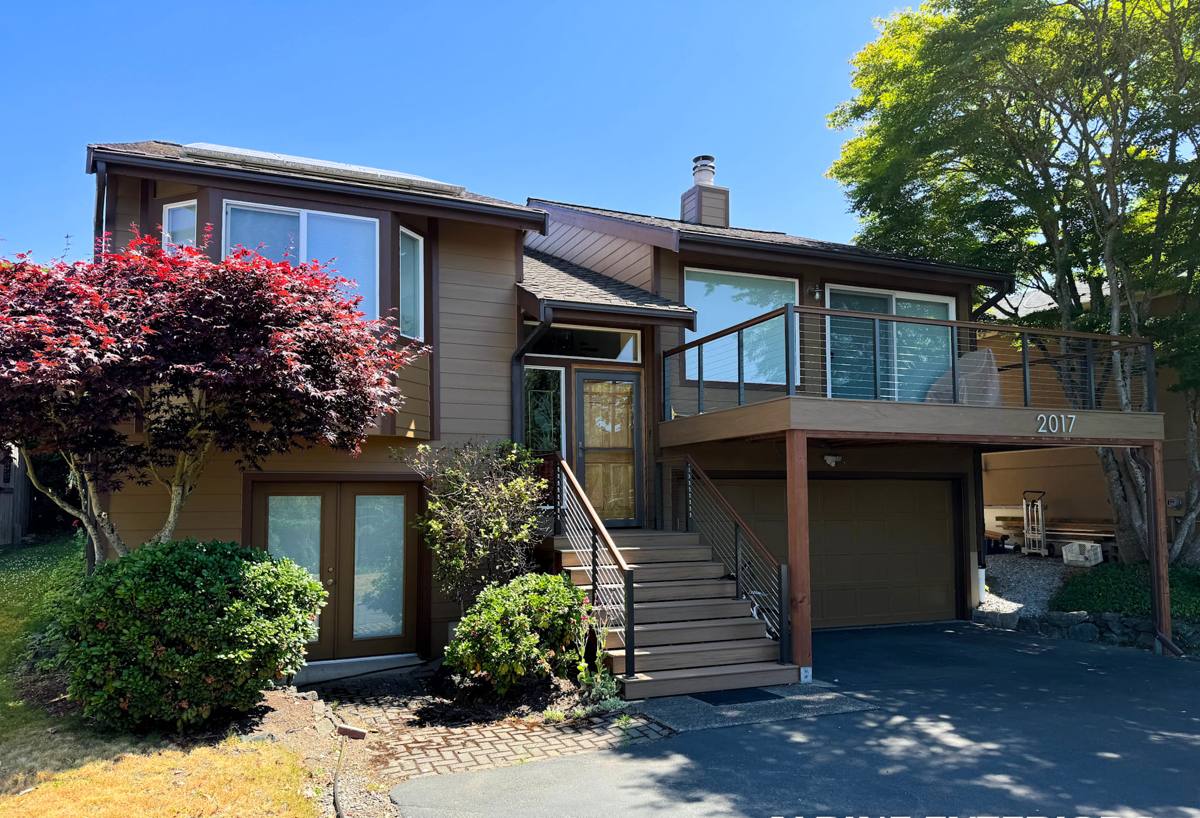
Signs a Cordata Home Is Due for Siding Replacement
Most siding failure in this area is gradual, which is why homeowners often miss the early signals. Here's what we look for, and what you can check yourself before calling anyone out.
- Soft or spongy spots when you press on the siding, especially near the bottom courses and around window trim
- Persistent moss or dark green-black staining that comes right back within weeks of cleaning
- Paint that's bubbling, peeling, or won't hold a fresh coat for more than a season or two
- Visible warping, cupping, or gaps opening up between boards or panels
- Interior drywall or trim near exterior walls that stays damp, stains, or smells musty after heavy rain
- Siding that's more than 20-25 years old and made of wood composite, hardboard, or original builder-grade vinyl
If you're seeing two or more of these, it's worth having someone look at the wall assembly, not just the surface. Surface staining is often the least of it — what's happening behind the siding is usually the real story.
What's Usually Hiding Behind Failing Siding
When we pull old siding off a Cordata home, we're checking the weather-resistive barrier, the flashing at windows and doors, and the condition of the sheathing underneath. In a climate this wet, siding that's been failing for even a couple of years can let enough moisture through to soften sheathing or start rot at framing members. Catching this during a planned siding replacement is far cheaper than discovering it later as a structural repair.
What a Correct Siding Replacement Actually Involves
Siding replacement isn't just removing old boards and nailing up new ones. Done right, it's a full reset of the wall's water management system. Here's what that means in practice:
- Full tear-off and inspection — removing existing siding and trim down to the sheathing so nothing hidden gets sealed over
- Sheathing repair — replacing any soft, delaminated, or rotted panels before anything new goes back up
- New weather-resistive barrier — a properly lapped and sealed house wrap that sheds water downward and out, not one that traps it
- Correct flashing at every penetration — windows, doors, hose bibs, light fixtures, and anywhere else something breaks the plane of the wall
- Rainscreen or ventilation gap where called for — a small air gap behind the siding lets any moisture that does get in dry out instead of sitting against the wall
- Manufacturer-spec installation — correct fastener type and placement, proper clearances at grade and roof lines, and factory-specified gaps and caulking
Skip any one of these steps and you can end up with siding that looks fine for a few years but fails from the inside out — which is exactly the pattern we see most often on older Cordata homes that got a quick re-side without addressing what was underneath.
Material Comparison for a Marine Climate Like Cordata's
We install James Hardie fiber cement siding exclusively, and the reasoning comes down to how different materials actually perform in exactly this kind of weather — not brand preference. Here's an honest look at how common options compare:
| Material | Moisture Behavior | Moss/Algae Resistance | Typical Lifespan Here |
|---|---|---|---|
| James Hardie fiber cement | Doesn't absorb or swell like wood; engineered for wet climates | Factory finish resists staining better than porous surfaces | 30+ years with proper install |
| Vinyl | Doesn't rot, but panels flex and gap, letting water track behind | Moderate; seams and J-channels collect moss and grime | 15-25 years, often less at seams |
| LP SmartSide / OSB-based | Wood-based core; vulnerable at cut edges and fastener holes | Prone to moss and algae if drying is slow | Highly install-dependent |
| Cedar / primed spruce | Natural material; absorbs and releases moisture constantly | Needs regular refinishing to resist growth | Shorter without diligent maintenance |
Every one of these products has a place somewhere. But for a neighborhood dealing with salt air, sustained rain, and shaded lots that hold moisture, we've found fiber cement to be the one that consistently holds up without asking the homeowner to fight the climate every season.
Why We Standardized on James Hardie
James Hardie's HZ5 product line is engineered specifically for climates like ours — freeze-thaw cycles, sustained moisture, and coastal exposure. The ColorPlus factory finish is baked on under controlled conditions, which holds color and resists fading and peeling far better than field-applied paint on porous materials. It's non-combustible, it doesn't provide a food source for moss the way wood-based products can, and Hardie backs it with a transferable warranty that matters if you ever sell the home. We don't install LP SmartSide, vinyl, Cemplank, Allura, or wood siding — not because those products can't work anywhere, but because we've made a professional call about what performs best, longest, with the least maintenance burden, in this specific climate.
Our Process for a Cordata Siding Replacement
We keep the process straightforward and give you full visibility into what's happening at each stage:
- On-site assessment — we walk the exterior, check problem areas, and look at trim, flashing, and drainage details, not just the siding surface
- Written scope and estimate — a clear breakdown of what's being replaced, what Hardie product and profile fits the home, and what it costs, with no vague allowances
- Tear-off and sheathing check — old material comes off, sheathing gets inspected and repaired as needed before anything is sealed back up
- Weather barrier and flashing — installed to manufacturer spec, with extra attention to window and door details given how much wind-driven rain this area sees
- Hardie installation — fastened, gapped, and finished to factory specifications so the warranty stays intact
- Final walkthrough — we go over the completed work with you before calling the job done
Timelines vary with home size and weather windows, but we plan around Whatcom County's rain patterns rather than fighting them, which keeps the tear-off phase as short as possible and limits how long your walls are exposed.
Why a Crew That Already Works Cordata Matters
Cordata's mix of home ages and construction styles means no two siding jobs look the same. A crew that regularly works this neighborhood has already seen how the local moisture patterns play out on different wall orientations, which trim details tend to fail first, and where builder-grade shortcuts commonly show up on homes of a certain era. That familiarity shows up in fewer surprises once tear-off starts and a more accurate estimate before work begins.
It also means we're not learning Whatcom County's permitting and inspection expectations on your project. Local experience shortens the distance between "estimate" and "correctly finished job," which matters most on a project where the whole point is not having to do it again in ten years.
What Drives Cost on a Cordata Siding Job
| Factor | Why It Matters |
|---|---|
| Home size and wall complexity | More corners, gables, and trim details mean more labor and material cuts |
| Sheathing condition | Rot or moisture damage found during tear-off adds repair scope |
| Hardie product and profile | Lap siding, panel systems, and trim boards vary in material cost |
| Access and site conditions | Steep grades, mature landscaping, or tight lot lines affect labor time |
| Existing moisture barrier | Full replacement of house wrap and flashing versus reuse where sound |
We won't quote a number without seeing the home, but we'll always explain what's driving the estimate so you know exactly what you're paying for.
If your Cordata home is showing signs of siding failure, or you're just planning ahead before the next wet season, we're happy to take a look. The estimate is free, there's no pressure, and you'll walk away with a clear, honest picture of what your home actually needs — just fill out the form below to get started.