 Sudden Valley Siding
 Happy Valley's Climate Is Hard on a Roof
Homes around Happy Valley sit in one of the wetter, greener corners of Whatcom County, and that's exactly what makes an asphalt shingle roof either a great long-term investment or a recurring headache. The combination of moist air off the Sound, near-constant driving rain through the fall and winter, and heavy tree cover creates conditions that most shingle manufacturers design for but that most installation crews don't fully respect. Salt-laden air corrodes exposed metal faster than it would inland. Wind-driven rain finds its way under poorly lapped shingles and loose flashing. And shade from mature trees keeps roof surfaces damp long after a storm passes, which is exactly what moss and algae need to take hold.
None of this means asphalt shingles are the wrong choice here — they're still the most practical, cost-effective option for the vast majority of homes in this area. It means the installation details that get skipped on an easier job in a drier climate can't be skipped here. A roof that's "close enough" somewhere else will show its weak points on a Happy Valley home within a few wet seasons.
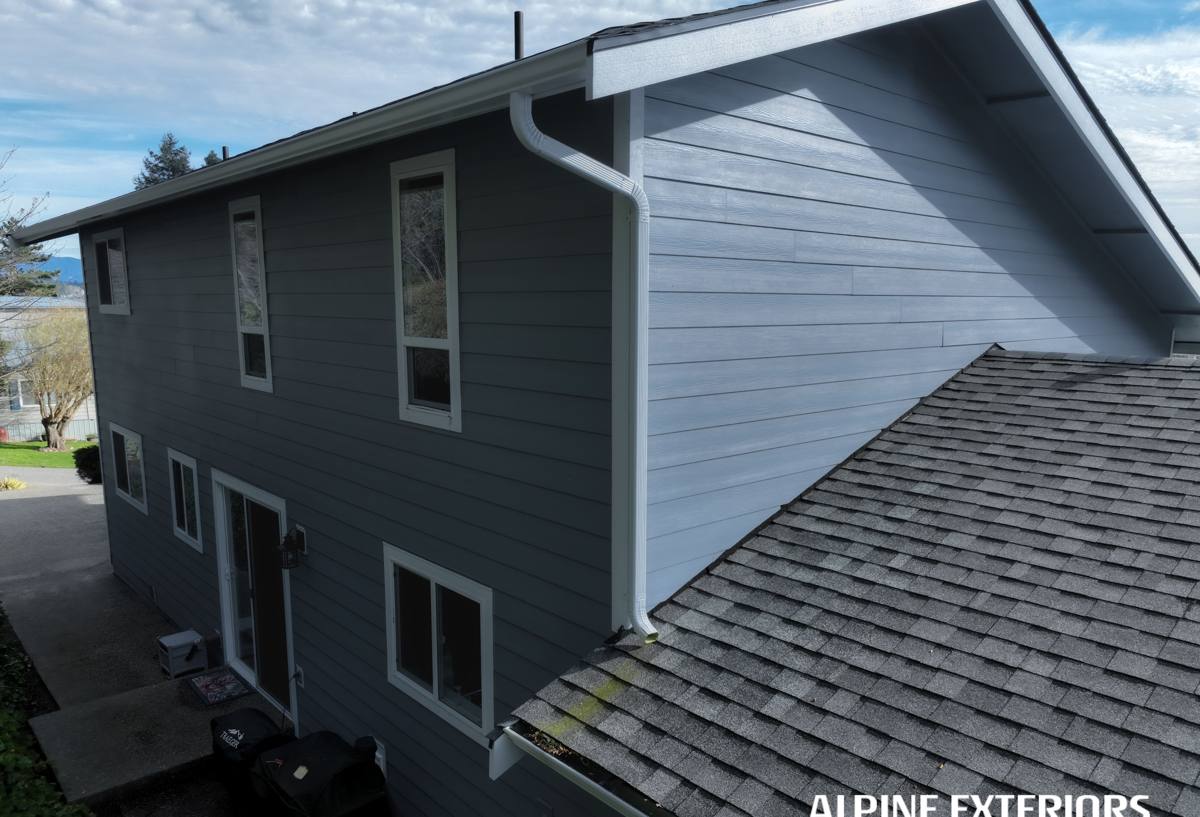
What a Correct Installation Actually Includes
A shingle roof is a system, not just a layer of shingles nailed to plywood. In this climate, every layer of that system matters more than it would in a milder one.
- Ice-and-water shield at eaves, valleys, and around penetrations — the areas where wind-driven rain is most likely to work its way backward under standard underlayment.
- Synthetic underlayment across the full deck, which holds up to prolonged moisture exposure far better than older felt products, especially during the stretch between tear-off and dry-in on a rainy install day.
- Correct nailing — six nails per shingle in higher-exposure areas, placed in the manufacturer's nailing zone, not just "close enough." Under-driven or over-driven nails are one of the most common causes of early shingle failure we find on inspections.
- Balanced ventilation — intake at the soffits and exhaust at the ridge, sized to actually move air. Without it, moisture from inside the house condenses against the underside of the deck, which rots sheathing from below where nobody sees it until it's serious.
- Properly formed flashing at every valley, chimney, skylight, and wall intersection, using metal that's rated to hold up against salt air rather than flashing that looks fine on day one and rusts through in a few winters.
Why This Matters More Here Than Elsewhere
Every one of these details is "best practice" everywhere. The difference in a place like Happy Valley is that mistakes get found faster. A slightly short ice-and-water run at the eave might never leak in a dry climate; here, three wet seasons of driving rain will usually find it.
Choosing the Right Shingle for This Microclimate
Not every asphalt shingle product is built the same way, and the right choice depends on how much shade your roof gets, how exposed it is to wind off the water, and how long you plan to stay in the house.
| Shingle Type | Best For | Trade-Offs in This Climate |
|---|---|---|
| 3-tab (economy) | Budget-conscious re-roofs, simple rooflines | Lower wind rating and shorter lifespan; shows moss and staining faster under tree shade |
| Architectural / laminate | Most homes in the area | Thicker, better wind resistance, longer warranty; the standard we recommend for most Happy Valley roofs |
| Algae-resistant (copper-granule) | Heavily shaded roofs, north-facing slopes | Higher upfront cost, but meaningfully slows the black-streak algae staining that's common under tree cover here |
| Impact-rated (Class 4) | Homes wanting hail/debris resistance | Premium cost; sometimes qualifies for insurance discounts, worth asking your carrier before deciding |
For most Happy Valley homes, a mid-to-upper-tier architectural shingle with algae-resistant granules is the sweet spot — it costs more than a basic 3-tab up front but holds its appearance and performance far longer under the moss and mildew pressure this area puts on a roof.
Our Process, Start to Finish
- On-site inspection and measurement. We walk the roof (or use a ladder/lift where pitch or access requires it), check the attic for ventilation and moisture signs, and measure for an accurate material takeoff.
- Written scope and material selection. You get a clear, itemized proposal — shingle line, underlayment type, flashing plan, and ventilation work — before anything is scheduled.
- Tear-off and deck inspection. Old roofing comes off down to the deck so we can actually see the plywood or planking underneath, not guess at its condition from below.
- Deck repair where needed. Soft, delaminated, or rotted sheathing gets replaced — this is called out and priced separately if it wasn't visible until tear-off.
- Underlayment, flashing, and ice-and-water installation. This is the part of the job that determines whether the roof stays dry in a driving rain, and it's the part most likely to get rushed by crews unfamiliar with this climate.
- Shingle installation to manufacturer nailing and exposure specs, with attention to valleys, hips, and any complex intersections.
- Ventilation check and correction so intake and exhaust are balanced, not just present.
- Cleanup and walk-through, including a magnetic sweep for nails and a final look at gutters, downspouts, and grounds.
Signs Your Roof Needs Attention
Most roof problems in this area don't start as leaks — they start as small, visible warning signs weeks or months before water actually gets inside. Homeowners in Happy Valley should watch for:
- Dark streaking or green-black patches on north-facing or heavily shaded slopes (algae and moss, not just dirt)
- Granules collecting in gutters or at downspout outlets
- Curling, cupping, or lifted shingle edges, especially on slopes that catch the prevailing wind and rain
- Rust staining below flashing points, particularly around chimneys and skylights
- Soft or spongy spots underfoot when walking the roof for inspection
- Musty smell or visible moisture staining in the attic, which often shows up before any ceiling stain does
Any one of these on its own isn't an emergency, but they're worth a look before the next wet season rather than after.
What Drives the Cost
Every roof is priced individually, but the same handful of factors move the number up or down on nearly every job we quote in this area.
| Factor | Why It Matters |
|---|---|
| Roof size and pitch | Steeper roofs take longer and often require additional safety equipment and labor |
| Number of existing layers | Tear-off of multiple old layers adds disposal cost and labor time |
| Deck condition | Rotted or delaminated sheathing found at tear-off adds repair cost not visible in the original quote |
| Shingle tier | Economy 3-tab, standard architectural, and algae-resistant or impact-rated products carry different material costs |
| Ventilation upgrades | Adding or correcting intake/exhaust venting adds modest cost but pays off in roof lifespan |
| Access and site conditions | Trees, steep driveways, or limited staging area can add time to tear-off and material delivery |
Given all that, costs vary widely from home to home — a small, simple, single-layer re-roof will run far less than a large, steep roof with multiple tear-off layers and deck repair. We'd rather walk your roof and give you real numbers than throw out a figure that doesn't reflect what your house actually needs.
Maintenance That Actually Extends Roof Life Here
A correctly installed roof in this climate still needs some upkeep, mostly aimed at the moss and moisture problems that shaded, damp roofs deal with every year.
- Zinc or copper strips near the ridge use rainwater to carry moss-inhibiting minerals down the slope, which meaningfully slows regrowth on shaded roofs.
- Gutter clearing before the wet season starts and again mid-winter, since clogged gutters back water up under the shingle edge.
- Soft washing (never pressure washing) to remove existing moss and algae without stripping granules or damaging the shingle mat.
- Attic checks once a year to confirm ventilation is still doing its job and insulation hasn't shifted or gotten wet.
- Post-storm flashing checks after any unusually heavy wind event, since driving rain and gusts are what typically expose a flashing problem first.
Why Hiring a Crew That Already Works This Area Matters
Roofing technique doesn't change from town to town, but judgment does. A crew that works Whatcom County roofs regularly knows how long a torn-off roof can sit exposed before an incoming system off the water turns a one-day job into a scramble, how to sequence work around the wettest months, and which flashing metals actually hold up against salt air over the long run instead of just looking good at handoff. That local knowledge shows up in fewer callbacks and a roof that performs the way it's supposed to through its second and third wet season, not just its first.
If you're weighing a repair against a full re-roof, or just want an honest read on where your current roof stands, we're happy to take a look. Reach out for a free, no-pressure estimate — someone will walk the roof, answer your questions plainly, and give you a real number based on your home, not a guess.