 Sudden Valley Siding
 Deck Replacement Built for Barkley's Weather, Not Just Its Looks
A deck in Barkley doesn't fail the way a deck fails in a dry climate. Out here, the problems start underneath and work their way up — a soaked ledger board, a post base that's been sitting in standing water, joists that look fine on top but are soft where no one checks. Driving rain finds every gap in flashing. Salt-tinged air off the water speeds up corrosion on fasteners and hardware that would last decades somewhere drier. And the long moss season doesn't just make boards slippery — it holds moisture against the wood long after a storm has passed, which is exactly what rot needs to get started.
We replace decks throughout Sudden Valley and the surrounding Whatcom County area, and Barkley homes tend to show the same pattern: a deck that looked serviceable from a distance but had real structural problems once we pulled the boards. Replacement done right here isn't about picking new lumber and calling it done — it's about building something that's actually designed to shed water, resist moss, and hold up to a wet climate for the long haul.
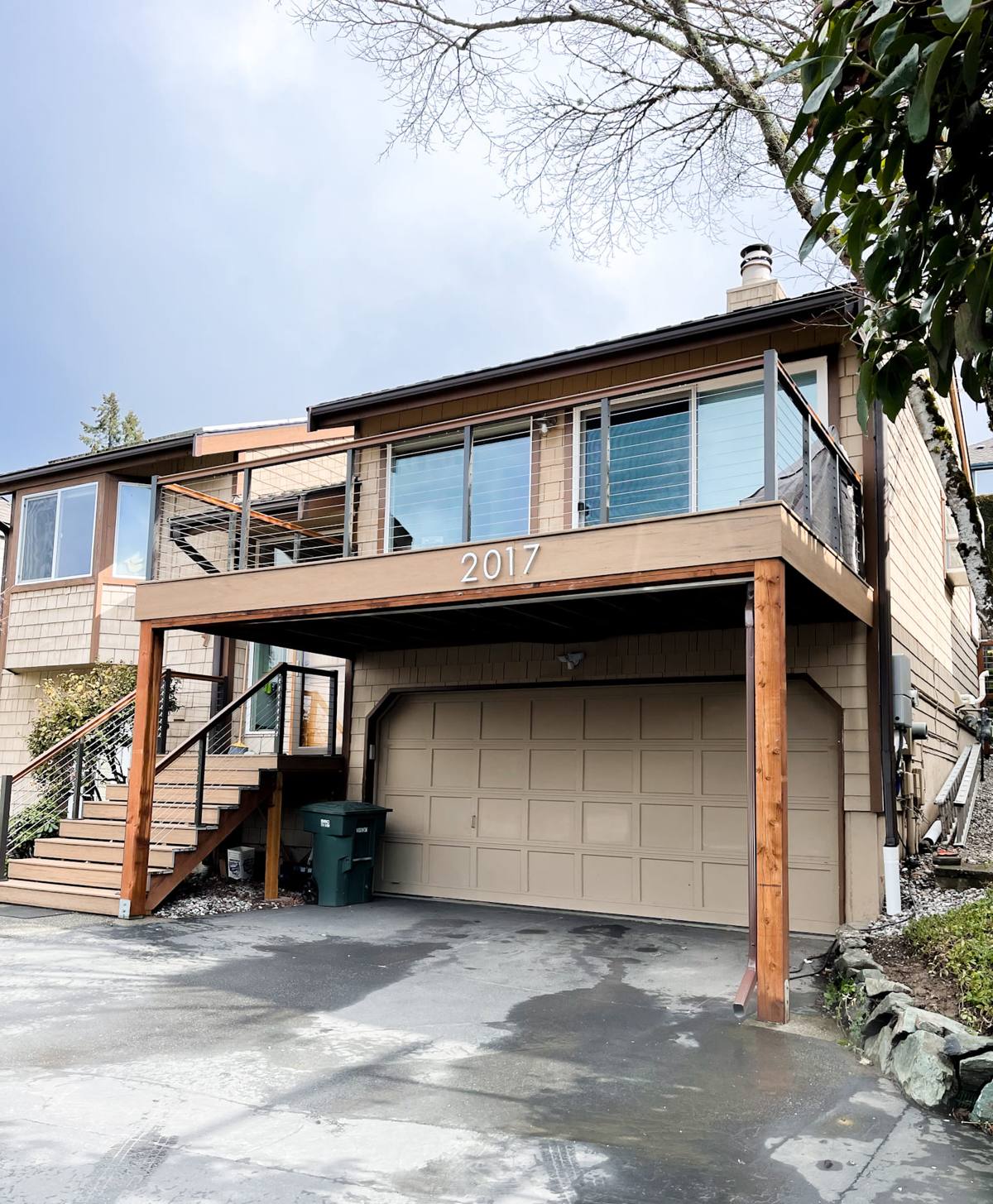
Signs a Barkley Deck Needs Replacement, Not a Patch
Not every tired-looking deck needs a full rebuild. But there's a point where repairing boards one at a time stops making sense — either because the structure underneath is compromised, or because you're spending repair money every year on a deck that's still going to fail. Here's what tells us it's time to replace rather than patch:
- Soft or spongy spots in the decking, especially near the house or along the rim joist
- Visible rot, dark staining, or fungal growth on the framing underneath, not just the surface boards
- A ledger board that's pulling away from the house, or flashing that's missing, cracked, or was never installed correctly
- Posts or footings that shift, wobble, or sit in ground that stays wet well after rain
- Rusted or corroded fasteners, especially older nails instead of proper structural screws
- A railing that flexes or feels loose under hand pressure — a code and safety issue, not cosmetic
- Persistent moss or algae that regrows within weeks of cleaning, which usually means poor drainage or airflow underneath
If you're only seeing one or two of these, repair might genuinely be the honest answer — we'll tell you that on-site rather than push a rebuild you don't need. But when the framing is compromised, patching the surface just delays the real cost and adds risk in the meantime.
What a Correct Deck Replacement Actually Involves
Full Tear-Out and Structural Inspection
We don't build new decking on top of framing we haven't inspected. A proper replacement starts with removing the old decking and railings so we can actually see the ledger, joists, beams, and posts. This is where a lot of hidden problems in Barkley decks show up — moisture damage that never reached the surface boards but has been quietly weakening the frame for years.
Ledger Board and Flashing
The ledger — the board that attaches the deck to your house — is the single most important connection on the whole structure, and it's also the most common place we find water damage. Correct flashing directs rain away from the house band board instead of letting it pool at the connection. In a climate with as much driving rain as this one, flashing isn't optional trim work; it's what keeps water out of your wall framing, not just your deck.
Footings and Posts
Whatcom County's wetter, denser soils mean footings need to be set correctly and posts need real separation from ground contact — post bases that lift the wood off wet soil, not just posts buried straight into it. We check depth, drainage around the footing, and whether existing footings even meet current code before deciding to reuse them.
Joist Protection and Fasteners
We use joist tape or an equivalent moisture barrier on top of the framing before decking goes down, which keeps water from sitting directly on the wood at every screw point — one of the most common early failure spots on any deck in a wet region. Fasteners matter too: corrosion-resistant, code-rated hardware, not standard nails that will rust and stain within a couple of wet seasons.
Railings and Code Compliance
Guardrail height, baluster spacing, and stair rise-and-run all have to meet current building code, not just match what was there before. If your existing deck was built to older standards, replacement is the point where we bring it up to what's actually required now.
Choosing Decking Material for This Climate
There's no single "best" decking material — there's the right one for your budget, your maintenance appetite, and how much moss and moisture exposure the site gets. Here's how the common options actually compare in a climate like this one:
| Material | Upfront Cost | Moisture & Moss Resistance | Maintenance | Typical Lifespan |
|---|---|---|---|---|
| Pressure-treated lumber | Lowest | Good if sealed regularly; moss grows on it readily if neglected | Annual cleaning and periodic sealing/staining | 15–20 years |
| Cedar | Mid-range | Naturally rot-resistant but still needs upkeep in constant wet weather | Regular sealing to preserve color and resist moisture | 15–25 years |
| Composite decking | Highest | Excellent — doesn't absorb water or feed rot the way wood does | Occasional washing; no sealing or staining | 25–30+ years |
We'll walk through these trade-offs honestly based on your budget and how much maintenance you actually want to keep up with. Composite costs more up front, but in a moss-heavy, rain-heavy climate, it saves a lot of the recurring work that wood decking demands. Wood costs less initially but only holds up if the sealing schedule actually gets kept — something that's easy to fall behind on.
How Our Deck Replacement Process Works
- On-site assessment — We inspect the existing deck, including getting underneath it and checking the ledger connection, before recommending replacement over repair.
- Honest estimate and material walkthrough — We go over decking, railing, and framing material options with real cost and maintenance trade-offs, no upsell pressure.
- Permitting — Deck replacements typically require a permit; we handle the paperwork so the job is inspected and legal, not a liability at resale.
- Tear-out and disposal — Old decking, railings, and any compromised framing are removed and hauled off.
- Structural rebuild — Ledger, flashing, footings, posts, and joists are corrected or replaced to current code, not just re-covered.
- Decking, railing, and finish work — Installation using corrosion-resistant fasteners and proper spacing for drainage and airflow underneath.
- Final walkthrough — We go over the finished deck with you and explain what maintenance, if any, it needs going forward.
Permits and Local Considerations
Deck replacement in Whatcom County generally requires a building permit, especially when the structure is attached to the house or elevated above a certain height — and if you're in an HOA-governed community, there may be additional review on materials or appearance before work starts. We handle the permit process as part of the job rather than leaving it on the homeowner, and we're familiar with the kind of documentation local jurisdictions expect for deck work specifically, which keeps the project from stalling mid-build.
Why It Matters That We Already Work in Barkley
A deck built by someone unfamiliar with this area often looks fine the first dry summer and starts showing problems by the second wet winter — flashing that wasn't sized for how hard the rain actually comes in, footings that weren't set with this soil in mind, decking that wasn't chosen with the moss season in mind. Working regularly in Sudden Valley and Barkley means we've already seen how decks here actually age, not just how they're built on paper. That shows up in small decisions — where we add extra flashing, how we handle drainage under the deck, which fasteners we won't use — that add years to how long the replacement actually lasts.
It also means faster response if something needs a look after the work is done. We're not driving in from out of the area for a warranty check; we're already working in the neighborhood.
Living With Your New Deck Through the Wet Season
Even a well-built deck benefits from a little seasonal attention. Clearing leaves and debris out of gaps between boards keeps moisture from sitting trapped against the wood or composite. A yearly rinse — plain water and a stiff brush, or a low-pressure wash — keeps moss from getting a foothold before it becomes a slip hazard. If you went with wood, staying ahead of the sealing schedule is what actually determines whether it hits the long end or short end of its lifespan. Composite owners have it easier, but even composite benefits from keeping the gaps between boards clear so water underneath can actually drain and dry.
If you're weighing whether your current deck needs replacing or could hold on with repairs, we're happy to take a look and give you a straight answer either way. Reach out for a free, no-pressure estimate using the form below.