 Sudden Valley Siding
 Building a Deck That Lasts in Columbia's Climate
A deck is one of the few home improvements that gets used almost every day it isn't actively raining — and in Whatcom County, that's more days than people from drier climates would guess. But a deck is also one of the most exposed structures on a property. It sits outside, unprotected by roof overhangs, taking on rain, standing moisture, and constant freeze-thaw cycling through the wet months. For homeowners in the Columbia area near Sudden Valley, that exposure is compounded by salt air drifting in off the water, driving rain that doesn't just fall but blows sideways into ledger boards and railings, and a moss season that can stretch from late fall well into spring. A deck built without those conditions in mind will look fine for a year or two and then start showing problems that are expensive to fix after the fact. A deck built correctly for this climate from day one avoids most of that.
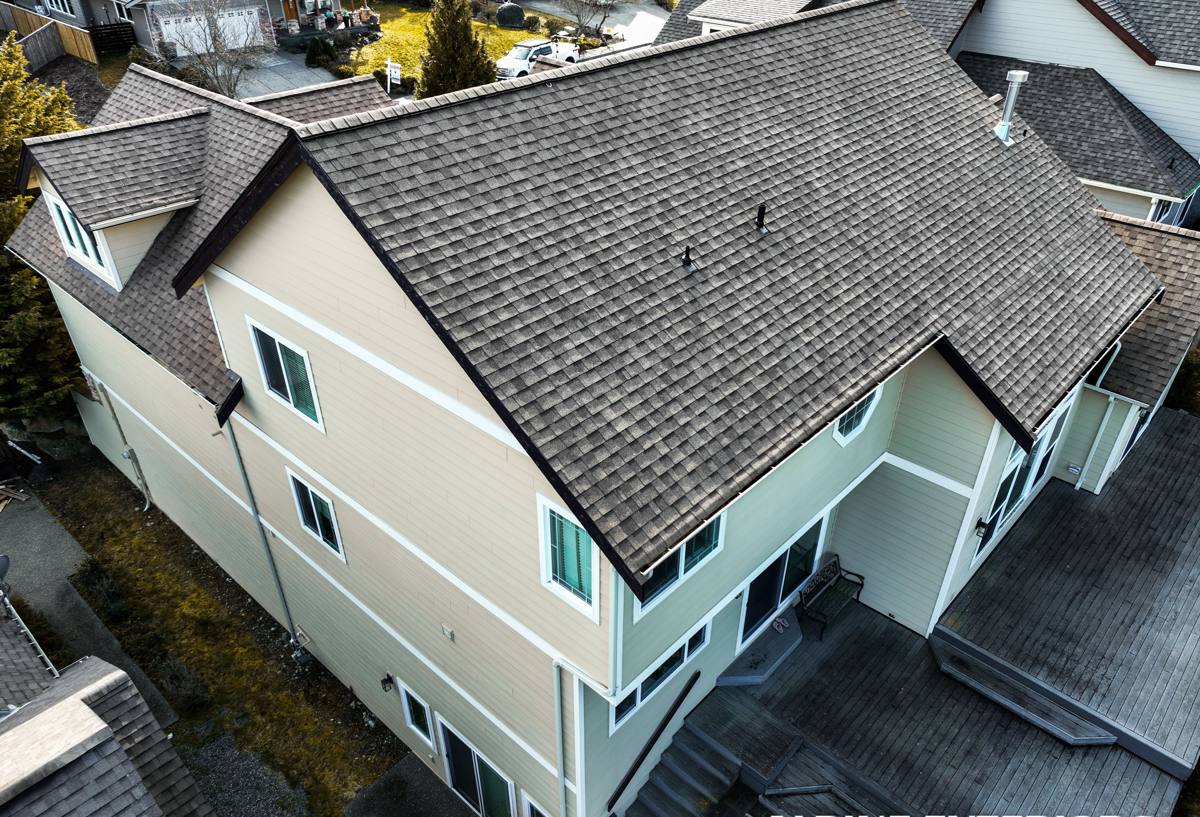
What This Climate Demands From a Deck
Moisture That Doesn't Let Up
Whatcom County's rainy season isn't just about total rainfall — it's about duration. Wood and fasteners that stay damp for weeks at a time behave very differently than the same materials in a climate with quick dry-outs between storms. Any spot on a deck where water can collect, wick into end grain, or sit against unprotected metal is a spot that will fail early.
A Long Moss Season
Shaded decks, north-facing decks, and decks under tree cover all grow moss and algae here, sometimes for most of the year. Beyond looking bad, a mossy deck surface holds moisture against the boards and turns into a slip hazard the moment it rains — which in this region is often.
Salt Air and Corrosion
Homes closer to the water pick up salt-laden air that accelerates corrosion on anything metal — fasteners, brackets, railing hardware. Standard hardware-store fasteners that would be fine in an inland, dry climate can start rusting and staining decking within a couple of seasons out here.
Where Decks Actually Fail: Framing and Structure
Most deck failures aren't dramatic collapses — they're slow rot that starts hidden and works its way outward. The places we see it most often:
- Ledger boards attached to the house without proper flashing, letting water track behind the siding and into the rim joist
- Joists and beams without any protective tape or coating, so every fastener hole becomes a place for water to enter end grain
- Footings poured too shallow or without proper drainage, allowing frost heave and soil movement to rack the frame over time
- Undersized beams or joist spans that flex under load, which loosens fasteners and opens gaps for water intrusion
None of this is visible once the decking boards go down, which is exactly why it gets skipped by crews trying to save time. A deck's frame is the part that has to be right the first time, because fixing it later usually means tearing up the surface you already paid for.
Choosing the Right Decking Material for Columbia Homes
There's no single "best" decking material — there's a best fit for the deck's exposure, the homeowner's maintenance appetite, and budget. Here's how the common options actually perform in this climate:
| Material | Moisture Behavior | Moss/Algae Resistance | Maintenance |
|---|---|---|---|
| Pressure-treated wood | Good if sealed regularly; end grain and cut edges need attention | Low — needs periodic cleaning/treatment | Annual cleaning and re-sealing recommended |
| Cedar | Naturally rot-resistant but still needs sealing in this rainfall | Moderate — still grows moss in shaded spots | Sealing every 1-2 years to hold color and resist moisture |
| Capped composite | Excellent — cap layer sheds water, doesn't absorb like wood | Higher, but still needs occasional washing | Wash as needed, no sealing or staining |
| PVC decking | Best moisture resistance of the common options | Highest — smooth surface sheds moss buildup more easily | Lowest — occasional cleaning only |
Wood costs less up front and can look excellent, but it asks for ongoing attention — sealing, cleaning, and watching cut ends for the first signs of rot. Composite and PVC cost more initially but hold up with far less upkeep in a climate that gives wood little chance to dry out between storms. We're honest with every homeowner about that trade-off rather than pushing whichever product has the best margin — it's your deck and your maintenance schedule, so the material should match how much time you actually want to spend on it.
Fasteners, Flashing, and Hardware — the Details That Matter
This is where a lot of the difference between a deck that lasts fifteen years and one that needs rebuilding in seven actually lives. It's not glamorous, but it's the part that matters most in a wet, salt-influenced climate.
- Ledger flashing installed correctly against the house's water-resistive barrier, not just caulked over — caulk fails, proper flashing doesn't rely on it
- Joist tape over every top edge and cut end, sealing out water at the exact points fasteners will penetrate
- Stainless steel or high-grade coated fasteners and structural hardware, sized for the corrosion this climate produces over time
- Hidden fastener systems where appropriate, which reduce the number of surface penetrations that can trap water on composite and PVC boards
Cutting corners on hardware is invisible on installation day and expensive three or four years later, once rust stains bleed through the decking or a bracket fails under load.
Permits, Code, and Why It's Not Optional
Whatcom County requires permits for most new decks and significant deck rebuilds, and inspections check the things that actually matter for safety — footing depth, guardrail height, stair rise and run, and structural connections. Skipping the permit process doesn't just risk a fine; it means nobody with code expertise ever verified the framing decisions that determine whether the deck is actually safe to stand on. If your property in the Columbia area is part of a homeowners' association or community with its own design guidelines, that's an added layer worth checking before materials get ordered — approvals take time, and it's far easier to confirm requirements up front than to redo work after the fact.
Our Deck-Building Process
We keep the process straightforward because deck projects don't need to be complicated to be done right:
- On-site assessment — we look at the site's drainage, sun/shade exposure, existing structure if there's a deck to replace, and how the space will actually be used
- Design and material selection — sizing, layout, and an honest conversation about material trade-offs for your specific spot and budget
- Permitting — we handle the paperwork and coordinate inspections so you're not chasing that down yourself
- Construction — proper footings, flashing, joist protection, and fastening from the framing up, not just a good-looking surface
- Final walkthrough — going over the finished deck together, including what maintenance (if any) the material you chose will need
Maintaining a Deck Through Whatcom County's Wet Season
Even a well-built deck needs some seasonal attention in this climate — how much depends on the material you chose. A short checklist we give homeowners going into fall and again in spring:
- Clear leaves and debris from between boards and around posts so water doesn't pool
- Check for moss buildup, especially on shaded or north-facing sections, and clean it before it gets slick
- Look at fastener heads and visible hardware for early rust or staining
- Inspect where the deck meets the house for any gaps, soft spots, or staining that could mean water is getting behind the ledger flashing
- Reseal wood decking on the schedule appropriate to the product — don't wait until it's visibly gray and dry
- Confirm gutters and downspouts near the deck are directing water away, not onto the structure
Why Hire a Crew That Already Works in Columbia
A contractor who works this area regularly already knows how sun exposure, tree cover, and drainage vary from one lot to the next around Sudden Valley, and builds accordingly instead of applying a one-size-fits-all approach. That local familiarity extends to permitting — knowing what the county inspectors actually check and building to pass the first time, not the third. It also means we're not disappearing after the invoice clears. If a question comes up two years down the road about maintaining the material you chose, you're calling a crew that's still working nearby, not searching for whoever happened to be cheapest that one season.
If you're planning a new deck or need to replace one that's showing its age, we're glad to come take a look and put together a straightforward, no-pressure estimate — just fill out the form below.