 Sudden Valley Siding
 Board & Batten in Barkley: A Style That Has to Earn Its Keep
Board and batten has always been popular around Sudden Valley — the vertical lines suit the wooded, cabin-and-lake-house character of homes in and around Barkley, and it dresses up gable ends, entries, and accent walls without looking fussy. But board and batten is also one of the least forgiving siding styles to get wrong. The seams between boards are covered, not lapped, which means the system lives or dies on what's underneath the visible battens. In a climate like Whatcom County's — driving rain off the water, long stretches of damp shade under the trees, and a moss season that can run most of the year — a board and batten job that looks right on install day but wasn't built for the moisture load will show problems within a few winters.
This page is specifically about board and batten in Barkley, not board and batten in general. The style doesn't change much from neighborhood to neighborhood, but what the local climate demands from the materials and the installation detail underneath it absolutely does.
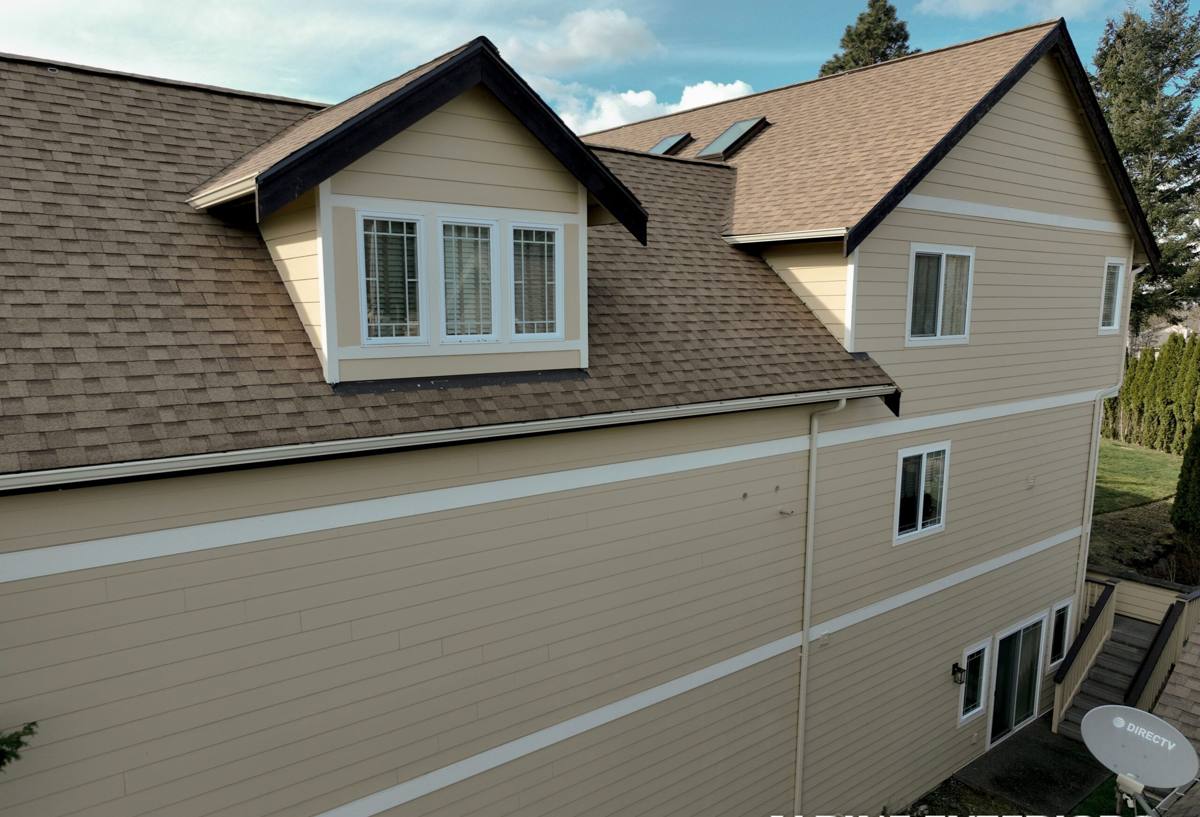
What Barkley's Climate Actually Does to Vertical Siding
A few things about this area matter more for board and batten than for a standard horizontal lap job:
Moisture that lingers, not just moisture that falls
Whatcom County gets a lot of rain, but the bigger issue for siding longevity is often how slowly things dry out. Homes tucked among trees around Sudden Valley get less direct sun and wind exposure than an open lot, so wood, seams, and fastener heads stay damp longer after a storm. Vertical board and batten has more seam length per square foot than lap siding, and every one of those seams is a place moisture can sit if it isn't detailed correctly.
Moss and algae
A long moss season isn't just a roof problem. Shaded, north-facing walls and anything close to overhanging trees will grow moss and algae on siding that stays damp — and moss holds moisture against the surface far longer than bare siding would on its own. Board and batten's vertical battens can create small ledges and shadow lines where organic growth gets a foothold if the material and finish weren't chosen with that in mind.
Salt-laden, corrosive air
Whatcom County's proximity to the Sound means homes throughout the region deal with moisture-laden, salt-influenced air that accelerates corrosion of anything metal on the exterior — fasteners, flashing, trim screws. On a board and batten wall, the battens themselves are typically face-nailed or blind-nailed at intervals, so there are more exposed or semi-exposed fastener points than on a lapped wall. The wrong fastener spec here shows up as rust streaks bleeding down the face of the siding, usually well before the siding itself has any real problem.
What a Correct Board & Batten Installation Actually Involves
Board and batten looks simple from the street — vertical boards, narrower strips covering the joints — but the parts nobody sees are what determine whether it holds up in this climate.
- A proper drainage plane behind the siding. A weather-resistant barrier (house wrap or building paper) installed shingle-style so water sheds outward, not into the wall.
- A rainscreen gap where conditions call for it. On shaded, moisture-prone walls — common around Sudden Valley's tree cover — a furred-out air gap behind the siding lets water that does get past the surface actually dry out instead of sitting against the sheathing.
- Correct fastener spec. Stainless steel or hot-dip galvanized fasteners sized and spaced to the manufacturer's instructions, not general-purpose nails that will corrode faster in this air.
- Flashing at every horizontal transition. Window and door heads, roof-to-wall intersections, and any horizontal trim need flashing that directs water out and away, not into the seam it's supposed to protect.
- Batten spacing and fastening that lets the wall move. Boards and battens need to be attached in a way that accommodates seasonal expansion and contraction without splitting the material or pulling fasteners loose over time.
- Sealed, back-primed cut ends. Every field cut is a raw edge exposed to moisture; if it isn't sealed on all six sides, that's where rot or swelling starts first — even on materials rated for wet climates.
Skip any one of these and the siding can still look correct for a year or two. The failures that show up later — soft spots at the base of battens, staining bleeding from fastener heads, boards cupping or separating from the wall — almost always trace back to one of these details being rushed or skipped.
Why We Only Install James Hardie for Board & Batten
Board and batten can be built from several different materials, and the material choice matters more here than on most siding styles because of how much seam and fastener exposure the style has. We install James Hardie fiber cement exclusively, including for board and batten profiles, and we don't install vinyl, LP SmartSide, cedar, or primed spruce as alternatives. That's not a marketing position — it's a standard we hold because of what we've seen these materials do over time in exactly this kind of climate.
Cedar
Real cedar board and batten looks great on day one and can look great for years if an owner keeps up with refinishing — but that's the catch. In a climate with this much sustained moisture and moss pressure, cedar needs regular re-staining or re-sealing to keep water out, and any lapse in that maintenance shows up as cupping, splitting, or rot at the battens faster than most owners expect.
Engineered wood (LP SmartSide and similar)
Engineered wood siding is treated to resist moisture better than raw wood, but it's still a wood-based product, and wood-based products swell, and swelling at cut ends and seams is exactly where board and batten is most exposed. In a wall system with this many seams, we've found the moisture sensitivity to be a real long-term liability, not a theoretical one.
Vinyl
Vinyl board and batten is lightweight and inexpensive, but it's also thin, it expands and contracts noticeably with temperature swings, and it can warp or bow over time — especially on south-facing walls with direct sun exposure. It also doesn't hold paint, so the color you install is the color you're stuck with as it fades.
James Hardie fiber cement
Hardie's fiber cement doesn't rot, doesn't attract wood-boring insects, and won't swell or delaminate from moisture the way wood-based products can. It's non-combustible, which matters for wildfire-adjacent insurance considerations even in a wet climate. Hardie's ColorPlus factory finish is baked on and warrantied against fading and peeling, which matters a lot on a style like board and batten where touch-up painting around battens and trim is tedious to do well. And Hardie's HZ5 product line is engineered specifically for climates with heavy moisture exposure — which is exactly what board and batten needs here.
| Material | Moisture/Moss Resistance | Maintenance Burden | Fastener Corrosion Risk | Typical Longevity |
|---|---|---|---|---|
| James Hardie fiber cement | High — doesn't rot or swell | Low — factory finish, no refinishing cycle | Low, with correct fastener spec | Multiple decades, backed by transferable warranty |
| Cedar | Moderate — depends entirely on upkeep | High — regular re-staining/sealing required | Moderate | Shorter if maintenance lapses |
| Engineered wood | Moderate — better than raw wood, still swells at exposed edges | Moderate | Moderate | Shorter in sustained wet exposure |
| Vinyl | Low resistance to warping/bowing over time | Low, but no refinishing option once faded | Low (plastic, not wood) | Variable, cosmetic failure common before structural |
Does Hardie Actually Make "Board and Batten," or Is It Built On-Site?
This is a fair question and worth answering directly. James Hardie's board and batten look is typically achieved one of two ways: a vertical HardiePanel installed with HardieTrim battens fastened over the panel seams, or a dedicated batten-profile board product depending on the look and reveal an owner wants. Either approach gives you a true fiber cement wall system underneath — the visible style is a finish detail, but the moisture management, drainage plane, and fastening we described above are what actually determine how it performs on a Barkley home over time.
Our Process for a Board & Batten Project in Barkley
We approach every board and batten job the same methodical way, adjusted for the specific exposure of the wall in question:
- Site assessment. We look at sun exposure, tree cover, roof overhangs, and existing moisture or moss patterns on the current siding before recommending anything.
- Substrate check. Existing sheathing gets inspected for hidden rot or water damage before new siding goes over it — covering up an existing problem is worse than not fixing it at all.
- Drainage plane and rainscreen decision. Based on the wall's actual exposure, we determine whether a furred rainscreen gap is warranted, particularly on shaded or north-facing elevations.
- Installation to Hardie's fastening and flashing specifications. Correct fastener type, correct spacing, correct flashing at every transition — no shortcuts that only show up as problems two winters later.
- Final walkthrough. We check seams, caulking lines, and batten fastening before calling the job finished, not just from the ground but up close.
Signs Existing Board & Batten Siding Needs Attention
If you already have board and batten on your home in or around Barkley, a periodic look at these can catch problems early:
- Dark staining or streaking running down from fastener heads or the tops of battens
- Soft or spongy spots near the base of boards, especially close to grade
- Battens that have separated or lifted away from the boards underneath
- Persistent moss or algae growth that doesn't clear up between rains
- Paint that's peeling or bubbling rather than just fading evenly
- Visible gaps at seams where caulking has cracked or pulled away
Why It Matters That We Already Work in Sudden Valley
A lot of what separates a board and batten job that lasts from one that doesn't isn't the material — it's whether the crew installing it actually understands the exposure a given wall will face. A crew that works Sudden Valley and Barkley regularly already knows which elevations tend to hold moss, which walls need the extra rainscreen detail, and what fastener corrosion actually looks like a few years after a rushed install in this climate. That local pattern recognition is hard to substitute with a generic install crew coming from outside the area, no matter how good the material is.
If you're considering board and batten siding for a home in Barkley or elsewhere around Sudden Valley, we're happy to take a look and talk through what your specific walls need — no pressure, no obligation. Use the form below to request a free estimate.