 Sudden Valley Siding
 Siding Replacement Built for the Columbia Area
Homes in the Columbia area sit inside one of the more demanding climate pockets in Whatcom County. Between salt-laden air moving in off the water, long stretches of driving rain through fall and winter, and a moss season that can run half the year on shaded north and west walls, exterior siding here works harder than it does almost anywhere else in the region. A siding replacement project in Columbia isn't just about swapping old material for new — it's about choosing a system and an installation method that can actually stand up to what this specific location throws at it, year after year.
This page walks through what local homes need from a siding replacement, what a correct job actually involves, and why the crew doing the work matters as much as the material itself.
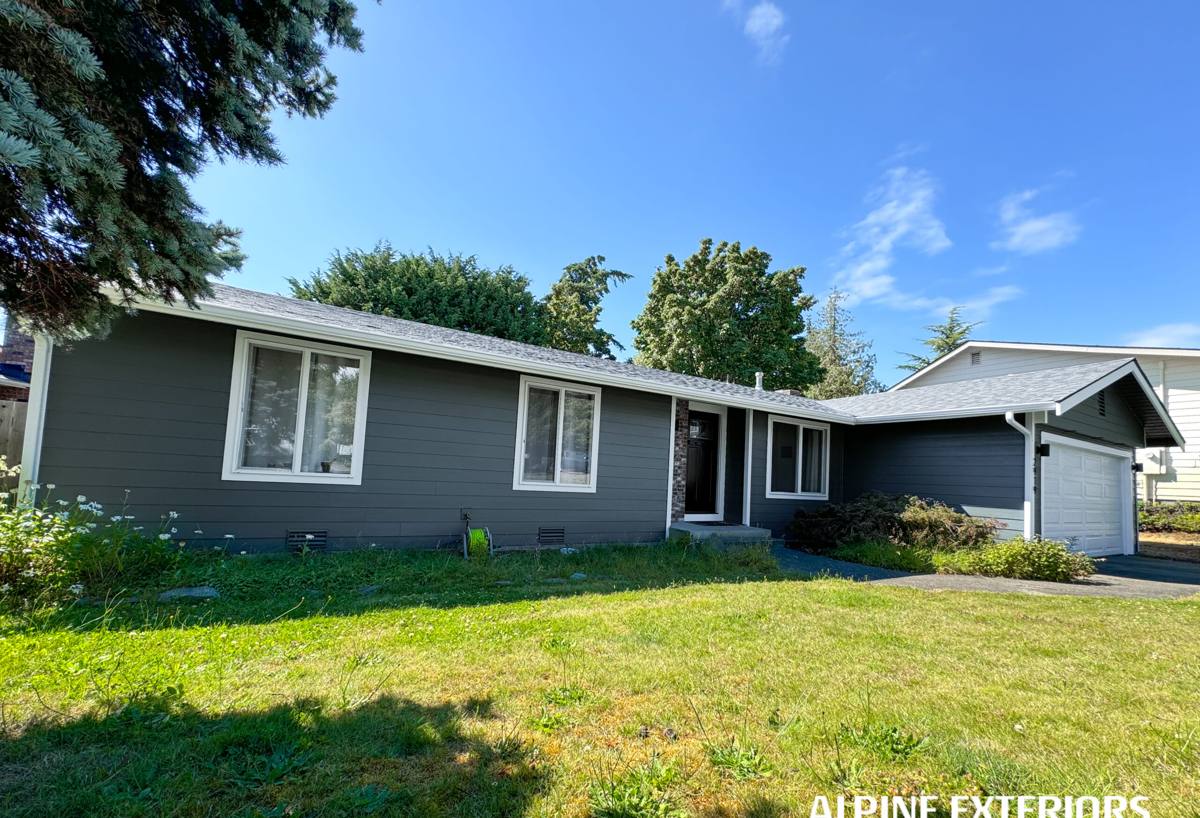
What Whatcom County's Climate Does to Siding Over Time
Every siding material fails eventually. The question is how, and how fast. In the Columbia area, three climate factors do most of the damage:
Salt Air
Airborne salt accelerates corrosion of fasteners, trim flashing, and any exposed metal components. It also breaks down cheaper paint and coating systems faster than inland climates, leading to chalking, fading, and premature repainting.
Driving Rain
Wind-driven rain doesn't just hit siding — it gets pushed sideways and upward, into laps, seams, and butt joints that would stay dry in a calmer climate. Any weakness in the water-resistive barrier, flashing, or panel overlap becomes a moisture entry point over time, not just a cosmetic issue.
Moss Season
Shaded, north- and west-facing walls in this area can stay damp for months at a stretch. Moss and algae take hold on porous or textured surfaces, holding moisture against the substrate and, on the wrong material, feeding rot underneath a surface that still looks intact from the ground.
None of these factors are dramatic on their own. Combined, and applied year after year, they're exactly why siding replacement decisions in Columbia should be made with this specific climate in mind — not a generic national average.
Signs a Columbia Home Needs Replacement, Not Repair
Not every siding problem calls for a full replacement. But there's a point where patching stops making sense and a full tear-off and reinstall is the honest recommendation. Signs worth taking seriously include:
- Soft or spongy spots when you press on the siding, especially near the bottom courses or below windows
- Visible warping, buckling, or panels that have pulled away from the wall
- Persistent moss or dark staining that returns within a season of cleaning
- Paint that's failing across large sections rather than one or two spots
- Interior signs — musty smells, peeling interior trim paint, or damp drywall near exterior walls
- Visible gaps at seams, corners, or trim where caulking has failed repeatedly
If more than one or two of these show up at once, especially combined with the home's age or a siding material known for moisture sensitivity, replacement is usually the more honest answer than another round of caulk and paint.
What a Correct Siding Replacement Job Involves
A siding replacement is not just removing old panels and nailing up new ones. Done right, it's a sequence, and skipping steps is exactly how a brand-new install ends up with the same failures as the old one within a few years.
Full Tear-Off and Inspection
Old siding comes off completely so the sheathing underneath can actually be inspected — not guessed at. Any soft, delaminated, or water-damaged sheathing gets identified and addressed before anything new goes up. This step is where problems that caused the original failure get found, or missed.
Water-Resistive Barrier
A new, continuous weather-resistive barrier goes over the sheathing, lapped correctly from the bottom up so water sheds outward rather than working its way behind the barrier at every horizontal seam.
Flashing at Every Penetration
Windows, doors, hose bibs, vents, and any other wall penetration get properly flashed and integrated with the water-resistive barrier. In a driving-rain climate, flashing details are where most long-term leaks actually originate — far more often than the field of the siding itself.
Correct Fastening and Clearances
Fastener type, spacing, and penetration depth matter, especially with fiber cement, where manufacturer specs exist for a reason. Ground clearance and clearance from roof lines, decks, and grade also need to be respected so the bottom edge of the siding isn't sitting in a moisture trap.
Trim, Caulking, and Finish Details
The last details — trim boards, caulking joints, touch-up paint at cut edges — are often rushed on lower-quality installs. They're also usually the first thing to fail. A correct job treats these as part of the water-management system, not decoration.
Why We Install Only James Hardie Fiber Cement
We install James Hardie fiber cement siding exclusively — not vinyl, not LP SmartSide, not cedar, not primed spruce, and not other fiber cement brands. That's a deliberate standard, not a default.
Vinyl is inexpensive and low-maintenance in mild climates, but it can warp or become brittle over time and offers limited protection at seams where driving rain is a factor. Wood products like cedar and primed spruce look good initially but require ongoing maintenance — painting, sealing, moisture monitoring — that's a poor match for a climate with a long moss season and persistent dampness on shaded walls. LP SmartSide and other engineered wood products have improved over the years, but they're still wood-based, meaning moisture management at every seam and cut edge is non-negotiable, and any lapse shows up as swelling or damage down the line.
James Hardie fiber cement is non-combustible, dimensionally stable, and holds its factory-applied ColorPlus finish far longer than field-applied paint on wood or vinyl. Hardie's HZ5 product line is specifically engineered for wetter, more humid climate zones like ours — which matters more here than in most parts of the country.
| Factor | James Hardie Fiber Cement | Vinyl | Wood / Engineered Wood |
|---|---|---|---|
| Moisture resistance | Engineered for wet climates (HZ5) | Moderate; seams are a weak point | Requires ongoing sealing/maintenance |
| Finish durability | Factory ColorPlus finish, long-lasting | Color molded in, can fade/chalk | Field-applied paint, needs repainting |
| Combustibility | Non-combustible | Combustible | Combustible |
| Maintenance | Low — occasional wash | Low, but limited repair options | Higher — painting, sealing, monitoring |
| Warranty | Strong, transferable | Varies by manufacturer | Varies; often coating-only |
We're upfront that this is our professional standard, not a claim that every other product is unusable everywhere. In Columbia's specific combination of salt air, driving rain, and moss season, it's the material we're willing to put our name on.
Our Siding Replacement Process
- Free estimate and inspection — we look at the current siding, sheathing condition (where visible), trouble spots, and get a sense of what tear-off will reveal
- Product and color selection — choosing the right James Hardie profile and ColorPlus finish for the home
- Tear-off and sheathing inspection — old material removed, substrate checked and repaired as needed
- Water-resistive barrier and flashing — installed and integrated at every penetration before any siding goes up
- Siding installation — installed to manufacturer fastening, spacing, and clearance specifications
- Trim, caulking, and final finish — details completed and inspected
- Walkthrough — final review with the homeowner before we consider the job done
Cost Factors for a Columbia Siding Replacement
Every home is different, but the main variables that move the price on a siding replacement project are consistent. We won't quote a number without seeing the home, but here's what typically drives the cost up or down:
| Factor | Why It Matters |
|---|---|
| Sheathing condition | Rot or water damage found during tear-off requires repair before new siding goes on |
| Home size and wall complexity | More corners, gables, and dormers mean more cutting, flashing, and labor |
| Siding profile chosen | Lap width, texture, and trim style affect material cost |
| Story height and access | Two- and three-story walls require more staging and safety setup |
| Existing material removal | Some materials come off faster and cleaner than others |
| Window and trim work included | Flashing repairs or trim replacement add scope beyond the field siding |
Why the Crew Matters as Much as the Material
Fiber cement siding is only as good as its installation. Incorrect fastening, missed flashing details, or wrong clearances can undercut even the best product on the market — and in a climate that pushes rain sideways and grows moss on the shaded side of every wall, those mistakes surface faster here than they would somewhere drier.
A crew that already works in the Columbia and greater Sudden Valley area has seen how local homes actually perform over time — which walls take the worst weather exposure, where moss tends to establish first, and what details matter most for long-term performance in this specific pocket of Whatcom County. That's not something a crew unfamiliar with the area picks up on the first job.
What to Ask Before Hiring
- Do you install to the manufacturer's written fastening and clearance specifications, or your own shortcuts?
- Will you inspect and repair sheathing before installing new siding, not just cover it up?
- How do you flash windows, doors, and penetrations — and can you explain why?
- What warranty applies to both the material and the labor?
- Do you have experience with homes in this specific area and its climate exposure?
Get a Free, No-Pressure Estimate
If your Columbia home's siding is showing signs of wear, moisture damage, or repeated moss growth, it's worth having someone take an honest look before deciding between another round of repairs and a full replacement. We'll walk the exterior, answer your questions directly, and give you a straightforward estimate — no pressure, no upsell. Fill out the form below to get started.