 Sudden Valley Siding
 Composite Decking for Bellingham and Sudden Valley Homes
A deck in this part of Whatcom County lives a harder life than the sales brochures suggest. Between the driving rain off the Sound, the salt-laden air closer to Bellingham Bay, and a moss season that can run from October well into May, an outdoor living space here needs more than a nice-looking board. It needs a system underneath it that manages water, resists organic growth, and holds up to freeze-thaw swings without cupping, splitting, or feeding mold. Composite decking, installed correctly, is one of the few products that can do all of that with a reasonable maintenance load — but "installed correctly" is doing a lot of work in that sentence, and it's where most of the problems we get called out to fix actually started.
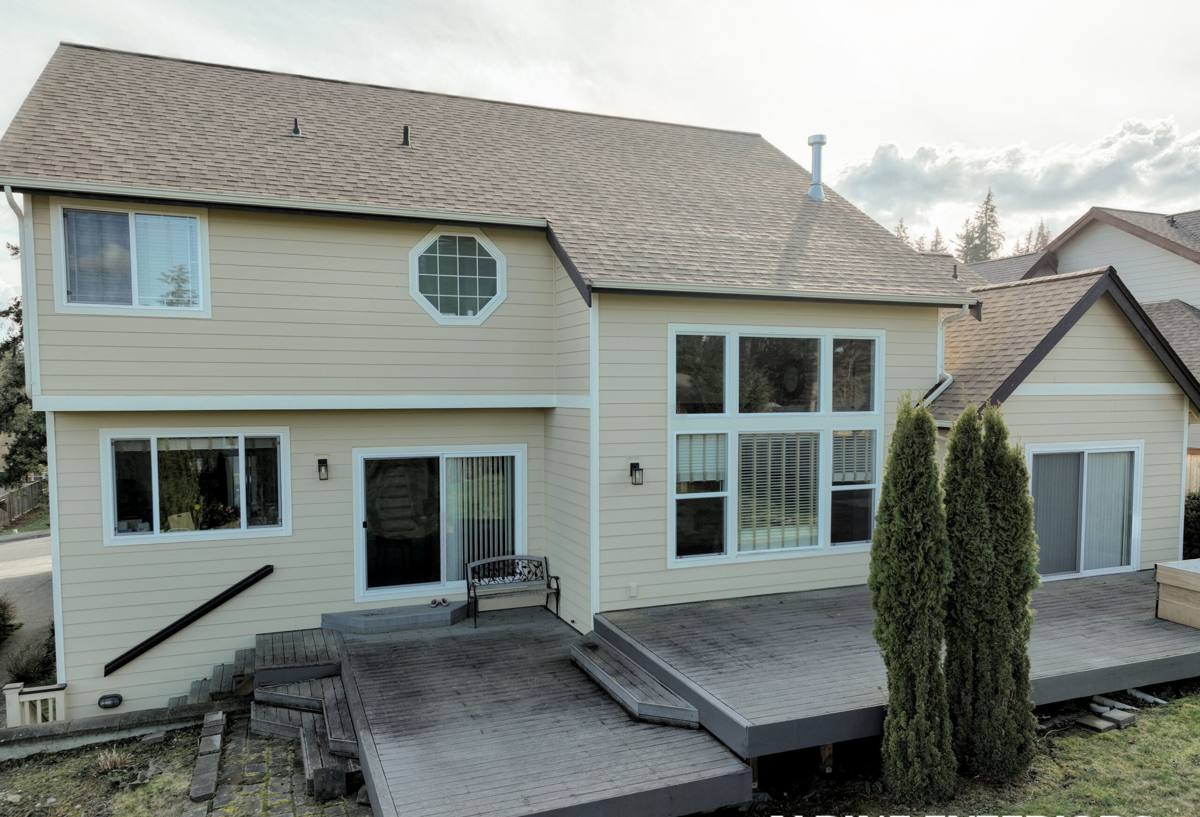
What Our Climate Actually Does to a Deck
Homeowners moving here from drier climates are often surprised by how much damage comes from moisture that never fully dries, rather than from any single storm. A few things stack up specifically in Bellingham and Sudden Valley:
Driving rain and standing moisture
Wind-driven rain doesn't just fall on a deck, it gets pushed sideways into ledger connections, stair stringers, and any spot where boards butt against siding or trim. If flashing and drainage aren't handled at the framing stage, water finds its way into the structure long before it shows up as a visible problem on the surface.
A long moss and algae season
Moss doesn't need much — shade, moisture, and time — and this region hands it all three for most of the year. On uncapped or lower-grade composite boards, moss and algae can take hold in the surface texture, turning a deck slick and dark within a couple of seasons if it isn't cleaned.
Salt air near Bellingham Bay
Properties closer to the water deal with airborne salt that accelerates corrosion on fasteners, brackets, and railing hardware. Stainless or coated fasteners aren't optional upgrades this close to salt air — they're the baseline.
Freeze-thaw cycling
We don't get deep, sustained freezes most winters, but we get enough freeze-thaw swings that trapped moisture in a poorly ventilated substructure can work joints loose and telegraph movement up into the decking boards over a few years.
Composite vs. Other Decking Materials Here
Every decking material has a real trade-off in this climate — the question is which trade-offs you're willing to live with.
| Material | How it handles our moisture/moss | Ongoing maintenance | Typical lifespan here |
|---|---|---|---|
| Pressure-treated wood | Absorbs water, needs sealing to resist moss and rot | Annual cleaning, re-staining/sealing every 2-3 years | 10-15 years before major repair |
| Cedar | Naturally rot-resistant but still needs sealing against constant damp | Regular cleaning and refinishing | 15-20 years with upkeep |
| Uncapped composite | Moisture-resistant core but surface can hold algae/moss without cleaning | Periodic washing, no staining | 20-25 years |
| Capped composite/PVC | Sealed shell resists moisture absorption and staining best | Occasional washing only | 25-30+ years, per manufacturer warranty |
We lean toward capped composite for most Bellingham and Sudden Valley installs specifically because of the moss and rain factors above — the capped shell doesn't give organic growth the same foothold that an open wood-grain surface does, and it doesn't absorb the standing moisture that drives rot in traditional lumber.
What a Correct Composite Deck Installation Involves
Composite boards get most of the attention, but the substructure and detailing underneath are what actually determine whether a deck performs for 25 years or needs surgery in 5.
Framing and ledger attachment
Any ledger board tying into the house needs proper flashing that sheds water away from the wall assembly, not into it. This is the single most common failure point we find on older decks in this area, and it's invisible until siding or framing behind it has already rotted.
Joist spacing and blocking
Composite boards flex differently than wood and most manufacturers require tighter joist spacing, especially on diagonal patterns or stair treads, to prevent bounce and long-term sagging.
Ventilation underneath
Low-clearance decks need enough airflow beneath the joists to let the structure dry out between our rain events. Skirting or landscaping that blocks airflow is a common reason we see moisture-related problems on decks that are otherwise well built.
Fastener selection
Hidden fastener systems rated for coastal or high-moisture exposure, matched to the specific board manufacturer's requirements, protect the warranty and prevent the surface staining that mismatched screws cause over time.
Expansion gaps
Composite material expands and contracts with temperature more than people expect. Gaps at board ends, around posts, and at the perimeter need to follow the manufacturer's spec exactly — too tight and boards buckle; too loose and the deck looks sloppy and traps debris.
Our Process on a Bellingham or Sudden Valley Deck
- On-site assessment of the existing structure (if replacing a deck) or site conditions and drainage (if building new)
- Discussion of board options, colors, and railing systems suited to sun exposure and shade on your specific lot
- Permit handling with the applicable local jurisdiction and, for Sudden Valley properties, coordination with any community association requirements that apply
- Framing and flashing work, inspected before boards go down
- Composite board installation with manufacturer-specified spacing, fasteners, and ventilation
- Railing, stair, and trim finish work
- Final walkthrough covering care and cleaning specific to our moss season
Choosing the Right Board for This Climate
Not every composite product performs the same way under our particular mix of shade, rain, and moss. A few things worth weighing:
- Capped composite over uncapped for any deck that sits under trees or in consistent shade
- Streaked or variegated colors hide pollen, moss shadow, and water spotting better than solid dark colors
- Textured or low-gloss surfaces provide better footing when boards are damp, which in this region is most of the year
- Manufacturer warranty terms on stain and mold resistance, since this is the failure mode most likely to actually get tested here
- Grooved-edge boards paired with a hidden fastener system, which hold up better than face-screwed boards over time
A note on why we don't install every product on the market
Some lower-cost composite lines use uncapped or lightly capped edges that are more prone to moisture wicking and surface staining in a climate this wet. We're not saying those products fail everywhere — they may perform fine in drier regions — but given what Whatcom County rain and moss season do to a deck surface over a decade, we set a higher bar for what we're willing to warranty our labor on.
Living With Composite Decking Through Moss Season
Composite decking cuts maintenance dramatically compared to wood, but "low maintenance" isn't "no maintenance," especially here.
- Sweep debris and standing pollen regularly during fall and spring to prevent surface staining
- Rinse and soft-wash the deck once or twice a year to keep moss and algae from establishing, more often in shaded areas
- Keep gutters and downspouts near the deck clear so runoff isn't concentrated onto the surface
- Trim back overhanging branches to reduce shade and speed up drying between rain events
- Check railing hardware annually for corrosion, especially on properties closer to Bellingham Bay
What a Composite Deck Runs in This Area
| Cost factor | Why it moves the price |
|---|---|
| Deck size and shape | Complex angles, multiple levels, and stairs add labor and material waste |
| Substructure condition | Replacing rotted framing or improving drainage adds cost but isn't optional if the existing structure is compromised |
| Board tier | Capped composite and PVC cost more upfront than uncapped composite or wood, but need far less over the deck's life |
| Railing system | Composite, cable, and glass rail options vary widely in material and install cost |
| Site access | Steep lots, limited equipment access, or waterfront setbacks common around Sudden Valley can add labor time |
Composite decking generally costs more per square foot than pressure-treated wood up front, and less over 20-plus years once you account for the sealing, staining, and board replacement that wood requires in this climate. We'll walk through real numbers for your specific deck rather than a generic range that doesn't account for your site.
Why It Matters That We Already Work This Area
A crew that only occasionally works in Whatcom County can still build a technically fine deck on a dry week in July. The difference shows up in the decisions made during the build — flashing detail choices, ventilation clearance, fastener grade — that only matter once the deck has been through a full Bellingham winter and a few moss seasons. Working in Sudden Valley and Bellingham regularly means we've already seen how specific framing and drainage choices hold up here, and we build to that experience rather than to a generic spec sheet.
If you're planning a new deck or replacing one that's showing its age, we're happy to come take a look and put together a straightforward, no-pressure estimate. Use the form below to get started.