 Sudden Valley Siding
 Building a Deck That Actually Holds Up in Happy Valley
Happy Valley homes deal with a specific combination of weather that a lot of national deck-building advice simply doesn't account for. Between the driving rain that rolls through Whatcom County for much of the year, the salt-laden air that moves in off the Sound, and a moss season that can stretch from fall well into spring, a deck here is under near-constant pressure to fail. Fasteners corrode faster. Boards stay damp longer between dry spells. Anything shaded by trees or a hillside grows a slick green film almost as soon as it's built.
None of that means a custom deck is a bad investment in this area — it means the build has to be planned for these conditions from the footings up, not treated the same way it would be in a dry inland climate. That's the difference between a deck that looks good for two summers and one that's still solid and safe fifteen years from now.
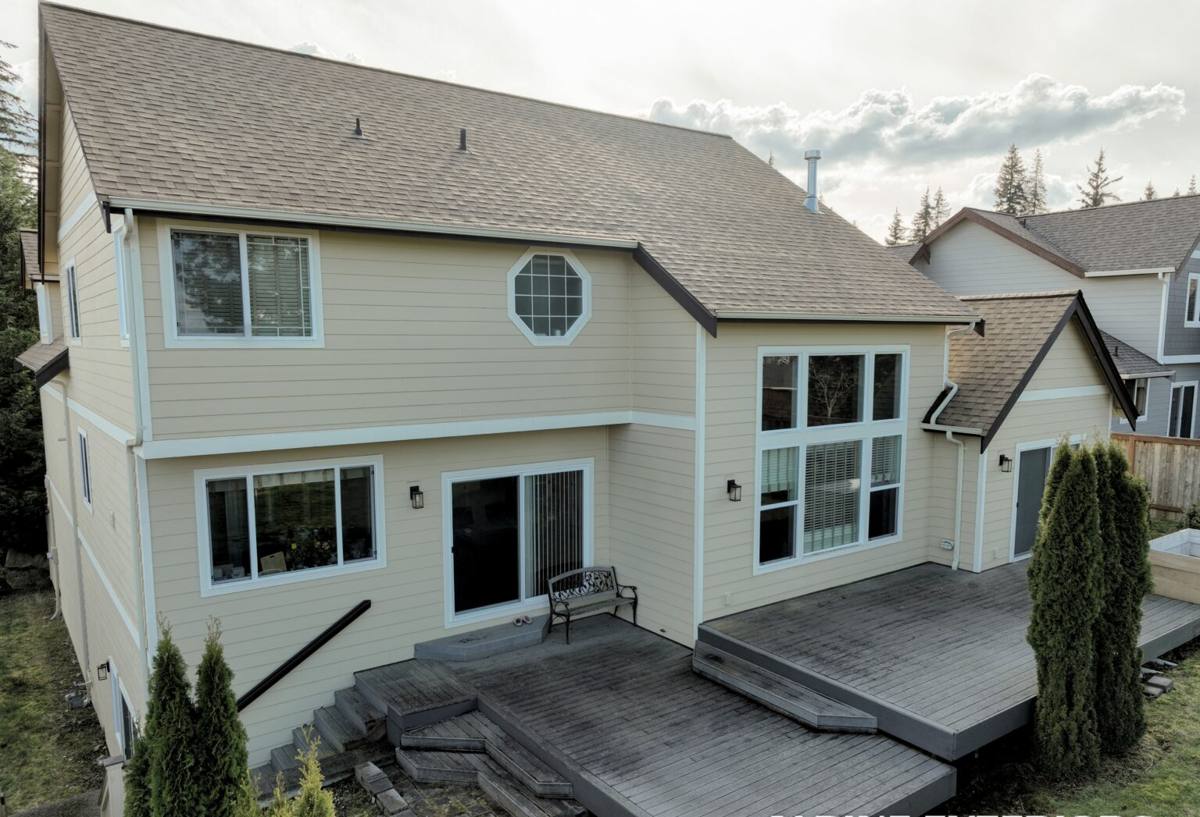
What "Custom" Should Mean for a Happy Valley Deck
Custom shouldn't just mean a different railing style or a stain color. On a property in this area, a genuinely custom deck accounts for your lot's grade, drainage, sun exposure, and how the space will actually get used — morning coffee, entertaining, grilling, or just extending the living space outward.
Reading the Lot Before Designing Anything
Many Happy Valley lots have some slope, tree cover, or proximity to natural drainage paths. Before we design anything, we look at where water moves across the property during heavy rain, how much direct sun the deck footprint gets through the day, and whether nearby trees will keep sections of the deck shaded and damp most of the year. A design that ignores this ends up with the deck's worst-performing section being the one you use most — usually the shaded side closest to the house.
Sizing and Layout That Fits How You'll Use It
A deck that's the right size for the lot and the household avoids two common problems: overbuilt structures that create maintenance burden for space that never gets used, and undersized decks that get awkward additions bolted on a few years later. We talk through how you actually plan to use the space before we finalize a footprint.
Framing and Footings: The Part You Won't See Again
The structural work underneath a deck matters more in a wet climate than almost anywhere else, because it's the part that fails silently. Undersized or poorly protected footings, ledger boards without proper flashing, and framing lumber that isn't rated for ground contact are the most common causes of deck failures we get called out to inspect — usually on decks that looked fine on the surface right up until they weren't.
- Footings sized and set below frost depth, appropriate for the soil conditions on your specific lot
- Proper ledger board flashing where the deck attaches to the house, to stop water intrusion into the wall structure
- Joist tape or equivalent protection on framing members to slow moisture absorption and rot
- Hardware rated for coastal/high-moisture exposure, not standard interior-grade fasteners
- Adequate airflow underneath the deck so framing can actually dry out between rain events
This structural layer is also the most expensive part of a deck to fix after the fact, since it usually means tearing up the decking above it. It's worth getting right the first time.
Choosing Decking Material for This Climate
There's no single "best" decking material — there's a best material for your budget, your maintenance tolerance, and how much sun or shade the deck gets. In a climate with this much rain and moss pressure, the trade-offs are more pronounced than they'd be in a drier region.
| Material | Upfront Cost | Maintenance | How It Handles This Climate |
|---|---|---|---|
| Pressure-treated wood | Lowest | Annual cleaning, periodic staining/sealing | Performs well if maintained on schedule; neglect shows fast in shaded, damp areas |
| Cedar | Moderate | Regular sealing to hold color and resist moisture | Naturally rot-resistant but still needs upkeep in constant damp conditions |
| Capped composite | Higher | Occasional washing, no staining or sealing | Strong resistance to moisture and moss staining; good long-term value in shaded lots |
| PVC decking | Highest | Minimal — occasional washing | Fully moisture-resistant; best choice for heavily shaded or ground-level sections |
We don't push one material on every job. A sunny, open deck can do very well in cedar or pressure-treated wood if you're willing to keep up with sealing. A shaded deck tucked under trees is usually better served by composite or PVC, simply because the maintenance schedule for wood in constant shade becomes unrealistic for most homeowners.
Why We're Selective About Low-End Composite
Not all composite decking is built the same. Older or budget composite formulations without a protective cap layer can absorb moisture over time, which shows up as swelling, staining, or surface breakdown — especially in a climate that stays damp as long as this one does. Our standard is to spec capped composite or PVC products with manufacturer warranties that specifically cover moisture performance, not just fade resistance. It costs more upfront than uncapped composite, but it's the honest trade-off for a material that has to survive our wet season year after year.
Railings, Fasteners, and the Small Details That Determine Lifespan
Railings and hardware take as much weather abuse as the decking itself, and they're often where corners get cut on lower-quality builds.
Railing Materials
Wood railings need the same maintenance commitment as wood decking. Metal cable and aluminum railing systems hold up well against moisture and require very little upkeep, which is why they've become a common upgrade on decks in this area. Composite railing to match composite decking is another low-maintenance option worth considering at the design stage rather than as an afterthought.
Fasteners and Connectors
Standard galvanized fasteners can corrode faster than expected in a coastal-influenced, high-moisture climate, sometimes staining the decking around them within a couple of years. We use stainless steel or climate-rated coated fasteners and connectors throughout, which costs a little more in materials but avoids the rust streaking and hardware failure that shows up early on decks built with standard-grade hardware.
Permits and Whatcom County Code Considerations
Most custom decks require a permit, and requirements vary based on height, size, and whether the deck is attached to the house. Guardrail height, stair geometry, and structural sizing all have to meet current code, and inspectors will check ledger attachment and footing depth specifically — the two areas most prone to shortcuts on unpermitted work. We handle the permitting process as part of the job rather than leaving it to the homeowner, and we build to pass inspection the first time, not to squeak by.
Skipping permits on a deck build might save time upfront, but it can create real problems later — during a home sale, an insurance claim, or simply if something needs repair and there's no record of how it was built.
Our Process, Start to Finish
- Site visit and design conversation — we walk the lot, discuss how you'll use the space, and talk through material options based on sun/shade exposure
- Design and written estimate — a clear scope and price before any work begins, with material choices spelled out
- Permitting — we prepare and submit what's required for your specific project
- Site prep and footings — including drainage planning specific to your lot's grade
- Framing — built to current code with moisture protection detailed above
- Decking, railing, and finish work — installed per manufacturer specifications to keep warranties valid
- Final walkthrough — we review the completed deck with you and go over any maintenance recommendations specific to your materials and exposure
What Ongoing Maintenance Actually Looks Like
Every deck needs some maintenance in this climate — the difference between materials is how much and how often. Here's a realistic baseline:
- Clear leaves and debris from between boards regularly, especially in fall — trapped organic matter is what starts moss and rot
- Wash the deck surface at least once or twice a year to remove algae and moss growth before it takes hold
- For wood decking, plan on sealing or staining every 1-2 years depending on sun exposure
- Check fastener heads and railing connections annually for movement or corrosion
- Keep gutters and downspouts near the deck clear so runoff isn't draining directly onto or under it
- Trim back overhanging branches to reduce shade and debris buildup where practical
Why Local Experience on This Kind of Project Matters
A deck built by a crew that hasn't worked much in Whatcom County's wet, moss-prone conditions can still look great on installation day — the problems show up two or three years later, once moisture has had time to find every shortcut. Working regularly on homes in and around Sudden Valley and Happy Valley means we've already seen which details matter most here: ledger flashing, fastener selection, drainage under the deck, and material choice for shaded lots. That experience shows up in fewer callbacks and a deck that's still doing its job a decade in, not just on the day we finish the walkthrough.
If you're planning a new custom deck or replacing one that's showing its age, we'd be glad to take a look at your property and talk through honest options for your budget and site conditions. Use the form below to request a free, no-pressure estimate.