 Sudden Valley Siding
 Deck Building Built for the Yew Street Corridor
Homes along the Yew Street corridor near Sudden Valley sit in a stretch of Whatcom County where the weather doesn't do anything by halves. Rain comes in sideways off Lake Whatcom and the surrounding hills, salt-tinged marine air drifts in from the Sound, and shaded lots hold moisture long after the rest of the yard has dried out. A deck built here has to handle all three at once, year after year, without turning into a maintenance chore or a safety problem.
We build and repair decks for homeowners in this area regularly, which means we're not guessing at what holds up. We know which details matter on a shaded, damp lot versus an open, sun-exposed one, and we build accordingly instead of treating every deck the same way a contractor from outside the county might.
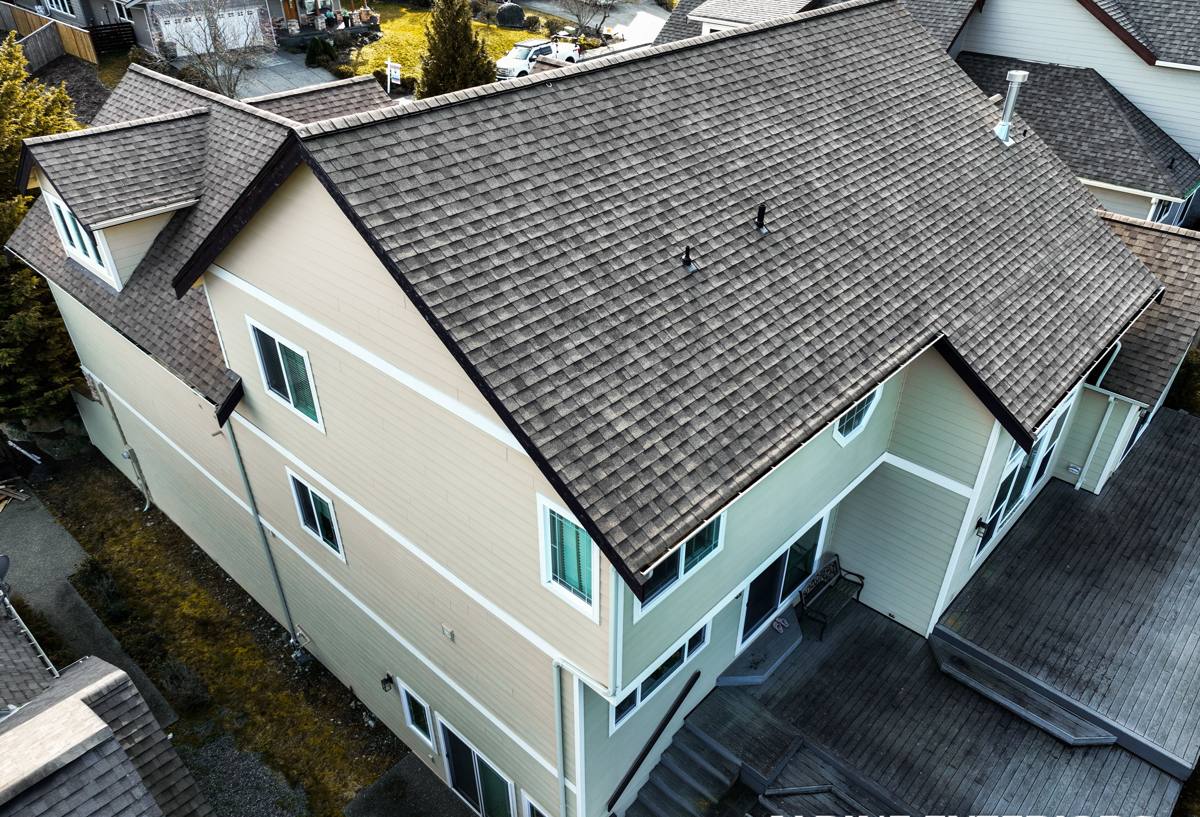
What Salt Air, Driving Rain, and Moss Actually Do to a Deck
Each of these factors attacks a deck differently, and understanding the mechanism helps explain why certain construction choices matter more here than in a drier climate.
Salt Air
Salt-laden air accelerates corrosion on any exposed metal — nails, screws, joist hangers, post bases. Once fasteners start to rust, they weaken, stain the wood around them, and can eventually fail structurally. This is why fastener selection isn't a minor detail on a deck built near the Sound; it's one of the first things we plan for.
Driving Rain
Wind-driven rain doesn't just fall on a deck's surface — it gets pushed sideways under railings, into ledger board connections, and behind any trim that isn't properly flashed. Water that gets trapped instead of shedding is what causes rot, not rain in general. Most deck failures we see start at a poorly flashed ledger or a joist end that was never sealed.
Moss and Algae Season
Shaded, damp conditions here can support moss and algae growth for much of the year, not just the wet months. Moss holds moisture against decking boards, and on wood surfaces it also creates a genuinely dangerous slip hazard on stairs and ramps. Left unaddressed, it accelerates surface decay underneath the growth where you can't see it.
Choosing the Right Decking Material for This Property Type
There's no single "best" decking material — the right choice depends on how much sun and shade your lot gets, how much upkeep you want to do, and your budget. Here's how the common options actually perform under these conditions.
| Material | Moss/Moisture Resistance | Maintenance | Typical Lifespan |
|---|---|---|---|
| Pressure-treated pine | Good if sealed regularly; moss can gain a foothold in shaded spots | Annual cleaning, re-sealing every 1-3 years | 15-25 years with upkeep |
| Cedar | Naturally rot- and insect-resistant, but surface still needs cleaning in shade | Cleaning and oiling every 1-2 years to hold color and grain | 20-30 years with upkeep |
| Composite decking | Doesn't rot, but moss and algae can still grow on the surface film | Periodic washing, no sealing or staining | 25-30+ years, manufacturer warranty-backed |
| PVC decking | Fully moisture-proof surface; still needs occasional washing to prevent algae film | Lowest maintenance of the group | 25-30+ years, manufacturer warranty-backed |
We don't push any one product line as a default. Composite and PVC cost more up front but cut down on the sealing and staining cycle that wood requires in a shaded, damp yard. Cedar and pressure-treated wood cost less initially and give a more traditional look, but only hold up long-term if the homeowner keeps up with cleaning and sealing on schedule. We'll walk through the honest trade-offs for your specific lot rather than steering you toward whatever's easiest for us to install.
Fasteners and Hardware
Given the salt air factor, we use stainless steel or hot-dip galvanized fasteners and structural connectors rated for coastal or high-moisture exposure, not the standard-grade hardware that's fine further inland. It costs a bit more per box, but it's the difference between hardware that lasts the life of the deck and hardware that starts staining and weakening within a few years.
Framing and Substructure: Where Failures Actually Start
The visible decking gets all the attention, but the framing underneath is what determines whether a deck is safe in ten years or fifteen. On damp, shaded Whatcom County lots, we pay particular attention to:
- Ledger board flashing where the deck attaches to the house — this is the single most common point of hidden rot
- Post bases set above grade with proper drainage, not buried in soil where they'll wick moisture
- Joist tape or flashing on top of every joist to keep water from soaking into the end grain
- Adequate airflow underneath the deck so the substructure can actually dry out between rain events
- Beam and footing sizing based on actual span and load, not just what's minimally allowed
A deck can look finished and still have a compromised ledger connection or a post base sitting in standing water. That's structural work you can't judge from the surface, which is part of why the framing inspection matters as much as the final walkthrough.
Drainage and Water Management
Given how much driving rain this area gets, drainage planning isn't optional — it's part of the design from day one. That means grading the ground underneath the deck to shed water away from the house foundation, spacing boards correctly for airflow and drainage, and, where a deck sits over living space or a patio, installing an under-deck drainage system so water doesn't just fall straight through onto whatever's below. We also look at how gutters and downspouts near the deck area interact with it, since a deck built without accounting for existing roof runoff can end up fighting the house's own drainage system.
Our Deck Building Process
The process is straightforward, but we don't skip steps to move faster.
- Site visit and assessment — we look at sun/shade exposure, slope, soil, existing structure (if replacing a deck), and how the site drains during rain
- Design and material discussion — size, layout, railing style, and an honest conversation about material trade-offs for your specific lot
- Permitting — we handle the Whatcom County permit application and required inspections so you don't have to navigate that process yourself
- Framing and structural work — footings, posts, beams, joists, ledger flashing, and hardware installed to the standards above
- Decking, railing, and finish work — surface installation, railings, stairs, and any trim or lighting
- Final walkthrough — we go over the finished deck with you, including care instructions specific to the material you chose
Permits and Local Code Considerations
Most new deck construction and many deck replacements in Whatcom County require a building permit, along with inspections at the framing stage and at completion. Requirements can vary based on deck height, size, and whether it's attached to the house, so this isn't a step to skip or assume your project is exempt from. We manage the permit application and coordinate inspections as part of the build, which also protects you if you ever sell the home — an unpermitted deck can complicate a real estate transaction down the road.
Maintenance Checklist for Yew Street-Area Decks
Whatever material you choose, a little seasonal attention goes a long way in this climate. We give every client a version of this list specific to their deck:
- Sweep debris off the deck regularly, especially in fall when leaves and needles trap moisture against the surface
- Clean moss and algae off boards and stairs at least once a year — more often on heavily shaded sections
- Check railings and stair connections annually for looseness or corrosion at the hardware
- Inspect the ledger flashing and area where the deck meets the house for any signs of water staining
- Reseal or re-stain wood decking on the manufacturer or product-recommended schedule, not just when it looks faded
- Keep gutters and downspouts near the deck clear so runoff isn't being directed onto or under the structure
- Clear the area underneath the deck of stored debris so airflow can keep the substructure dry
Why a Crew That Already Works This Area Matters
Deck construction principles don't change city to city, but the details that make a deck last do change with the site. A contractor who mostly builds in drier, sunnier parts of the state may not default to coastal-grade fasteners, under-deck drainage, or extra attention to shaded-lot moss control — because they haven't needed to. We build in Whatcom County conditions regularly, so those aren't upsells we pitch after the fact; they're part of how we plan the job from the first site visit.
If you're planning a new deck or need to replace one that's showing its age near Yew Street or elsewhere around Sudden Valley, we're glad to take a look and give you a straightforward, no-pressure estimate — no obligation, just an honest read on what your project needs. The form below is the fastest way to reach us.