 Sudden Valley Siding
 Deck Repair for Alger Homes, Built Around Whatcom County Weather
A deck in the Alger area near Sudden Valley works harder than most homeowners realize. It sits outside year-round, soaking up driving rain off Lake Whatcom, catching salt-laden air that drifts in off the Sound, and spending a good chunk of the calendar under a shifting green film of moss and algae. None of that is unusual for Whatcom County. But it does mean a deck built or repaired without that climate in mind will fail faster than it should, and often in ways that aren't obvious until the damage is already structural.
This page is about one job, done right, in one area: deck repair for homes in and around Alger and Sudden Valley. Not a general contractor pitch, not a list of every service we offer — just what a correct repair looks like here, what tends to go wrong first, and how we approach the work when we're called out.
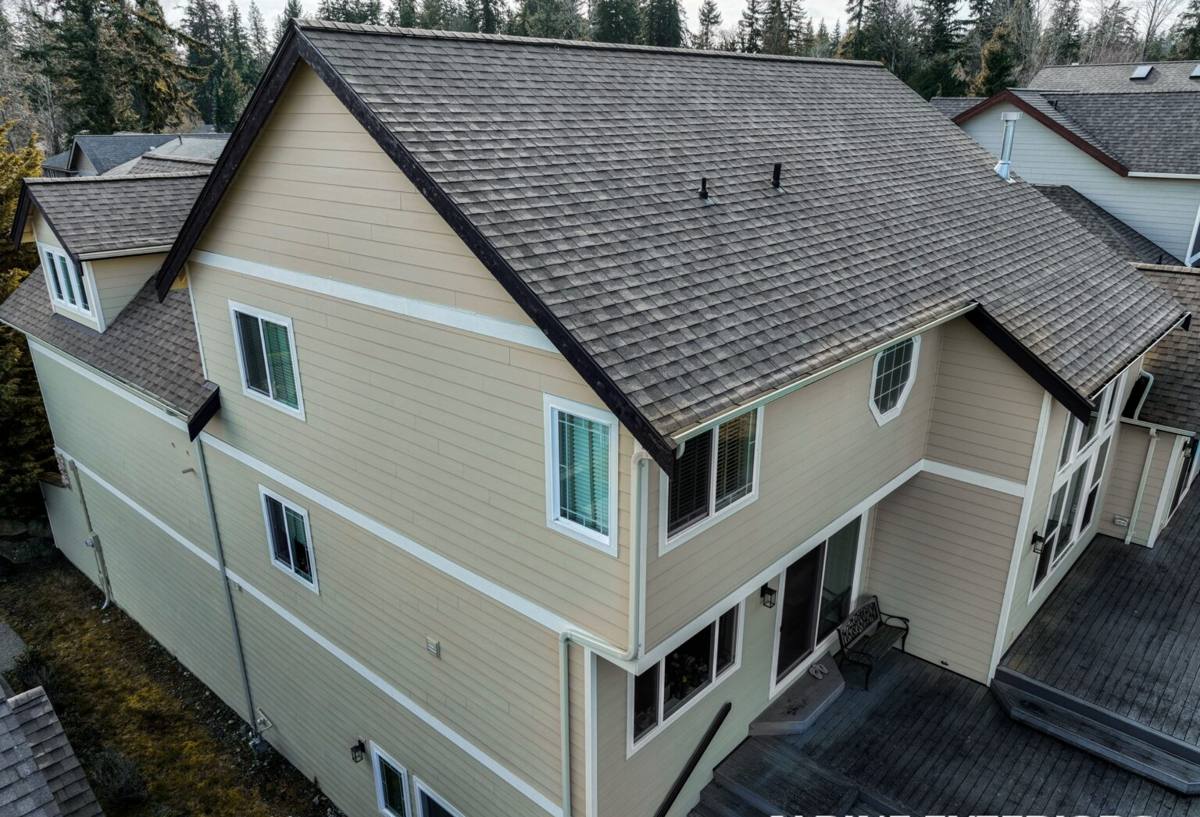
How Local Weather Actually Attacks a Deck
Moisture That Doesn't Let Up
Western Washington's long wet season means a deck rarely gets a real chance to dry out between storms. Water works its way into end grain, fastener holes, and any spot where two pieces of wood meet — ledger boards, stair stringers, post bases. Left alone, that trapped moisture leads to rot from the inside, which is exactly why so many deck failures start in places you can't see from the surface.
Moss and Algae Season
Moss doesn't just look bad on a deck surface — it holds moisture against the wood, blocks sunlight from drying the boards, and makes the surface slick and dangerous underfoot. In this part of Whatcom County, moss season runs long, and decks with poor drainage or heavy tree cover can stay damp for weeks at a stretch even between rain events.
Salt Air and Metal Fasteners
Proximity to the water means airborne salt finds its way onto exposed metal — nails, screws, joist hangers, railing brackets. Standard fasteners corrode faster here than they would further inland, and corroded fasteners are one of the most common hidden causes of a deck that suddenly feels loose or wobbly.
Sun, Freeze, and Movement
Summers bring UV exposure that dries and checks wood fibers, while winter cold snaps can freeze trapped moisture inside boards and connections. That expansion and contraction cycle, repeated year after year, is what eventually opens up small cracks into real structural gaps.
Common Deck Problems We Find in the Alger Area
When we inspect a deck near Alger or Sudden Valley, the same handful of issues show up again and again. If you're noticing any of these, it's worth having a real inspection before the problem grows:
- Soft, spongy, or bouncy spots in the decking boards
- Gaps opening up between boards or at the ledger board where the deck meets the house
- Rust streaks running down from screws, nails, or metal hardware
- Railings or stair posts that wobble or flex when pushed
- Persistent moss, algae, or a musty smell that doesn't clear up in dry weather
- Standing water that pools instead of draining off the surface
- Visible gaps, cracking, or separation at support posts and beams
- Nails backing out or fasteners that look corroded or discolored
Any one of these on its own might be minor. Several together, especially near the ledger board or main support posts, usually means the problem has moved past the surface and into the structure.
What a Correct Deck Repair Actually Involves
The Ledger Board and Flashing
The ledger board — where the deck attaches to the house — is the single most important connection on the entire structure, and it's also the spot most prone to hidden rot because it's constantly exposed to water running off the siding above it. A correct repair means pulling back decking near the ledger to check flashing, confirming water is being directed away from the house rather than trapped against it, and replacing any compromised wood before it's covered back up.
Framing and Structural Support
Joists, beams, and posts carry the actual weight of the deck. If these are compromised by rot or corroded connectors, patching the surface above them does nothing — the deck is still unsafe. We check framing condition before we ever touch surface boards, because there's no point replacing decking over a frame that won't hold it.
Decking Boards and Surface
Individual board replacement makes sense when damage is isolated. But boards need to be matched properly for thickness and fastening pattern, gapped correctly for drainage and seasonal movement, and fastened in a way that won't telegraph rust stains or loosen within a year or two.
Fasteners and Hardware
Given the salt air in this area, we use corrosion-resistant fasteners and connectors rated for exterior, coastal-adjacent exposure — not general-purpose hardware that looks fine on day one and starts rusting by the following winter.
Railings and Stairs
Railing posts take constant lateral stress and are a common weak point. A proper repair checks the post-to-frame connection, not just whether the railing itself looks solid, since a railing can appear sturdy while its actual anchor point has already failed underneath.
Repair or Replace? How We Actually Decide
Not every deck problem means starting over, and not every deck is worth patching indefinitely. We walk through the same factors on every inspection:
| Factor | Repair Usually Makes Sense | Replacement Usually Makes Sense |
|---|---|---|
| Ledger board condition | Solid wood, isolated surface wear | Rot extends into framing connection |
| Support posts and beams | Sound wood, minor surface weathering | Soft wood, cracking, or visible sagging |
| Decking boards | Damage limited to a few boards | Widespread soft spots or warping |
| Fasteners and hardware | Localized corrosion, structure intact | Corrosion is widespread throughout |
| Overall age | Recently built or well-maintained | Original wood was never sealed or maintained |
The honest answer is often "repair the parts that are failing now, and plan for the parts that will need attention in the next few years." We'd rather tell you that plainly than either oversell a full rebuild or patch something that's going to need real work again soon.
Our Process, Start to Finish
- Inspection. We walk the full deck — surface, framing underneath, ledger connection, posts, and railings — and identify what's cosmetic versus structural.
- Honest assessment. We tell you what needs to happen now, what can reasonably wait, and why, in plain terms.
- Scope and plan. We put together a repair plan matched to what your deck actually needs, not a generic package.
- Repair work. Framing and structural issues are addressed first, then surface decking, fasteners, and railings.
- Drainage and moisture check. Before we call the job done, we confirm water is actually moving off the deck and away from the house, not pooling or channeling toward the ledger.
- Final walkthrough. We go over the work with you so you know exactly what was done and what to keep an eye on going forward.
Materials: Honest Trade-Offs, Not Sales Pitches
Homeowners in the Alger and Sudden Valley area usually choose between repairing with traditional lumber or transitioning problem areas to composite decking. Both have a place, and we'll tell you the trade-offs straight rather than push whichever is easiest for us to install.
Pressure-treated or cedar lumber is familiar, easier to source-match for repairs, and generally lower upfront cost. The trade-off is ongoing maintenance — it needs sealing or staining on a regular cycle in a climate this wet, and skipping that maintenance is what leads to the rot and moss problems we see most often.
Composite decking resists moisture and moss buildup better and needs less routine maintenance, which matters given how long the damp season runs here. The trade-offs are a higher upfront material cost and the fact that composite boards behave differently than wood during installation — fastening, spacing, and structural support underneath still have to be done correctly, or you end up with the same underlying framing problems regardless of what's on top.
Neither material fixes bad framing or a poorly flashed ledger board. That work matters more than which decking surface you choose.
Why It Matters That We Already Work in Alger and Sudden Valley
A crew that regularly works decks in this specific area already knows how Lake Whatcom moisture, tree cover, and salt-tinged air behave here compared to drier inland parts of Whatcom County. That's not a small thing — it shapes which spots we check first, which materials and fasteners we trust for the exposure level, and how aggressively we look for hidden moisture damage before it becomes a safety issue. It also means we're not learning the local permitting and inspection process for the first time on your project.
We're not a national franchise cycling through Whatcom County on a route. This is the area we work, which means we're the ones you'll call if something needs a follow-up look down the road — and we build every repair with that accountability in mind.
Get a Free, No-Pressure Estimate
If your deck near Alger or Sudden Valley has soft spots, moss buildup, a wobbly railing, or you just haven't had it looked at in a while, use the form below for a free estimate. We'll give you a straightforward read on what's going on and what it would take to fix it right — no pressure, no upsell.