 Sudden Valley Siding
 Deck Repair Built for Life on Lake Whatcom
A deck in Sudden Valley works harder than a deck almost anywhere else in Whatcom County. Between the humidity that sits over the lake, the driving rain that comes through in long fall and winter storms, and the salt-laden marine air that drifts inland off the Puget Sound region, exterior wood and hardware here take a steady beating. Add in the tree cover that shades so many Sudden Valley lots, and you get a long moss season that keeps deck surfaces damp for weeks at a time even between storms. None of that means a deck is doomed — it means repairs have to account for moisture, not just cosmetics.
This page covers what deck repair actually looks like for homes in and around Lake Whatcom: the failure patterns we see most, what a repair should include to hold up, and how we approach the work when we're out at your property.
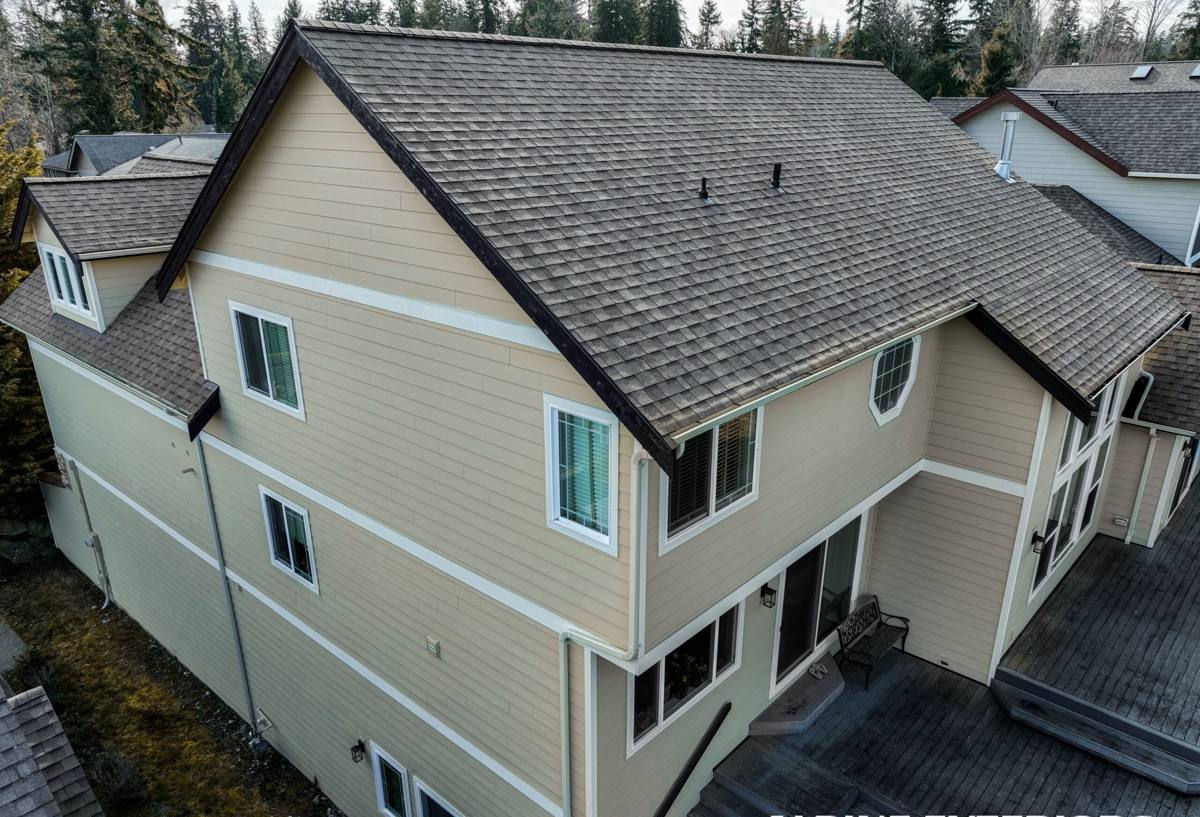
Why Decks Fail Faster Around Sudden Valley
Every deck ages. What's different here is the combination of factors working against it at the same time.
Shade and Moisture
Lots backing onto the lake or tucked into mature trees don't get the sun exposure that dries a deck out between rains. Wood surfaces, especially on the north side of a house or under a heavy tree canopy, can stay damp long enough for moss and algae to establish. That growth holds moisture against the wood and makes the surface slick and slower to shed water — a slow-motion problem that eventually shows up as soft spots and surface rot.
Driving Rain and Wind-Driven Water
Storms coming off the water don't just fall straight down — wind pushes rain sideways into ledger connections, under railings, and into any gap where flashing or caulking has failed. Water that gets behind a ledger board or into a post base is the kind of damage that isn't visible from the surface until it's advanced.
Corrosion from Marine Air
Standard fasteners and hardware corrode faster in this region than they would inland in a drier climate. Once a fastener starts to rust, it loses holding power and can stain the wood around it, which is often the first visible sign that something underneath needs attention.
The Deck Problems We See Most Often
Ledger Board and Structural Connections
The ledger board — where the deck attaches to the house — is the single most important structural connection on most decks, and it's also the one most exposed to trapped moisture if it wasn't flashed correctly when built. Soft wood, dark staining, or separation at the ledger is a structural issue, not a cosmetic one.
Decking Surface Wear
Cupping, splintering, and soft boards are the most common homeowner complaint. On composite decking, we also see delamination or swelling at cut ends where the factory sealing was cut through during original installation and never resealed.
Posts, Beams, and Footings
Post bases that sit in standing water or contact soil directly are prone to rot at the base, even when the rest of the post looks fine. This is a common issue on lakeside lots where grading sends water toward the deck substructure.
Railings and Stairs
Railings take constant hand contact and structural load, and loose or rotted railing posts are a safety issue we prioritize immediately, not something to leave for a future repair visit.
What a Correct Repair Actually Involves
A repair that only replaces what's visible from the top often misses what caused the damage in the first place. Our approach on every deck repair includes:
- Probing suspect boards, posts, and the ledger connection to find the actual extent of soft or rotted wood, not just the obviously damaged section.
- Checking flashing at the ledger board and any point where the deck meets the house siding or trim.
- Confirming joist hangers, post bases, and other structural hardware are rated for the load and haven't corroded past usable condition.
- Replacing damaged framing members and decking with appropriately rated material — not just matching what's there if what's there was part of the problem.
- Re-sealing cut ends, fastener penetrations, and any exposed end grain before it's covered or in service.
Skipping any of these steps usually means the same repair has to happen again in a few years, in the same spot, for the same reason.
Repair or Replace: How We Decide
Not every deck problem calls for a full rebuild, and not every deck is worth patching. We look at the structure as a whole before recommending either path.
| Factor | Leans Toward Repair | Leans Toward Replacement |
|---|---|---|
| Ledger board condition | Solid, properly flashed | Soft, unflashed, or improperly attached |
| Extent of rot | Isolated to a few boards or one post | Spread across multiple structural members |
| Age of structure | Under 15 years, built to a reasonable standard | Original construction quality or code compliance unclear |
| Framing material | Structural framing sound, surface wear only | Joists or beams compromised |
| Homeowner's timeline | Want to extend the deck's life a few more years | Ready to invest in a long-term, low-maintenance surface |
Honest repair work sometimes means telling a homeowner that a full rebuild will save them money over patching a structure that's going to keep failing piece by piece.
Materials and Fasteners That Actually Hold Up Here
Given the moisture and marine air Sudden Valley deals with, material choice matters more than it would in a drier inland climate.
Fasteners and Hardware
We use stainless steel or hot-dip galvanized fasteners and structural connectors rated for exterior, moisture-prone use — not standard coated screws that can corrode within a few seasons in this environment. The same goes for joist hangers and post bases.
Decking Material
Pressure-treated lumber, cedar, and composite decking are all viable choices, and each comes with trade-offs worth understanding honestly rather than picking whatever's cheapest at the moment:
| Material | Maintenance | Moisture Behavior | Trade-offs |
|---|---|---|---|
| Pressure-treated lumber | Needs periodic sealing/staining | Resists rot when sealed and maintained | Lowest upfront cost, ongoing upkeep required |
| Cedar | Needs regular sealing to hold appearance | Naturally rot-resistant but still needs care in shade | Better looks, higher cost, still requires maintenance |
| Composite | Minimal — occasional cleaning | Won't rot, but can trap moisture if end grain isn't sealed at cuts | Higher upfront cost, installation sensitivity at joints and fasteners |
We don't push one material over another as a rule — we explain what each one asks of you in a climate like this one and let you decide based on your budget and how much upkeep you want to take on.
Our Process for a Lake Whatcom Deck Repair
Every repair starts with a real inspection, not a quick look from the yard. We walk the full deck, check the substructure from underneath where access allows, and probe anything that looks or feels soft. From there:
- We explain what we found in plain terms — what's cosmetic, what's structural, and what's urgent.
- We give you options where they genuinely exist, including a repair-only path if that's the honest recommendation.
- We put the scope and material choices in writing before work starts.
- We handle disposal of removed decking and framing as part of the job.
- We do a final walk-through so you know exactly what was repaired and what to watch going forward.
Maintenance That Extends a Repair's Life
A good repair can be undone by the same conditions that caused the original damage if a deck isn't maintained afterward. This is especially true on shaded, lakeside lots where moss comes back fast.
- Sweep debris and standing leaves off the deck surface regularly, especially in fall.
- Clean moss and algae off the surface at least once a year, ideally before the wet season sets in.
- Check that gaps between boards aren't clogged, since trapped debris holds moisture against the wood.
- Reseal or restain wood decking on the schedule the product calls for — don't wait until it visibly fails.
- Look under the deck once a year for standing water, soil contact at post bases, or new staining at the ledger.
- Trim back overhanging branches where practical to cut down on shade and falling debris.
Why It Matters to Hire a Crew That Already Works Sudden Valley
A deck repair contractor who works this specific area regularly has already seen how Sudden Valley's terrain, tree cover, and proximity to the lake affect a structure over time. That matters in a few practical ways: we're familiar with the kind of grading and drainage issues common on sloped, wooded lots here, we know what a properly flashed ledger connection needs to hold up through a wet Whatcom County winter, and we're used to working within HOA or community guidelines that some Sudden Valley properties have for exterior work. We'd rather you check your own covenant documents than take our word for what applies to your lot — but we know to ask the question up front instead of after the work is scheduled.
Access is also a real consideration around the lake. Some properties have limited equipment access, sloped yards, or shared driveways, and a crew that's worked in the neighborhood before plans around that instead of running into it mid-job.
What Deck Repair Costs Depend On
We don't quote a number without seeing the deck, but the biggest cost drivers are consistent from job to job:
| Cost Factor | Why It Matters |
|---|---|
| Extent of structural repair | Ledger and framing repairs cost more than surface board replacement |
| Access | Sloped or limited-access lots take longer to work |
| Material choice | Composite costs more upfront than treated lumber, less over time |
| Deck size and complexity | Multiple levels, built-in benches, or curved railings add labor |
| Underlying cause | Fixing a drainage or flashing problem adds scope beyond the visible repair |
Small, isolated repairs can run a few hundred dollars. Larger structural work involving the ledger, framing, or multiple posts runs into the thousands. A full deck replacement is its own project and priced separately once we've seen the scope.
If your deck has soft spots, moss buildup that won't clear, or you're just not sure what condition it's really in, we'll come take a look. The estimate is free, there's no pressure to move forward, and you'll get a straight answer about what's cosmetic and what actually needs attention.