 Sudden Valley Siding
 Why Fairhaven Decks Wear Out Faster Than You'd Expect
Fairhaven sits close enough to the water that homes here deal with a steady mix of salt-laden air, driving rain, and a moss season that can run half the year. That combination is hard on a deck in ways that don't show up right away. Salt air accelerates corrosion on fasteners and hardware long before the wood itself looks bad. Driving rain, especially when it comes in sideways during a windstorm, gets pushed under flashing and behind ledger boards that were only built for straight-down rain. And the shade, humidity, and near-constant moisture that make moss season so long here also feed rot in ledgers, joists, and post bases where nobody's looking.
None of this means a deck in Fairhaven can't last. It means the details that get skipped in a lot of deck builds - flashing, fastener grade, drainage gaps, footing depth - matter more here than they would in a dry inland climate. A deck built to a generic national standard, without accounting for this specific mix of salt air and rain, tends to show real problems inside eight to twelve years instead of lasting decades.
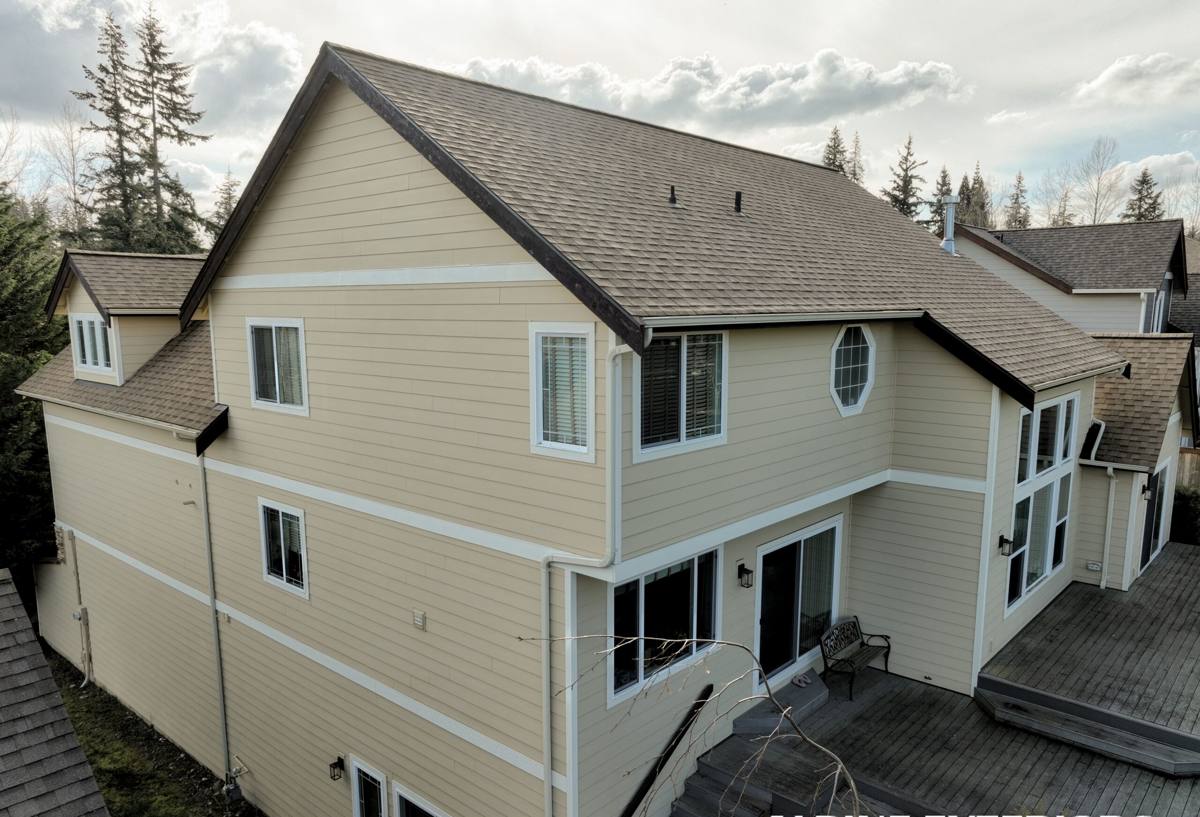
Signs Your Deck Needs Replacing, Not Just Repairing
Homeowners often call us for a board repair and find out the deck needs a full replacement once we get underneath it. Here's what tells us a patch job won't cut it:
- Soft, spongy, or springy spots anywhere on the decking, especially near the house
- Rust streaks running down from fastener heads or bracket hardware
- A ledger board that's pulling away from the house, even slightly
- Wood that's gone gray and fibrous, or that a screwdriver sinks into easily
- Wobble in the railing posts or a railing that's noticeably loosened over a year or two
- Visible moss or algae growth on the deck surface that returns within weeks of cleaning
- Gaps that have closed up between boards, trapping water and debris instead of draining
- Support posts sitting directly on soil or a cracked footing, with no visible gap or barrier
Any one of these on its own might be a repair. Two or three together, especially anything involving the ledger connection or the framing underneath, usually means the structure has been compromised long enough that patching individual boards just delays a bigger problem.
What a Correct Deck Replacement Actually Involves
Framing and Structure
The framing is what actually holds the deck up, and it's also the part most likely to get shortcuts on a rushed job. A correct replacement means pressure-treated joists and beams sized for the actual span and load, footings set below frost depth and bearing on solid ground rather than fill dirt, and post bases raised off the footing so wood never sits in standing water.
Ledger Attachment and Flashing
The ledger board - where the deck bolts into the house - is the single most common failure point we see in this climate. It has to be through-bolted, not just lag-screwed, into solid framing, and it needs proper flashing that directs water out and away from the house rather than letting it wick behind the siding. In a climate with this much driving rain, a ledger without correct flashing is a matter of when it fails, not if.
Joist Protection and Fasteners
We run joist tape over the top of every joist before decking goes down. It's a small material cost that keeps rain from soaking directly into end grain and cut edges, which is where rot starts fastest. Fasteners and structural hardware need to be rated for the wood treatment they're going into and for coastal exposure - mismatched or under-graded hardware is where salt-air corrosion shows up first, sometimes within a couple of seasons.
Choosing the Right Decking Material for This Climate
There's no single right answer for every homeowner - it comes down to budget, how much upkeep you want to do, and how long you want the deck to last before the next replacement. Here's how the common options compare once you factor in this area's rain and moss season:
| Material | Moisture & Moss Resistance | Maintenance | Typical Lifespan | Upfront Cost |
|---|---|---|---|---|
| Pressure-treated lumber | Good if sealed regularly; moss and algae will grow on neglected surfaces | Needs cleaning and re-sealing every 1-2 years | 10-15 years | Lowest |
| Cedar | Naturally rot-resistant but still needs finish maintenance in this much rain | Annual cleaning and periodic re-staining | 15-20 years | Mid-range |
| Composite decking | Excellent - doesn't absorb moisture, resists moss staining much better | Occasional washing, no sealing or staining | 25-30+ years | Highest |
We'll be direct about the trade-off with wood: it costs less up front, but in a climate that stays damp for months at a stretch, the maintenance schedule is not optional. Skip a re-sealing cycle or two and you'll see moss take hold and moisture start working into the grain faster than you would somewhere drier. Composite costs more initially but for homeowners who want to stop thinking about their deck every spring, it's usually the better long-term fit here.
Railings, Fasteners, and Hardware That Hold Up to Salt Air
Hardware gets overlooked because it's small, but it's often the first thing to fail on a coastal deck. Standard zinc-coated fasteners can start showing rust within a couple of years this close to the water. We spec stainless or high-grade coated fasteners and structural connectors rated for coastal and treated-lumber exposure, and we make sure railing posts are through-bolted into the framing rather than just screwed to the rim joist - a common shortcut that leads to a wobbly railing well before the decking itself shows any wear.
Metal railings and hardware accessories should also be rated for coastal exposure. A railing system that looks fine in a showroom in a dry climate can start pitting and staining within a season or two out here if it wasn't built for salt air.
Permits and Code Requirements
Most deck replacements in Whatcom County require a permit, particularly when the deck is attached to the house or sits above a certain height, since that involves structural load, footing depth, and guardrail requirements the local building department reviews. Rules can vary depending on your specific jurisdiction and whether you're inside city limits or in an unincorporated area, so we handle the permit application and inspections as part of the job rather than leaving homeowners to sort that out themselves. Skipping the permit on an attached deck isn't just a compliance issue - it can also complicate a home sale down the road if the work isn't on record.
Our Deck Replacement Process, Start to Finish
- On-site assessment: We inspect the existing deck, ledger connection, framing, and footings to confirm what's actually failing and give you an honest scope - repair versus full replacement.
- Design and material selection: We walk through decking material, railing style, and layout options based on your budget and how you use the space.
- Permitting: We prepare and submit the permit application and schedule the required inspections.
- Demolition and disposal: The old deck comes out, including any hidden rot in the framing that wasn't visible from the surface, and debris is hauled off site.
- Framing and flashing: New footings, framing, ledger attachment, and flashing go in to code, with joist tape applied before decking.
- Decking and railings: Decking is installed with correct fastener spacing and drainage gaps, followed by code-compliant railings.
- Final walkthrough: We inspect the finished deck with you, confirm everything is solid, and go over any maintenance the material you chose will need.
Why a Crew That Already Works Fairhaven Matters
A lot of deck problems in this area trace back to a build that followed a generic playbook instead of accounting for local conditions. A crew that regularly works Fairhaven and the surrounding Whatcom County area already knows which fastener grades hold up to the salt air, how much flashing detail a ledger needs to handle driving rain, and where moss tends to take hold fastest on a deck surface. That's not something you can fully spec from a manufacturer's install sheet written for a dry climate - it comes from having replaced decks that failed here and knowing exactly why.
It also means faster, more accurate estimates. We're not guessing at local permit requirements or relearning the climate on your project - we've already accounted for it before we show up.
Maintaining Your New Deck Through the Moss Season
Whatever material you choose, a few habits go a long way in this climate:
- Sweep leaves and debris off the deck surface regularly, especially in fall - trapped organic matter is what feeds moss growth
- Clean the deck at least once a year with a cleaner appropriate for the material, before moss has a chance to establish
- Keep gutters and downspouts clear so water isn't dumping directly onto or near the deck
- Check the ledger flashing and any visible fasteners once a year for early signs of rust or separation
- Re-seal or re-stain wood decking on the schedule the product calls for - don't stretch it another year to save time
A new deck built correctly for this climate, paired with basic seasonal upkeep, is what actually gets you the full lifespan out of the material you chose instead of an early repair call.
If your deck is showing rot, rust, soft spots, or just isn't holding up the way it should, we're happy to take a look. Reach out for a free, no-pressure estimate using the form below and we'll give you a straight answer on repair versus replacement.