 Sudden Valley Siding
 Roofing Fairhaven Homes in a Climate That Doesn't Let Up
Fairhaven sits close enough to the water that salt air is a real factor in how roofing materials age, and it shares the same wet, gray stretch of the calendar as the rest of Whatcom County. A roof here has to handle three things at once: airborne salt that speeds up corrosion on fasteners and flashing, driving rain that finds its way into any gap the wind can reach, and a moss season that runs long enough to do real damage if the roof wasn't built to resist it. None of these problems are dramatic on their own. They're slow. That's what makes them expensive if a roof isn't installed with this specific climate in mind.
Sudden Valley Siding Company works asphalt shingle roofing jobs in the Fairhaven area regularly, and this page covers what that actually means in practice — not a generic rundown of shingle roofing, but what a correct installation looks like for homes dealing with salt exposure, sideways rain, and moss pressure year after year.
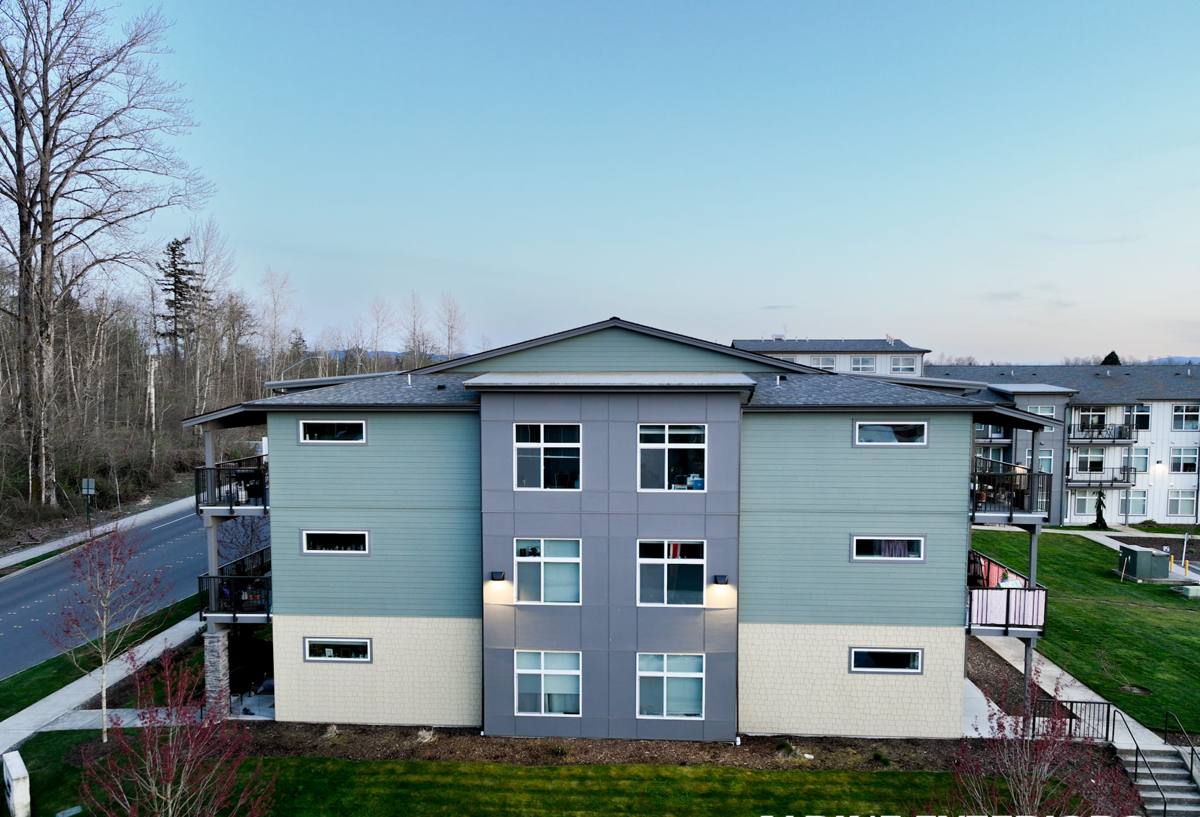
What Salt Air, Driving Rain, and Moss Actually Do to a Roof
Salt Air
Salt-laden air accelerates corrosion on exposed metal — nail heads, flashing, drip edge, and vent caps. A roof detailed with standard fasteners and thin flashing in a salt-exposed area will show rust streaks and metal fatigue years before an inland roof would. The fix isn't complicated, but it has to be planned for from the start: corrosion-resistant fasteners and properly gauged flashing, not an afterthought added because something failed.
Driving Rain
Wind-driven rain doesn't fall straight down — it gets pushed sideways and upward under shingle tabs, around chimneys, and into valleys. A roof that would be watertight in calm conditions can still leak in a wind-driven storm if the underlayment, valley work, and flashing details weren't built for that scenario. This is one of the most common causes of a "mystery leak" that shows up only during certain storms.
Moss Season
Western Washington's moss season is long, and moss doesn't just sit on top of a roof looking bad — it holds moisture against the shingle surface, lifts shingle edges as it grows, and works its way into seams over time. On north-facing slopes and shaded sections, moss growth can start within a couple of years on a roof that wasn't built with moss resistance in mind, and once it's established it accelerates shingle wear.
What a Correct Asphalt Shingle Roof Needs Here
A roof built for this climate isn't a different product — it's the same asphalt shingle system installed with the right details underneath and around it. The parts that matter most in Fairhaven's conditions:
- Full synthetic underlayment across the whole roof, not just felt paper, for a stronger secondary water barrier under wind-driven rain.
- Ice-and-water shield at eaves, valleys, and around every penetration — the spots most likely to take on water under pressure.
- Corrosion-resistant fasteners and flashing sized and coated for salt-air exposure, not standard-grade hardware.
- Algae-resistant (AR) shingles with copper or zinc granules built in, which slow moss and algae growth on shaded and north-facing slopes.
- Balanced attic ventilation — intake at the eaves and exhaust at the ridge — so moisture from inside the house doesn't condense under the roof deck and feed moss and rot from below.
- Properly lapped and step-flashed valleys and walls, since these are the most common failure points in a wind-driven rain event.
Skip any one of these and the roof will likely still look fine for a while. The failures that follow — rust streaks, soft spots at valleys, moss taking hold within a couple of seasons — show up gradually, which is exactly why they're easy to under-build for if a crew isn't used to this specific coastal, mossy climate.
Signs a Fairhaven Roof Needs Attention
Most roofing problems in this climate develop slowly and are easy to miss from the ground. A few things worth checking or asking about:
- Moss or dark streaking concentrated on north-facing or shaded slopes
- Granules collecting in gutters or downspouts, which signals shingle wear
- Shingle edges that look lifted, curled, or cupped
- Rust staining around flashing, vent boots, or nail heads
- Soft or spongy-feeling spots when walked (a sign of deck moisture underneath)
- Daylight visible through the roof deck from inside the attic
- Water stains on interior ceilings, especially after a windy storm
Any one of these on its own isn't necessarily an emergency, but they're worth a look before the next wet season rather than after a leak shows up inside the house.
Choosing the Right Shingle for This Climate
Not every asphalt shingle option is a good fit for salt air and moss pressure. Here's how the common options compare for a Fairhaven-area home:
| Shingle Type | Moss/Algae Resistance | Wind & Rain Performance | Typical Lifespan Here |
|---|---|---|---|
| Standard 3-tab | Low — no algae-resistant granules | Lower wind rating, thinner profile | Shorter, especially on shaded slopes |
| Architectural (laminate) | Moderate to high with AR granules | Higher wind rating, better seal-down | Longer, our standard recommendation |
| Algae-resistant (AR) architectural | High — copper/zinc granules slow growth | Same strong wind/rain performance as standard architectural | Longest-performing option for shaded, moss-prone areas |
For most Fairhaven homes, especially anything with tree cover or north-facing roof planes, an architectural shingle with algae-resistant granules is the right default. It costs a bit more up front than a 3-tab shingle but holds up noticeably better against the specific pressures of this climate, and most manufacturers back the AR granules with a longer warranty against algae staining specifically.
How We Approach a Reroof
- Inspection and estimate. We look at the whole roof system — deck condition, ventilation, flashing, valleys — not just the shingle surface, and give an honest read on what's actually needed.
- Tear-off. Old shingles and underlayment come off completely so we can inspect the deck underneath rather than roofing over hidden problems.
- Deck repair. Any soft, water-damaged, or rotted decking gets replaced before anything new goes down. This step gets skipped by crews trying to cut time, and it's the one that causes problems years later.
- Ice-and-water shield and underlayment. Applied at eaves, valleys, and penetrations first, then full synthetic underlayment across the deck.
- Flashing and drip edge. New, corrosion-resistant metal at all valleys, walls, chimneys, and roof edges — not reused old flashing.
- Ventilation check. Intake and exhaust venting is confirmed or corrected so the attic can breathe properly once the new roof is on.
- Shingle installation. Installed to manufacturer spec for nailing pattern and exposure, which matters for both the wind warranty and long-term performance.
- Cleanup and final walkthrough. Magnetic sweep for stray nails, debris hauled off, and a walkthrough so you know what was done and why.
Cost Factors for Asphalt Shingle Roofing
Every roof is priced based on its own specifics, but the main variables that move the number are consistent from job to job:
| Factor | Why It Matters |
|---|---|
| Roof size and number of planes | More square footage and more cuts around hips, valleys, and dormers means more labor and material |
| Roof pitch and access | Steeper roofs and difficult access slow the work and require more safety setup |
| Deck condition | Rotted or soft decking found during tear-off needs replacement before shingles go down |
| Shingle grade | Standard 3-tab, architectural, and algae-resistant architectural shingles have different material costs |
| Ventilation upgrades | Adding or correcting ridge and soffit venting adds labor but pays off in shingle lifespan |
| Layers to remove | Tearing off multiple existing layers takes longer than a single-layer tear-off |
We give a specific, itemized number after seeing the actual roof — broad ranges without an inspection tend to be more misleading than helpful, especially once deck condition and access are factored in.
Ventilation and Moss Prevention: The Part That's Easy to Skip
A lot of moss and premature aging problems trace back to ventilation, not the shingles themselves. Without balanced intake and exhaust airflow, warm, moist air from inside the house gets trapped against the underside of the roof deck. That moisture works against the shingles from below while moss and algae work against them from above — a roof that only fights one of those fronts won't hold up as well as one that's protected against both. Correcting or upgrading ventilation during a reroof is one of the most cost-effective things we do on these jobs, because it protects the investment in everything installed above it.
Why It's Worth Hiring a Crew That Already Works This Area
A roofing crew that regularly works Fairhaven and the surrounding Whatcom County communities already knows which slopes tend to hold moss, how much of a factor salt exposure is at a given elevation and distance from the water, and which flashing and fastener upgrades are worth the extra cost versus which aren't necessary on a given home. That's the difference between a roof that's simply installed to code and one that's installed for the conditions it will actually face for the next 20-plus years. It also means straightforward scheduling and follow-up — no guesswork about whether a crew understands the regional weather patterns they're building against.
After Installation: Keeping It Performing
An asphalt shingle roof built correctly for this climate still benefits from basic upkeep:
- Clear gutters and downspouts each fall so water isn't backing up against the roof edge
- Keep overhanging branches trimmed back to cut down on shade and debris on moss-prone slopes
- Have moss or algae growth treated early rather than letting it establish and spread
- Do a visual check after major windstorms for lifted or missing shingles
- Schedule a periodic inspection every few years, especially after the roof's first decade
None of this is a heavy lift, but it's the difference between a roof that reaches its full lifespan and one that needs early intervention because small issues went unnoticed.
If you're weighing a reroof or just want an honest read on where your current roof stands, we're happy to take a look. Reach out using the form below for a free, no-pressure estimate on asphalt shingle roofing for your Fairhaven-area home.