 Sudden Valley Siding
 Why Ferndale Homes Need More Than Standard Siding
Ferndale sits close enough to Bellingham Bay and the Nooksack River delta that salt-laden air, low-lying moisture, and long stretches of shade off mature trees are simply part of owning a home here. Add in Whatcom County's wet season, which can run from October through April with barely a dry week in between, and you've got a climate that's hard on exterior building materials. Wood siding swells and rots. Vinyl gets brittle and stains. Even mid-grade fiber cement products can underperform if they weren't engineered for this kind of exposure or weren't installed correctly.
We install James Hardie fiber cement siding exclusively, and on Ferndale homes specifically we spec it for the conditions this area actually sees — not a generic siding job dropped into a coastal-adjacent town. That distinction matters more than most homeowners realize until they've lived with the wrong product for a few winters.
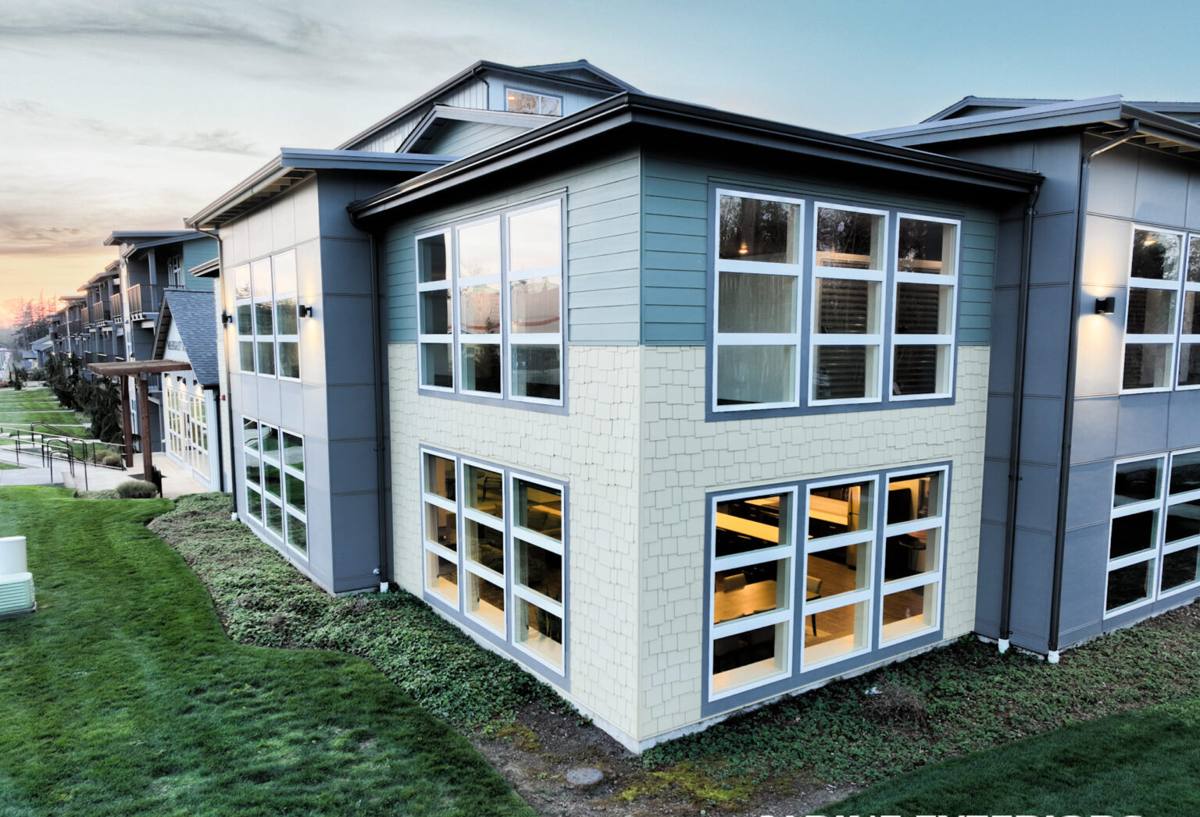
What Salt Air, Driving Rain, and Moss Season Actually Do to a House
Salt Air
Ferndale isn't oceanfront, but its proximity to the bay means airborne salt and moisture reach exterior walls more than homeowners expect, especially on the sides of a house that face open air or take wind off the water. Salt accelerates corrosion on fasteners, staples, and any exposed metal trim, and it draws moisture into porous or poorly sealed siding materials. Over years, that combination is what causes premature paint failure and edge swelling on lower-grade siding.
Driving Rain
Whatcom County rain rarely falls straight down — wind off the strait pushes it sideways into wall assemblies, which is exactly the condition lap siding and its flashing details are supposed to defend against. A siding system with a compromised water-resistive barrier, sloppy flashing, or gaps at trim joints will let that wind-driven rain find its way behind the cladding, where it does the most damage.
Moss and Algae Season
Shaded, north-facing walls and anything near tree cover in this part of Whatcom County will grow moss and algae given enough damp months in a row. It's not just cosmetic — moss holds moisture against the siding surface for extended periods, which is a problem for any material that isn't dimensionally stable or properly finished. It's one of the most common maintenance complaints we hear from Ferndale homeowners with older siding.
Why We Only Install James Hardie
James Hardie fiber cement is engineered specifically for climate zones like ours. The HZ5 product line — Hardie's formulation for regions with sustained moisture exposure — resists moisture absorption, doesn't support rot, and holds its shape and finish far longer than wood-based or vinyl alternatives in wet, coastal-influenced conditions. It's also non-combustible, which matters given the wildfire-smoke seasons the broader Pacific Northwest has seen in recent years, even in areas that don't face direct fire risk.
The factory-applied ColorPlus finish is a real advantage here, not a marketing line. It's baked on under controlled conditions and backed by its own finish warranty, which means the surface holding up against salt air and UV isn't a field-applied paint job that starts failing at the first sign of moss or moisture. For a house that's going to sit through a decade of Whatcom County winters, that's the difference between repainting in eight years and not touching the finish for far longer.
James Hardie vs. Other Siding Options in a Coastal-Influenced Climate
| Factor | James Hardie Fiber Cement | Vinyl | Untreated Wood / Cedar |
|---|---|---|---|
| Moisture absorption | Very low, engineered for wet climates (HZ5) | Doesn't absorb, but seams and panels can warp and gap | High — prone to swelling, rot, and moss growth |
| Salt air resistance | Strong; factory finish protects surface long-term | Can become brittle and discolored over time | Poor without frequent refinishing |
| Moss/algae resistance | Good when installed with proper drainage and clearances | Moderate; moss grows on surface film but panels don't degrade structurally | Poor; moss retains moisture against wood fibers |
| Finish longevity | ColorPlus factory finish, long warranty period | Color molded in but fades and chalks with UV/salt exposure | Requires repainting or restaining every few years |
| Fire resistance | Non-combustible | Melts/deforms under heat | Combustible |
What a Correct James Hardie Install Looks Like in Ferndale
The product is only half the equation. Fiber cement siding performs to spec only when the installation details are right, and in a climate like ours those details are non-negotiable, not optional upgrades.
- HZ5 product formulation specified for Whatcom County's climate zone, not a generic or lower-tier Hardie line
- A continuous, properly lapped weather-resistive barrier behind the siding to stop wind-driven rain before it reaches the sheathing
- Correct fastener type, spacing, and corrosion-resistant hardware to hold up against salt air over decades
- Proper clearances at grade, decks, and roof lines so siding isn't sitting in standing moisture or leaf litter
- Flashing at every window, door, and trim transition — installed before siding goes up, not caulked in afterward as a shortcut
- Painted or factory-finished cut edges on every field cut, since an exposed raw edge is where moisture intrusion starts
- Ventilation gaps and drainage planes maintained on shaded or north-facing walls where moss pressure is highest
Skip any one of these and you can end up with a house wearing the right siding material but still failing the way a lesser product would — trapped moisture, early paint issues, or moss creeping in at the joints within a few years instead of decades.
Our Process for a Ferndale James Hardie Project
1. On-Site Assessment
We walk the exterior and look specifically at exposure — which walls take the most wind-driven rain, where moss has already established itself, where the old siding shows signs of moisture behind it, and what the existing water-resistive barrier and flashing situation looks like once we're into the wall assembly.
2. Product and Color Selection
We spec HZ5 as the baseline for this area and walk through ColorPlus color options that hold up against UV and salt exposure. We'll also talk through trim, corner, and soffit details so the whole exterior system is consistent, not just the field siding.
3. Tear-Off and Prep
Old siding comes off, and we inspect sheathing underneath for any existing moisture damage before anything new goes up. This is often where problems from a prior installation — missing flashing, gaps in the barrier — get found and corrected.
4. Installation to Manufacturer Spec
Weather-resistive barrier, flashing, fastening, and clearances are all installed to James Hardie's published specifications for this climate zone. This is also where the difference between a crew that installs Hardie occasionally and one that works it constantly in Whatcom County conditions shows up most.
5. Final Walkthrough
We go over the finished exterior together, review maintenance basics for local conditions, and make sure the warranty paperwork is in order and transferable if you sell the home down the line.
Maintenance Ferndale Homeowners Should Actually Expect
James Hardie siding installed correctly is low-maintenance, not no-maintenance. In a climate with a long moss season, an occasional soft wash on shaded or north-facing walls keeps organic growth from building up at panel joints. Keeping gutters clear and trimming back vegetation that shades walls year-round reduces how much moisture sits against the siding in the first place. Beyond that, there's no repainting cycle to plan around the way there is with wood — the ColorPlus finish is doing that job for you.
Cost Factors for a Ferndale James Hardie Project
| Factor | Why It Affects Cost |
|---|---|
| Home size and wall complexity | More corners, gables, and trim transitions mean more cutting, flashing, and labor time |
| Tear-off and sheathing condition | Rot or moisture damage found under old siding needs repair before new siding goes on |
| Product line and profile | HZ5 plank, shingle-style, or panel profiles vary in material cost and install time |
| Trim and accessory scope | Corner boards, fascia, soffit, and trim packages add to both material and labor |
| Access and site conditions | Multi-story walls, tight lot lines, or landscaping near the home affect scaffolding and staging |
We give straightforward, honest ranges once we've actually seen the home — not a number pulled from a national average that has nothing to do with Ferndale conditions.
Why Local Experience with This Product Matters
James Hardie siding is installed all over the country, but a crew that mainly works drier climates isn't necessarily tuned into the flashing, drainage, and moss-prevention details that matter here. A crew that works Whatcom County regularly has already seen how wind-driven rain behaves against a north-facing wall in Ferndale, how fast moss can establish itself on a shaded elevation, and where prior installations in this area have failed. That's not something you can shortcut with a spec sheet alone — it comes from doing the work here, on homes facing the same weather your home does.
If you're weighing a siding replacement in Ferndale and want a straight answer about what your home actually needs, we're glad to take a look. Reach out for a free, no-pressure estimate — we'll assess your home's exposure, walk you through the right James Hardie product line and finish, and give you honest numbers before any work begins.