 Sudden Valley Siding
 Ferndale Roofs Face a Different Kind of Weather
Ferndale sits close enough to the water that salt-laden air is a constant, quiet factor in how a roof ages here. Add in the driving, wind-pushed rain that rolls through Whatcom County off the Strait of Georgia and Puget Sound, and you have a climate that stresses roofing systems in ways drier inland regions never experience. Then there's moss season, which in this part of Washington isn't really a season at all — it's most of the year. Shade from mature trees, persistent damp, and mild winter temperatures give moss and algae exactly what they need to take hold on north-facing slopes and anywhere debris collects.
None of this means a roof in Ferndale is doomed to fail early. It means the replacement has to be planned and installed with these specific stressors in mind, not treated like a generic reroof. That's the difference between a roof that looks good for two years and one that performs for its full warranty life.
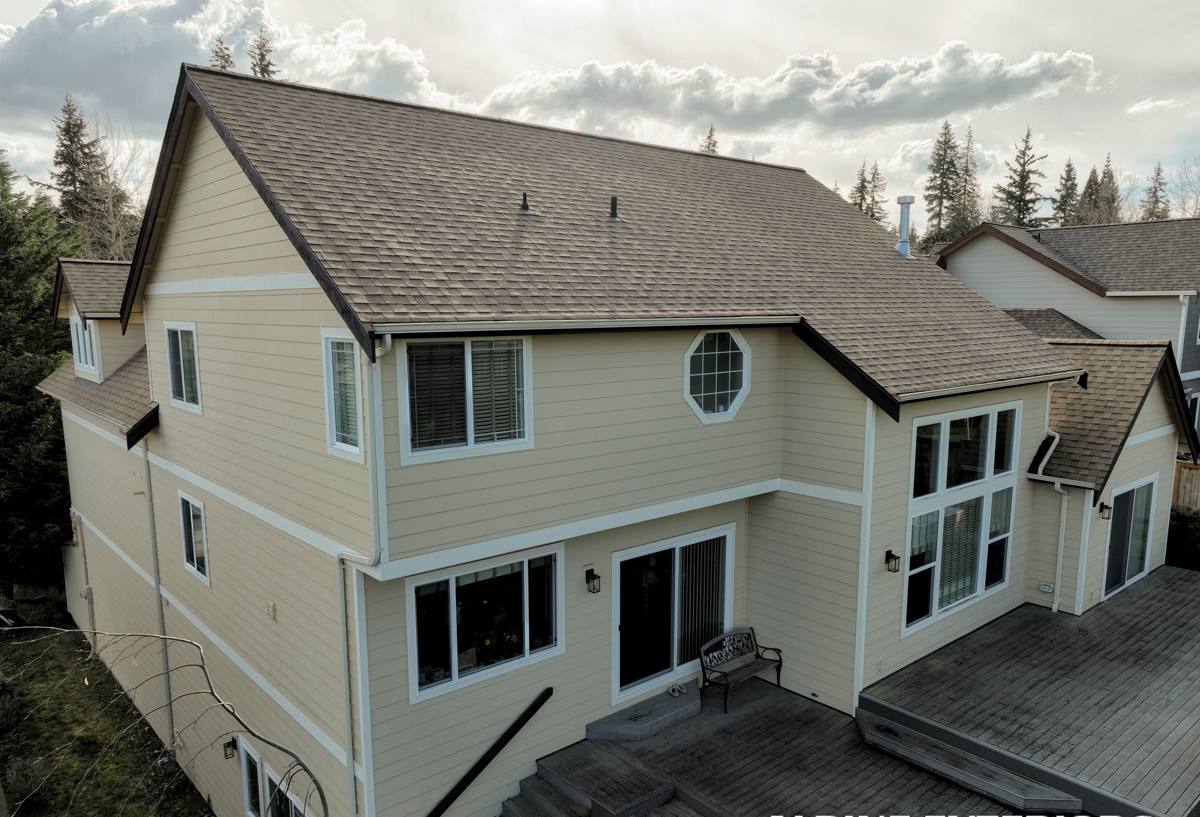
How Salt Air, Rain, and Moss Actually Damage a Roof
Salt Air and Metal Components
Salt in the air accelerates corrosion on exposed metal — nail heads, flashing, vent boots, and gutter hardware. Left unaddressed, corroded fasteners lose holding power and corroded flashing develops pinholes long before the shingles around it are worn out. This is why fastener and flashing material selection matters more here than it would fifty miles inland.
Driving Rain and Wind-Driven Water
Rain that comes in at an angle, pushed by wind off the water, doesn't behave like rain falling straight down. It gets up under shingle tabs, around vent penetrations, and along valleys and edges that a lighter storm would never test. Underlayment quality and flashing detail work carry a lot more weight in a wind-driven-rain climate than they do in fair-weather regions.
Moss, Algae, and Trapped Moisture
Moss doesn't just look bad — it holds moisture against the roofing material, lifts shingle edges as it grows, and can work its way under tabs over time. Algae staining is mostly cosmetic, but heavy moss growth left unmanaged for years shortens the practical life of a roof, especially on the shaded north and east-facing slopes common on wooded Ferndale lots.
Signs a Ferndale Home Needs Roof Replacement, Not Another Repair
- Granule loss heavy enough that you're finding grit in gutters and downspouts every time it rains
- Shingles that are cupping, curling, or cracking, especially on south and west-facing slopes
- Moss growth that comes back within a few months of cleaning, or moss thick enough to hold visible water
- Soft spots in the decking you can feel when walking the roof, or sagging visible from the ground
- Repeated leaks around the same penetration or valley despite prior patch repairs
- A roof that's 18-20+ years old on standard architectural asphalt shingles, or older on lower-grade material
- Daylight visible through the roof deck from inside the attic
A single one of these usually points to a repair. Two or three together, especially on a roof already past the 15-year mark, usually means repair costs start approaching replacement costs without buying you much additional life.
What a Correct Roof Replacement Involves Here
A roof replacement done right in this climate isn't just stripping old shingles and nailing down new ones. Each layer matters:
Tear-Off and Deck Inspection
Full tear-off lets us actually see the decking. Any wood that's soft, delaminated, or water-stained gets replaced before anything new goes down — covering over bad decking is one of the most common shortcuts that leads to early failure.
Underlayment
Given how much wind-driven rain Whatcom County sees, we treat underlayment as a real second line of defense, not a formality. Ice-and-water shield goes at eaves, valleys, and around penetrations where wind-driven water is most likely to find a way in.
Flashing and Fasteners
Given the corrosive effect of salt air, flashing and fastener material is chosen for longevity, not just upfront cost. Properly formed step flashing, counter-flashing, and valley metal — installed correctly rather than just caulked — is what actually keeps water out over the long run.
Ventilation
Balanced intake and exhaust ventilation keeps the attic from trapping the moisture this climate already produces in abundance. Poor ventilation contributes to premature shingle aging from beneath and can worsen moss and mildew conditions in the attic itself.
Moss-Resistant Considerations
On shaded or north-facing sections, we talk with homeowners about algae-resistant shingle products and practical steps — like keeping overhanging branches trimmed back — that reduce how fast moss reestablishes after installation.
Comparing Roofing Material Options for This Climate
| Material | Typical Lifespan | How It Handles This Climate | Maintenance Burden |
|---|---|---|---|
| Standard 3-tab asphalt | 15-20 years | Adequate but shows wear from moss and driving rain sooner than upgraded options | Moderate — regular moss removal needed |
| Architectural (laminate) asphalt | 25-30 years | Thicker profile and better wind rating handle driving rain well; algae-resistant granule options available | Moderate — periodic cleaning recommended |
| Metal roofing | 40-50+ years | Sheds water and moss buildup effectively; coated fasteners needed to manage salt-air corrosion risk | Low — occasional inspection |
| Wood shake | 20-30 years | Attractive but holds moisture longer, which accelerates moss growth and rot risk in this climate | High — regular treatment and moss control required |
We don't push one material on every home. The right choice depends on the roof's pitch, how much shade the lot has, the home's architectural style, and the budget. What we won't do is recommend a material or install method that looks fine at handoff but creates a maintenance headache within a few years — that's a decision we frame honestly, including the trade-offs, rather than glossing over.
Cost Factors Homeowners Should Understand
- Roof size and pitch — steeper roofs take longer to work safely and require more material overage
- Layers to remove — a roof with two existing layers costs more to tear off than a single-layer roof
- Decking condition — rot or soft decking found during tear-off adds material and labor not visible from the ground
- Material selection — standard asphalt, architectural asphalt, and metal carry different price points and different long-term value
- Flashing and ventilation upgrades — bringing older penetration and ventilation details up to current standards adds cost but reduces future leak risk
- Access and site conditions — trees, slope, and dumpster placement on the lot affect labor time
We don't quote a roof over the phone or from a satellite photo. An accurate number requires an actual look at the deck, the pitch, and the current flashing details.
Our Process for a Ferndale Roof Replacement
- On-site inspection. We walk the roof (weather permitting) and check the attic for ventilation, moisture, and deck condition from below.
- Written estimate. A clear breakdown of material, labor, and any anticipated deck repair allowance — no vague lump sums.
- Scheduling around the weather. Roofing in a wet climate means watching forecasts closely and staging materials so your home isn't left exposed mid-project.
- Tear-off and deck repair. Old material removed, decking inspected and repaired as needed before anything new is installed.
- Underlayment, flashing, and shingle installation. Installed in the sequence and detail described above, not shortcut.
- Cleanup and final walkthrough. Magnetic sweep for nails, debris hauled off, and a walkthrough so you know exactly what was done.
Why a Crew That Already Works in Ferndale Matters
A roofing crew that works this specific stretch of Whatcom County regularly already knows which slopes on which lots hold moss the longest, how local wind patterns drive rain into valleys and penetrations, and which flashing and fastener choices actually hold up against salt air over a decade rather than just at installation. That local pattern recognition isn't something a crew traveling in from outside the area picks up on the first job. It shows up in fewer callbacks and a roof that performs the way it's supposed to through its first few wet winters, not just on a sunny install day.
Simple Moss and Maintenance Checklist for Homeowners
- Trim back tree branches overhanging the roof to reduce shade and debris buildup
- Clear gutters and valleys of needles and leaves at least twice a year
- Have moss physically removed rather than left to spread — pressure washing shingles can damage granules, so this should be done carefully or by a professional
- Check attic ventilation isn't blocked by insulation or storage
- Have flashing and penetrations visually checked after major windstorms
- Schedule a professional inspection every few years, even without an obvious problem
Permits and Local Considerations
Roof replacement in unincorporated Whatcom County or within Ferndale's city limits may require a permit depending on the scope of work, and some neighborhoods have HOA guidelines around approved materials or colors. We handle the permit process as part of the job and can talk through any HOA requirements before material is ordered, so there are no surprises partway through the project.
If your roof is showing its age or you just want an honest opinion on whether repair or replacement makes sense, we're glad to take a look. Fill out the form below for a free, no-pressure estimate — we'll walk the roof, answer your questions straight, and give you a clear picture before any work begins.