 Sudden Valley Siding
 Why Geneva Siding Has to Work Harder Than Most
Geneva sits in one of the wetter corners of a wet state. Whatcom County's marine climate pushes salt-tinged air inland off the Sound, stacks up driving winter rain against west-facing walls, and keeps humidity high enough that moss and algae get a foothold on almost anything that stays damp for more than a day or two. None of that is unusual for this part of Washington — but it means siding here isn't just a cosmetic choice. It's a moisture-management system, and it either does that job correctly or it starts failing quietly, behind the paint, long before anyone notices from the curb.
We work Geneva and the surrounding Sudden Valley area regularly, and the siding failures we get called out to almost always trace back to the same root cause: a product or installation that wasn't built for sustained wet exposure. That's the whole reason we standardized on James Hardie fiber cement and stopped installing anything else.
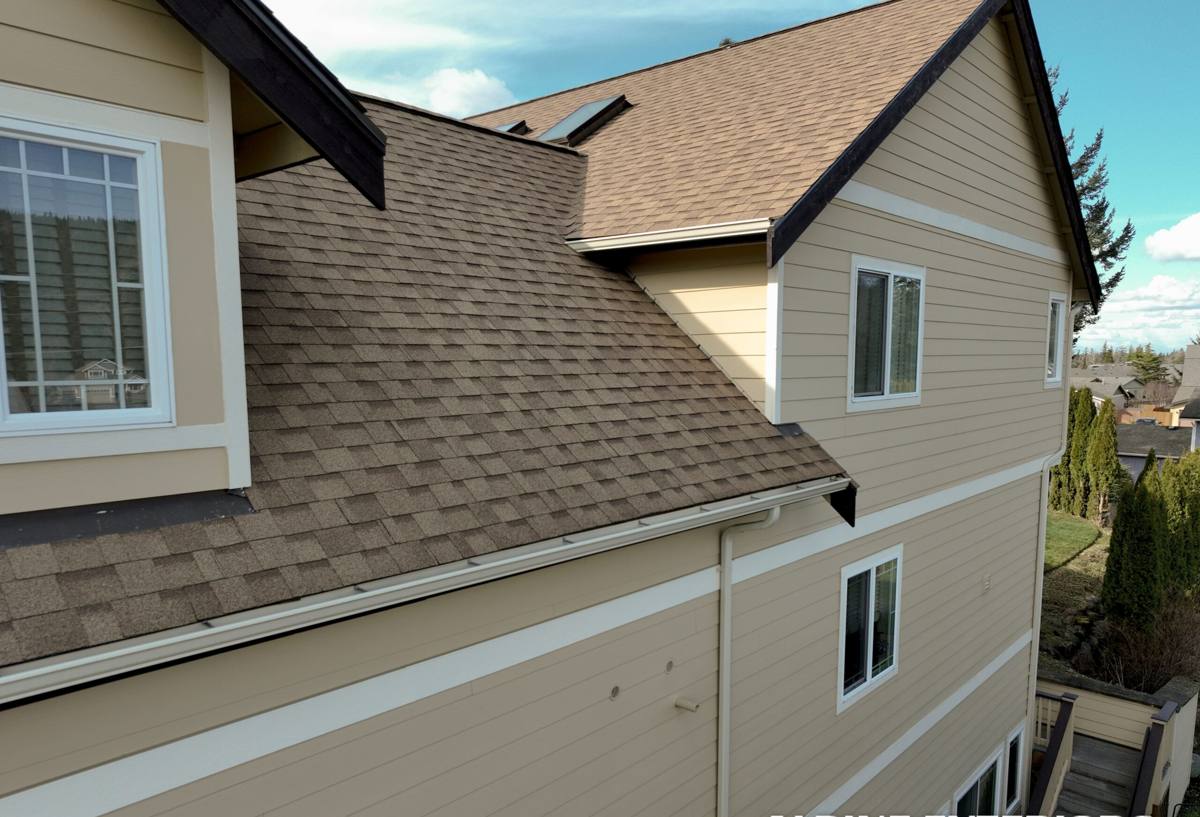
What James Hardie Brings to This Specific Climate
James Hardie fiber cement is cement, sand, and cellulose fiber, engineered and cured into a rigid board. It doesn't absorb water the way wood-based products do, it won't feed rot fungus the way raw or primed wood can, and it holds up to repeated wet-dry cycling — which is exactly what Geneva homes go through for most of the year — without swelling, cupping, or delaminating.
The HZ5 Engineering Matters Here
Hardie makes climate-specific versions of its products, sold under the HZ (HardieZone) system. HZ5 is engineered for colder, wetter climates like the Pacific Northwest, with a formulation and finish tuned for freeze-thaw cycling and prolonged moisture exposure. Using the correct HZ product for this region isn't a minor spec detail — it's part of what keeps the product performing over decades rather than years.
ColorPlus Finish and Moss
Hardie's ColorPlus is a factory-applied, baked-on finish rather than a field-applied paint job. It resists fading and holds its color far longer than site-painted siding, and a harder, more consistent finish gives moss and algae less to grip onto compared to raw or lightly primed wood surfaces. It won't stop biological growth entirely in a climate this wet — nothing does — but it makes a real difference in how often you're dealing with green streaking versus how quickly it comes back after a wash.
What a Correct Installation Actually Involves
Fiber cement is only as good as the installation behind it. Most of the siding failures we see on older Geneva homes aren't a materials problem — they're a workmanship problem where the siding was treated like a cosmetic skin instead of a drainage system.
Drainage Plane and Rain Screen
Water gets behind siding eventually — through wind-driven rain, condensation, or small gaps that develop over time. A correctly built wall assembly assumes that and gives the water somewhere to go: a weather-resistant barrier behind the siding, and in most of our installs, a rain screen gap that lets bulk water drain and the wall cavity dry out instead of trapping moisture against the sheathing.
Flashing at Every Transition
Windows, doors, roof lines, deck ledgers, and any penetration through the siding are the places water finds its way in. Proper Z-flashing, head flashing, and kick-out flashing at rooflines aren't optional extras — they're the difference between a wall that sheds water and one that slowly rots from the inside.
Fastening, Clearance, and Caulk Discipline
Hardie specifies fastener type, spacing, and placement for a reason — under-fastening or nailing through the wrong zone of the board voids the warranty and creates weak points. We also hold manufacturer-required clearance from grade, roofing, and decking so the bottom edge of the siding isn't sitting in standing water or splash-back, and we follow Hardie's guidance on where caulk is appropriate and where it isn't — over-caulking traps moisture just as badly as leaving a real gap unsealed.
- Weather-resistant barrier installed and lapped correctly before any siding goes up
- Rain screen or drainage gap where the wall assembly calls for it
- Z-flashing and head flashing at every window, door, and roofline transition
- Correct HZ5 product specified for Whatcom County's climate zone
- Fasteners placed per Hardie's published fastening zone, not "close enough"
- Proper clearance maintained from grade, decks, patios, and roof surfaces
- Factory-cut edges used wherever possible to limit field-cut exposure
- Cut edges and any exposed ends sealed and touched up per manufacturer spec
How James Hardie Compares to the Alternatives
We get asked fairly often why we don't offer vinyl, LP SmartSide, or cedar as options. Each of those products has real strengths — this isn't about any of them being bad products in general. It's about what performs best under sustained Whatcom County moisture exposure, which is the only condition Geneva homes actually live in.
| Material | Moisture Behavior | Moss/Algae Resistance | Fire Rating | Typical Maintenance |
|---|---|---|---|---|
| James Hardie fiber cement | Doesn't absorb water like wood; stable through wet-dry cycles | Hard factory finish resists growth better than raw wood surfaces | Non-combustible | Periodic rinse; caulk/trim checks |
| Vinyl | Doesn't rot, but can warp, crack, or blow off in wind; traps moisture behind it if not vented correctly | Smooth surface sheds growth reasonably well | Combustible, can melt/deform near heat | Low, but panels are hard to repair invisibly |
| LP SmartSide (engineered wood) | Wood-strand core is more moisture-sensitive than fiber cement; edge sealing is critical | More prone to growth if finish/caulking isn't maintained | Combustible | Regular caulk and finish upkeep required |
| Cedar | Natural wood; absorbs and releases moisture, prone to cupping and rot without diligent upkeep | Prone to moss and mildew in shaded, damp exposures | Combustible | Frequent refinishing, sealing, and spot repair |
Every one of those products can perform acceptably with a diligent maintenance routine. The trade-off we weren't willing to keep making is asking homeowners to carry that maintenance burden in a climate that doesn't give siding a break for most of the year. Fiber cement, correctly installed, asks less of the homeowner over the life of the wall.
Our Process for a Geneva Job
The steps are the same whether it's a full re-side or a targeted section, though the scope obviously changes.
- Walk and assess. We look at the existing siding, sheathing condition, trim, flashing, and any visible moisture damage before quoting anything.
- Tear-off and sheathing check. Old siding comes off, and we inspect the sheathing underneath — this is where hidden rot from years of trapped moisture usually shows up, and it needs to be addressed before new siding goes on, not covered over.
- Weather barrier and drainage plane. A new weather-resistant barrier goes on correctly lapped, with a rain screen gap where the wall assembly warrants it.
- Flashing and trim. Windows, doors, and roof transitions get flashed before siding installation begins, not patched afterward.
- Hardie installation. Panels or lap siding go up to manufacturer fastening and clearance spec, in the HZ5 product line built for this region.
- Finish detail and cleanup. Cut edges are sealed, touch-up is applied where needed, and the site is cleaned of old material and debris.
- Walkthrough. We go over the finished job with the homeowner before calling it done.
Signs Your Current Siding Is Telling You Something
Most siding problems in this area develop slowly enough that homeowners get used to seeing them without registering them as a warning. A few worth paying attention to:
- Persistent green or black streaking that comes back quickly after cleaning
- Soft spots or a spongy feel when you press on the siding, especially near the bottom courses
- Paint that keeps failing in the same spots no matter how often it's redone
- Visible gaps, warping, or buckling at seams and panel joints
- Musty smell or discoloration on interior walls that back up to exterior siding
- Caulk that's cracked, shrunk, or missing at trim and window edges
Any one of these on its own might be minor. Several together usually mean water has been getting behind the siding for a while.
Living With Fiber Cement Siding in This Climate
Fiber cement is low-maintenance, not no-maintenance. In a climate with a moss season that can run half the year, a periodic rinse-down keeps growth from getting established and staining the finish. Keeping gutters clear and downspouts directed away from the wall reduces the amount of water splashing back onto lower courses. Trimming back vegetation that shades and dampens a wall section helps too — moss needs shade and moisture to take hold, and Geneva has plenty of both in the wrong spots. Beyond that, an annual look at caulking and trim joints catches small gaps before they become entry points for water.
Why It Matters That We Already Work in Geneva
Siding performance isn't uniform across a region — it depends on how a given lot sits relative to prevailing wind and rain direction, how much shade and moisture a particular wall gets, and how the local weather patterns actually behave through a full year, not just on paper. A crew that already works Geneva and the broader Sudden Valley area has seen how homes here actually hold up, which walls tend to take the worst of the driving rain, and where moss problems tend to recur. Many homes in this area are also part of a community association with expectations around exterior appearance, and it helps to work with a crew that's used to coordinating around that rather than treating it as a surprise mid-project.
What Affects the Cost of a Geneva Siding Job
We don't quote sight unseen, but the factors that move a project up or down in cost are consistent enough to lay out honestly.
| Factor | Why It Matters |
|---|---|
| Home size and wall area | More square footage means more material and labor, straightforwardly |
| Tear-off vs. new construction | Removing and disposing of old siding adds labor that new-construction siding doesn't require |
| Sheathing or structural repair | Hidden rot found during tear-off has to be fixed before new siding goes on — this is the most common source of a quote changing mid-project |
| Trim and architectural detail | Multiple gables, dormers, or trim-heavy elevations take more time to flash and finish correctly |
| Product line and profile | Panel siding, lap siding, and shingle-style profiles differ in material and labor cost |
| Site access | Steep lots, limited staging area, or difficult equipment access add time |
If you're weighing siding options for a home in Geneva or elsewhere around Sudden Valley, we're glad to walk the property, take an honest look at what's there now, and talk through what correct James Hardie installation would involve for your specific home. There's no pressure and no cost to get an estimate — just a straight assessment from a crew that works this climate every day.