 Sudden Valley Siding
 New Roof Installation in Happy Valley: Built for This Part of Sudden Valley
Happy Valley sits within the broader Sudden Valley community on the south shore of Lake Whatcom, and homes here deal with a specific combination of conditions that a lot of generic roofing advice doesn't account for. Salt-influenced marine air moves through this part of Whatcom County, rain arrives driven by wind rather than falling straight down, and heavy tree cover keeps roof surfaces damp long after a storm has passed. Put those three things together over a few decades and you get a roofing environment that's noticeably harder on materials and installation quality than a drier, more open part of the state. Sudden Valley Siding Company installs new roofs throughout this community, and Happy Valley's mix of shade, elevation, and lake-adjacent humidity is territory we work regularly, not an occasional stop.
This page focuses specifically on new roof installation for Happy Valley homes — what the climate demands, what a correct installation actually involves, and what to look for in a crew before you sign a contract. If you're weighing repair versus replacement, or trying to understand why one roofing bid looks different from another, this is the detail that usually explains the gap.
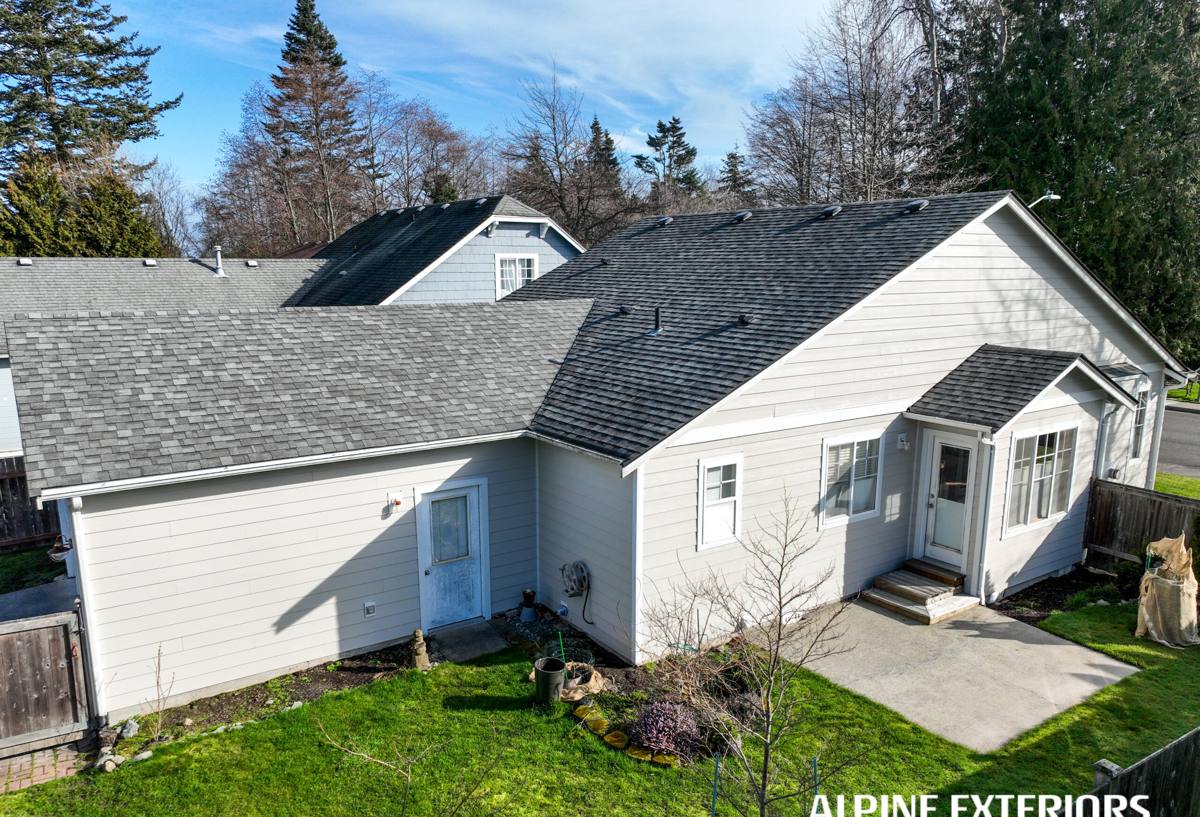
What Salt Air, Driving Rain, and Moss Actually Do to a Happy Valley Roof
Salt Air and Metal Corrosion
Marine-influenced air carries fine salt content that settles on exposed surfaces, including roof flashing, fasteners, vent stacks, and any exposed metal components. Over years, that exposure accelerates corrosion on hardware that isn't rated for it — a galvanized nail or a lower-grade flashing metal that would last decades in a dry inland climate can start showing pitting and rust well ahead of schedule here. Corroded fasteners lose holding power, and corroded flashing develops pinholes long before it looks obviously failed from the ground.
Driving Rain and Wind-Loaded Water
Rain in this part of Whatcom County rarely falls straight down. Wind pushes it sideways into roof valleys, up under shingle tabs, around chimney flashing, and into any gap where the roofing system relies on gravity alone to keep water out. A roof that would perform fine under vertical rainfall can leak under wind-driven rain if the underlayment, flashing laps, and fastening pattern weren't detailed with that load in mind. This is one of the most common reasons a roof that "looks fine" still leaks during a hard winter storm.
A Moss Season That Doesn't Really End
Heavy tree canopy around Happy Valley and the rest of Sudden Valley keeps roof surfaces shaded and slow to dry, and shaded, slow-drying surfaces are exactly where moss and algae take hold. In more open, sun-exposed parts of the state, moss growth is seasonal. Here, on north-facing slopes and roof planes under mature trees, it can stay active for most of the year. Moss doesn't just look bad — it holds moisture directly against the roofing surface, works its way under shingle edges as it grows, and can physically lift roofing material over time if it's left unmanaged.
Signs a Happy Valley Roof Needs Full Replacement, Not Another Repair
Not every roofing problem calls for a full tear-off. But there's a point where continuing to patch a roof costs more over time than replacing it, and where patches stop being able to solve the underlying problem. Watch for these signs:
- Granule loss heavy enough that you're finding sand-like buildup in gutters and downspouts on a regular basis
- Shingles that are curling, cupping, or cracking across multiple roof planes rather than in one isolated spot
- Moss or algae growth that returns within months of cleaning, especially on shaded or north-facing sections
- Soft spots in the roof deck when walked, or visible sagging along a ridge or valley line
- Daylight visible through the roof deck from inside the attic, or water staining on rafters and sheathing
- A roof that's already had two or more previous repairs to the same section within a few years
- A roof approaching or past the manufacturer's expected service life for its material and this climate
If you're seeing more than one or two of these, it's worth getting a straight assessment before spending more money chasing individual repairs that won't hold up long-term.
What a Correct New Roof Installation Actually Involves
Tear-Off and Deck Inspection
A proper replacement starts with removing the old roofing down to the deck, not layering new material over old. That step matters here specifically because it's the only point in the process where the crew can actually see the condition of the roof deck itself — soft, rotted, or water-stained sheathing that's been hidden under old roofing for years often only shows up once it's exposed. Any damaged deck sections need to be replaced before anything new goes down; skipping this step to save time is one of the most common causes of early roof failure.
Underlayment and Water Barrier
The underlayment is the roof's real backup line of defense, and in a climate with sustained rain and wind-driven moisture, it's not a place to cut corners. Synthetic underlayment generally outperforms older felt products for tear resistance and moisture holdout, and ice-and-water barrier membrane at eaves, valleys, and roof penetrations gives an added layer of protection exactly where wind-driven water is most likely to find a way in.
Flashing at Every Penetration and Transition
Chimneys, vent stacks, skylights, and roof-to-wall transitions are where the large majority of roof leaks actually originate — not out in the open field of shingles. Correctly lapped, corrosion-resistant flashing at every one of these points, installed to shed water downhill in the right sequence, is what determines whether those details hold up under driving rain or become the next leak point.
Ventilation That Matches the Home
A roof needs balanced intake and exhaust ventilation to manage heat and moisture in the attic space. In a shaded, humid climate like this one, inadequate ventilation traps moisture against the underside of the roof deck, which can lead to rot and shortens the life of the roofing material from underneath — a failure mode that has nothing to do with the shingles themselves and everything to do with what's happening below them.
Fastening and Material Installation
Correct nail placement, pattern, and count matter more here than in a milder wind climate, since under-fastened roofing is far more likely to lift or fail under sustained wind-driven rain events. Manufacturer installation specifications exist for a reason, and following them precisely is what keeps a roofing product's warranty valid if something does go wrong down the line.
Roofing Material Options for a Happy Valley Home
There's no single correct material for every roof — it depends on budget, roof pitch, how much shade the roof gets, and how long you plan to stay in the home. Here's how the common options compare against this specific climate's demands:
| Material | Moss and Moisture Resistance | Salt Air / Corrosion Behavior | Typical Lifespan Here |
|---|---|---|---|
| Architectural asphalt shingle | Good with algae-resistant granules; needs periodic cleaning on shaded planes | Fasteners and flashing must be corrosion-rated; shingle itself is unaffected | 20-30 years, often less on heavily shaded planes without upkeep |
| Standing seam metal | Very good; sheds moss more easily due to smooth, steep-shedding surface | Requires marine-grade coatings and fasteners to avoid accelerated corrosion | 40-50+ years with correct materials and installation |
| Synthetic/composite shingle | Good; resists moisture absorption better than organic-based products | Fastener and flashing corrosion resistance still required | 30-50 years depending on product line |
| 3-tab asphalt shingle | Weakest of the group; less algae resistance and shorter service life in shade | Same flashing/fastener requirements as architectural shingle | 15-20 years, shorter under heavy shade and moss exposure |
Cost generally scales with lifespan and corrosion resistance — metal and higher-tier synthetic products cost more upfront but ask less of the homeowner in cleaning and repair over the life of the roof, which is a real factor on a shaded lot like a typical Happy Valley property.
Cost Factors Worth Understanding Before You Compare Bids
| Factor | Why It Moves the Price |
|---|---|
| Roof pitch and complexity | Steep pitches, multiple valleys, and dormers all add labor time and safety requirements |
| Number of existing layers | Tear-off of multiple old roofing layers adds disposal cost and labor beyond a single-layer removal |
| Deck condition | Rotted or soft sheathing found during tear-off requires replacement before new roofing goes down |
| Access and site conditions | Tree cover, tight driveways, and steep lots around Sudden Valley can affect staging and disposal logistics |
| Material choice | Asphalt, synthetic, and metal roofing carry meaningfully different material costs per square |
| Flashing and ventilation upgrades | Bringing older flashing or inadequate ventilation up to current standards adds cost but reduces future leak risk |
Our Installation Process, Start to Finish
- On-site inspection and honest assessment of whether repair or full replacement is the right call for your roof's actual condition
- Written estimate detailing material options, scope of work, and what the price does and doesn't include
- Scheduling that accounts for Whatcom County's wet season, since roofing work depends on reasonable weather windows
- Full tear-off and deck inspection, with any damaged sheathing identified and replaced before new material goes down
- Installation of underlayment, ice-and-water barrier, flashing, and roofing material to manufacturer specification
- Final walkthrough covering what was done, warranty coverage, and what basic upkeep your specific roof will need
Why Hiring a Crew That Already Works Happy Valley Matters
Roofing detail work that's correct in a dry, low-wind climate isn't automatically correct here. A crew that mostly works inland or in less shaded, less marine-influenced areas may not default to corrosion-rated fasteners, may under-detail flashing for wind-driven rain, or may not think about ventilation the same way when moss and sustained moisture aren't part of their everyday reality. A crew that regularly works Happy Valley and the rest of Sudden Valley already knows which roof planes on a typical lot here stay shaded longest, where driving rain tends to find weak details, and what a roofing system actually needs to hold up through a full Whatcom County wet season rather than just look finished on installation day.
That local familiarity also shows up in smaller, practical ways — knowing how tree cover and lot access around this community affect staging and disposal, and having a realistic sense of how the area's moss season should shape both material choice and a homeowner's maintenance expectations after the job is done.
Warranty and What to Expect After Installation
A new roof should come with both a manufacturer's material warranty and a separate workmanship warranty from the installer — those are two different things, and a low price on one sometimes means a gap on the other. Ask specifically what each one covers, for how long, and whether the workmanship warranty is honored directly by the crew that did the install rather than passed off to a manufacturer claims process. After installation, a roof in this climate still benefits from periodic visual inspection and moss/debris clearing on shaded planes — not because the new roofing is fragile, but because staying ahead of moss buildup is simpler and cheaper than dealing with what it causes if it's ignored for years.
Questions Worth Asking Before You Sign a Roofing Contract
- Does the estimate include full tear-off and deck inspection, or does it assume no deck repair will be needed?
- What underlayment and ice-and-water barrier products are specified, and where will they be used on this specific roof?
- Are the fasteners and flashing corrosion-rated for a marine-influenced climate, or standard-grade?
- What does the workmanship warranty cover, for how long, and who honors it if something goes wrong?
- How will the crew handle disposal and site protection given this lot's access and tree cover?
A contractor who answers these clearly and specifically, without hedging, is generally one who's thought through what this climate actually requires — not just quoting a generic roofing package.
If you're weighing a new roof for a Happy Valley home, we're glad to take a look at your roof's actual condition, sun and shade exposure, and access, and give you a straight answer on what it needs. Reach out below for a free, no-pressure estimate.