 Sudden Valley Siding
 Building New in Edgemoor? Get the Windows Right the First Time
New construction is the one chance to install windows correctly instead of fighting a retrofit later. If you're building or having a home built near Edgemoor, you're working with a specific set of conditions: proximity to salt-influenced marine air, long stretches of driving rain off the water, and a moss season that runs longer here than it does twenty miles inland. Windows that go in wrong at the framing stage don't fail right away — they fail in year four or five, after the finishes are painted, the trim is caulked, and nobody wants to open the wall back up.
We install new-construction windows for homes in and around Sudden Valley and the surrounding Whatcom County communities, including Edgemoor. This page covers what that job actually involves, what the climate here demands from the window and the install, and what to expect if you bring us in during your build.
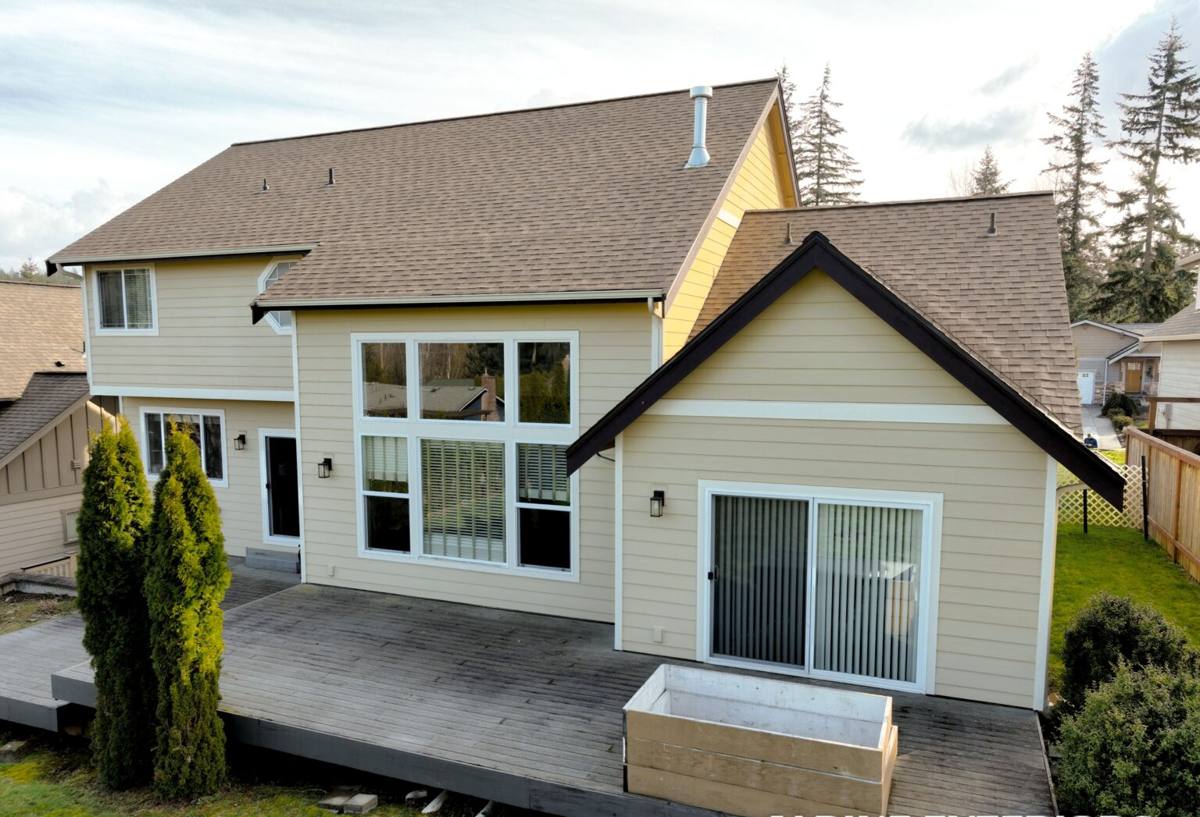
What Edgemoor's Climate Actually Does to a Window Opening
Edgemoor sits close enough to the water that homes take on a mix of stresses that inland Whatcom County builds don't see as much of:
- Salt-influenced air: accelerates corrosion on unprotected fasteners, hinges, and lower-grade cladding finishes over time.
- Driving, wind-driven rain: pushes water sideways into gaps that a calm-weather install would never expose.
- Extended moss and mildew season: persistent damp shade around window sills and trim gives organic growth a long runway if drainage isn't built in from the start.
- Temperature swings between marine layer mornings and clear afternoons: cause expansion and contraction that will find any weak seal.
None of this is exotic — it's just Whatcom County's normal weather pattern. But it means the margin for error on flashing, sealant, and drainage is smaller here than it is in a drier climate. A window that would perform fine in eastern Washington can leak within a few winters here if the install skips a step.
Why New Construction Is Different From a Replacement
Replacement window work happens inside an existing wall — you're matching an opening that's already there. New construction is the opposite: you're building the opening around the window, which means you control the outcome far more than you ever will on a retrofit. That's an advantage, but only if it's used correctly.
What a correct new-construction install includes
- Verifying rough opening size and square before the window ever arrives on site
- Installing a proper sill pan flashing so any water that gets past the window has somewhere to go besides the framing
- Layering flashing tape and housewrap in the correct shingle-lap order (bottom to top, so water always sheds outward and down)
- Setting the window level, plumb, and square, then fastening per the manufacturer's schedule — not just "close enough"
- Backer rod and exterior sealant at the right joints, sized for the gap — not sealant used as a substitute for flashing
- Insulating the shim space without over-packing it, which can bow the frame
- Interior air sealing so conditioned air isn't leaking out around the frame year-round
Skip any one of these and the window can look perfect for years while a slow leak works behind the trim. That's the failure pattern we see most often when we're called in to fix someone else's new-construction install — not the window itself, but a missed flashing detail from the original build.
Choosing Window Materials for a Marine-Influenced Site
Edgemoor's exposure changes which frame materials make sense. We'll talk through options directly with you, but here's the general trade-off picture:
| Frame Material | How It Handles This Climate | Maintenance Reality |
|---|---|---|
| Vinyl | Good moisture resistance, no corrosion risk; performance varies a lot by manufacturer quality | Low — occasional cleaning, no repainting |
| Fiberglass | Excellent dimensional stability through temperature swings; holds up well to sustained damp exposure | Low to moderate — very durable, higher upfront cost |
| Wood-clad | Attractive interior wood with an exterior shell, but the cladding seams need to be detailed carefully near salt air | Moderate — depends heavily on cladding quality and install |
| Aluminum | Strong and slim sightlines, but prone to condensation and corrosion sensitivity without a thermal break and marine-grade hardware | Higher — needs attentive hardware and finish upkeep |
We don't push one brand or material as universally "best." What matters more than the label on the frame is whether the hardware is corrosion-resistant, whether the manufacturer's installation instructions match how we're detailing the opening, and whether the warranty actually covers water intrusion — not just glass seal failure.
Hardware and Fasteners Matter More Here
In a marine-influenced environment, cheap fasteners and hinges are often the first thing to fail — well before the window itself. We spec corrosion-resistant fasteners and hardware for Edgemoor builds as a standard practice, not an upgrade option, because replacing a corroded hinge on a finished window six years in is a much bigger job than specifying the right one on day one.
How Moss and Damp Shade Factor Into Placement and Detailing
Homes tucked under tree cover — common around Sudden Valley and Edgemoor — deal with window sills and lower trim that stay damp longer after every rain. That doesn't mean avoiding shaded elevations; it means detailing them correctly:
- Sloped sills that shed water away from the frame instead of letting it pool
- Drip caps above the window to break water flow before it reaches the head jamb
- Trim materials and paint systems chosen for sustained moisture exposure, not just appearance
- Keeping nearby landscaping and gutter discharge from dumping extra water onto specific window elevations
None of this is complicated, but it has to be planned during framing and window scheduling — not patched in after the siding and trim are already up.
Our Process for New-Construction Window Installs
- Plan review: we look at window schedules and rough opening details before framing locks them in, so sizing and flashing sequencing are right from the start.
- Coordination with your builder or GC: new construction is a sequenced job — we work around framing, housewrap, and siding trades so nothing gets installed out of order.
- Sill pan and flashing install: done before the window ever goes in, so the drainage plane is complete regardless of what the window itself does.
- Window set: leveled, squared, and fastened to manufacturer spec.
- Air sealing and insulation: interior gaps sealed properly, not just stuffed with insulation.
- Final exterior sealant and trim tie-in: sequenced so water always has a path outward, never a path in.
- Walkthrough: we go over what was installed and why, so you know what's behind the trim before it's covered up for good.
Why Local Install Experience Matters for This Job
A window installer who's never worked this close to the water can do a technically fine install and still miss the details that matter here — because those details aren't in a generic install manual, they're learned from seeing what actually fails in this specific climate. We've done enough work in and around Sudden Valley and Whatcom County to know which elevations take the worst of the driving rain, which shaded spots hold moss longest, and where salt-influenced air causes hardware problems inland installers don't think about.
That local pattern-recognition is the difference between a window install that just meets code and one that's actually built for where it's sitting.
Questions Worth Asking Any Contractor Before You Hire
- Do you install a sill pan flashing on every window, or only on request?
- What's your fastener and hardware spec for homes near the water?
- How do you sequence flashing with housewrap and siding trades?
- What does your workmanship warranty actually cover, separate from the manufacturer's product warranty?
- Can you walk me through your install on this specific window schedule before work starts?
If a contractor can't answer these clearly, that's worth knowing before framing locks in your window openings — not after.
What This Typically Involves Cost-Wise
New-construction window installation is generally priced by opening count, window size and type, and site accessibility, plus any additional flashing or trim detailing your elevations require. Homes with more shaded, damp-prone elevations or larger openings will run higher than a straightforward, well-exposed build. We'll give you a clear, itemized number once we've reviewed your window schedule and site conditions — not a vague ballpark that changes once work starts.
If you're building near Edgemoor or anywhere around Sudden Valley and want your window openings detailed correctly from the start, we're happy to walk your plans and give you a straightforward, no-pressure estimate. Use the form below to get in touch.