 Sudden Valley Siding
 Ferndale's Siding Takes a Different Kind of Beating
Ferndale sits close enough to the water that salt-laden air is a constant, low-grade stress on exterior building materials, and it doesn't take a storm to deliver it — a normal onshore breeze does the job day after day. Add Whatcom County's driving, wind-pushed rain and a moss season that can stretch from early fall well into spring, and you have a climate that's genuinely harder on siding than most of the country deals with. Homes here don't fail because owners neglected them. They fail because three slow-acting forces — salt, water, and shade-loving growth — are working on the exterior nearly year-round.
That's the lens we look through on every Ferndale repair call. A crack or a soft spot rarely has one cause. It's usually the end result of moisture finding a way in, sitting there because of local shade and drainage patterns, and then being pushed further by wind-driven rain hitting the wall at an angle instead of straight down.
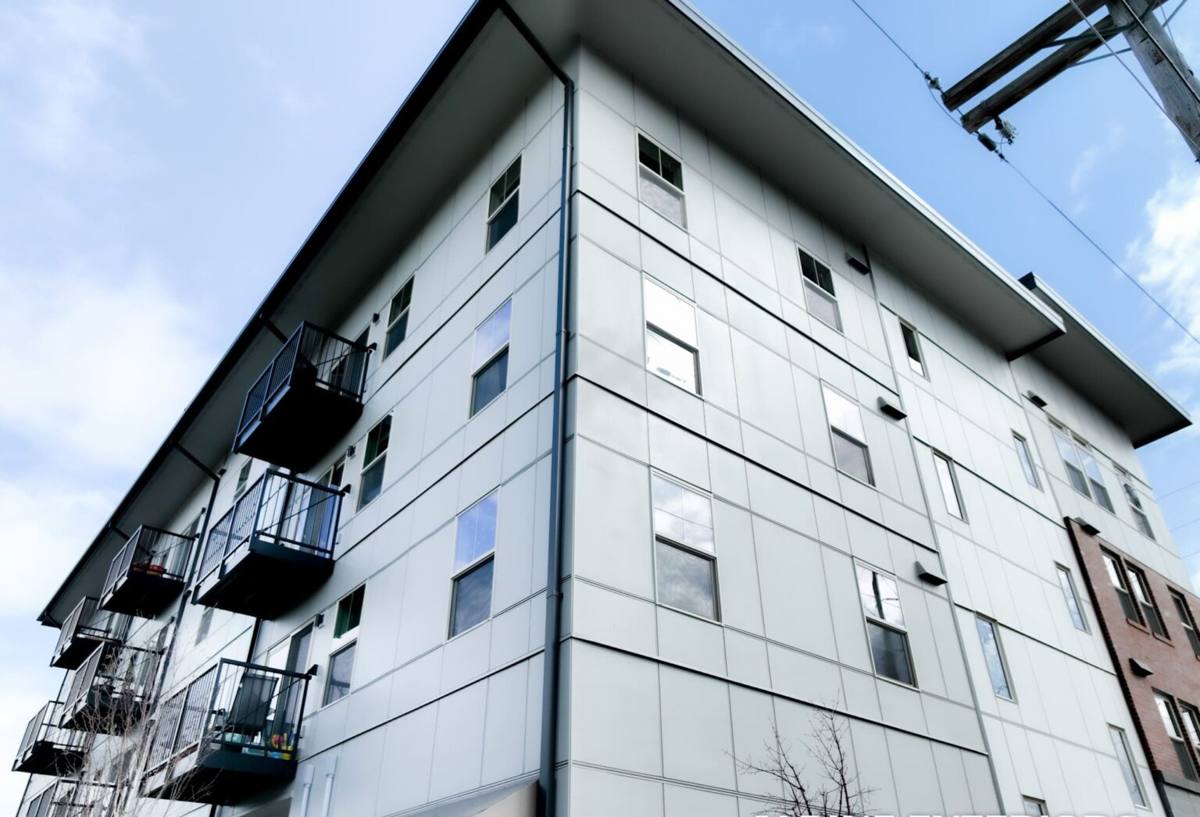
What "Repair" Actually Means on a Home Like Yours
Siding repair covers a wider range of problems than people expect, and the right fix is different for each one:
- Moisture intrusion at seams and butt joints — water working behind the siding where two pieces meet, usually because the joint wasn't sealed or flashed correctly the first time.
- Delamination or cracking — layers or edges of the material separating or splitting, often starting small and getting worse with every freeze-thaw or wet-dry cycle.
- Moss and algae staining — cosmetic at first, but moss holds moisture against the surface and against fasteners, which turns a cosmetic problem into a structural one over time.
- Caulk and sealant failure — the single most common reason water gets in behind otherwise sound siding; caulk has a service life and Ferndale's climate shortens it.
- Rot at corners, trim, and butt joints — the giveaway that water has already been getting in for a while, not just recently.
- Fastener pops and impact damage — nails backing out from wood movement, or dings from debris in a windstorm.
Each of these needs a different repair approach, and lumping them all together as "patch it and caulk it" is how a repair ends up needing to be redone in two years.
Signs You Need a Repair, Not Just a Wash
A lot of Ferndale homeowners reasonably start with a power wash when they see staining. That's fine for surface moss, but it won't tell you whether there's a real problem underneath. Look for these instead:
- Soft spots when you press on the siding, especially near the bottom courses or below windows
- Visible cracking that follows a straight line along a seam or joint, not random surface checking
- Paint or factory finish that's bubbling or peeling in one localized area rather than evenly across the wall
- Dark staining that comes back within weeks of cleaning it off
- Gaps opening up where caulk has shrunk, pulled away, or gone chalky
- Any spot where you can see daylight, insulation, or house wrap through a gap
- Consistent moisture or musty smell on the interior wall opposite a suspect exterior spot
Any one of these is worth a look before it turns into a bigger opening for water. None of them require replacing the whole wall — but ignoring them usually leads to a repair that does.
Why We Repair With James Hardie Fiber Cement — Not Whatever's Easiest to Match
We install and repair James Hardie fiber cement exclusively. We don't install vinyl, LP SmartSide, primed wood, or other fiber cement brands, and that standard doesn't disappear just because we're doing a repair instead of a full re-side. If your existing siding is Hardie, we patch it with Hardie, matched to your existing ColorPlus finish where possible so the repair doesn't stand out as a different material weathering differently down the road.
If your home has a different siding material and you're dealing with recurring repair problems — chronic moisture at seams, repeated moss and cracking, caulk that never seems to hold — that's usually a sign the material itself is fighting the local climate rather than a sign of bad workmanship. In cases like that, we'll be straight with you about whether a patch is a real fix or a temporary one, and we'll talk through what a Hardie-based repair section or eventual re-side would look like. We'd rather tell you that up front than sell you a repair we don't think will hold.
Fiber cement holds up well against salt air and constant moisture cycling because it's non-combustible, dimensionally stable, and doesn't absorb water the way wood-based products can. That stability is exactly what you want in a repair patch — a material that will age at the same rate as the rest of your wall instead of becoming the next problem spot.
What a Correct Repair Actually Involves
A repair that lasts starts before anyone touches the siding itself:
- Find the moisture source first. If we replace a damaged board without figuring out why it failed, the new board fails the same way.
- Open it up and inspect what's behind it. House wrap, flashing, and sheathing condition tell us whether this is a surface repair or something deeper.
- Replace only what's actually damaged. There's no need to strip a whole elevation for one bad section — but we don't stop short of the full extent of the damage either.
- Correct the fastening and flashing. A lot of the failures we see trace back to fastening patterns or missing flashing details from the original install, not the siding material.
- Match the finish. ColorPlus-matched replacement boards where available, or a proper repaint matched to existing color, so the patch doesn't read as an obvious repair.
- Re-seal with the right sealant. Not every caulk is rated for the movement and moisture exposure Ferndale sees; we use sealants built for it, not whatever's cheapest.
- Fix the root cause. If a gutter, downspout, or grading issue is feeding water to that section of wall, the repair isn't finished until that's addressed too.
Our Process for a Ferndale Repair Job
We keep the process straightforward because most repair jobs are stressful enough for a homeowner without a confusing back-and-forth:
- Inspection and moisture check — we look at the visible damage and check moisture readings around it, not just the one spot you called about.
- Honest scope and estimate — what needs replacing, what can be left alone, and why, in writing.
- Scheduling around the weather — repair work needs a dry window to do it right, and we plan around Whatcom County's rain patterns rather than rushing a patch into wet siding.
- The repair itself — done to the same fastening, flashing, and sealing standard as new installation, not a shortcut version of it.
- Cleanup and walkthrough — we show you what was done and why, including anything we think you should keep an eye on going forward.
What Drives the Cost of a Repair
| Repair Type | Typical Scope | What Drives the Cost |
|---|---|---|
| Small trim or corner repair | One or two boards, localized area | Access, color match, whether rot has spread to trim behind it |
| Multi-board wall section | A run of siding along one elevation | Number of boards, staging/access height, extent of moisture behind the wall |
| Moisture remediation repair | Removal, inspection, and rebuild of the wall assembly | Condition of sheathing and house wrap once opened up, not just the visible siding |
| Moss and staining follow-up | Cleaning plus preventive treatment | Roof and shade conditions feeding the moss, size of affected area |
We won't quote a number over the phone based on a description alone — too much of the real cost depends on what's happening behind the siding, which you can't see from the ground or from a photo.
Why a Crew That Already Works Ferndale Matters
Whatcom County covers a lot of different microclimates, and Ferndale's mix of proximity to the water, tree cover, and drainage patterns produces its own repair patterns — which walls take the worst of the driving rain, which lots hold shade and moss longer into the season, which original installs from a given era tend to show the same failure points. A crew that works this area regularly recognizes those patterns faster instead of treating every job as a first guess. That translates into a more accurate diagnosis on the first visit and a repair that accounts for the conditions your specific home actually sits in, not a generic textbook fix.
It also means faster response. A repair that gets scheduled and finished promptly, before the next round of driving rain, does a lot less collateral damage than one that sits open on a waiting list for weeks.
After the Repair: Keeping It From Happening Again
A good repair buys you time, but a few habits keep it from being a recurring expense:
- Rinse moss and algae off before it builds up into a thick mat, especially on shaded or north-facing walls
- Check gutters and downspouts each fall, before the heavy rain season, so water isn't dumping against a wall
- Walk the exterior once a year and look at caulk lines — recaulking a small gap early is far cheaper than repairing what gets in behind it
- Keep an eye on any spot that's been repaired before; it's worth checking twice a year rather than once
None of this requires a professional visit every time — it's mostly a matter of catching small things before Ferndale's weather turns them into bigger ones.
If you're dealing with a soft spot, cracking, staining that won't go away, or you just want a second opinion on whether something is worth repairing, we're glad to take a look. Reach out for a free, no-pressure estimate using the form below.