 Sudden Valley Siding
 Siding Replacement in South Hill: What This Neighborhood Is Up Against
South Hill sits up in the trees above Lake Whatcom, and that elevated, wooded setting is a mixed blessing for the siding on your house. The views and privacy are the reason people move here — but the same shade, humidity, and moisture that make the neighborhood feel green also make it hard on exterior building materials. Homes here spend more of the year damp than homes out in the open, and that changes what "good siding" actually needs to do.
We've replaced siding on enough South Hill homes to know the failure patterns aren't random. They cluster on north- and west-facing walls, under overhangs that don't get sun, and around windows and trim where the original installation cut corners on flashing. A siding replacement done right here isn't just a cosmetic swap — it's a chance to fix the water management the first install got wrong.
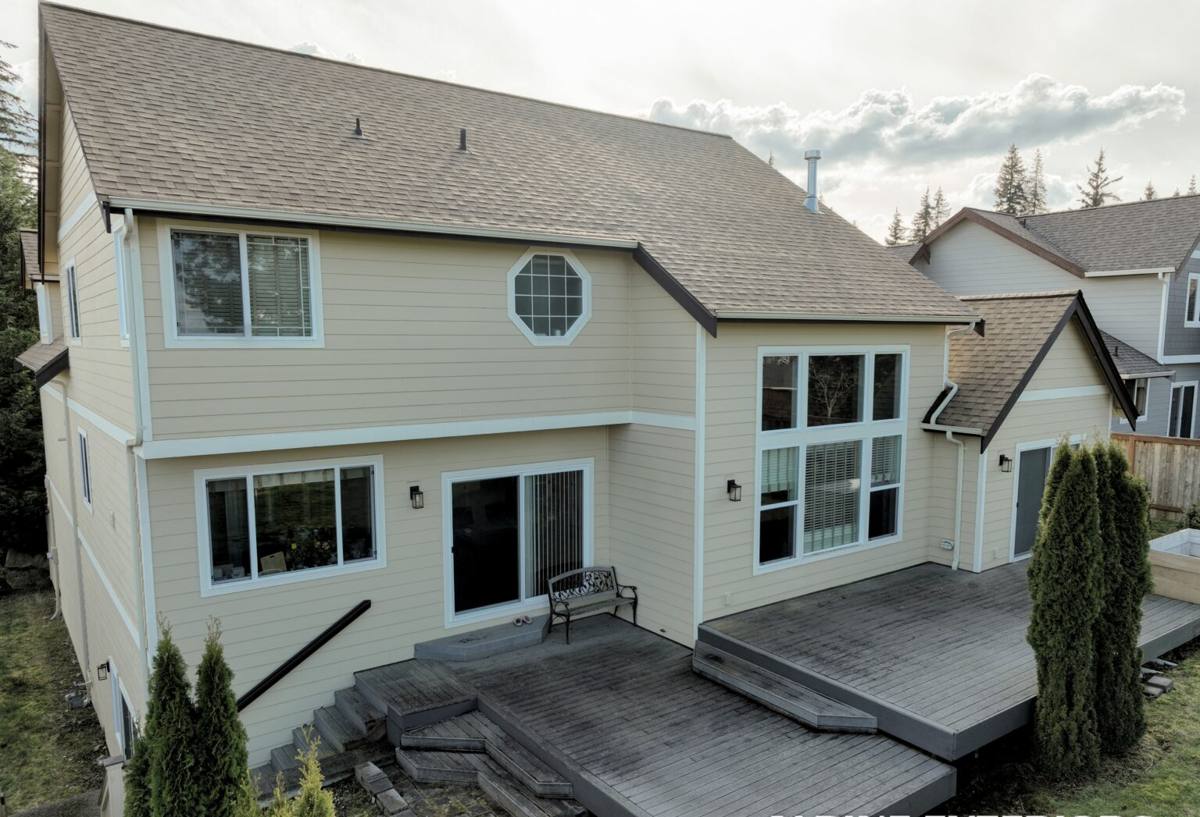
The Climate Factors That Drive Siding Failure Here
Driving Rain and Wind-Driven Moisture
Whatcom County gets long stretches of steady rain, and on exposed or hillside lots that rain often comes in sideways rather than straight down. Siding that isn't lapped, flashed, and sealed correctly lets that wind-driven moisture work its way behind the cladding, where it soaks sheathing and framing that never fully dries between storms.
A Long Moss and Mildew Season
Shaded lots under a tree canopy stay damp for months at a stretch. That's ideal growing conditions for moss, algae, and mildew on any siding surface that holds moisture at the surface — and it's a big reason wood-based and low-quality composite products struggle here. Siding needs a finish and a substrate that don't feed organic growth and don't soften when they stay wet.
Marine-Influenced Air and Humidity
Western Washington's marine climate keeps humidity high most of the year, and salt-laden air moving inland off the Sound is part of what accelerates corrosion on fasteners, flashing, and any metal trim on a home's exterior. Combined with the lake-effect moisture around Sudden Valley, it's a climate that punishes anything installed with shortcuts.
Signs Your South Hill Home Needs Siding Replacement, Not Just Repair
Repair makes sense when the problem is isolated. Replacement makes sense when the problem is systemic — when what's failing on one wall is a preview of what's coming on the rest of the house. Here's what tells us it's time to stop patching:
- Soft or spongy spots when you press on the siding, especially near the bottom courses or under windows
- Paint that won't hold — it blisters, peels, or needs repainting every couple of years no matter what product is used
- Persistent moss or black streaking that comes back within a season of cleaning
- Visible warping, buckling, or gaps at the seams and corners
- Interior signs — musty smell, discolored drywall, or trim near exterior walls that feels damp
- Siding that's original to a home built more than 20-25 years ago with a wood-based or lower-grade product
If you're only seeing one or two of these on one section of wall, a repair may buy you time. If you're seeing several across multiple elevations, the siding system itself — not just the surface — has likely failed.
What a Correct Siding Replacement Job Actually Involves
Tear-Off and Sheathing Inspection
We don't install new siding over old problems. Full tear-off means pulling the existing cladding down to the sheathing and actually looking at what's underneath — rot, soft spots, or water staining that tells us where the old system failed. Any damaged sheathing or framing gets replaced before anything new goes up. Skipping this step is the single most common shortcut that causes a "new" siding job to fail early.
Weather-Resistive Barrier and Flashing
The house wrap and flashing details do more to keep a South Hill home dry than the siding material itself. Every window, door, and penetration gets flashed so water sheds outward and down, never behind the barrier. Given how much rain this area sees, we treat flashing detail as non-negotiable, not an upsell.
Installing James Hardie to Manufacturer Spec
Fiber cement has to be installed to spec to perform — correct fastener type and spacing, proper clearance from grade and roofing, and gaps at butt joints sized and caulked the way the manufacturer requires. We install exclusively to James Hardie's published installation guidelines, which is also what keeps their warranty intact if you ever need it.
Why We Install Only James Hardie Fiber Cement
We don't install vinyl, LP SmartSide, Cemplank, Allura, or primed wood siding, and that's a deliberate standard, not a limitation of what we're capable of doing. Vinyl expands and contracts with temperature swings and can crack in cold snaps; engineered wood products are more moisture-sensitive at cut edges and seams than fiber cement; and cedar or primed spruce require an ongoing maintenance commitment that most homeowners underestimate until the paint starts failing on year three.
James Hardie fiber cement is non-combustible, dimensionally stable in wet climates, and comes with a factory-applied ColorPlus finish that's baked on rather than field-painted, which matters a lot in a climate that barely lets paint cure between rain events. Their HZ5 product line is engineered specifically for climates like ours, with freeze-thaw and moisture performance built into the formulation rather than added after the fact. It's the product we're willing to stand behind with our own installation work.
Comparing Siding Options for a Home Like Yours
| Material | Moisture/Moss Resistance in This Climate | Maintenance | Typical Lifespan |
|---|---|---|---|
| James Hardie Fiber Cement | High — non-combustible, dimensionally stable when wet | Periodic washing; factory finish resists fading | 30+ years with correct install |
| Vinyl | Moderate — can trap moisture behind panels if not vented correctly | Low, but cracks/warps in cold and can't be repainted easily | 15-25 years |
| Engineered Wood (LP SmartSide) | Moderate — vulnerable at cut edges and seams if sealing fails | Moderate; edge sealing and caulking need upkeep | 20-30 years, install-dependent |
| Cedar / Primed Wood | Lower in shaded, damp conditions without diligent upkeep | High — repainting/staining on a recurring cycle | 15-25 years with consistent maintenance |
Every product on that table can perform if it's installed and maintained correctly. What we're not willing to do is install a product that puts the burden of moisture management almost entirely on future upkeep, in a neighborhood where shade and humidity already work against the siding from day one.
Our Siding Replacement Process, Start to Finish
- On-site inspection and estimate — we walk the exterior, check for the failure signs above, and give you a written scope and price
- Material selection — choosing the James Hardie product line, profile, and ColorPlus color for your home
- Tear-off and sheathing repair — removing old siding and fixing any rot or damage found underneath
- Weather barrier and flashing installation — the step that determines whether the next 30 years stay dry
- Siding installation to manufacturer spec — correct fastening, spacing, and joint treatment
- Trim, caulking, and final detail work around windows, doors, and corners
- Final walkthrough — we review the finished work with you before calling the job done
Cost Factors for South Hill Siding Replacement
We won't quote a number without seeing the house, but the factors that move the price are consistent from job to job:
| Factor | Why It Matters |
|---|---|
| Extent of sheathing/framing repair | Damage found during tear-off adds material and labor before new siding goes up |
| Home size and wall complexity | More corners, dormers, and trim detail mean more cutting and flashing work |
| Access and site conditions | Steep or wooded South Hill lots can require more staging and care to protect landscaping |
| Siding profile and finish chosen | James Hardie offers multiple plank widths, textures, and ColorPlus colors at different price points |
| Trim and accessory scope | Full trim replacement alongside siding costs more upfront but keeps the whole exterior consistent |
The honest answer is that hidden sheathing damage is the biggest wildcard on any older South Hill home — it's also exactly why a real inspection during tear-off matters more than a quick exterior estimate.
Why Hiring a Crew That Already Works in South Hill Matters
A crew that's worked this neighborhood before knows which walls take the worst of the weather, how much clearance the tree cover and terrain demand, and where the older homes here typically had flashing done wrong the first time. That's not something you get from a general contractor working South Hill for the first time — it comes from having actually pulled siding off houses in this specific pocket of Whatcom County and seen what was underneath.
It also matters for accountability. A local crew is easy to reach if a question comes up two years after the job, and we have a reputation in this specific community to protect — which is exactly the incentive that keeps a job done right the first time.
If your South Hill home is showing any of the signs above, or you'd just like an honest opinion on whether repair or replacement makes sense, we're happy to take a look. Request a free, no-pressure estimate using the form below and we'll walk the exterior with you and tell you what we actually see.