 Sudden Valley Siding
 Why Window Installation Is Different in Cordata
Cordata sits inland enough from Bellingham Bay that homeowners sometimes assume salt air and coastal weather aren't really a factor here. They are — just slower and less obvious. Marine air moves through the whole county, driving rain comes in sideways for days at a stretch, and the shaded, moisture-heavy conditions that blanket Whatcom County in green moss every winter don't stop at a property line. Windows are one of the first places all of that shows up, because a window opening is a hole cut into your wall's water management system. Get the installation wrong, and you've built a leak path that can sit hidden behind trim and drywall for years before it becomes a visible problem.
A window that looks fine from the street can still be letting moisture into the wall cavity around it. That's the piece of this job that matters more than the glass itself: how the window is flashed, sealed, and tied into the existing siding and weather-resistive barrier. We've installed and replaced windows across Cordata and the surrounding Whatcom County neighborhoods long enough to know which details get skipped on a rushed job, and why those shortcuts show up as rot, fogged glass, or drafts two or three winters later.
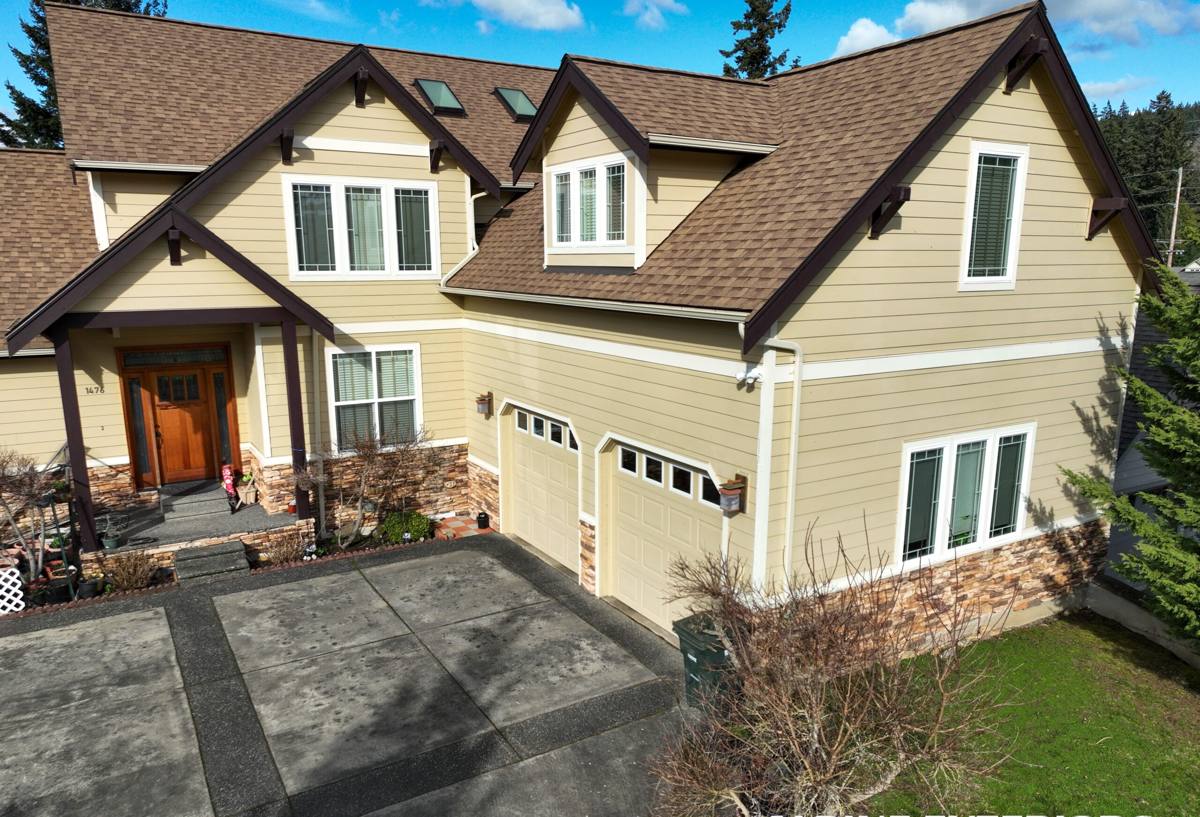
Signs Your Current Windows Are Losing the Fight
Most homeowners don't call about windows until something is obviously wrong, but the early signs are usually there for a while first. Knowing what to look for can save you from a much bigger repair.
- Fogging or a milky haze between the panes of a double-pane window — the seal has failed and the insulating gas has escaped
- Soft or discolored trim and sill wood, especially on north- and west-facing walls that catch the most driving rain
- Moss or dark streaking starting at the top corners of a window and running down the siding below it
- Windows that are harder to open and close than they used to be, or that no longer latch snugly
- A noticeable draft or cold spot near the frame on windy days, even with the window fully closed
- Peeling paint or bubbling caulk along the exterior trim
Any one of these can mean the window itself is failing, or it can mean the window is fine but the installation around it is not. That distinction matters, because replacing the glass unit without fixing the flashing just resets the clock on the same problem.
What a Correct Installation Actually Involves
Window installation isn't really about the window — it's about how it meets the wall. A well-built window can perform poorly for decades if it's installed against a weak weatherproofing detail, and a mid-grade window installed correctly will often outlast a premium one installed carelessly.
Flashing and Weatherproofing
Every opening needs a flashing sequence that sheds water down and out, never in. That means a sloped sill pan under the window, self-adhering flashing tape lapped correctly at the sides and head so water always drains over the layer below it, and a weather-resistive barrier that's properly integrated rather than just taped over. In a climate that sees as much sustained rain as ours, a flashing detail that's "close enough" is not the same as one that's correct. Water finds the gap.
Air Sealing and Insulation
The gap between the window frame and the rough opening needs to be sealed and insulated, not just caulked on the visible exterior trim. Low-expansion foam or backer rod and sealant around the full perimeter cuts drafts and keeps condensation from forming inside the wall cavity, which is often where hidden rot actually starts.
Frame and Trim Integration
The new window has to tie back into your existing siding and trim so water sheds past the joint instead of pooling at it. This is where mismatched materials or a rushed retrofit tend to fail — a trim detail that looks fine when it's installed can still leave a seam that traps moisture once the wood starts moving with the seasons.
Choosing the Right Window for a Whatcom County Home
There's no single "best" window for every house, but there are real trade-offs worth understanding before you decide, especially with a lot of sustained moisture exposure in the forecast most months of the year.
| Frame Material | How It Handles Our Climate | What to Watch For |
|---|---|---|
| Vinyl | Won't rot, low maintenance, good value | Lower-end frames can flex or discolor over time; corner welds matter |
| Fiberglass | Dimensionally stable, holds paint well, strong in temperature swings | Higher upfront cost than vinyl |
| Wood-clad | Classic look, good insulating core | Any breach in the cladding exposes wood to moisture; higher maintenance |
| Aluminum | Durable frame, slim sightlines | Poor insulator unless thermally broken; can condense in cold, damp weather |
For most Cordata homes, we lean toward vinyl or fiberglass for a straightforward reason: they hold up to sustained damp weather with the least ongoing maintenance. Wood-clad windows can still be the right call for a specific look or a historic home, but we'll tell you honestly what that means for upkeep before you commit — a cladding breach that goes unnoticed for a season or two can turn into a much bigger repair than the window itself.
Our Window Installation Process
We run the same sequence on every job because skipping steps is exactly how the hidden problems described above get built into a house.
- On-site assessment — we check the existing openings, siding condition, and any signs of past moisture intrusion before quoting anything
- Product selection — we walk through frame material, glass package, and sizing based on your home and budget, not a one-size pitch
- Careful removal — old windows come out without tearing more siding or trim than necessary, and we inspect the rough opening once it's exposed
- Sheathing and framing repair — any soft sheathing or rot found at this stage gets repaired before anything new goes in; this is non-negotiable
- Sill pan and flashing installation — sloped, sequenced, and lapped correctly so water only ever moves outward
- Window set and shim — leveled, plumbed, and squared so the sash operates properly for the life of the window
- Air sealing — perimeter foam or sealant around the full frame, interior and exterior
- Exterior trim and siding tie-in — matched and integrated so the finished look is clean and the water management is continuous
- Final walkthrough — we operate every window with you and confirm the finish work before we call it done
What Drives the Cost
Window installation pricing varies more by project condition than by the sticker price of the window itself. Rough numbers to think in terms of:
| Factor | Why It Matters |
|---|---|
| Number of openings | Per-window cost typically drops as the total job size grows |
| Frame material and glass package | Vinyl runs lower than fiberglass or wood-clad; upgraded glass (low-E, gas fill) adds cost but improves comfort |
| Condition behind the old window | Hidden rot or soft sheathing found during removal adds repair time before the new window can go in |
| Retrofit vs. full-frame replacement | Full-frame gives us access to redo flashing properly; retrofit is faster but depends on the existing opening being sound |
| Trim and siding matching | Matching existing trim profiles or siding material takes more time than a plain reinstall |
We give straightforward, itemized estimates so you know what you're paying for and why — no inflated "good-better-best" packages designed to upsell you past what your house actually needs.
Why a Crew That Already Works Cordata Matters
General contractors and out-of-area crews can install a window. What's harder to get without local experience is judgment about how Whatcom County weather actually behaves against a given wall assembly, siding type, and exposure. We've seen how driving rain off a west-facing wall behaves differently than the same storm hitting an east-facing one, and how moss buildup on a shaded north wall accelerates trim decay in ways that aren't obvious until you've opened up a few of them. That local pattern recognition shows up in small decisions — where to run an extra course of flashing tape, when a retrofit isn't appropriate and full-frame replacement is worth the extra cost — that a crew unfamiliar with this specific climate might not think twice about.
There's also the practical side: being local means we're around for a warranty call, a follow-up question, or a related siding issue that shows up near the window a year or two later. We're not driving in from out of the area for a one-time job.
Keeping New Windows Performing Long-Term
A correct installation does most of the work, but a little seasonal attention keeps things performing the way they should for the long run.
- Inspect exterior caulk lines each spring and fall; hairline cracks are easy to reseal before they let water in
- Clear moss or debris from window sills and the trim directly above and below each opening
- Check that weep holes on vinyl and fiberglass frames stay clear so condensation and rain can drain out
- Operate every window at least a few times a season so hardware and weatherstripping don't seize or compress unevenly
- Watch for any new soft spots in trim or siding near window corners, especially after a hard winter
If you're in Cordata and dealing with drafty, foggy, or aging windows — or planning ahead before the wet season sets in — we're happy to take a look and give you a straightforward, no-pressure estimate. Fill out the form below and we'll get in touch.