 Sudden Valley Siding
 Siding Built for Yew Street's Weather, Not Just the Catalog
Homes along Yew Street in Sudden Valley take a specific kind of beating year-round. It's not one dramatic storm that wears out a house here — it's the steady combination of salt-laden air moving through Whatcom County, driving rain that comes in sideways off the water more often than most homeowners expect, and a moss season that seems to start earlier and last longer every year. Siding that isn't matched to that combination doesn't fail all at once. It fails slowly, at the seams, behind the trim, and underneath a coat of paint that looked fine the week it was applied.
We work Yew Street regularly, which means we're not guessing at how a wall assembly behaves here — we've seen what holds up and what doesn't over multiple seasons on this specific stretch of Sudden Valley. That local repetition is worth more than a manufacturer's spec sheet, because it tells us where water actually collects, which elevations take the worst of the wind-driven rain, and which details get skipped when a crew is passing through once and never coming back.
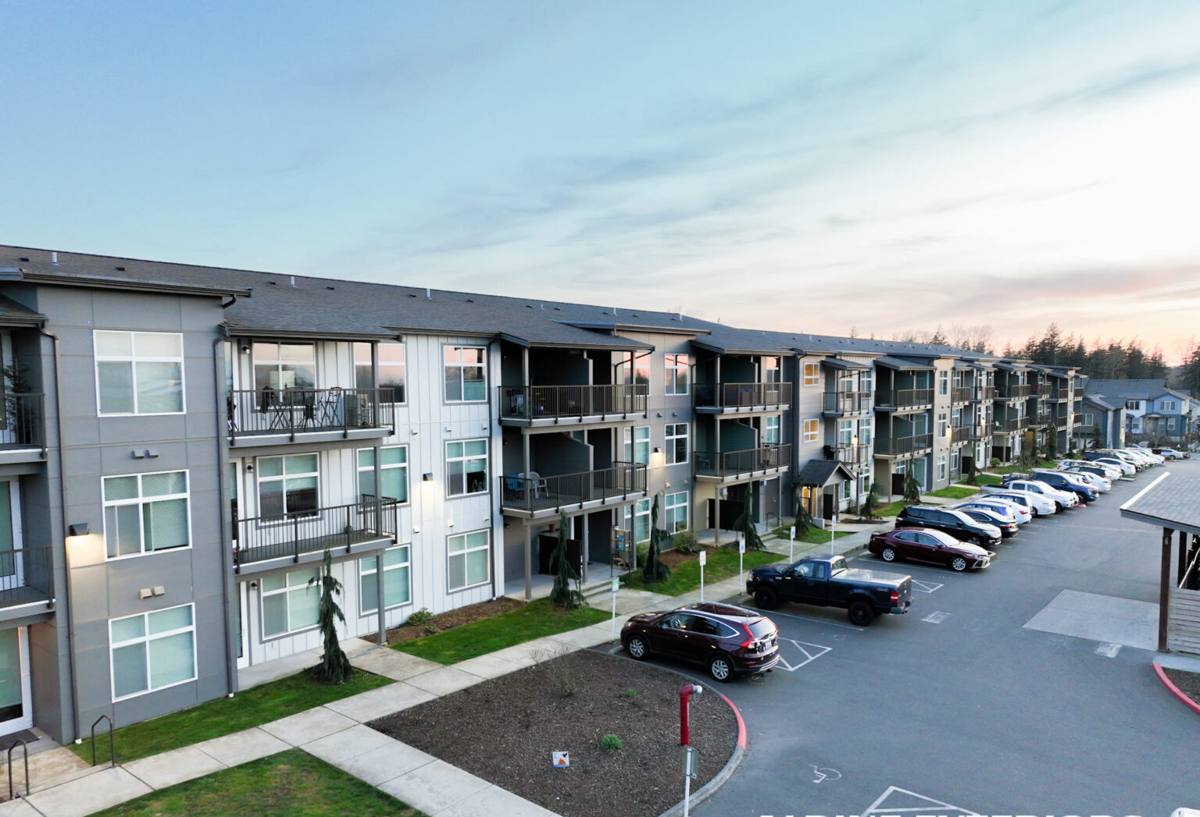
What This Climate Actually Does to Siding
Salt Air and Slow Corrosion
Salt-laden air doesn't just affect homes sitting right on saltwater. It travels, and over years it accelerates the breakdown of fasteners, flashing, and any siding material that isn't dimensionally stable. Fastener corrosion is one of the most common hidden failure points we find when we pull old siding off a Whatcom County home — the boards can look serviceable while the nails holding them have already lost most of their grip.
Driving Rain and Water Intrusion
Rain that comes in at an angle, rather than straight down, finds every shortcut in a siding installation: unsealed butt joints, undersized flashing, caulk used where flashing should have been, and siding installed too close to the ground or a roofline. Fiber cement itself doesn't rot, but a poor installation around a material that doesn't rot is still a poor installation — water gets behind the cladding and goes to work on the sheathing, framing, and insulation instead.
Moss, Algae, and Prolonged Dampness
A long moss season means siding surfaces stay damp longer between dry spells. On north-facing walls and anywhere shaded by trees, that dampness lingers for days. Material that absorbs moisture swells, and repeated swelling and drying is what eventually opens up joints and pushes paint or coatings to fail early. Material that sheds moisture and holds its factory finish is the only real answer to a moss season this long.
Why We Install Only James Hardie Fiber Cement Here
We don't offer vinyl, LP SmartSide, primed spruce, cedar, or other fiber cement brands, and Yew Street is exactly the kind of environment that explains why. Each of those has a real weak point that this climate finds quickly:
- Vinyl expands and contracts with temperature swings and can warp or pull away from fasteners over time, opening gaps that let wind-driven rain track behind it.
- Wood products (cedar, primed spruce) are organic material in a climate that stays damp for extended stretches — even with excellent maintenance, moisture cycling and moss growth shorten their service life and demand ongoing upkeep most homeowners don't want to sign up for.
- LP SmartSide and other engineered wood products perform reasonably when installed and maintained precisely to spec, but they're still wood-based, and any lapse in caulking, painting, or flashing maintenance opens the door to swelling at cut edges.
- Other fiber cement brands may be dimensionally sound, but they don't carry Hardie's factory-baked ColorPlus finish or the specific HZ5 formulation engineered for wet, marine-influenced climates like this one.
James Hardie fiber cement is non-combustible, dimensionally stable in changing humidity, and — in the ColorPlus line — finished at the factory under controlled conditions rather than painted on site after installation. That factory finish is baked on with a process that holds color and resists moss and mildew far longer than field-applied paint, which matters directly on shaded Yew Street lots where a wall can stay damp for days after a rain event.
Fiber Cement Siding Options at a Glance
| Material | Moisture Behavior | Maintenance Burden | Typical Service Life Here |
|---|---|---|---|
| James Hardie (HZ5, ColorPlus) | Dimensionally stable, sheds moisture, factory-sealed edges available | Occasional wash; no repainting for years with ColorPlus | Decades with correct install |
| Vinyl | Doesn't absorb water but can warp/gap with temperature swings | Low, but repairs are visible and hard to color-match | Variable; shortened by wind and UV over time |
| Cedar / primed wood | Absorbs moisture, prone to swelling and moss growth | High — regular painting, caulking, moss treatment | Shorter without diligent upkeep |
| LP SmartSide | Engineered wood — stable if sealed edges and finish are maintained exactly | Moderate to high — finish maintenance is non-negotiable | Depends heavily on maintenance discipline |
What a Correct Installation Looks Like on Yew Street Homes
Fiber cement is only as good as the installation behind it. The material itself resists moisture, but the assembly around it is what actually keeps water out of the wall. On the homes we work in this area, that means:
Weather Barrier and Flashing
A continuous weather-resistant barrier behind the siding, with flashing integrated at every window, door, deck ledger, and roofline intersection — not caulk substituting for flashing. This is the detail that matters most in a driving-rain climate, because it's the backup system that catches water the siding surface doesn't stop.
Proper Clearances
Hardie specifies minimum clearances from grade, roofing, and other horizontal surfaces for a reason: those gaps let water drain and air circulate instead of wicking up into the bottom edge of the siding. On sloped Sudden Valley lots this needs real attention rather than a rule of thumb.
Fastening to Spec
Corrosion-resistant fasteners, set at the correct depth and spacing, into solid framing or proper blocking. Overdriven or underdriven nails are one of the most common defects we find on re-siding jobs, and in a salt-air environment, the wrong fastener accelerates failure years before the siding itself would have needed attention.
Joint Treatment and Caulking
Butt joints backed and sealed correctly, using the right sealant for fiber cement rather than a general-purpose caulk that hardens and cracks within a couple of seasons.
Factory-Finished Cut Edges
Field cuts and edges sealed or primed per Hardie's specifications so that no raw fiber cement edge is left exposed to Yew Street's damp, moss-prone air.
Our Process for a Yew Street Project
- On-site assessment — we walk the home, check existing siding and trim condition, note drainage patterns and shaded elevations specific to the lot.
- Scope and product selection — we confirm the right Hardie panel or lap profile and ColorPlus color, matched to sun exposure and HOA or neighborhood expectations where relevant.
- Prep and moisture check — old siding removal (where applicable), sheathing inspection for hidden water damage, and repair of any compromised framing before new material goes up.
- Weather barrier and flashing installation — the step that determines how the wall performs for the next several decades, done before a single piece of siding is hung.
- Installation to manufacturer spec — correct clearances, fastening, and joint treatment throughout.
- Final walkthrough — trim, caulking, and touch-up review with the homeowner before we consider the job finished.
Why a Crew That Already Works Yew Street Matters
Siding installation is detail work, and the details that matter shift by microclimate. A crew that's only ever worked drier inland projects can install fiber cement competently and still get the flashing details wrong for a lot that sees more wind-driven rain than average. Working Yew Street repeatedly means we already know:
- Which elevations on this stretch take the worst weather exposure and need extra attention at flashing and joints
- How local moss and algae growth patterns affect where ColorPlus finish earns its keep versus a lesser coating
- What existing wall assemblies in the area typically look like once old siding comes off, so surprises are rarer and estimates are more accurate
- Realistic scheduling around Whatcom County's wetter months, so installation happens during workable weather windows rather than being rushed between storms
Cost Factors for a Yew Street Fiber Cement Project
| Factor | Why It Affects Price |
|---|---|
| Home size and wall complexity | More corners, dormers, and trim details mean more cutting, fitting, and flashing work |
| Existing siding removal and disposal | Tear-off adds labor and disposal cost versus a bare-wall install |
| Sheathing or framing repair | Hidden moisture damage found during removal needs to be fixed before new siding goes up |
| Panel/lap profile and color | ColorPlus premium colors and specialty profiles price differently than standard options |
| Site access and lot slope | Sloped Sudden Valley lots can affect staging, scaffolding, and labor time |
We don't quote broad numbers without seeing the specific home — the honest range depends on all of the above. What we can promise is a written estimate that spells out exactly what's included, with no surprise change orders for details that should have been scoped up front.
A Homeowner's Checklist Before Hiring for This Climate
- Ask specifically what weather barrier and flashing system will be used, not just what siding brand
- Confirm the installer follows James Hardie's published fastening and clearance specifications, not a generic approach
- Ask how the crew handles cut-edge sealing on fiber cement
- Find out whether the estimate includes sheathing inspection and repair if hidden moisture damage is found
- Ask how long the crew has actually worked in Sudden Valley or comparable Whatcom County microclimates
- Get the warranty terms in writing — both the manufacturer's material warranty and the installer's workmanship warranty
Living With Fiber Cement Siding on Yew Street
Once correctly installed, Hardie fiber cement with a ColorPlus finish asks very little of a homeowner in this climate. An occasional rinse to clear pollen, dust, or the start of surface moss is typically all that's needed — there's no repainting cycle to keep up with the way there is on wood siding. If moss does establish on a shaded wall, a gentle wash rather than pressure-washing at close range protects both the finish and the caulked joints. The bigger maintenance win is structural, not cosmetic: because the material doesn't swell and shrink with every wet-dry cycle the way wood does, the joints and fastener points that a driving-rain climate would otherwise work loose over time stay tight for far longer.
Ready When You Are
If you're weighing a siding replacement or new install on Yew Street, we're glad to come take a look and talk through what your home actually needs — no pressure, no upsell to a product we don't stand behind. Fill out the form below for a free estimate.