 Sudden Valley Siding
 Composite Decking Built for Acme's Wet, Shaded Climate
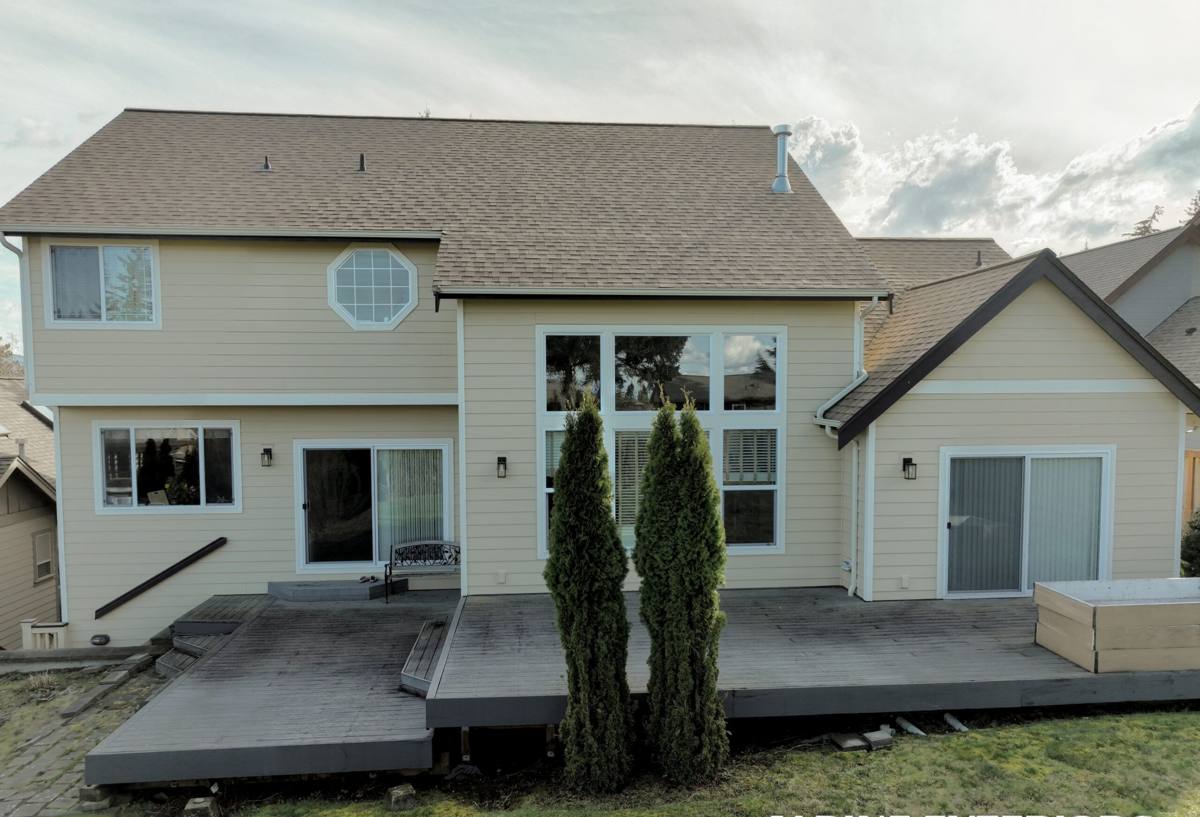
Acme sits in the timbered valleys south of Bellingham, in a stretch of Whatcom County that holds onto rain, shade, and moisture longer than the more open parts of the region. Tree canopy keeps yards cool and green, but it also keeps decks damp. Add in the salt-tinged air that moves through Whatcom County from the Sound, a rainy season that runs long, and a moss season that seems to stretch from October into May, and a backyard deck here works harder than it would in most parts of Western Washington. Composite decking was built for exactly this kind of climate — but only when it's installed on a structure engineered to shed water instead of trap it.
We install composite decking throughout the Sudden Valley and Acme area, and we've learned that the boards themselves are only half the job. The other half is what's underneath them, and how the whole system handles the specific moisture load this part of the county deals with year-round.
What Rain, Moss, and Salt Air Actually Do to a Deck
Moss isn't just a cosmetic problem. In shaded, damp lots like a lot of what you find around Acme, moss and algae take hold on any surface that stays wet between rains — and once established, they hold moisture against the board or the substructure underneath it. On real wood decking, that trapped moisture leads to soft spots, fastener rot, and a surface that gets dangerously slick well before it looks worn out. On lower-grade or uncapped composite, the same shaded dampness can let mildew and algae stain the surface over time.
The salt content in the region's air also plays a role, mostly on the parts of a deck people forget to think about: fasteners, joist hangers, railing brackets, and any exposed metal hardware. Uncoated or mismatched hardware corrodes faster here than it would in a dry inland climate, and once a fastener starts to go, it's usually hidden under the decking where you won't see it until there's a problem.
Freeze-Thaw Adds a Second Stress
Acme's valley location means colder nights than you'll see right on the water in winter. Water that sits in a poorly drained joist bay or a cracked footing freezes, expands, and works structural connections loose over a few seasons. None of this is dramatic on its own — it's cumulative, and it's exactly why the substructure matters as much as the decking material on top of it.
Composite Decking Basics: What You're Actually Buying
Capped Composite vs. Older Wood-Plastic Composite
Modern capped composite decking wraps a wood-plastic core in a polymer shell that resists moisture absorption, staining, and surface mildew far better than the older, uncapped wood-plastic composite boards from years past. In a shaded, moss-prone yard, that cap layer is doing real work — it's the difference between a board that sheds water and one that slowly wicks it in through the grain-textured surface. We standardize on capped composite for jobs in this area because of how it performs in exactly this kind of climate, not because of any one brand's marketing.
Where PVC Decking Fits
All-PVC decking is another option — lighter than wood-composite boards, with no wood fiber content for mold or moss to feed on. It typically costs more up front and can flex more between supports, so joist spacing has to be tighter. For pool decks, low-clearance decks, or spots with heavy shade and standing moisture, it's worth discussing as an alternative to standard composite.
What a Correct Installation Involves
The Substructure Comes First
Composite boards are heavier and behave differently than wood under load, so joist spacing is typically tighter than a traditional wood deck build — often 12 or 16 inches on center depending on the board and how it's oriented. Ledger boards need proper flashing where they meet the house, and footings need to sit below the frost line with solid bearing, not just poured into whatever soil happens to be there.
Drainage and Airflow Underneath
In a shaded, tree-covered lot, a deck built tight to grade with no airflow underneath becomes a trap for humidity — which shows up later as mold on the joists, moss creeping up from below, and a musty smell that's hard to trace. We grade and vent the space underneath the deck so it can actually dry out between rain events, instead of staying damp all winter.
Fasteners and Hardware
We use stainless steel or coated fasteners rated for the moisture and salt exposure common across the county, along with hidden-fastener clip systems where the board profile allows for it. Hidden fasteners avoid puncturing the board's protective cap layer, which is one of the more common ways an otherwise good composite deck starts absorbing water it shouldn't.
Our Process, Start to Finish
- On-site walk of your yard to look at shade, drainage, grade, and access — this tells us more than any photo can
- Design and measurement: footprint, board direction, stairs, and railing layout
- Permitting where Whatcom County requires it, which we handle rather than leaving to you
- Substructure build: footings, ledger flashing, joists, and any joist protection tape
- Composite decking installation with the fastener system matched to the board
- Railing, fascia, and finish details
- Final walk-through so you know how the specific boards we installed hold up and what they need from you
Attached decks and decks above a certain height typically require a Whatcom County building permit. We pull and manage that as part of the job rather than treating it as your problem to sort out.
Composite Decking Cost Factors
Composite decking costs vary by board tier, deck size, height off grade, railing style, and how easy the site is to access — a flat, open backyard costs less to build on than a sloped, tree-lined lot with limited equipment access, which describes a fair number of Acme properties. Broad ranges below are a starting point, not a quote; we'll give you real numbers after seeing your site.
| Tier | Typical Installed Cost | Expected Lifespan | Maintenance Here |
|---|---|---|---|
| Entry-level capped composite | Lower end of the composite range | Long, but lighter-duty cap layer | Regular rinsing to stay ahead of moss and pollen buildup |
| Mid-tier capped composite | Mid-range | Long-term, solid warranty coverage | Occasional soft washing, low upkeep |
| Premium capped composite / PVC | Higher end | Longest-rated performance | Minimal — best fit for heavy shade and moisture |
Maintenance in a Moss-Prone Climate
Composite decking needs far less upkeep than wood, but "low-maintenance" doesn't mean "no-maintenance" in a climate like this one. A little seasonal attention goes a long way toward protecting the investment.
- Sweep off leaves, needles, and pollen regularly — anything organic left sitting gives moss a place to anchor
- Keep gutters and downspouts clear so runoff doesn't sheet directly across the deck surface
- Trim back overhanging branches where possible to let boards dry out between rain events
- Deal with early moss growth with a soft wash rather than a high-pressure blast, which can damage the cap layer
- Check railing hardware and lower fasteners once a year for corrosion or moisture staining
- Glance underneath the deck occasionally to make sure airflow paths haven't been blocked by stored items or overgrowth
Why Hire a Crew That Already Works in Acme
A lot of what makes a deck last in this area isn't in the spec sheet — it's local knowledge. Many Acme properties are on septic or well systems that limit where footings and equipment can go. Root systems from mature trees affect where a footing can safely be placed. Seasonal soil saturation can change how a job needs to be sequenced, and driveway or lot access on rural roads isn't always straightforward for larger equipment or material deliveries. A crew that's already worked jobs in this specific area plans around those realities instead of running into them mid-project.
We're a Whatcom County company, and Acme is part of the ground we already know — the drainage patterns, the shade lines, the permitting process, and what actually holds up here versus what just looks good on a spec sheet from somewhere drier.
Get a Free, No-Pressure Estimate
If you're weighing composite decking for a property in Acme, we're glad to walk the site, talk through what your specific yard needs, and give you an honest estimate — no pressure, no upsell. Use the form below to get started.