 Sudden Valley Siding
 Why Windows Take a Beating in Acme and Sudden Valley
Homes around Acme and Sudden Valley deal with a specific combination of weather that's harder on windows than most homeowners realize. Marine air moving inland across Whatcom County carries salt that settles on glass, frames, and hardware. Add driving rain that comes in sideways during fall and winter storms, and a moss season that can run from October clear through May on shaded, tree-covered lots, and you've got three separate stresses working on the same window at once.
None of these show up overnight. Salt air slowly breaks down seals and finishes. Wind-driven rain finds any gap in flashing or caulking and pushes water where it shouldn't go. Moss and algae hold moisture against sills, tracks, and trim long after a storm has passed, which is exactly the kind of standing dampness that rots wood and corrodes hardware. A window that was installed without accounting for these conditions often looks fine for a few years, then fails all at once.
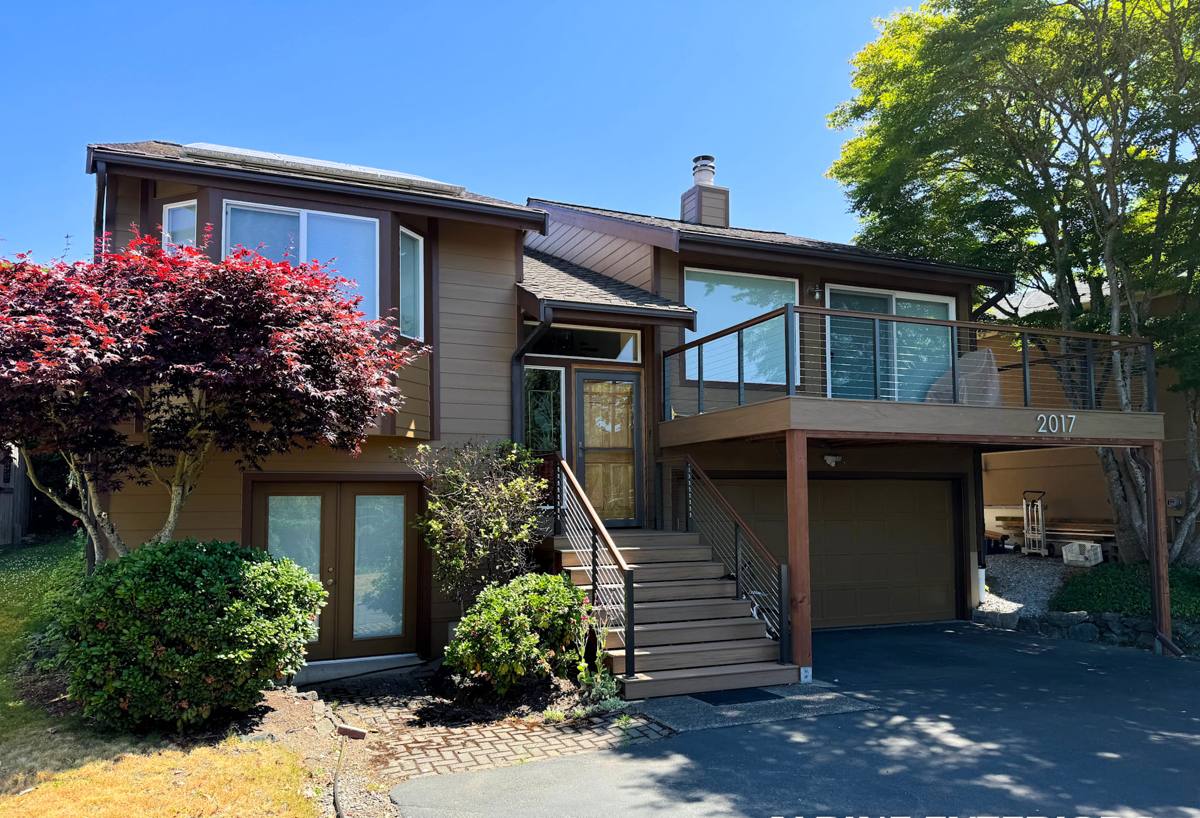
Signs Your Acme Home Needs Window Replacement
Most homeowners call us after noticing one or two of these. If you're seeing several at once, it's worth getting a real look rather than patching symptoms one at a time.
- Fog, haze, or moisture trapped between panes of glass — a sign the seal has failed
- Windows that stick, won't stay open, or are hard to lock
- A draft you can feel near the frame even when the window is closed and locked
- Soft, discolored, or spongy wood at the sill or corners of the frame
- Moss, algae, or dark staining building up on the sill, tracks, or exterior trim
- Original single-pane or bare aluminum-frame windows that have never been replaced
- A noticeable jump in heating costs with no other explanation
- Paint or finish that's peeling or bubbling around the window opening
What a Correct Window Replacement Job Involves
Swapping the glass unit into an existing opening is the easy part. Getting it right so the window holds up through another twenty years of Whatcom County weather depends on a handful of steps that are easy to rush and expensive to skip.
Removal and Structural Check
Once the old window is out, we check the sheathing, sill, and framing underneath for rot or moisture damage before anything new goes in. This is especially common on older single-pane or aluminum-frame windows, where condensation has often been draining into the wall for years without anyone noticing. Installing a new window over damaged framing just seals the problem inside the wall.
Flashing and Water Management
This is the step that matters most in a climate with regular driving rain. The window needs to be flashed so water is directed out and away from the framing, not just sealed with a bead of caulk and hoped for. That means a proper sill pan, correctly lapped flashing tied into the house's weather barrier, and a sequence that lets water shed downward and outward no matter which direction the wind is blowing. A window installed without this step can look perfect from the outside and still leak.
Insulation and Air Sealing
The gap between the window frame and the rough opening needs to be filled with low-expansion foam or backer rod and sealant — not stuffed with standard foam that can bow the frame, and not left loose enough to let moist air migrate into the wall cavity. Poor air sealing here is a common source of the drafts and condensation homeowners notice years later.
Installation and Finish
The window has to be shimmed plumb, level, and square, and fastened according to the manufacturer's instructions — this isn't just good practice, it's usually a condition of keeping the product warranty valid. Exterior trim and caulking go on in a sequence that lets water run off the building rather than behind it.
Choosing a Frame Material for This Climate
There's no single "best" window frame material — the right choice depends on how much maintenance you want to take on and what you're willing to spend up front versus over time. Here's how the common options compare for a coastal, high-moisture climate like ours.
| Frame Material | Moisture Behavior | Maintenance | Typical Cost Tier |
|---|---|---|---|
| Vinyl | Won't rot; can expand and contract with temperature swings | Low — occasional cleaning | Lower |
| Fiberglass | Very stable, resists moisture and swelling well | Low | Mid to upper |
| Wood-clad | Interior wood warmth with an exterior shell resisting weather, but any breach in the cladding exposes wood to rot | Moderate — watch cladding seams and interior finish | Upper |
| Bare aluminum | Conducts cold and promotes interior condensation; poor fit for this climate | Low, but performance issues remain | Lower |
For most Acme homes, we steer clients toward vinyl or fiberglass because they hold up against salt air and repeated wetting without the ongoing maintenance that wood cladding demands. We're not against wood-clad windows — they can look great and perform well — but we're upfront that they require more attention over time in a climate this wet, and we'll only recommend them if you're prepared for that upkeep.
Glass and Performance Options Worth Considering
Once you've settled on a frame, the glass package is where a lot of the day-to-day comfort difference comes from.
Double vs. Triple Pane
Double-pane windows with a quality Low-E coating and argon gas fill are the standard for most homes in this area and perform well. Triple-pane adds extra insulation value and sound dampening, which some homeowners want on a busy road or in a room they want extra quiet, but it comes at a higher cost and added weight on the frame and hardware.
Low-E Coatings and U-Factor
In a cloudy, marine climate, U-factor (how well the window resists heat loss) generally matters more day to day than solar heat gain — we're not fighting brutal summer sun the way drier climates are. A good Low-E coating still helps by cutting winter heat loss and reducing UV fading on floors and furniture, so it's worth including even though our summers are mild.
Condensation Resistance
Given how much humidity this region deals with, ask about a window's condensation resistance rating, not just its U-factor. A window that resists interior condensation will hold up better around bathrooms, kitchens, and rooms that don't get much airflow.
How We Handle a Window Replacement Project
- Estimate and measurement — we look at every opening in person, check for existing moisture or rot issues, and measure precisely rather than working off rough estimates.
- Ordering — windows are built to your exact openings, so we confirm sizes, materials, and glass packages before anything is ordered, and we'll walk you through realistic lead times.
- Install day — old windows come out, framing gets checked, and new units go in following the flashing, insulation, and fastening steps above — not shortcuts.
- Final walkthrough and cleanup — we test operation on every window, check the seal and finish work, and clean up the job site before we consider the work done.
Why Local Experience in Acme Matters
A window that's rated fine on paper can still fail here if it's installed without accounting for how this specific area behaves. Crews who work regularly in Acme and Sudden Valley know which lots stay shaded and damp long enough to grow moss on sills within a season, which exposures take the worst of the driving rain, and how to sequence flashing and trim so water sheds the way it's supposed to rather than finding the one gap that was missed. That kind of judgment doesn't come from a manufacturer's install manual — it comes from doing the work in this specific climate, on this specific terrain, repeatedly.
It also means fewer surprises during the estimate. We're not guessing at what your home's exposure will do to a given product over time — we've seen it play out on homes nearby.
What Affects the Cost of Window Replacement
Costs vary enough from home to home that we won't quote a number without seeing the job, but these are the main factors that move the price up or down.
| Factor | Why It Matters |
|---|---|
| Frame material | Vinyl runs lower, fiberglass and wood-clad run higher |
| Glass package | Double-pane Low-E is standard; triple-pane and upgraded coatings add cost |
| Number and size of windows | Larger openings and full-home replacements have per-unit savings but higher total cost |
| Structural repair | Rot or water damage found during removal adds labor and materials to fix properly before installing |
| Access and height | Second-story or hard-to-reach windows take more time and equipment |
| Trim and finish work | Matching existing exterior trim or siding profiles can add to the scope |
The one factor we won't cut corners on regardless of budget is the flashing and water management step — it's the difference between a window that lasts and one that causes a problem behind the wall a few years down the road.
Get a Straight Answer on Your Windows
If you're dealing with drafts, fogged glass, or windows that just don't operate the way they used to, we're happy to take a look and give you an honest read on what's going on — no pressure, no upsell on things you don't need. Fill out the form below for a free estimate, and we'll walk your home's specific exposure and openings with you before recommending anything.