 Sudden Valley Siding
 Deck Replacement in Alger: Building for Salt Air, Rain, and Moss
Alger sits in a stretch of Whatcom County where a deck takes a steady beating from three directions at once: salt-laden air moving in off the nearby Puget Sound waters, long stretches of driving rain through the fall and winter, and a moss and mildew season that runs longer here than it does further inland. Individually, none of those is unusual for western Washington. Together, on a wood or composite deck that sits outside year-round, they add up fast. We replace decks throughout the Alger and greater Sudden Valley area, and the decks that fail early almost always fail for the same reasons — not because the homeowner didn't maintain them, but because the framing, fasteners, or ledger connection underneath weren't built for this specific combination of weather.
This page is about deck replacement specifically — what actually wears out a deck in this climate, what a correct rebuild involves structurally and materially, what drives the cost of the job, and how our process works from first look to final walkthrough.
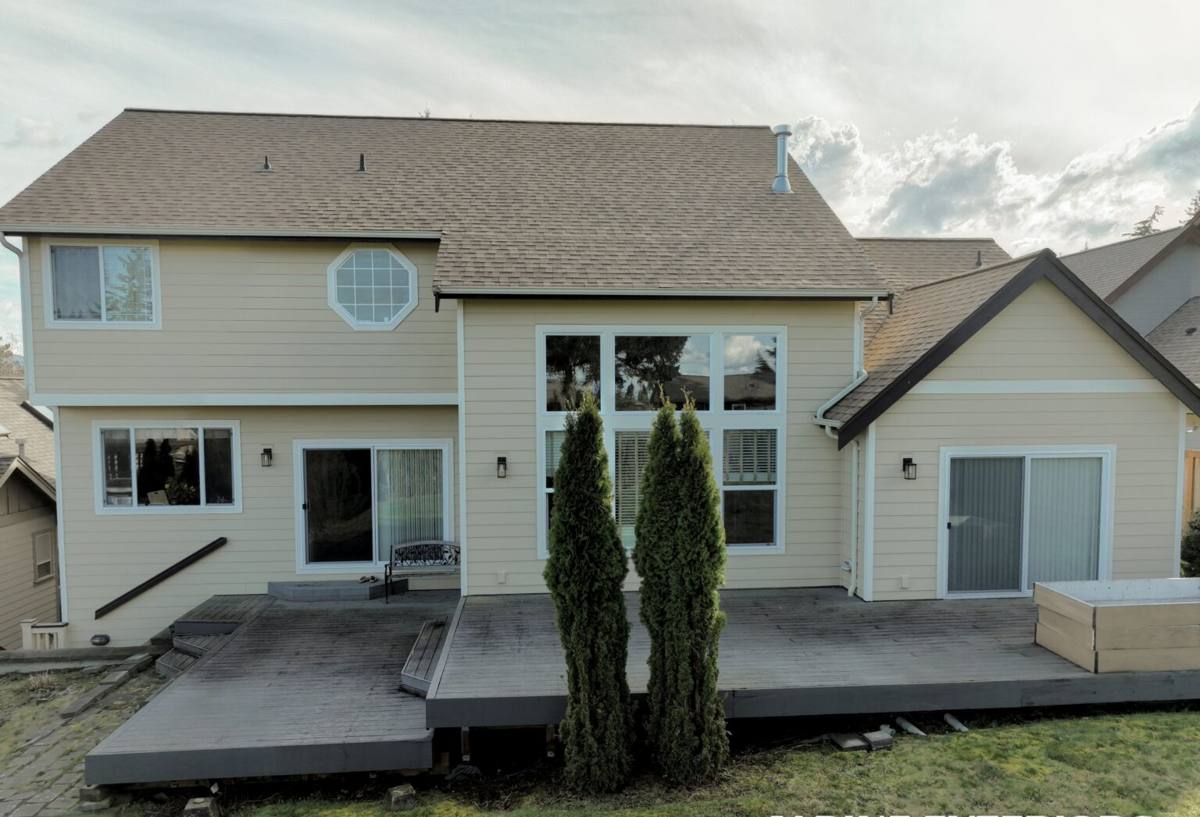
What This Climate Does to a Deck in Alger
Salt Air and Metal Corrosion
Homes closer to the water pick up airborne salt that settles on every exposed metal surface — joist hangers, structural screws, railing brackets, and fastener heads included. Standard fasteners that would hold up fine on a deck twenty miles inland can start showing rust and pitting within a few seasons out here. That corrosion doesn't stay cosmetic. Once a joist hanger or ledger bolt starts losing material, the connection it's holding gets weaker, and that's a structural problem, not just an appearance one.
Driving Rain and the Ledger Connection
The ledger board — where the deck attaches to the house — is the single most common failure point on any deck, and driving rain makes it worse. Wind-driven rain pushes water sideways into gaps that would stay dry in a calmer climate, and if the ledger flashing wasn't installed correctly the first time, water works its way behind the board and into the house's rim joist. By the time that shows up as a soft spot or a sagging deck edge, the rot has usually been progressing for years, unseen, on the inside of the wall.
A Long Moss and Mildew Season
Shaded decking boards, especially ones tucked under overhangs or tree cover, stay damp for extended stretches through the wet months. That dampness is exactly what moss and mildew need to establish themselves, and once they take hold on a wood deck surface, they hold moisture against the board even longer, accelerating rot from the top down at the same time salt and rain are working on the structure from below and behind. It's a slow squeeze from multiple directions, which is why decks in this area often look fine on the surface right up until they don't.
Signs a Deck Needs Replacement, Not Repair
Not every aging deck needs a full rebuild. But there's a point where patching boards or re-sealing the surface stops being a real fix and starts being a way to delay a bigger problem. We look for these signs when we assess a deck in Alger:
- Soft, spongy, or visibly sagging decking boards, especially near the ledger or in shaded areas
- Rust staining or visible corrosion on joist hangers, bolts, or structural screws
- Gaps, staining, or soft wood at the ledger-to-house connection
- Wobble or movement in the railing posts when pushed
- Persistent moss or mildew that returns quickly after cleaning
- Structural framing (joists, beams, posts) that shows rot or insect damage when probed
- A deck that predates current code requirements for ledger attachment and guard rail spacing
If the framing and ledger connection are still sound and it's really the surface boards showing their age, resurfacing can make sense. Once the framing, hardware, or ledger connection are compromised, replacement is the honest recommendation — a new deck built on a bad structural foundation just fails again sooner.
What a Correct Deck Replacement Involves
Ledger Board and Flashing
The ledger gets removed and rebuilt with proper flashing that directs water away from the house rather than trapping it behind the board — a self-adhering membrane and metal flashing detail, not just caulk. This is the connection point that matters most for keeping water out of the house itself, and it's worth doing correctly the first time rather than revisiting it in a few years.
Footings and Structural Framing
Footings need to sit below frost depth and bear on solid, undisturbed soil — something that's easy to shortcut and hard to fix later without tearing the deck apart again. Joists, beams, and posts get sized to current code span tables for the actual loads the deck will see, not just matched to whatever was there before.
Fasteners and Hardware Grade
Given the salt air this area sees, we don't use standard galvanized fasteners on a deck rebuild here. Hot-dip galvanized or stainless steel hardware, rated for ground contact and coastal-adjacent exposure, holds up to salt air and sustained moisture far longer than lighter coatings that were never meant for this kind of environment.
Decking Material Choice
Whether a homeowner goes with wood or composite decking, the material only performs as well as the structure underneath it. We walk through the real maintenance trade-offs of each option for a property like this one, rather than pushing a single product on every job.
Comparing Decking Materials for This Climate
| Material | Behavior in Salt Air & Rain | Moss/Mildew Resistance | Typical Maintenance |
|---|---|---|---|
| Pressure-treated wood | Holds up well if properly sealed and fasteners are corrosion-rated | Needs regular cleaning; moss takes hold in shaded spots | Annual cleaning and re-sealing |
| Cedar decking | Naturally moisture-resistant but still needs upkeep near salt air | Moderate; still needs periodic cleaning in shade | Regular staining/sealing to prevent graying and checking |
| Composite decking | Doesn't absorb moisture the way wood does; hardware and framing beneath still need corrosion-rated fasteners | Higher resistance to moss staining; still benefits from periodic washing | Low; occasional washing, no sealing or staining |
| PVC decking | Fully moisture-impervious surface; framing below still needs the same structural care | High resistance to moss and mildew staining | Low; periodic washing |
Whichever surface material a homeowner chooses, the framing, ledger, and fasteners underneath are what actually determine how long the deck lasts in this climate. A composite deck built on undersized joists or standard fasteners will still have a structural problem — it'll just take longer to show on the surface.
What Drives the Cost of a Deck Replacement in Alger
Every deck replacement quote comes down to a handful of variables, and it helps to know what they are before comparing bids. The biggest swing factor is usually what the crew finds once the old decking comes off — a ledger and frame in decent shape costs far less to rebuild than one with hidden rot or corroded hardware that has to be fully replaced. Size and footprint matter too, along with height above grade, since a deck with stairs, multiple levels, or built-in railing takes more labor than a simple single-level platform.
- Deck size, footprint, and number of levels
- Condition of the existing framing and ledger once demolition begins
- Decking material selected, from pressure-treated wood up through PVC
- Amount of new footing and structural work required by current code
- Permit and inspection scope required for the specific project
We give a written estimate after seeing the existing deck in person, because guessing at framing condition from a photo or a phone call almost always leads to a number that changes once work starts.
Our Deck Replacement Process
We start with an on-site assessment of the existing deck: the ledger connection, the framing underneath, the footings, and the hardware, since those are the parts that actually determine whether a deck is a repair candidate or needs a full rebuild. From there we put together a clear, written scope covering demolition, framing, ledger flashing, hardware grade, decking material, and railing, along with a realistic timeline. Permitting through Whatcom County is handled as part of the job, not left for the homeowner to sort out separately. Once the old deck is removed, we rebuild the structure to current code span and attachment requirements before the decking or railing goes on, and we walk the finished deck with the homeowner before calling the job done.
Why a Local Crew That Works Alger Matters
A contractor who regularly works this stretch of Whatcom County already knows which fastener grade actually holds up to the salt air here, how far below frost depth footings need to sit, and which parts of a deck tend to fail first on a shaded, damp lot near the water. That's the kind of judgment that doesn't come from a generic deck-building checklist — it comes from having seen what does and doesn't last in this specific climate. Properties closer to the water tend to need more corrosion-resistant hardware and more attention to ledger flashing than lots set further back and higher up, and a crew that works this area regularly can tell the difference at a glance rather than treating every property the same way. It also means a crew that understands local permitting and inspection requirements without treating them as an afterthought.
A Simple Checklist Before Hiring for a Deck Replacement
- Ask whether they pull permits and handle inspections as part of the job, not as a homeowner task
- Confirm current Washington contractor licensing and active liability insurance
- Ask what fastener and hardware grade they use, and why, given salt air exposure
- Get a written scope covering demolition, framing, ledger flashing, and decking material — not just a total price
- Ask how they handle the ledger-to-house connection specifically, since that's the most common failure point
If you're weighing whether a deck in Alger needs a repair or a full replacement, we're happy to take a look and give an honest read on what it actually needs. Reach out below for a free, no-pressure estimate.