 Sudden Valley Siding
 Edgemoor Roofs Face a Different Kind of Wear
Edgemoor sits close enough to the water that homes here take a different kind of beating than roofs a few miles inland in Whatcom County. It's not one big storm that does the damage — it's the daily grind of salt-laden air, wind-driven rain that finds every gap in a poor installation, and a moss season that can run eight or nine months out of the year in the shade of the fir and cedar canopy common to this part of the county. An asphalt shingle roof that's specified and installed correctly can handle all of that for decades. One that's built to a generic spec, or installed by a crew that doesn't know this stretch of coastline, tends to show its age early — curling shingles, dark streaking, soft spots at the eaves, and granule loss that shows up in the gutters within the first five or six years.
This page covers what we actually do differently on Edgemoor roofs, why it matters, and what you should expect from a properly built asphalt shingle roof in this specific environment.
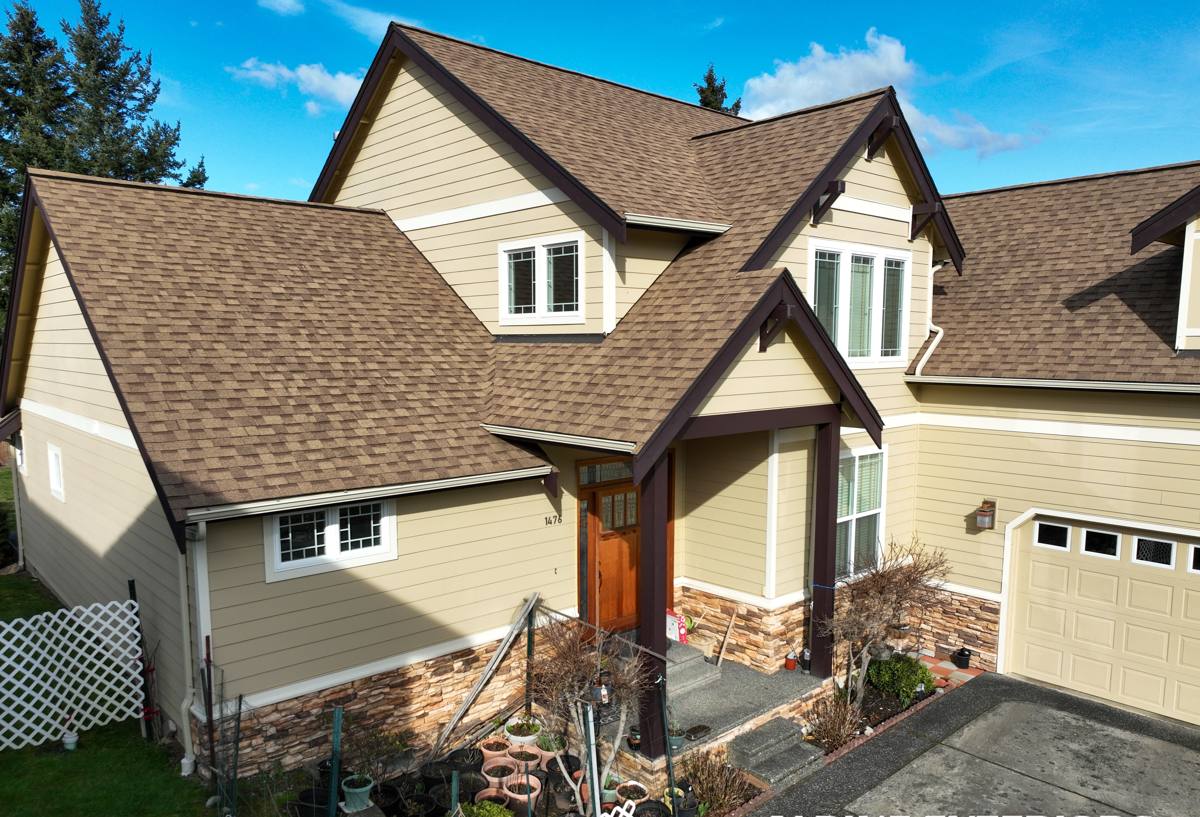
What Salt Air, Rain, and Moss Actually Do to a Shingle Roof
Salt and Wind Exposure
Proximity to saltwater doesn't rot asphalt shingles the way it corrodes bare metal, but it does accelerate wear on the metal components of a roofing system — flashing, fasteners, vent stacks, and drip edge. Standard galvanized fasteners and lower-grade flashing lose their protective coating faster in a salt-air environment, and once that happens, corrosion works its way into the roof deck around every penetration. Wind off the water also puts more sustained uplift pressure on shingle tabs than a sheltered inland roof ever sees, which is why nailing pattern and sealant strip activation matter more here than the shingle brand printed on the wrapper.
Driving Rain
Whatcom County storms rarely come straight down. Rain here tends to arrive at an angle, driven by wind off the Sound, which means water gets pushed sideways under shingle edges, around chimneys, and into valleys in a way that vertical rain never would. A roof built to a minimum-code underlayment and flashing spec can pass a dry-day inspection and still leak the first time a real coastal storm hits it broadside. This is the single biggest difference between a roof that's "up to code" and one that's actually built for Edgemoor.
Moss and Organic Growth
The tree cover and moisture that make Edgemoor and Sudden Valley attractive places to live are the same conditions that grow moss on a north-facing or shaded roof slope almost year-round. Moss isn't just cosmetic. It holds moisture against the shingle surface long after the rest of the roof has dried, works its rhizoids into the granule layer, and lifts shingle tabs enough to let wind-driven rain underneath. A roof that isn't specified with algae-resistant shingles and isn't detailed to shed water and dry out quickly will grow moss faster than the manufacturer's warranty assumes.
What a Correct Asphalt Shingle Roof Looks Like in This Climate
"Correct" isn't about buying the most expensive shingle on the shelf — it's about matching the shingle class, underlayment, flashing metal, and ventilation to what this coastline actually does to a roof year-round.
| Component | Minimum-code approach | What we spec for Edgemoor |
|---|---|---|
| Shingle type | Standard 3-tab or basic architectural | Algae-resistant (copper-granule) laminate/architectural shingle, wind-rated for coastal exposure |
| Underlayment | Single-layer felt | Synthetic underlayment plus self-adhered ice-and-water membrane at eaves, valleys, and penetrations |
| Flashing | Galvanized steel | Corrosion-resistant flashing (aluminum or coated steel) at chimneys, valleys, and wall intersections |
| Fasteners | Standard galvanized nails | Corrosion-resistant nails matched to shingle manufacturer specs |
| Ventilation | Minimum code intake/exhaust | Balanced ridge and soffit ventilation sized to slow moisture buildup and moss regrowth |
None of this is exotic material — it's standard product available from any major manufacturer. The difference is choosing it deliberately for this environment instead of defaulting to whatever keeps the bid lowest.
How Our Process Works
1. Roof and Site Inspection
We start by walking the roof, not just looking at it from the ground. We check deck condition at the eaves and valleys (the two areas that take the most water damage in this climate), look for existing moss and its extent, check flashing at every penetration, and assess ventilation. We also look at tree cover and shade patterns on your specific lot, since that tells us which slopes will need the most moss-resistant detailing.
2. Tear-Off and Deck Prep
Old shingles come off down to bare deck. We don't install over existing layers — a second layer traps moisture and voids most manufacturer warranties outright. Any soft or water-damaged decking gets replaced before anything else goes down; this is where a lot of the real problems on older Edgemoor roofs get found and fixed.
3. Underlayment and Flashing
Self-adhered ice-and-water membrane goes down first at eaves, valleys, and around every penetration, followed by synthetic underlayment across the field. New flashing is installed at chimneys, skylights, and wall-to-roof transitions rather than reusing old flashing, since corroded flashing is one of the most common hidden leak sources we find on tear-offs in this area.
4. Shingle Installation
Shingles are installed to the manufacturer's nailing pattern and wind-rating spec, not a shortcut pattern. Starter strips and ridge caps are installed as a matched system, since mixing components from different product lines is a common way warranties get voided without the homeowner ever knowing.
5. Ventilation Check and Cleanup
We confirm intake and exhaust ventilation is balanced before we leave, since poor ventilation is one of the biggest drivers of premature moss regrowth and shingle aging from underneath. Site cleanup includes a magnetic nail sweep and full debris haul-off.
6. Final Walkthrough
We walk the finished roof with you, explain what was done, and go over basic maintenance — what to watch for and when it's worth a call, not a hard sales pitch for annual contracts you don't need.
Repair, or Full Replacement?
Not every roof problem in Edgemoor means a full tear-off. The honest answer depends on the age of the roof, how much of it is affected, and what's actually happening under the surface.
| Factor | Leans toward repair | Leans toward replacement |
|---|---|---|
| Roof age | Under 10-12 years | Approaching or past the shingle's rated life |
| Damage extent | Isolated area (one slope, one valley, one flashing point) | Widespread granule loss, curling, or multiple leak points |
| Deck condition | Solid, dry decking under the affected area | Soft spots, rot, or staining found in multiple areas |
| Moss coverage | Light, recently developed | Heavy, longstanding, tabs visibly lifted |
We'll tell you straight which category your roof falls into. A patch job on a roof that's genuinely near the end of its life just delays the real cost and risks water getting into the deck in the meantime.
Maintenance That Actually Extends Roof Life Here
A properly installed roof still needs a bit of seasonal attention in this climate. This isn't a sales list — these are the things that genuinely make a difference on shaded, coastal-exposed roofs like the ones common around Edgemoor and Sudden Valley:
- Keep gutters and downspouts clear, especially before the fall rains — clogged gutters back water up under the shingle edge
- Have moss treated or gently removed before it spreads across a full slope, not after
- Trim back overhanging branches where practical to reduce shade and speed drying time
- Check attic ventilation isn't blocked by insulation, since blocked vents trap moisture against the deck
- Have flashing and valleys checked every few years, since that's where most coastal leaks actually start
- Avoid pressure washing shingles — it strips granules and shortens the roof's life faster than moss does
Why a Crew That Already Works Edgemoor Matters
A roofing crew that mostly works dry, inland jobs will still build you a roof that meets code. But code is a floor, not a target, and it doesn't account for what a house three blocks from the water actually experiences over a winter. Knowing which slopes in a given Edgemoor microclimate hold moss longest, which flashing details actually stand up to sideways rain off the Sound, and which corners get skipped on a generic spec because they're "extra" — that comes from working this specific area repeatedly, not from a training manual. It's also why we don't treat every roof in Whatcom County the same way we'd treat one in a drier part of the state.
What This Means for Your Estimate
When we quote an Edgemoor roof, the number reflects the upgraded underlayment, corrosion-resistant metal and fasteners, and algae-resistant shingle class that this environment calls for — not a stripped-down base bid with those items as pricey add-ons later. We'd rather give you an accurate number up front than a low number that grows once the tear-off exposes what's really going on underneath.
If your roof is showing moss, granule loss in the gutters, or you're just planning ahead, we're happy to take a look and give you a straight, no-pressure estimate — use the form below to get started.