 Sudden Valley Siding
 Building a Custom Deck for Barkley's Wooded, Lake-Basin Climate
Barkley sits close to the Sudden Valley community on Lake Whatcom, in a part of Whatcom County where tall conifers, sloped lots, and a lake-basin setting shape almost every outdoor build decision differently than they would on an open, sunny lot. Add in the marine-influenced air that moves through this part of the county, driving rain off Pacific storm systems, and a moss season that runs long in the shaded, damp pockets under tree canopy, and a deck here is working against conditions that most decking products and generic builds simply weren't designed around.
A custom deck for a Barkley property isn't just a layout and a material pick off a brochure. It's a set of decisions about drainage, footing placement, and material choice that respond to the specific way this area holds moisture — heavy shade that slows drying time, needle and leaf litter that builds up fast, and grades that affect how water moves under and around the structure. This page walks through what a deck in this setting actually needs, what a correct build involves, and how our process works for a custom deck project in Barkley and the surrounding Sudden Valley area.
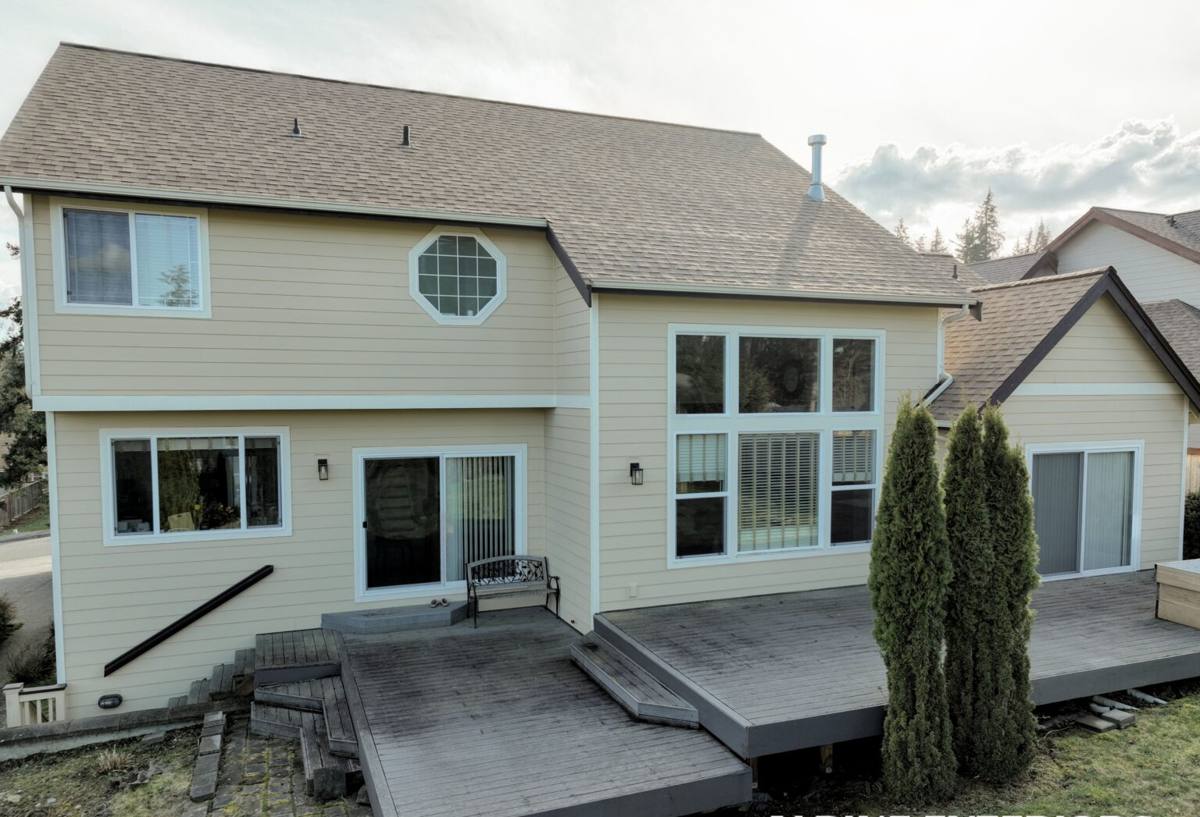
What Makes a Barkley Deck Different
Deep Shade From Surrounding Conifers
A lot of Barkley properties sit under or near mature evergreen canopy, and that shade changes how a deck behaves in ways a sunnier lot doesn't deal with. Surfaces that stay shaded most of the day dry out slower after rain, which means moisture sits in board gaps and joist connections longer between storms. That extended damp window is exactly what moss, algae, and mildew need to establish, and once they take hold on a shaded deck they tend to spread faster than on a lot that gets regular sun exposure to dry things back out.
Lake-Basin Moisture and a Long Moss Season
Being close to Lake Whatcom means the air around Barkley holds more ambient moisture than it would further from the water, and that combines with the marine-influenced rain patterns common across Whatcom County to keep humidity elevated for long stretches of the year. Driving rain during winter storms adds another layer, pushing water into places a calm-weather deck design wouldn't need to account for — under railings, into ledger connections, and between boards that aren't gapped with enough clearance. The result is a moss season that starts earlier and runs later here than it would on a drier, more open site.
Sloped, Wooded Lots
Many lots in and around Sudden Valley are graded or sloped, sitting among established trees rather than on flat, cleared ground. That changes footing placement, can put tree roots in the way of a straightforward foundation plan, and affects how a deck's substructure needs to be engineered to sit level and stay stable on uneven terrain. A deck design that ignores the slope and root structure of the actual lot tends to run into problems during the build, not just years later.
Choosing the Right Decking Material for This Setting
Material choice carries more weight in a shaded, damp setting like Barkley than it would somewhere drier, because the gap between a well-suited product and a poorly-suited one shows up faster here. The three main categories homeowners weigh are pressure-treated or cedar wood, capped composite, and cellular PVC.
Wood
Pressure-treated lumber and cedar look good when new and remain a reasonable choice for homeowners who want a natural look, but both need regular sealing or staining to hold up against sustained shade and moisture, and both are the first materials to show moss, graying, and soft spots when that maintenance slips. In a heavily shaded Barkley yard, that maintenance window is shorter than it would be on a sunnier lot.
Capped Composite
Capped composite boards use a plastic shell around a wood-fiber composite core, which resists moisture absorption and surface staining far better than uncapped composite or wood. In a shaded, lake-adjacent setting, that cap layer is doing real structural work rather than just adding a marketing claim — it's the difference between a deck that needs occasional washing and one that needs ongoing sealing to keep moss from taking hold.
Cellular PVC
PVC decking contains no wood fiber at all, so it doesn't absorb moisture the way even capped composite can at cut edges or fastener holes. It typically costs more and can flex more under heavy point loads, but for a deeply shaded deck that rarely dries out between rain events, some homeowners find the added moisture resistance worth the extra cost, especially on a lower or ground-level deck with limited airflow underneath.
| Material | Shade & Moisture Handling | Moss Resistance | Upkeep |
|---|---|---|---|
| Cellular PVC | Excellent — no wood fiber to absorb moisture | Strong, smooth non-porous surface | Occasional washing |
| Capped composite | Strong — cap layer resists moisture and staining | Good on most lines | Occasional washing |
| Uncapped composite | Moderate — some moisture absorption at exposed fiber | Fair; more prone to buildup in shade | Periodic cleaning |
| Cedar | Moderate — natural resistance, but needs sealing | Fair when sealed and maintained | Regular oiling or sealing |
| Pressure-treated wood | Weak in sustained shade without upkeep | Poor without regular treatment | Regular sealing or staining |
What a Correctly Built Deck Involves Here
The decking surface is what homeowners picture first, but in Barkley's shaded, sloped setting, the framing, footings, and drainage details underneath are what actually determine how long the deck lasts. A build done right for this area includes:
- Footing placement and depth engineered for the lot's actual slope and soil conditions, not a generic flat-lot layout
- Framing material rated for sustained moisture and shade exposure, sized correctly for the span and load
- Corrosion-resistant fasteners throughout, since damp, shaded conditions accelerate corrosion in standard hardware over time
- Correct board gapping for drainage and airflow, so moisture from rain and ambient humidity can actually dry between boards instead of sitting
- Proper ledger board flashing where the deck ties into the house, since that connection point is one of the most common places moisture gets in on a poorly built deck
- Substructure ventilation and grading that accounts for reduced airflow under a shaded, low-lying deck
- Clearance and planning around existing tree roots so footings don't compromise root systems or get undermined by them later
- Railing and post attachment sized for the site's actual wind and load conditions, including any elevation changes on a sloped lot
Skip any one of those and the deck usually still looks fine when it's finished. The problems tend to show up a season or two later, as a soft joist, moss creeping across a board that never fully dries, or a footing that's shifted on uneven ground.
Site Access and Sudden Valley's Private Roads
Building in and around Sudden Valley comes with a practical wrinkle that doesn't come up on every job elsewhere in Whatcom County: much of the community runs on private roads with its own access rules, and material delivery, equipment staging, and crew access all need to be planned around that ahead of time rather than figured out on the day of the build. A crew that hasn't worked this area before can lose real time sorting out gate access or squeezing a delivery truck down a narrower private road. Planning that logistics piece up front, before materials show up, keeps a project moving on schedule instead of stalling on its first day.
How Our Process Works
We start with a site visit to look at what's actually there — existing structure condition if it's a replacement, the slope and soil around the build area, how much shade the site gets through the day, and proximity to trees and root systems that need to be worked around. From there we talk through decking material options that fit the budget and how the space will actually be used, whether that's a quiet spot tucked under the trees or a larger deck built for entertaining.
Permitting for Barkley and the rest of Whatcom County generally follows standard setback, structural, and grading requirements, and we handle that as part of the job rather than leaving it for the homeowner to sort out. Once permitted, the build follows the sequence above — footings and framing first, sized and placed for the lot's actual slope and moisture exposure, then the decking surface, railing, and any stairs or trim work. We finish with a walkthrough covering what the specific material you chose actually needs going forward, which for most modern decking is minimal, but not nothing in a shaded setting like this one.
What Your Deck Still Needs From You
Even a well-built deck in the right material needs some routine attention in a shaded, lake-basin climate to reach its full lifespan. A short list worth keeping in mind:
- Clear needles, leaves, and organic debris from board gaps regularly, since shaded decks trap that buildup longer than sunnier ones
- Rinse or wash the deck surface periodically to keep moss and mildew from establishing before they spread across a full board or section
- Check railing posts and hardware once a year for early corrosion or loosening, especially heading into the wet season
- Trim back overhanging branches where practical to let in more light and airflow across the surface
- Address any soft framing, shifting footing, or standing water underneath right away — that's a structural issue, not a cosmetic one, and it doesn't improve with time
Why It Matters That We Already Work Barkley and Sudden Valley
A crew that mostly builds decks on open, sunny lots elsewhere in the county can still put one together competently, but a Barkley job has variables that don't come up as often on a typical build — sloped and rooted terrain that affects footing placement, shade patterns that extend the moss season well beyond what a sunnier lot sees, and private road access that has to be planned around rather than discovered on delivery day. Working this area regularly means we're not guessing at those requirements on your project. We've seen which decking lines actually hold up against Barkley's specific combination of shade, lake-basin moisture, and a long moss season, and which framing and drainage details are worth the extra time rather than an upsell.
That familiarity also shows up in the smaller judgment calls — how to orient a deck to catch what sun a shaded lot does get, or being straightforward about what a deck here realistically needs to last versus what's just an extra line item.
Get a Straight Answer About Your Deck
Whether you're replacing a tired deck, building new, or want an honest read on what a custom deck would take on your Barkley or Sudden Valley property, we're happy to walk the site with you and lay out the options plainly. Reach out below for a free, no-pressure estimate.