 Sudden Valley Siding
 Siding Replacement for Barkley Homes in Sudden Valley
Barkley homes sit inside one of the more demanding exterior environments in Whatcom County. Between the marine-influenced air that moves through the region, long stretches of driving rain in the fall and winter, and a shoulder season damp enough to grow moss on nearly any north-facing wall, siding here works harder than siding almost anywhere else in the state. When it's time to replace it, the goal isn't just a fresh look — it's putting a water-management system on the house that can actually stand up to another twenty, thirty, or forty years of this climate.
This page is about one job, done right, in one place: full siding replacement on a Barkley home. Not a patch job, not a re-side over rotten sheathing, and not a generic siding page you could read for any city in the country.
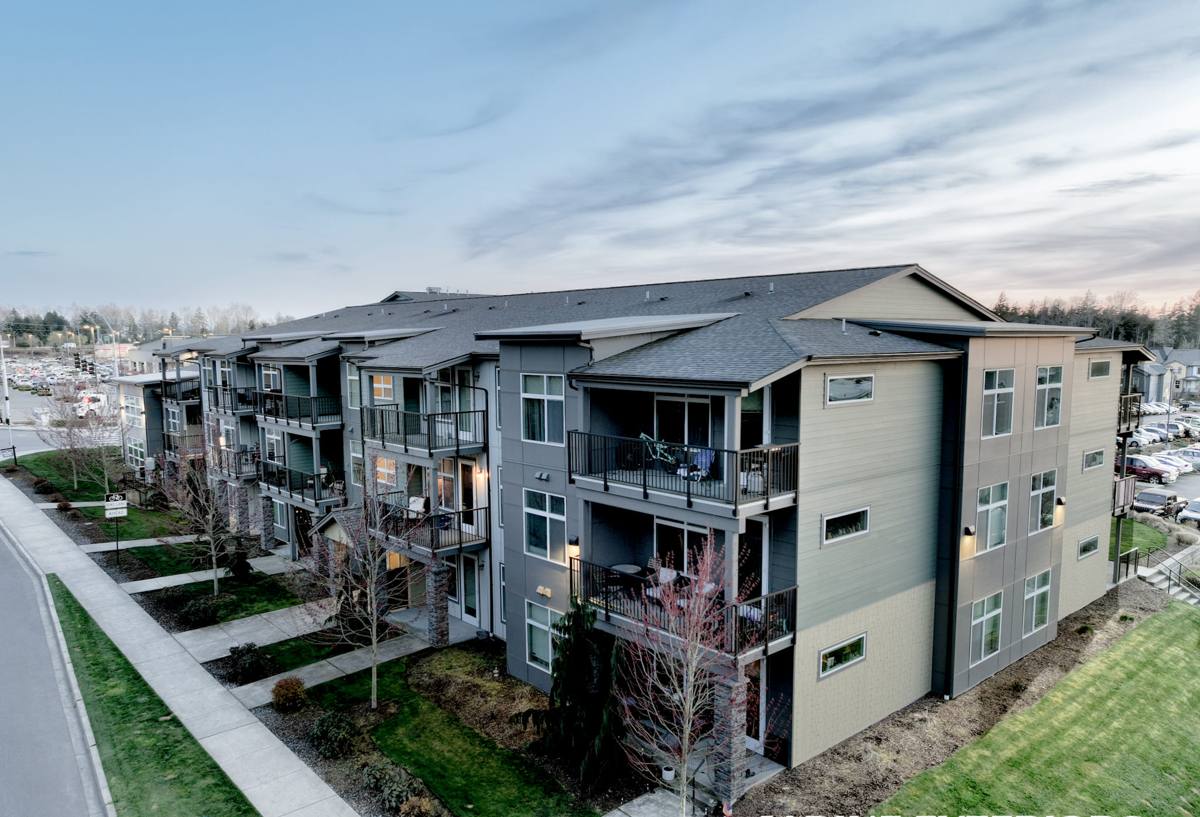
What Whatcom County Weather Does to Siding Over Time
Every siding failure we see in this area traces back to the same handful of causes, and they're all weather-driven:
Moisture that never fully dries
Whatcom County doesn't get brutal storms as much as it gets persistent, low-intensity moisture — weeks of drizzle, fog, and overcast skies that keep exterior walls damp far longer than they would be in a drier climate. Siding that can absorb and hold water, or siding installed without a real drainage plane behind it, stays wet longer than it should. Over years, that's what leads to soft trim, swollen panels, and hidden rot in the sheathing.
Driving rain and wind-driven wetting
Storms coming off the water don't just fall straight down — wind pushes rain sideways into walls, especially on exposed elevations and around windows, doors, and corner trim. Any gap in flashing or caulking becomes an entry point. This is why flashing detail matters as much as the siding product itself.
Moss, algae, and constant shade
Barkley's tree cover and lake-proximity humidity are exactly the conditions moss and algae like best. On siding that holds surface moisture — some wood-based and engineered wood products in particular — moss doesn't just sit on the surface, it can hold water against the material long enough to accelerate breakdown underneath.
Freeze-thaw cycling
Whatcom County winters aren't extreme, but they're not mild either. Repeated freezing and thawing puts stress on any siding material that has absorbed water, expanding trapped moisture and working joints, fasteners, and seams loose over time.
Signs a Barkley Home Needs Siding Replacement (Not Just Repair)
Not every siding problem calls for a full tear-off. But there's a point where patching stops being cost-effective and starts being a way to delay an inevitable, larger repair bill. Signs it's time to talk about full replacement:
- Soft or spongy siding when pressed, especially near the bottom courses or under windows
- Visible cupping, buckling, or separation at panel seams
- Paint that won't hold — repeated peeling or blistering within a couple of years of painting
- Moss or dark staining that returns within months of cleaning, especially on north- and west-facing walls
- Visible gaps at trim, corners, or window flashing that let daylight or drafts through
- Interior signs — musty smell, discolored drywall, or damp insulation — near exterior walls
- Siding style or material that's simply reached the end of its practical service life, even if it hasn't failed outright yet
If you're seeing more than one or two of these, it's worth a real inspection before winter rains make the underlying damage worse.
What a Correct Siding Replacement Job Actually Involves
Siding replacement is often sold as a cosmetic upgrade. In a climate like this one, it's better understood as a water-management project that happens to also improve appearance. A correct job includes:
Full tear-off and sheathing inspection
Old siding comes off completely so the sheathing underneath can be checked for rot, soft spots, or existing water damage. Any of that gets repaired before anything new goes back on — covering damaged sheathing with new siding just hides the problem for a few more years.
A real weather-resistive barrier
A properly lapped and sealed water-resistive barrier (house wrap) goes over the sheathing, with attention to how it integrates with window and door flashing so water is directed out, not in.
Correct flashing at every penetration
Windows, doors, hose bibs, light fixtures, vents — every penetration in the wall is a potential entry point. Flashing has to be installed in the correct shingle-lap order (top pieces overlapping the ones below) so gravity moves water outward and down, never into the wall assembly.
Rainscreen or drainage gap where it matters
In a climate this consistently damp, a drainage gap behind the siding — allowing any moisture that does get past the outer layer to drain and the wall to dry — is a meaningful upgrade over siding installed tight against the wrap.
Manufacturer-spec fastening and clearances
Correct nail placement, correct fastener type, and correct clearance from grade, roofing, and decks all matter more than they get credit for. Most premature siding failures we're called to look at trace back to one of these details being skipped, not to the siding material itself failing.
Why We Install Only James Hardie Fiber Cement
We standardized on James Hardie fiber cement siding, and we don't install vinyl, LP SmartSide, primed wood, or other fiber cement brands. That's not a marketing position — it's a judgment call based on what holds up in exactly the conditions Barkley deals with every year.
Fiber cement doesn't absorb water the way engineered wood products can, so it doesn't swell, delaminate, or feed rot at cut edges the way some wood-based sidings can if a seal fails. It's non-combustible, which matters in a state that takes wildfire risk seriously even in wetter regions. And James Hardie's ColorPlus factory finish is baked on and warrantied against fading and peeling — a real advantage in a region where a fresh paint job can start looking tired within a couple of damp winters.
We install Hardie's HZ5 product line, which is engineered specifically for climates with significant moisture exposure — including the Pacific Northwest. That's not a generic siding choice; it's a product line built for the weather Barkley actually gets.
Our Siding Replacement Process in Barkley
- On-site inspection. We walk the exterior, check for soft spots, moisture intrusion, and existing flashing problems, and look at how the home is oriented relative to prevailing wind and rain.
- Written scope and estimate. You get a clear breakdown of what's being removed, what sheathing repair (if any) is anticipated, the Hardie products and colors involved, and the price — no vague allowances.
- Full tear-off. Old siding and trim come off down to the sheathing, with damaged material photographed and reviewed with you before anything is covered up.
- Sheathing repair and weather barrier installation. Any rot gets addressed, then the water-resistive barrier and flashing go in per manufacturer spec.
- Hardie installation. Siding, trim, and accessories go up to manufacturer fastening and clearance requirements, with attention to every window, door, and penetration detail.
- Final walkthrough. We go around the house with you, point out the details that matter for long-term performance, and cover basic care going forward.
Cost Factors for a Barkley Siding Replacement
Every home is different, so we won't quote a number here that doesn't mean anything without seeing your house. What we can tell you is what actually moves the price:
| Factor | Why It Matters |
|---|---|
| Home size and wall complexity | More square footage, more corners, dormers, and gables mean more material and labor |
| Sheathing condition | Rot discovered during tear-off adds repair cost but is far cheaper to fix now than later |
| Siding profile and trim detail | Lap siding, panel siding, and trim boards each carry different material and labor costs |
| Color and finish choice | Factory ColorPlus finishes vary in cost by color depth and line |
| Access and site conditions | Steep lots, limited driveway access, or dense tree cover common in Barkley can affect staging and labor time |
| Existing moisture damage | Homes with long-deferred maintenance often need more extensive sheathing and flashing work |
Choosing a Contractor Who Already Works in Barkley and Sudden Valley
Local experience isn't a nice-to-have on a job like this — it changes decisions on site. A crew that already works Barkley and the wider Sudden Valley area knows what this specific microclimate does to a wall assembly, has already seen which elevations tend to take the worst weather, and doesn't have to relearn Whatcom County's inspection and permitting expectations on your dime.
Before hiring anyone for siding replacement here, it's worth checking:
- Are they licensed and insured to work in Washington, and can they show proof without hesitation?
- Do they install one siding system correctly, or are they generalists spreading attention across several product lines?
- Will they show you sheathing condition during tear-off, not just cover it back up?
- Do they provide a written scope that specifies products, flashing approach, and fastening — not just a total price?
- Can they explain why they're recommending a specific product for your home's exposure, rather than defaulting to whatever's cheapest?
Life After Replacement: Keeping Barkley Siding Performing
Correctly installed Hardie siding is low-maintenance, but "low" isn't "zero." A yearly rinse to knock off surface moss and organic buildup, prompt attention to any caulking that pulls away at trim joints, and keeping gutters clear so water isn't sheeting down the wall will get you the full life the product is built for. None of that compares to the ongoing repainting, caulking, and moisture watch that wood-based sidings demand in this climate.
If your Barkley home's siding is showing its age, or you just want a straight answer about what shape it's really in, we're happy to take a look. The estimate is free, there's no pressure, and you'll get a clear picture of what your home actually needs — just fill out the form below to get started.