 Sudden Valley Siding
 Bellingham's Climate Is Harder on Siding Than It Looks
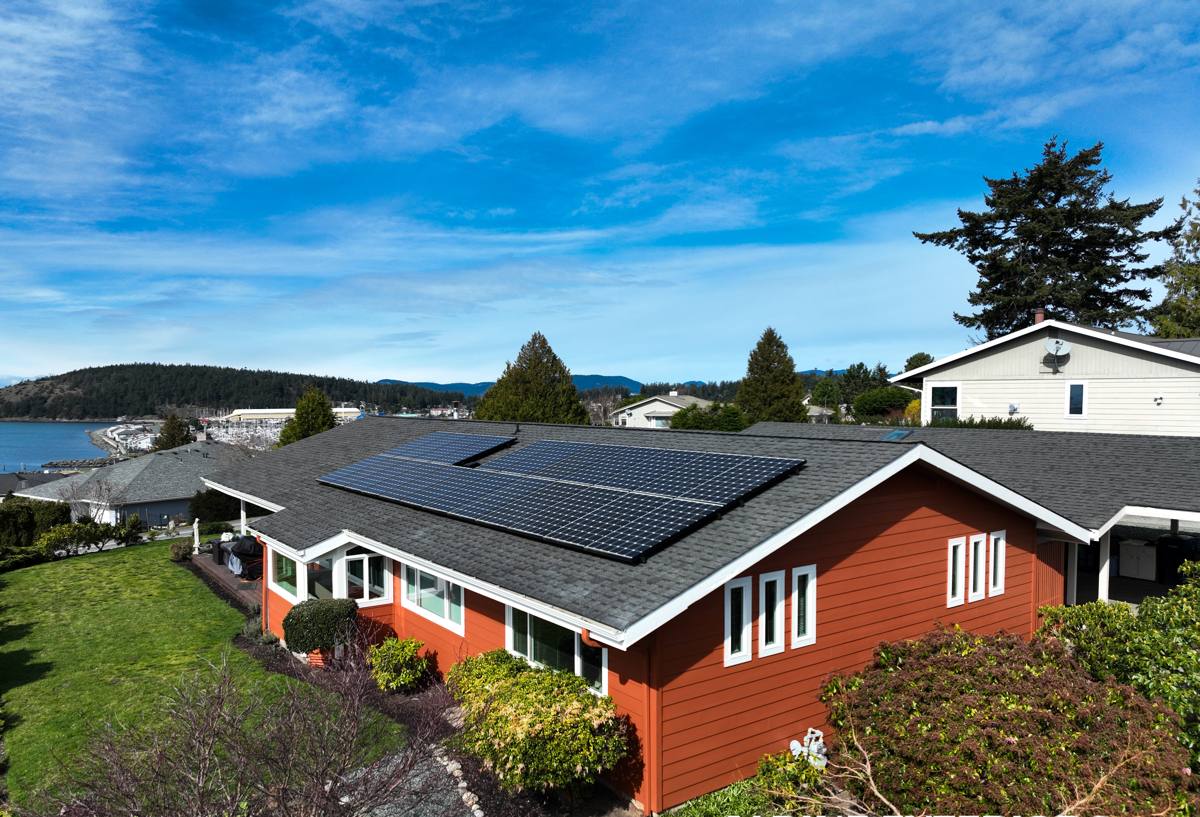
Homes around Bellingham and Sudden Valley sit close to Bellingham Bay and Lake Whatcom, which means siding here deals with more than just rain. Salt-laden air moves in off the water, driving rain arrives sideways during fall and winter storms, and the shaded, damp conditions under evergreen canopy create a moss and algae season that can run most of the year. Any one of those factors will shorten the life of the wrong siding material. Together, they make material choice and installation quality the two biggest variables in how a home's exterior holds up over the next 20 to 30 years.
This page focuses on one thing: what James Hardie fiber cement siding needs to look like, and be installed like, on a Bellingham or Sudden Valley home specifically. It is not a general product overview — it is the local version of that conversation.
What Salt Air, Rain, and Moss Actually Do to Siding
Understanding the damage mechanism helps explain why the material and the installation both matter.
Salt air
Airborne salt accelerates corrosion on fasteners, trim flashing, and any exposed metal components. On siding materials that rely on paint film alone for protection, salt exposure also speeds up finish breakdown, leading to earlier fading and chalking.
Driving rain
Wind-driven rain doesn't just wet a wall — it pushes moisture up and under laps, into seams, and behind poorly flashed penetrations. Materials that absorb water and hold it (rather than shedding it) stay damp longer after each storm, which is exactly the condition mold, rot, and paint failure need to take hold.
Moss and algae season
Shaded, moisture-retentive surfaces in Whatcom County can stay damp for weeks at a stretch. Moss and algae growth isn't just cosmetic — sustained organic growth holds moisture against the siding surface and, on materials with less dimensional stability, can contribute to swelling, cupping, or accelerated coating failure.
Why We Install Only James Hardie in This Climate
James Hardie fiber cement is engineered from cement, sand, and cellulose fibers — a composition that doesn't absorb and swell the way wood-based siding does, and doesn't rely on a thin paint film as its only defense the way some other materials do. For a climate that combines salt air, sustained rain, and moss pressure, that combination matters in three specific ways:
- Non-combustible core — an added safety margin that has nothing to do with moisture, but matters for insurance and peace of mind regardless of climate.
- Dimensional stability — fiber cement doesn't expand and contract with moisture the way wood products do, which reduces the seam and joint movement that lets water find a way in over time.
- Factory-applied ColorPlus finish — a baked-on finish process that resists fading and holds up to UV and salt exposure far longer than field-applied paint, which matters when the coastal air is actively working against paint film.
James Hardie also builds region-specific product lines through its HZ5 and HZ10 engineering designations, matched to different climate zones across North America. Western Washington, including Whatcom County, falls into a zone where moisture management is the priority — which is reflected in the product's engineered moisture resistance and installation specifications for this region.
The ColorPlus Finish Advantage in a Wet, Salty Climate
Paint performance is one of the most overlooked factors in siding longevity, and it's especially relevant here. A factory-applied finish like ColorPlus is cured under controlled conditions and bonded to the fiber cement substrate before it ever reaches your home, which gives it more consistent coverage and adhesion than a coat applied on site in variable weather. In a climate where the finish is dealing with salt air and near-constant moisture cycling, that difference shows up as a longer interval before fading, chalking, or touch-up painting becomes necessary. It also means color consistency across the whole house, since every plank comes from the same factory process rather than field-mixed paint.
What a Correct Installation Involves
James Hardie siding performs to its engineered lifespan only when it's installed to the manufacturer's specifications. In a high-moisture, wind-exposed area like Bellingham or Sudden Valley, a handful of details matter more than they would in a milder climate:
| Detail | Why it matters here |
|---|---|
| Proper clearance above rooflines, decks, and grade | Prevents splashback and standing moisture from wicking into board bottoms during heavy rain |
| Correct fastener type and placement | Salt air accelerates corrosion on the wrong fastener; placement affects how well boards resist wind-driven rain infiltration |
| Rain screen / drainage plane behind the siding | Gives incidental moisture a path to drain and dry instead of sitting against the wall assembly |
| Sealed and flashed penetrations | Every vent, light fixture, and utility penetration is a potential entry point during driving rain |
| Factory-cut edges caulked or touched up per spec | Field-cut edges lose factory finish protection if not sealed correctly |
None of these are exotic requirements — they're standard parts of a correct install. The problem is that skipping any one of them rarely shows up immediately. It shows up two, five, or ten years later, as a callback nobody wants to make.
A homeowner's rough checklist for verifying installation quality
- Boards are installed with manufacturer-specified clearance from rooflines, decks, patios, and grade
- Fasteners are the corrosion-resistant type specified for coastal/high-moisture regions
- A drainage plane or rain screen is present behind the siding, not siding installed directly against sheathing
- Joints, seams, and trim are caulked and sealed according to Hardie's published details
- Cut edges are sealed or primed rather than left exposed
- Installer can show familiarity with Hardie's published installation manual, not just general siding experience
Our Process for Bellingham and Sudden Valley Homes
Because we work exclusively with James Hardie, our process is built around getting this one system right rather than juggling installation methods for multiple products.
- On-site assessment — we look at existing siding condition, moisture damage, moss buildup patterns, roofline clearances, and any trouble spots specific to the home's exposure to wind and rain.
- Product and color selection — matched to the home's exposure and the HZ product line appropriate for this region.
- Prep and moisture barrier work — addressing any existing water intrusion or damaged sheathing before new siding goes on, and installing a proper drainage plane.
- Installation to manufacturer spec — clearances, fastening, flashing, and sealing done to Hardie's published details, not shortcuts.
- Final walkthrough — checking seams, trim, and penetrations before we consider the job finished.
Cost Factors for a Bellingham-Area James Hardie Project
Every home is different, but the same handful of factors drive cost on most Hardie projects in this area:
| Factor | Why it affects cost |
|---|---|
| Existing wall condition | Rot or moisture damage found during removal adds repair scope before new siding goes on |
| Home size and complexity | More corners, dormers, and trim details mean more cutting, fitting, and finish work |
| Product line and profile | Lap width, shingle-style panels, and trim choices carry different material costs |
| Access and site conditions | Steep lots, tree cover, and limited staging area (common around Lake Whatcom) can affect labor time |
| Removal and disposal of old siding | Volume and material type of what's coming off affects labor and disposal cost |
We provide itemized estimates so you can see exactly what's driving the number, rather than a single lump figure.
Why Local Experience in This Climate Matters
A crew that has already worked on homes around Bellingham and Sudden Valley has seen how salt air, driving rain, and moss actually behave on real houses in this specific environment — not just in a manufacturer's general installation guide. That means recognizing which walls take the brunt of prevailing wind and rain, which areas near tree cover need extra attention to drainage and moss prevention, and where past callbacks in this region have traced back to a skipped detail. Installation quality is the single biggest variable in how long any siding system lasts, and that's especially true in a climate that doesn't forgive shortcuts.
Ongoing Care in a Moss-Prone Climate
Even correctly installed Hardie siding benefits from basic seasonal attention in this climate. Keeping gutters clear so overflow doesn't run down the siding face, trimming back vegetation that keeps walls shaded and damp, and periodically rinsing off accumulated moss or algae growth all help the ColorPlus finish perform for its full service life. None of this is heavy maintenance — it's the same kind of upkeep most homes in this region need regardless of siding material, just slightly more important given how long moss season runs here.
If you're planning a siding project in Bellingham or Sudden Valley, we're happy to take a look and walk you through what your home specifically needs. Use the form below to request a free, no-pressure estimate.