 Sudden Valley Siding
 Why Bellingham Siding Takes a Different Kind of Beating
Bellingham sits where damp marine air off the bay meets steep, tree-covered lots and a rain season that can stretch from October clear into May. That combination is hard on exterior walls. Salt-laden air moving in off Bellingham Bay accelerates corrosion on fasteners, trim, and any siding product that isn't built to resist it. Long stretches of driving rain push water sideways into laps, seams, and butt joints that were never sealed quite right to begin with. And on the shaded, tree-lined properties common throughout Whatcom County, a moss season that can run most of the year keeps siding damp for days after the rain actually stops.
None of that is unusual for this part of Washington. But it means a siding repair in Bellingham is rarely just a cosmetic fix. The damage you can see — a cracked board, a stained patch, a bulge near a window — is almost always a symptom of moisture that's been working on the wall for longer than the visible problem suggests. Repairing it correctly means understanding what the climate did to get you there, not just patching the spot.
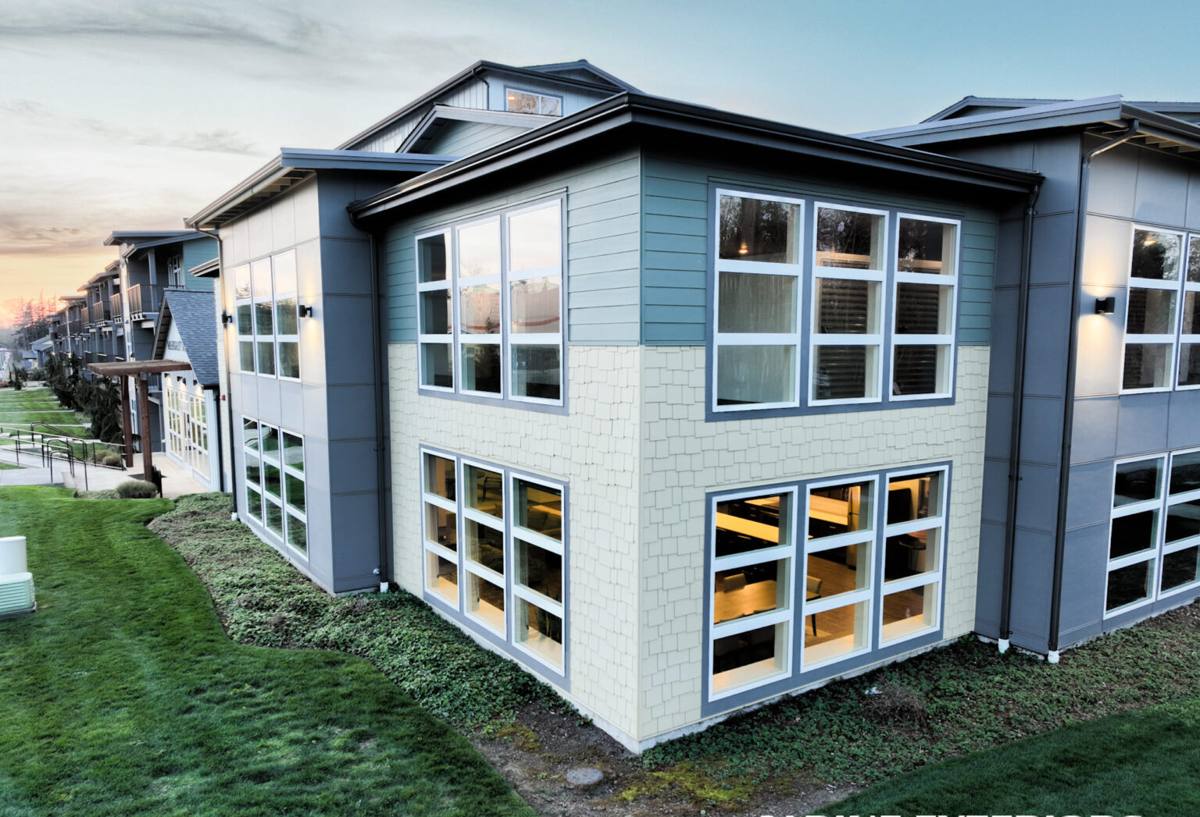
The Damage We See Most Often on Bellingham Homes
Every siding material fails differently, but the underlying cause in this region is almost always some combination of trapped moisture, prolonged shade, and UV/salt exposure on unprotected surfaces. Here's what shows up most on repair calls in and around Bellingham:
| What You See | Likely Cause | Urgency |
|---|---|---|
| Soft, spongy, or bulging boards | Water intrusion behind the siding, often from failed caulking or flashing | High — sheathing and framing may already be affected |
| Green or black staining, especially on north-facing or shaded walls | Extended moss and algae growth from shade and prolonged dampness | Moderate — cosmetic now, but traps moisture over time |
| Cracking or splitting at butt joints and corners | Material movement, freeze-thaw cycling, or original installation gaps | Moderate to high depending on how far it's traveled |
| Rust streaking around nail heads or trim fasteners | Salt-air corrosion on unprotected or incorrect fasteners | Moderate — usually fixable before it spreads |
| Peeling paint or chalky, faded finish | UV and moisture breakdown of an old or poorly maintained coating | Low to moderate — worth addressing before it becomes a moisture entry point |
What a Correct Repair Actually Involves
A lot of "siding repair" in this region amounts to caulking a crack and repainting over it. That approach hides a problem instead of fixing it, and on a house exposed to Bellingham's rain and humidity, it tends to come back within a season or two. A repair that's actually going to hold up starts with finding out how far the damage extends, not just how far it shows.
Steps We Won't Skip
- Removing enough siding around the damaged area to inspect the sheathing, house wrap, and flashing underneath — not just patching over the surface
- Checking whether the water intrusion traces back to a window, door, deck ledger, or roof-to-wall flashing detail rather than the siding itself
- Matching replacement material to the existing siding's profile, reveal, and finish as closely as possible so repairs don't stand out as a patchwork
- Re-flashing and re-sealing with materials rated for coastal Pacific Northwest exposure, not generic caulk that will fail again in a wet winter
- Confirming fastener type and spacing meet manufacturer specifications, since incorrect fasteners are a common source of the corrosion staining we see locally
If we open a wall and find rot in the sheathing or framing, we tell you before we close it back up — not after. That's the difference between a repair that lasts and one that just buys a year or two before the same spot fails again.
Repair or Replace? How We Actually Decide
Not every damaged section needs a full re-side, and we're not going to tell you it does. But there's a point where patch repairs on aging or already-marginal siding stop making financial sense. The honest answer depends on how much of the wall is affected, what the material is, and how it was installed originally.
| Factor | Repair Usually Makes Sense | Replacement Usually Makes Sense |
|---|---|---|
| Extent of damage | Isolated to one or two sections or walls | Recurring across multiple elevations |
| Sheathing condition | Dry and sound once opened up | Soft, delaminated, or showing rot |
| Age of existing siding | Under 10-15 years, in otherwise good shape | Original material at or past its practical service life |
| Underlying material | Sound fiber cement or well-maintained wood | Failing engineered wood, cracked old vinyl, or unmaintained cedar |
| Moisture pattern | One traceable, fixable entry point | Multiple, unrelated failure points across the house |
When a house is a genuine repair candidate, we say so and do the repair — that's most of what we're called out for. When the pattern points to a material that's simply worn out or was never suited to this climate in the first place, we'll tell you that too, and explain what we'd recommend instead.
Our Process for a Bellingham Repair Call
- Inspection. We look at the damaged area and the surrounding wall assembly, not just the spot you called about, since moisture problems in this climate rarely stay contained.
- Diagnosis. We identify the actual source — flashing, a failed seal, grade issues, or shade-driven moss buildup — and explain it in plain terms.
- Written scope. You get a clear description of what needs to happen and why, including whether we found anything beyond the original complaint.
- Repair. We open the wall as needed, address the root cause, match materials, and close it back up to shed water correctly.
- Follow-up guidance. We tell you what to watch for and what routine maintenance will keep the repair from needing a repeat visit.
Why It Matters That We Already Work in Bellingham
Siding failure patterns aren't the same everywhere, and a crew that mostly works drier inland climates can miss things a Whatcom County house needs. We're used to the specific rhythm of this area: the wall orientations that hold moss longest, the flashing details that tend to fail first on homes exposed to weather rolling in off the bay, and the older housing stock around Bellingham where original construction details weren't always built for the amount of rain this region actually gets. That local pattern recognition is what keeps a repair from becoming a guessing game.
It also means we're not driving in from out of the area for a single job and disappearing. If a repair needs a follow-up visit or the same issue shows up somewhere else on the house down the road, we're a local call, not a search for whoever's available next time.
Our Position on Materials, and Why It Affects Repairs Too
We install James Hardie fiber cement siding exclusively for full re-sides and additions — we don't install vinyl, LP SmartSide, Cemplank, Allura, or primed wood siding as a product line. That standard exists because of what we've seen this climate do to those materials over time: engineered wood products are sensitive to sustained moisture exposure at cut edges and seams, vinyl can become brittle and gap-prone with age and temperature swings, and unfinished or primed wood demands a maintenance schedule most homeowners can't realistically keep up with in a region this wet.
For repair work, that standard doesn't mean we refuse to touch anything that isn't Hardie — plenty of sound siding in Bellingham is a material other than Hardie, and a legitimate repair on it is still a legitimate repair. But when damage points to a material or installation that's fundamentally out of its depth in this climate, rather than one bad detail, we'll say so honestly. And when a section or a full wall does need replacing, Hardie fiber cement is what we install: it's non-combustible, holds a factory ColorPlus finish that resists the fading and peeling this climate causes on field-painted surfaces, and Hardie's HZ5 product line is engineered specifically for wet, freeze-thaw climates like ours.
Between Repairs: A Maintenance Checklist for Bellingham Homes
A lot of repair calls we get could have been smaller jobs — or avoided entirely — with a bit of routine attention. This won't stop every problem the climate throws at a house, but it catches most of them early:
- Walk the exterior twice a year, especially after the first heavy fall rains, looking for new cracks, soft spots, or staining
- Keep gutters and downspouts clear so water isn't running down the wall face instead of away from it
- Trim back vegetation and tree cover where it's keeping siding shaded and damp longer than the rest of the house
- Rinse visible moss or algae growth before it thickens, especially on north-facing and tree-shaded walls
- Recaulk and repaint on schedule rather than waiting for visible failure — caulk fails from the inside out, so cracking on the surface usually means it's been compromised for a while
- Check that soil, mulch, or landscaping hasn't crept up to or above the bottom edge of the siding, which traps moisture against the material
Get an Honest Look at Your Siding
If you're seeing damage, staining, or moss buildup on your home's siding, it's worth having someone look at it before a small problem becomes a bigger one. We offer free, no-pressure estimates for siding repair throughout Bellingham and the surrounding Whatcom County area — we'll tell you straight whether it's a repair, and what we'd recommend if it isn't. Fill out the form below to get started.