 Sudden Valley Siding
 Board & Batten Siding Built for the Alger Area
The stretch of northwest Washington that includes Alger and reaches back toward Sudden Valley and Whatcom County deals with a specific combination of weather that most siding products were never designed around: salt-laden air moving in off the water, long stretches of driving rain, and a moss season that can run most of the year on shaded, north-facing walls. Board and batten siding, when it's built correctly, handles this combination better than almost any other siding style — but "built correctly" is doing a lot of work in that sentence, and it's the part most installations get wrong.
This page covers what board and batten siding needs to hold up on an Alger-area home, what a correct installation actually involves, and why we only install it as James Hardie fiber cement rather than the vinyl or engineered-wood versions of the same look.
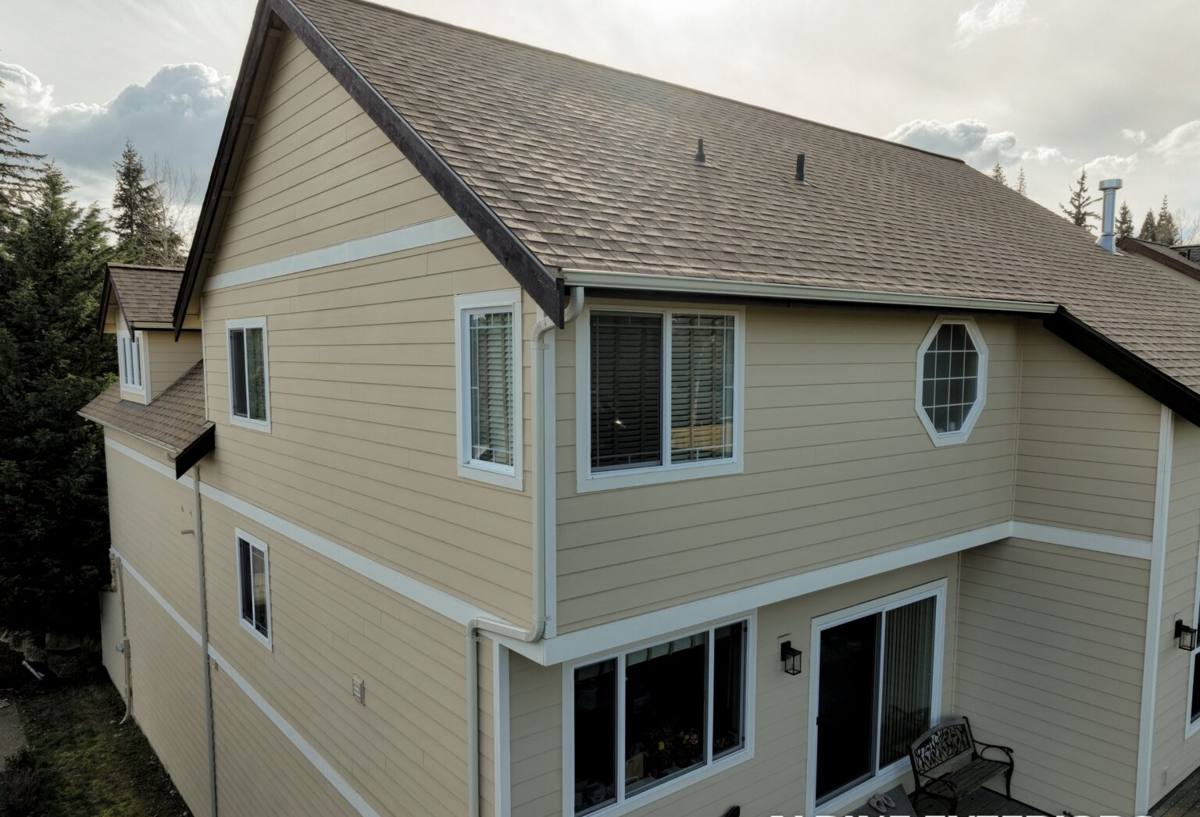
Why This Climate Is Hard on Vertical Siding
Salt Air and Metal Fasteners
Homes closer to the water pick up airborne salt that accelerates corrosion on exposed fasteners, flashing, and trim. Board and batten siding uses more linear feet of vertical seams and batten strips than horizontal lap siding, which means more fastener penetrations and more trim-to-wall transitions — every one of them is a place where the wrong material or the wrong fastener starts to fail years before it should.
Driving Rain and Wind-Driven Moisture
Rain that comes in sideways doesn't just run down a wall, it gets pushed into every gap, lap, and seam it can find. Vertical board and batten relies on the boards and battens shedding water down and out, not on caulk or paint holding a seal — if the assembly behind the boards can't manage moisture that gets past the surface, it ends up trapped in the wall cavity instead of draining back out.
Moss, Algae, and Shaded Walls
Whatcom County's tree cover and long damp season mean north- and east-facing walls in Alger often stay wet longer than they dry. Moss and algae growth on siding isn't just cosmetic — sustained moisture against a wood-based product softens it over time, and the batten strips are exactly the kind of horizontal-ish ledge where moss likes to establish.
What Board & Batten Siding Actually Is
Wide Boards, Narrow Battens
Board and batten is a vertical siding pattern: wide flat boards installed side by side with a gap between them, then a narrower strip — the batten — installed over each gap to cover the seam. The result is a strong, linear look with deep shadow lines, popular on farmhouse, craftsman, and modern exteriors alike around the Pacific Northwest.
Why the Assembly Matters More Than the Look
The visual pattern is simple, but the water management behind it is not. Because the boards run vertically, water tends to travel along the seams rather than being interrupted every few inches the way it is with horizontal lap siding. If the batten spacing, fastening, and drainage plane behind the siding aren't detailed correctly, that vertical seam becomes a direct path for water into the wall assembly.
Why We Only Install This as James Hardie Fiber Cement
Board and batten is sold in several materials — vinyl, engineered wood (LP SmartSide and similar), primed spruce or cedar boards, and fiber cement. We install James Hardie exclusively, and on a vertical siding style in a climate like this one, the reasoning matters more than usual.
It Doesn't Feed Moisture Back Into Itself
Fiber cement is cement, sand, and cellulose fiber — it doesn't swell, rot, or delaminate the way wood-based products can if water gets past a seam. Engineered wood siding relies on a resin-treated surface staying intact; once that surface is cut, drilled, or chipped on site — which happens constantly during installation and over the life of a house — the exposed edge is vulnerable in a way fiber cement's cut edges simply aren't.
Non-Combustible
James Hardie fiber cement is non-combustible, which matters to insurers and to homeowners regardless of style. It's not the reason most people choose it, but it's a real difference from vinyl (which can melt and deform under heat) and wood-based products.
ColorPlus Factory Finish
Hardie's ColorPlus finish is baked on at the factory under controlled conditions, not brushed or sprayed on site. On board and batten specifically, this matters because the boards and battens both need to match — factory finish keeps color consistent across every piece instead of relying on field-applied paint to look uniform over dozens of boards and hundreds of feet of batten strip.
HZ5 / HZ10 Engineered for This Climate
Hardie manufactures its siding in climate-specific formulations. The HZ10 line is engineered for the wetter, more humid climate zones that include the Pacific Northwest, with moisture and freeze-thaw performance matched to what this region actually sees rather than a one-size-fits-all product.
What a Correct Board & Batten Installation Involves
Most board and batten failures we get called out to inspect aren't material failures — they're installation shortcuts. The following has to happen for the assembly to actually perform:
- A weather-resistant barrier (housewrap or building paper) installed and lapped correctly over the sheathing, with every penetration flashed before the first board goes up
- A rainscreen or drainage gap behind the siding so any water that gets past the surface has somewhere to go besides the wall cavity
- Boards fastened per manufacturer spec — correct fastener type, length, and spacing, not whatever was on the truck that day
- Battens fastened into structural framing or furring where required, not just into the board beneath them
- Proper gapping between boards to allow for expansion and contraction without buckling the batten over it
- Flashing and kickout details at every roof-wall intersection, window head, and deck ledger — the spots where most moisture intrusion actually starts
- Factory-cut ends and field cuts sealed per Hardie's installation instructions, not left raw
Skip any one of these and the siding can look right for a few years before the problem underneath shows up as staining, soft trim, or paint failure at the seams.
Mistakes We See on Older Board & Batten Jobs in This Area
Re-siding older Alger-area homes, the same handful of problems show up repeatedly: battens face-nailed directly through both boards with no gap for movement, no drainage plane behind the siding at all, caulk used as the primary water seal instead of proper flashing, and fascia or trim boards left unprimed on cut ends where moss gets a foothold within a couple of seasons. None of these are visible from the street when the work is fresh — they show up three, five, ten years later, which is exactly why the installation details matter more than the finished look on day one.
Cost Factors for Board & Batten Siding
Board and batten typically costs somewhat more than standard lap siding to install because of the added labor in the batten strips and the trim-heavy detailing it usually pairs with. The real cost drivers on a given house are below — we'll walk through all of these during a walkthrough rather than quoting a number sight unseen.
| Factor | Why It Affects Cost |
|---|---|
| Tear-off vs. new construction | Removing and disposing of existing siding, and repairing any sheathing damage found underneath, adds labor before the new siding goes up |
| Board width and batten spacing | Narrower board spacing means more battens, more fasteners, and more labor hours per square foot |
| Wall height and access | Two-story walls, steep grades, or limited equipment access add setup time and safety requirements |
| Trim and architectural detail | Corner boards, window and door trim, and transitions to other siding styles all add cutting and fitting time |
| Existing moisture damage | Rot or water damage found once old siding comes off has to be repaired before new siding can go on correctly |
| Color and finish selection | Factory ColorPlus finishes and premium color options price differently than standard primed board for field painting |
Our Process, Start to Finish
1. Walkthrough and Assessment
We look at the existing siding and wall condition, note any moisture or rot issues, and talk through board width, batten spacing, and color with you before anything is priced.
2. Written Scope and Estimate
You get a written estimate that spells out material, prep work, and what's included — no verbal-only quotes, no vague allowances for "if we find rot."
3. Tear-Off and Prep
Old siding comes off, sheathing is inspected and repaired as needed, and the weather-resistant barrier and drainage plane go on before a single new board is hung.
4. Installation to Manufacturer Spec
Boards and battens go up fastened, gapped, and flashed to James Hardie's published installation requirements — the same specs that back the product warranty.
5. Final Walkthrough
We walk the finished job with you, cover care and maintenance, and make sure the paperwork for your warranty coverage is in your hands.
Why a Crew That Already Works in Alger Makes a Difference
A contractor who already works this part of Whatcom County has already seen how salt exposure, driving rain, and moss behave on real walls here — not in a manufacturer's marketing brochure. That shows up in small decisions: which side of the house gets extra flashing attention, how much drainage gap to build in on a shaded wall, which trim details hold up and which don't. It also means a shorter drive if something needs a warranty check years down the road, and a crew that isn't learning this climate on your house.
If you're weighing board and batten siding for a home in the Alger area, we'll come take a look, walk you through what your specific walls need, and put together a straightforward written estimate — no pressure, no obligation.