 Sudden Valley Siding
 Deck Repair Built for the Columbia Area of Sudden Valley
Decks in the Columbia area take a different kind of punishment than a deck sitting out in the open sun. Between the tree cover around Lake Whatcom, the damp air that settles into the valley, and a rainy season that stretches most of the year, wood and fasteners here stay wet longer than they should. That's the root cause behind most of the deck repairs we get called out for in this part of Sudden Valley — not bad lumber, not bad luck, just moisture that never fully dries out between storms.
We work in this neighborhood regularly, which matters more than it sounds. A deck repair done right depends on understanding how a specific property drains, how much shade it holds onto through the day, and how the framing was likely built when the home went up. Guessing at that from a truck parked in a different county leads to repairs that look fine and fail again in a year or two.
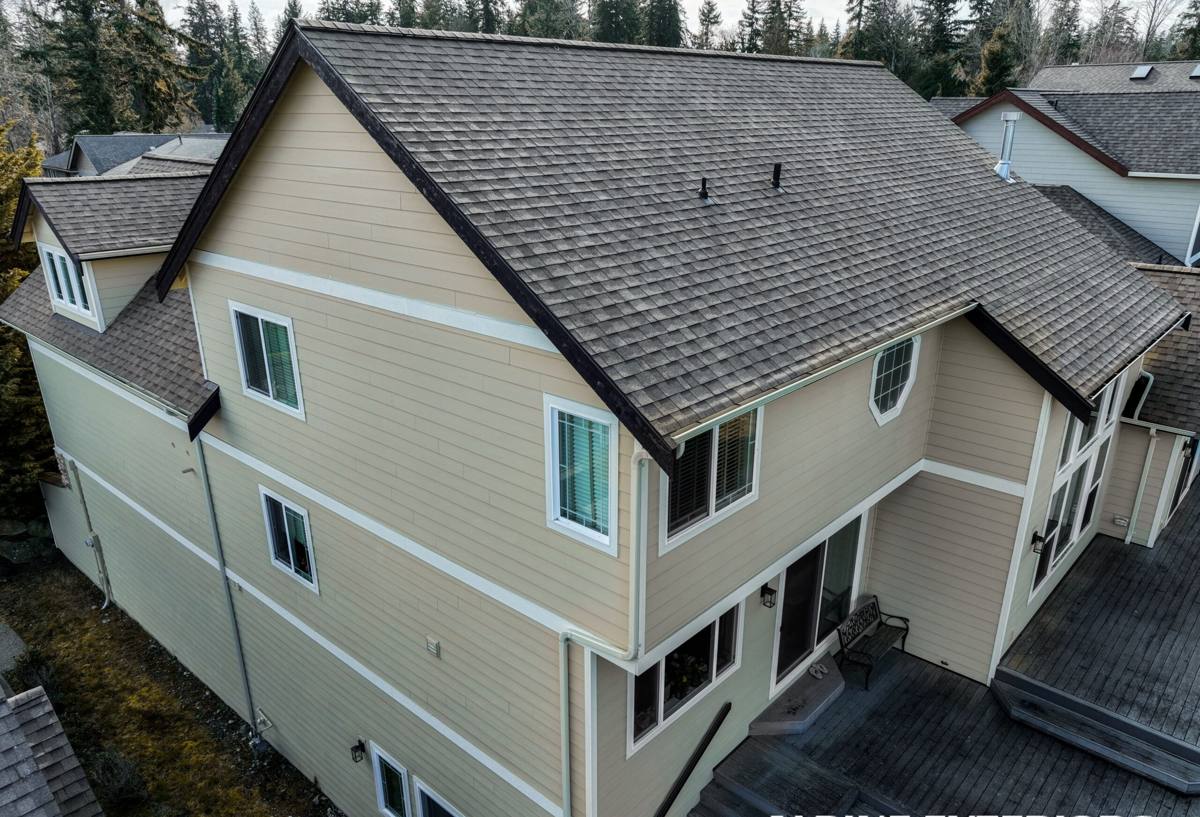
What Whatcom County Weather Does to a Deck
Three things drive deck damage here, and they compound each other:
- Driving rain that gets pushed sideways into ledger boards, rim joists, and any spot where the deck meets the house
- Salt-tinged, moisture-heavy air that keeps fasteners and hardware in a slow, steady state of corrosion
- A long moss season that turns deck boards and even structural framing into a surface that holds water instead of shedding it
None of these are dramatic on their own. The problem is duration. A deck in a drier climate gets wet, then dries. A Columbia-area deck often doesn't get that second half of the cycle for weeks at a time in fall and winter. That's when rot gets a foothold — usually in places you can't see from the surface.
Where Moss Does More Than Make a Deck Look Old
Moss on a deck surface isn't just cosmetic. It holds moisture directly against the wood grain, blocks airflow, and keeps boards from ever reaching a dry state during the wet months. Left alone through a few seasons, moss-covered boards soften, fastener heads corrode faster underneath the growth, and the deck surface starts to feel spongy in isolated spots — usually the first real sign something structural is starting underneath.
Signs a Repair Is Needed — Before It Becomes a Rebuild
Homeowners in this area usually notice one of these first:
- Boards that feel soft, springy, or slightly spongy underfoot, especially near the house or stair landing
- Visible gaps or dark staining where the deck attaches to the house (the ledger board)
- Railing posts that wiggle more than they used to
- Rust streaks running down from screw heads or joist hangers
- A persistent musty smell coming from underneath the deck
- Stair stringers that feel slightly uneven or have visible checking (splitting) at the notches
Catching any of these early is the difference between a repair that costs a few hundred to low thousands of dollars and a full deck rebuild. We'd rather tell a homeowner "this is fine for another year, keep an eye on it" than sell a repair that isn't needed yet — and we'd rather flag a real structural issue early than let it turn into a safety problem.
What a Correct Deck Repair Actually Involves
A repair that's done right isn't just swapping out the boards that look bad. It starts with figuring out why they failed in the first place, because replacing rotten wood without fixing the moisture path just buys a year or two before the same spot fails again.
Our repair process typically includes:
- Structural inspection — checking ledger board attachment, joist condition, post bases, and any hardware for corrosion or movement
- Moisture source diagnosis — identifying whether the damage is coming from surface exposure, poor drainage underneath, or a flashing gap at the house connection
- Selective demolition — removing only the boards, joists, or posts that are actually compromised, not the whole deck
- Framing and hardware repair — sistering damaged joists, replacing corroded fasteners with proper-rated hardware, correcting ledger flashing if that's the culprit
- Decking replacement — matching or upgrading the surface material, with attention to proper board spacing for drainage and airflow
- Final check — railing tightness, stair stability, and a look at drainage under the deck so water has somewhere to go besides sitting there
The Ledger Board: The Single Most Important Repair Point
If there's one spot on a deck that determines whether a repair holds up long-term, it's the ledger board — the piece that bolts the deck directly to the house. This is also the hardest spot to inspect without pulling material back, because it's usually hidden behind the rim joist and any house siding or trim that overlaps it.
In a climate with this much driving rain, a ledger board without proper flashing acts like a funnel, channeling water behind the connection and into the house framing instead of shedding it outward. We check this connection on every repair call, even when the customer's concern is somewhere else on the deck, because a failing ledger board is a bigger problem than any surface-level issue and it's often invisible until you know where to look.
Repair Materials: Matching, Upgrading, or Mixing
Not every repair should use the exact material the deck was originally built with. Sometimes matching makes sense for appearance and cost. Other times, upgrading the repaired sections to a more moisture-resistant material is the more honest recommendation, even if it means a slight color or texture difference until the whole deck eventually gets refinished or replaced as one unit.
| Repair Material | Best Use Case | Trade-Off to Know |
|---|---|---|
| Matching pressure-treated lumber | Structural framing repairs (joists, posts, ledger) | Needs to be properly sealed at cut ends or it re-absorbs moisture quickly |
| New pressure-treated decking boards | Budget-conscious surface repairs | Will weather at a different rate than older, sun-faded boards nearby |
| Composite decking boards | Repairing high-moisture zones or areas prone to moss buildup | Higher upfront cost; installation tolerances are less forgiving than wood |
| Cedar or other naturally rot-resistant wood | Matching an existing cedar deck's appearance | Still needs regular sealing in this climate — natural resistance isn't permanent |
We'll walk through these options honestly rather than defaulting to whatever's easiest to install. If composite makes sense for a shaded, moisture-prone section, we'll say so. If matching wood is the more sensible and cost-effective call, we'll say that instead.
Our Process for Columbia-Area Repair Calls
Because we already work regularly in Sudden Valley, a repair visit here usually moves faster than it would for a crew coming in cold. We know the general drainage patterns in this part of the neighborhood, the typical age range of decks built during the community's main development periods, and the kinds of ledger and flashing details that were common practice at the time. That context shortens the diagnostic part of the visit and lets us focus on the actual repair.
A typical repair visit looks like this: an on-site walk of the whole deck (not just the spot the homeowner flagged), a written explanation of what's failing and why, an honest repair-vs-replace recommendation if the damage is more extensive than expected, and a straightforward scope of work before anything gets cut or pulled apart.
Repair vs. Full Replacement: How We Draw the Line
Homeowners often assume any deck problem means starting over. That's rarely true. We generally recommend repair when the damage is contained to specific boards, a section of railing, or isolated framing members, and the ledger board and main support posts are sound. We start steering toward replacement when rot has spread through multiple structural framing members, when the ledger connection itself has failed, or when the deck is old enough that patching one area just means the next area fails within a season or two.
There's no set square-footage or age cutoff — it comes down to what we actually find once we're able to inspect the framing directly, which is something no one can accurately judge from photos alone.
A Simple Maintenance Checklist Between Repairs
A few habits go a long way toward stretching the life of a repair in this climate:
- Clear moss and debris off the deck surface at least once each fall and once in early spring
- Keep gutters and downspouts near the deck clear so runoff isn't dumping directly onto or under it
- Check railing posts for movement once or twice a year, especially after a hard windstorm
- Look underneath the deck occasionally for standing water or vegetation growth against the framing
- Reseal or restain exposed wood surfaces on the schedule the product manufacturer recommends, not just when it looks faded
Why a Local Crew Matters for This Kind of Work
Deck repair is one of those jobs where local experience actually changes the outcome, not just the sales pitch. A crew that's worked multiple decks in the Columbia area of Sudden Valley has already seen how the tree cover, moisture, and moss cycle here plays out over time on real structures, not just in general climate data for Whatcom County. That means fewer surprises during the repair and a better shot at fixing the actual cause instead of just the symptom that's currently visible.
If you're noticing soft spots, rust stains, or a deck that just doesn't feel as solid as it used to, we're glad to take a look. The estimate is free, there's no pressure to move forward, and you'll get a straight answer about whether you're looking at a repair or something bigger — use the form below to get in touch.