 Sudden Valley Siding
 Why Columbia Roofs Wear Differently Than Roofs Inland
Homes in the Columbia area of Sudden Valley sit in a climate that is hard on roofing in ways that don't show up right away. Whatcom County gets long stretches of steady, driving rain rather than short downpours, which means water has more time to find weak spots at valleys, penetrations, and eaves. Add the tree cover and humidity that make moss and algae growth almost constant here, and a roof that would last decades in a drier climate can start failing early if it wasn't built correctly for these conditions in the first place.
We're not talking about cosmetic issues. Sustained moisture under a compromised roof system leads to rotted decking, damaged insulation, and interior leaks that often aren't obvious until they're serious. A new roof installation done right for a Columbia home isn't just about the shingles you see — it's about every layer underneath them working together to shed water and let the structure breathe.
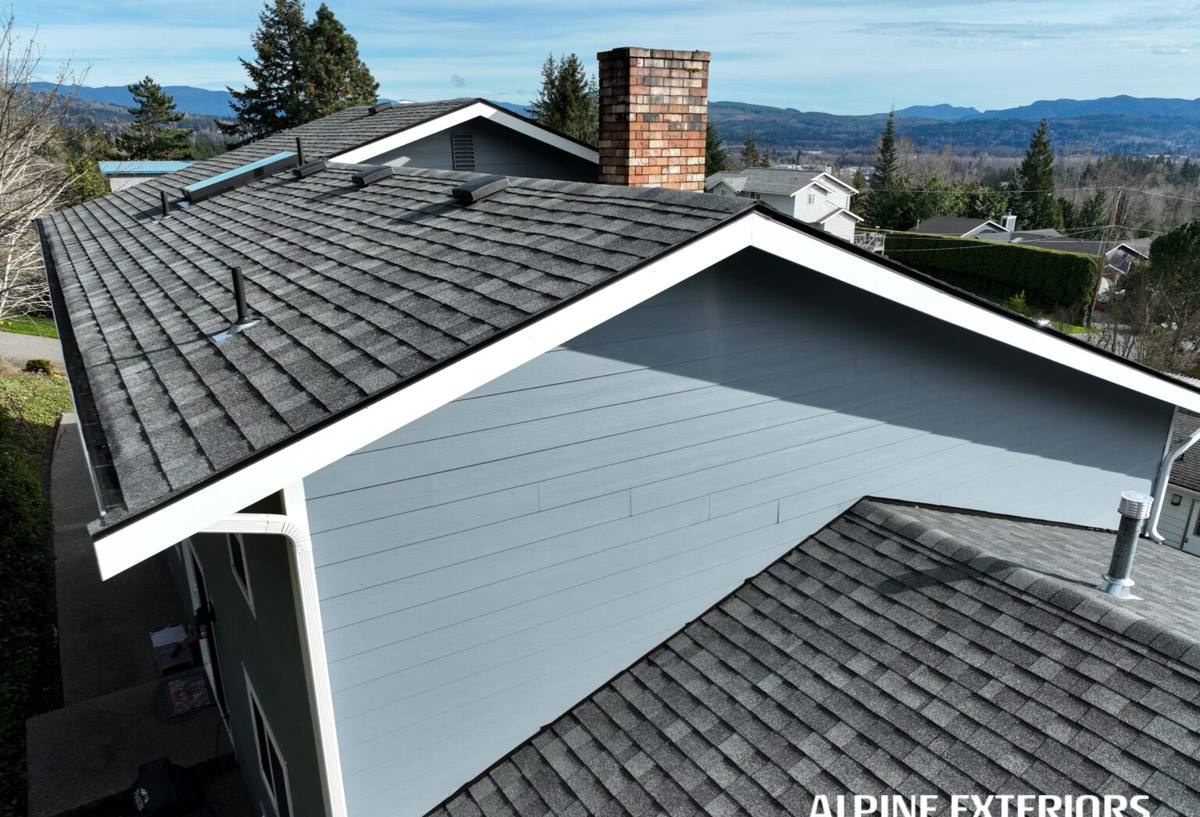
What Actually Goes Into a Correct New Roof Installation
A roof replacement is more than stripping old shingles and nailing down new ones. Skipping steps is the single biggest reason roofs fail early in this region, and most of those skipped steps are invisible once the job is "done."
Full Tear-Off and Deck Inspection
We remove the existing roofing down to the deck rather than layering over it. This lets us actually see the plywood or OSB underneath, which in a wet climate is often where the real damage is hiding — soft spots, delamination, or old leaks that were never addressed. Any compromised decking gets replaced before anything new goes down. Installing a new roof over bad decking just hides a problem that will resurface.
Underlayment and Water Barrier Details
Given how much sustained rain this area sees, we treat underlayment as a primary defense, not a formality. That means synthetic underlayment across the field and ice-and-water shield in the areas most prone to water intrusion — eaves, valleys, and around chimneys, skylights, and vents. These are the spots where wind-driven rain backs up and finds its way under shingles if the barrier isn't there.
Ventilation That Matches the Climate
Proper intake and exhaust ventilation keeps the attic space at a consistent temperature and moisture level. In a humid, wet climate, poor ventilation traps moisture against the underside of the deck, which accelerates rot and can encourage mold — separate from anything happening on the roof surface. We size and balance ventilation to the home rather than treating it as an afterthought.
Flashing and Edge Protection
Flashing around chimneys, walls, skylights, and roof-to-wall transitions is where most leaks actually originate, not in the open field of shingles. We install new flashing rather than reusing old pieces, and we pay close attention to drip edge and starter courses, since driving rain in this area tends to expose weak edge details that would go unnoticed in calmer weather.
Choosing a Roofing Material That Makes Sense for Columbia
There's no single "best" roofing material — the right choice depends on how much moss and moisture resistance you want, how the home is styled, and how much maintenance you're willing to do. Here's an honest comparison based on how these materials actually perform in a wet, moss-prone climate like this one.
| Material | Moss/Algae Resistance | Wind & Rain Performance | Typical Lifespan | Maintenance |
|---|---|---|---|---|
| Standard 3-tab asphalt | Moderate — needs regular cleaning | Adequate, lower wind rating | Shorter end of asphalt range | Higher — moss takes hold faster on thinner profile |
| Architectural/laminate asphalt | Better — heavier profile sheds debris more effectively | Stronger wind rating, better in driving rain | Longer end of asphalt range | Moderate |
| Algae-resistant (copper-infused) shingles | Best among asphalt options | Same as architectural | Similar to architectural | Lowest among asphalt options |
| Standing seam metal | Very good — moss struggles to grip smooth panels | Excellent in wind-driven rain | Longest of the common options | Low, but fasteners and seams need periodic checks |
For most Columbia homes, we steer clients toward algae-resistant architectural shingles or metal, simply because the moss and moisture load here makes standard 3-tab a harder material to keep looking and performing well long-term. That's not a knock on asphalt as a category — it's about matching the product to the site conditions.
Moss and Algae: What Actually Prevents It, Long-Term
Moss doesn't just sit on a roof — its root structure lifts shingle edges and holds moisture against the surface, which is exactly what accelerates decking rot. In a climate with as long a wet season as this one, moss control has to be part of the installation, not something you deal with later.
- Zinc or copper strips installed near the ridge let rainwater carry trace metal ions down the roof surface, which discourages new moss growth over time.
- Trimming back overhanging branches reduces shade and debris buildup, both of which feed moss growth.
- Good attic ventilation keeps the roof deck temperature more even, which matters more than people expect for slowing moss colonization.
- Gentle, low-pressure cleaning on a regular schedule prevents the kind of buildup that leads to premature shingle wear — pressure washing directly on asphalt shingles can do more harm than good.
We build these considerations into the installation itself rather than treating moss control as a separate add-on service you have to think about later.
Our New Roof Installation Process
- On-site inspection and estimate. We look at the existing roof, decking condition where visible, ventilation setup, and any problem areas before quoting anything.
- Material selection. We walk through options based on your budget, the home's style, and how much moss and moisture resistance makes sense for your specific lot.
- Scheduling around the weather. Given how much rain this area gets, we plan installations for stretches of manageable weather and stage materials to minimize the time your roof deck is exposed.
- Tear-off and deck inspection. Full removal of old roofing, with any damaged decking replaced before moving forward.
- Underlayment, flashing, and ventilation installation. The layers that do the real work of keeping water out, installed to match the specific vulnerabilities of this climate.
- New roofing material installation. Installed to manufacturer specifications so the warranty is actually valid, not just installed to "look right."
- Final walkthrough and cleanup. We check the finished roof with you, clear the site of debris and nails, and go over care and maintenance basics before we leave.
Why It Matters That We Already Work in Columbia
A roofing crew that only occasionally works in Whatcom County can still do competent work, but there's a real advantage to a crew that already knows how homes in Sudden Valley and the Columbia area tend to be built, where moss and moisture problems typically show up first, and what local permitting and inspection expectations look like. That familiarity shows up in small decisions — how much ventilation a specific roof style actually needs, which flashing details tend to fail first on homes in this area, how to sequence a job around the wet season instead of getting caught mid-tear-off in a multi-day rain system.
It also means we're not learning the region on your project. We've seen how roofs in this specific climate age over time, which informs the material and detailing recommendations we make from the first estimate.
Signs Your Columbia Home Needs Replacement, Not Another Repair
Not every roof problem means a full replacement, but there's a point where patching individual issues costs more over time than doing the job right once. Watch for these signs:
- Shingles that are cupping, curling, or losing significant granules, especially on slopes that get the most rain exposure
- Moss or algae that keeps coming back within months of cleaning, rather than staying manageable
- Soft or spongy spots on the roof deck, or visible sagging along the roofline
- Daylight visible through the attic roof boards, or damp insulation after rain
- Multiple past repairs in different areas rather than one isolated problem
- A roof approaching or past the manufacturer's expected lifespan for its material
If you're seeing more than one of these, it's worth getting an honest assessment before investing more money into repairs on a roof that's nearing the end of its useful life.
Protecting the Investment After Installation
A correctly installed roof still benefits from basic upkeep, especially in a climate that keeps roofing surfaces damp for much of the year. Keep gutters and downspouts clear so water isn't backing up at the eaves, have the roof checked after major storms, and schedule periodic moss removal before it becomes established rather than after. We go over manufacturer warranty terms and basic maintenance expectations at the end of every installation so you know exactly what's covered and what simple upkeep is on you.
Get a Straight Answer About Your Roof
If you're weighing repair versus replacement, or you just want an honest read on how much life is left in your current roof, we're happy to take a look. Reach out for a free, no-pressure estimate using the form below, and we'll walk you through exactly what your Columbia home needs and why.