 Sudden Valley Siding
 Storm Damage Roof Repair in Columbia: Why Local Conditions Matter
If you own a home in the Columbia area of Sudden Valley, you already know your roof works harder than a roof in a drier inland town. Whatcom County sits under a marine climate pattern that pushes wind and driving rain off the Salish Sea corridor through the Lake Whatcom basin, and that same moisture-heavy air carries a faint salt influence that speeds up corrosion on exposed metal flashing, fasteners, and gutter hardware. Add in the tree canopy that surrounds much of Sudden Valley and a moss season that can stretch from fall through spring, and you have a roof environment that ages differently than most manufacturer warranties assume.
Storm damage repair here isn't just about patching whatever a wind event knocked loose. It's about understanding what that same storm exposed underneath — moss that was already lifting shingle edges, flashing that had started to corrode, or decking that had been quietly absorbing moisture for months before the wind finally tore something open. A repair that only addresses the visible hole misses the conditions that caused it.
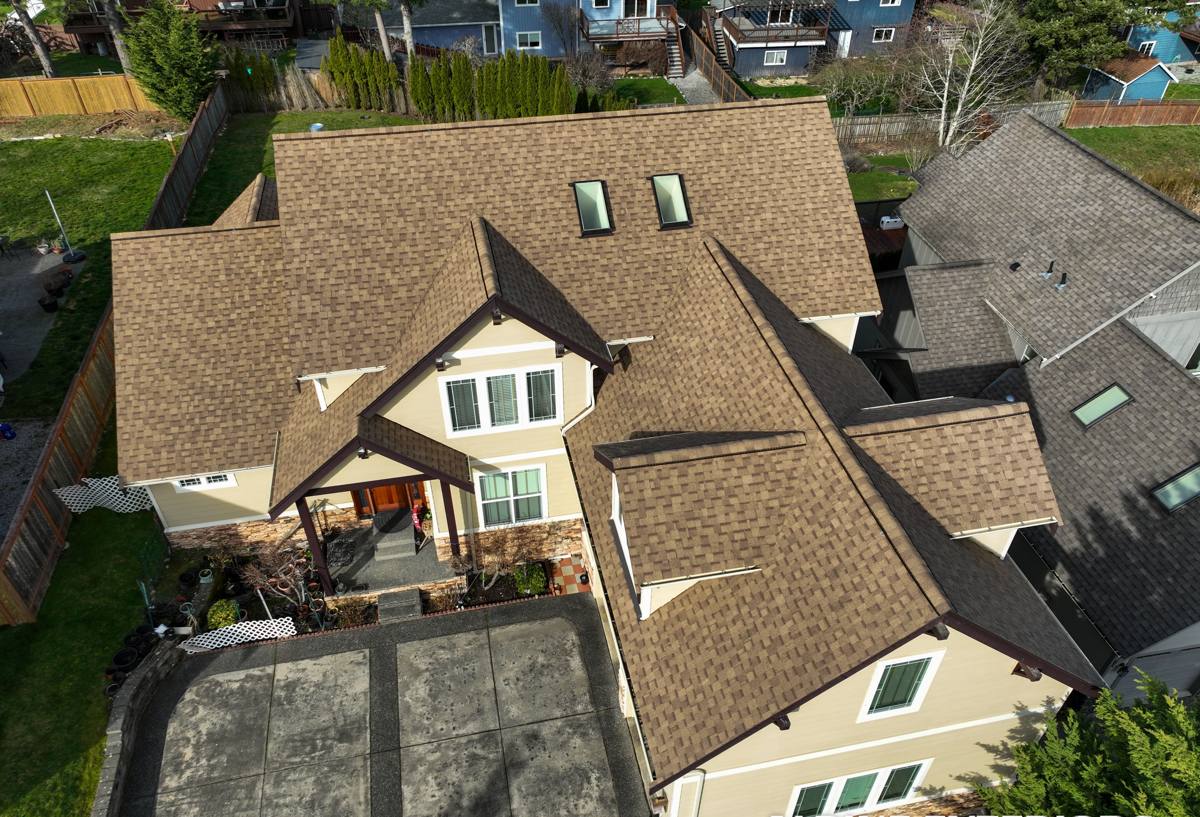
What Actually Counts as Storm Damage
Homeowners often assume storm damage means a dramatic hole or a shingle sailing across the yard. In practice, most of what we find after a wind or rain event in Columbia is quieter than that — and easier to miss from the ground.
Wind Damage Signs
- Shingles that are creased, curled up at the corners, or missing granules in a wind-shadow pattern
- Ridge caps that have separated slightly from the ridge line
- Flashing around chimneys, skylights, or plumbing vents knocked loose or bent
- Fasteners backed out or exposed where wind flexed the roof deck
Moisture and Moss-Related Damage
Moss doesn't cause storm damage on its own, but it sets the stage for it. A mat of moss holds water against the shingle surface long after a storm has passed, which softens the shingle mat and makes it far more likely to tear or lift in the next round of wind. When we inspect storm damage in Sudden Valley, we almost always check for moss buildup in the same visit, because the two problems tend to travel together.
Debris Impact
Wooded lots mean falling limbs and windblown debris are a real factor here, more so than in an open subdivision. A branch strike can puncture the roofing membrane cleanly, or it can crack a shingle in a way that isn't obvious until a wet week later when a stain shows up on the ceiling below.
What a Correct Storm Damage Repair Actually Involves
A rushed repair replaces the shingle you can see and stops there. A correct repair works from the decking outward, because the shingle is the last layer, not the only one.
- Deck inspection. Any area with a suspected leak or impact gets checked for soft spots, delamination, or rot in the plywood or OSB sheathing underneath. Damaged decking has to be cut out and replaced before anything goes back on top of it.
- Underlayment continuity. The water-resistant barrier beneath the shingles needs to tie back into the surrounding underlayment properly, with correct overlap, so water can't find a path around the repair.
- Flashing integrity. Flashing at chimneys, valleys, and penetrations gets re-secured or replaced rather than just caulked over. Caulk is a short-term patch, not a repair, and it fails faster in this climate than most homeowners expect.
- Matching materials. Shingle color, profile, and exposure need to match the existing roof closely enough that the repair doesn't stand out as a visible patch — and more importantly, so the new section performs the same as the surrounding roof under wind load.
- Correct fastening. Nailing pattern and placement follow the shingle manufacturer's specification, not a shortcut pattern. Under-driven or over-driven nails are one of the most common causes of repeat wind damage.
Repair Scope Comparison
Not every storm-damaged roof needs the same level of work. The table below outlines the general categories we see in Columbia and Sudden Valley homes, though every roof gets its own inspection before we recommend a scope.
| Scope | Typical Cause | What's Involved | General Cost Range |
|---|---|---|---|
| Spot repair | Isolated wind lift, small debris strike, one failed flashing point | Shingle and flashing replacement in a limited area, deck check | A few hundred dollars |
| Section repair | Concentrated wind damage, moss-softened area, or a slow leak that spread | Deck repair, underlayment replacement, multiple courses of shingles | Low to mid four figures |
| Roof-wide repair or partial re-roof | Aging roof plus storm event, widespread moss undermining, multiple leak points | Larger tear-off, full underlayment replacement, possible ventilation upgrades | Varies significantly by size and access |
These ranges are general starting points, not quotes. Roof pitch, access, the number of penetrations, and how much decking needs replacing all move the number in either direction. We always give a written estimate before starting work.
Our Process, Start to Finish
Homeowners in Columbia calling about storm damage usually want two things: an honest answer about how bad it is, and a clear idea of what happens next.
- Inspection and documentation. We walk the roof and document the damage with photos and notes, distinguishing storm-caused damage from pre-existing wear like moss or age-related granule loss.
- Straight talk on scope. We tell you what's storm damage, what's maintenance, and what can reasonably wait — we don't pad a repair into a replacement, and we don't undersell a repair that's really a replacement.
- Written estimate. You get a scope of work and a price before anything is touched, including options where they exist.
- Insurance coordination, if needed. If you're filing a claim, we can provide documentation your adjuster will want to see and walk the roof with them if that's helpful.
- The repair itself. Deck work, underlayment, flashing, and shingle work performed in that order, with matching materials.
- Cleanup. Old materials and debris hauled off — we don't leave nails and shingle scraps in your yard or gutters.
Insurance and Documentation Notes
One of the more frustrating parts of storm damage is the line between what's covered and what isn't. Most homeowners' policies cover sudden, storm-caused damage — a limb strike, wind-torn shingles, a flashing failure tied to a specific weather event. Most policies do not treat moss buildup or general wear as a covered event, because insurers classify that as a maintenance issue rather than storm damage, even though the two often show up together on the same roof.
The practical takeaway: if a storm passes through and you suspect damage, get it documented and inspected sooner rather than later. A gap between the storm and the inspection makes it harder to separate what the storm caused from what simply continued to deteriorate afterward — and that distinction matters if you're filing a claim.
Why a Crew That Already Works Sudden Valley Matters
Storm damage repair isn't a generic service — the right approach depends on what's normal for your area. A crew that already works in Columbia and the rest of Sudden Valley knows the roof pitches and material choices common to homes built here, understands how the tree cover affects moss growth and debris exposure lot by lot, and is familiar with the general expectation across the community that repair materials match the look of the surrounding neighborhood rather than standing out. That local familiarity means fewer surprises during the inspection and a repair that fits the house instead of a one-size-fits-all patch.
It also means faster response. After a regional wind event, contractors without local routes are often working through a long list spread across the whole county. A crew already routing through Sudden Valley on a regular basis can usually get eyes on your roof sooner, which matters when an open flashing seam or lifted shingle is left exposed to the next round of rain.
Questions Worth Asking Before You Hire
- Will you inspect the full roof, or only the spot I called about?
- Will the estimate separate storm damage from pre-existing wear?
- Do you carry current liability insurance and workers' compensation coverage?
- Will the repair materials match what's already on the roof?
- What's your timeline for getting a crew out after a storm?
After the Repair: A Maintenance Checklist
A good repair holds up longer with a little seasonal attention. This is the same general checklist we'd suggest for any roof in this climate, not just one that's just been repaired.
- Walk the roofline visually (binoculars from the ground work fine) after any significant wind event
- Keep gutters and valleys clear of needles and leaf litter, especially heading into the wet season
- Watch for moss regrowth along shaded slopes and north-facing sections
- Trim back branches that overhang the roof to reduce both debris strikes and shade that feeds moss
- Check the attic after heavy rain for any sign of moisture, staining, or unusual odor
- Schedule a professional inspection every couple of years, or sooner after a notable storm
Get a Straight Answer on Your Roof
If a recent storm has you wondering whether that lifted shingle or damp ceiling spot is something to worry about, it's worth getting an honest, no-pressure look before it turns into a bigger repair. We offer free estimates for homeowners in Columbia and throughout Sudden Valley — fill out the form below and we'll take it from there.