 Sudden Valley Siding
 Building Decks for Happy Valley's Specific Conditions
Happy Valley sits within the broader Sudden Valley community in Whatcom County, and like the rest of this stretch of the county, decks here take a beating that homeowners further inland rarely deal with. Salt-laden air moving in off the water, long stretches of driving rain, and a moss season that seems to run most of the year all work against wood decking in ways that are easy to underestimate until you're the one replacing boards every few years. We install composite decking for homeowners throughout Happy Valley and the surrounding Sudden Valley area, and the approach we take is built around what actually survives this climate, not what looks best in a showroom display.
Composite decking isn't automatically the right answer just because it's popular. It's the right answer here because of what this specific environment does to alternatives, and because a correctly installed composite deck solves problems that a poorly installed one will simply hide for a year or two before they resurface.
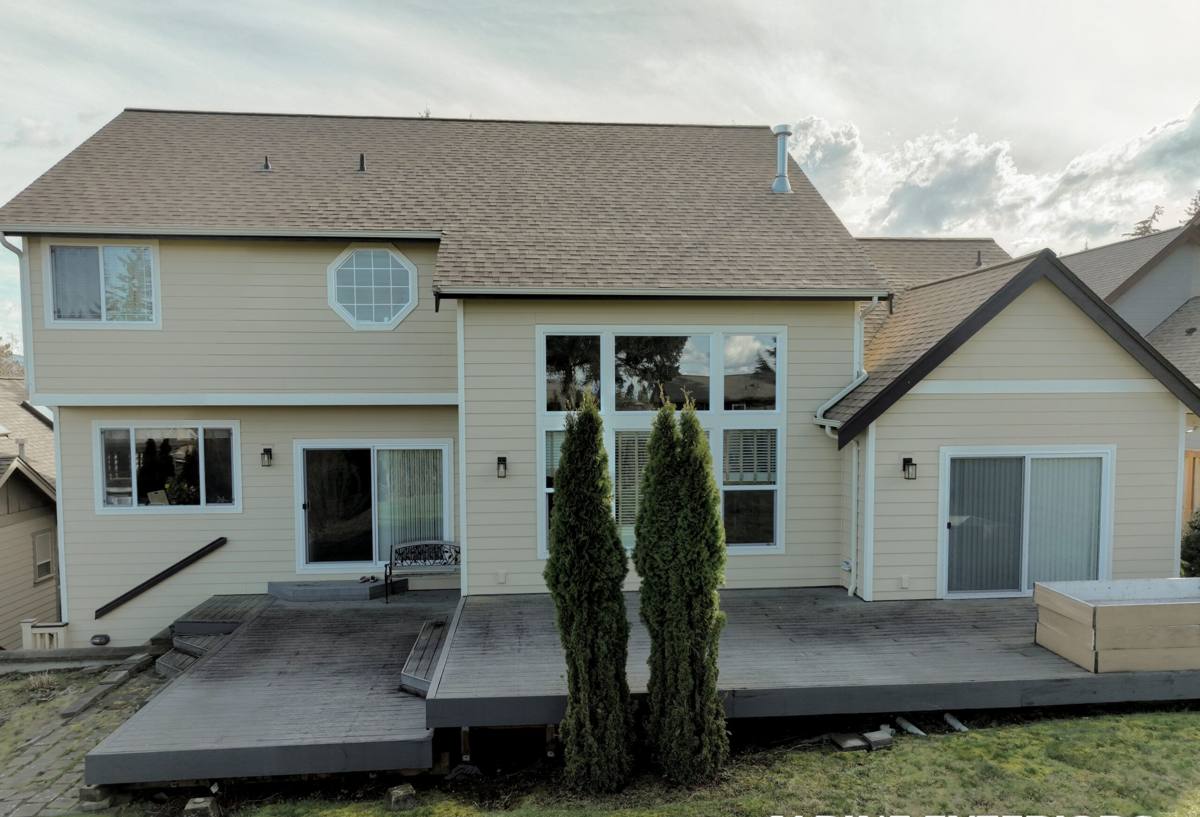
What Salt Air, Rain, and Moss Actually Do to a Deck
Salt Air and Metal Fatigue
Airborne salt accelerates corrosion on anything metal — fasteners, joist hangers, railing brackets, flashing. On a wood deck, that often means the hardware fails well before the boards do, and by the time you notice rust streaks or a loose railing post, the corrosion has usually been working on fastener heads and hanger connections for a while. Composite boards don't eliminate this risk on their own; the hardware underneath still needs to be rated for the exposure, which is a detail that gets skipped more often than it should.
Driving Rain and Standing Moisture
Whatcom County gets a lot of rain, and in Happy Valley it frequently arrives at an angle rather than falling straight down, driven by wind off the water. That means water finds its way under railings, into end grain, and along ledger board connections that would stay relatively dry in a calmer climate. Wood decking absorbs that moisture and swells; even pressure-treated lumber will eventually check, cup, or soften at the points where water collects and doesn't drain or dry quickly.
A Long Moss and Algae Season
Shade, humidity, and mild temperatures keep moss and algae active on exterior surfaces for most of the year in this part of Whatcom County. On a deck, that shows up first on boards that sit in shade or hold water — north-facing sections, areas under overhangs, and the gaps between boards where debris collects. Moss on a wood deck isn't just cosmetic; it holds moisture against the board surface and accelerates the rot that's already working from the inside out. On a poorly ventilated composite deck, moss and algae can also build up on the surface texture, which is why airflow underneath the deck matters as much for composite as it does for wood.
Why Composite Makes Sense for This Specific Environment
Composite decking is manufactured from a blend of wood fiber and recycled or virgin plastic, capped or coated to resist moisture absorption at the board's surface. That construction addresses the two biggest wood failure points in a climate like Happy Valley's: it doesn't absorb rainwater into the board the way solid wood does, and it doesn't offer moss and algae the same kind of porous surface to colonize. That doesn't make it maintenance-free — nothing exposed to this climate is — but it changes what maintenance looks like, from sanding, staining, and replacing rotted boards to periodic cleaning.
What Composite Doesn't Fix
Composite decking is only as good as what's underneath it. A composite deck built on an undersized or poorly flashed substructure, with the wrong fasteners, or without adequate airflow beneath the boards, will still develop problems — moisture trapped under the deck, hardware corrosion, and in some cases mold on the underside of boards that never get a chance to dry. We've been called out to look at composite decks installed by other crews where the boards themselves were fine but the substructure underneath was failing. The board is one part of the system; it's not the whole system.
What a Correct Composite Deck Installation Involves
A deck that's going to hold up in Happy Valley's conditions needs attention at every layer, not just the visible surface. Here's what we build to on every project:
- Engineered substructure: Joists and beams sized correctly for the span and the load, not just matched to what the old deck used.
- Corrosion-resistant hardware: Stainless steel or hot-dip galvanized fasteners, joist hangers, and structural screws rated for coastal or high-moisture exposure — not standard interior-grade hardware.
- Proper ledger flashing: A correctly flashed ledger board connection where the deck meets the house, since this is one of the most common points of hidden water intrusion on any deck, composite or wood.
- Ventilation underneath: Adequate clearance and airflow beneath the deck surface so moisture doesn't sit trapped against the joists or the underside of the boards.
- Correct board spacing: Gapping set to the manufacturer's specification, accounting for thermal expansion and drainage, not just eyeballed for a tight look.
- Hidden or manufacturer-approved fastening: Using the clip or screw system the board manufacturer specifies, which affects both appearance and warranty validity.
Skipping any one of these doesn't necessarily show up on day one. It shows up two, three, or five years in, usually as a soft spot, a rust stain, or a section of decking that stays damp long after the rest of the deck has dried.
Composite vs. Other Decking Materials
| Material | Moisture Behavior in This Climate | Maintenance | Typical Lifespan Here |
|---|---|---|---|
| Pressure-treated wood | Absorbs rain and humidity; prone to cupping, checking, and rot at fasteners and ground contact | Annual cleaning, periodic staining or sealing, board replacement over time | 10–15 years before major repairs, often less on shaded sections |
| Cedar | Naturally rot-resistant but still absorbs moisture; graying and softening accelerate in constant damp shade | Regular sealing to maintain rot resistance and appearance | 15–20 years with consistent upkeep |
| Capped composite | Moisture-resistant surface layer; core material doesn't swell or rot from rain exposure | Periodic washing to control surface algae and pollen film | 25–30+ years, often backed by manufacturer warranty |
| Uncapped composite (older generation) | Can absorb some surface moisture; more prone to mold staining in shaded, damp conditions | More frequent cleaning; can fade or stain over time | 15–20 years, more maintenance-dependent |
We install capped composite products for the vast majority of Happy Valley projects because the capped surface is specifically what resists the moss, algae, and moisture staining that this climate produces. Uncapped composite has its place on a budget, but we're upfront with homeowners about the trade-off before they commit.
Our Process, Start to Finish
1. On-Site Evaluation
We walk the existing deck or the proposed footprint in person, checking ledger connection points, existing framing condition if it's a replacement, drainage patterns, and sun/shade exposure across the deck. This tells us what substructure work is actually needed before we ever talk about board selection.
2. Substructure and Framing
If we're replacing an existing deck, we assess the framing rather than assuming it's reusable. Joists and ledger connections that have been absorbing moisture for years often need replacement even when the old decking on top looked fine. New builds get framing sized to the specific span and load requirements of the project.
3. Flashing and Water Management
Ledger flashing, joist tape, and any necessary drainage detailing go in before a single board is installed. This is the step that determines whether the deck stays dry where it meets the house for the next 25 years or starts hiding rot in year three.
4. Composite Board Installation
Boards go down using the fastening system specified by the manufacturer, spaced correctly for drainage and expansion, and finished with matching fascia, stair treads, and trim as needed.
5. Railings and Final Details
Railing systems get the same corrosion-resistant hardware treatment as the deck structure itself, since railing posts and brackets are just as exposed to salt air and driving rain as anything else on the deck.
6. Walkthrough
We walk the finished deck with the homeowner, point out drainage and maintenance basics specific to the board product installed, and answer questions before we consider the job done.
Cost Factors to Understand Before You Get a Quote
| Factor | Why It Matters |
|---|---|
| Substructure condition | A replacement deck built on failing or undersized framing needs that framing rebuilt first, which affects total cost more than the board choice itself |
| Board tier (capped vs. uncapped, brand) | Capped composite costs more upfront but generally reduces long-term maintenance in this climate |
| Deck footprint and shape | Multiple levels, curves, or built-in features like stairs and benches add labor and material beyond simple square footage |
| Railing system | Composite, aluminum, and cable rail systems vary significantly in material cost and installation time |
| Height and access | Elevated decks require additional structural support and can complicate material staging and demolition of an existing deck |
| Site access | Some Sudden Valley lots have limited equipment or material access, which affects labor time |
We give homeowners a written estimate that breaks these factors out rather than a single lump number, so it's clear what's driving the cost.
Maintaining a Composite Deck in This Climate
Composite decking cuts down on maintenance significantly compared to wood, but "low maintenance" isn't "no maintenance," especially with salt air and a long moss season in the mix. A realistic maintenance routine for a Happy Valley composite deck includes:
- Periodic washing with a soft-bristle brush and mild soap and water to remove pollen film, dirt, and early algae growth before it takes hold
- Clearing debris from between boards and off the deck surface, especially under trees or overhangs where moisture and organic matter collect
- Checking railing hardware and fasteners annually for signs of corrosion, particularly in the first few years after installation
- Keeping gutters and downspouts near the deck clear so runoff isn't dumping directly onto the deck surface or substructure
- Confirming under-deck ventilation stays clear of stored items or overgrowth that can block airflow
None of this requires sanding, staining, or sealing the way a wood deck does. It's closer to the upkeep you'd give any other exterior surface exposed to this climate.
Why Hiring a Crew That Already Works Happy Valley Matters
The construction details that matter for a deck in Happy Valley aren't universal — they're specific to this stretch of Whatcom County's combination of salt air, driving rain, and moss pressure. A crew that primarily builds decks in a drier or more sheltered part of the state may not default to corrosion-rated hardware, or may not think to prioritize ventilation and flashing the way conditions here require. We work this area regularly, which means we're not guessing at what holds up — we're building to what we've already seen fail and correcting for it before it becomes the homeowner's problem.
Before hiring anyone for deck work in Happy Valley, it's worth asking a few direct questions:
- What fastener and hardware grade do you use, and is it rated for coastal or high-moisture exposure?
- How do you flash the ledger board connection, and can you explain why?
- What ventilation clearance do you build in underneath the deck?
- Do you assess and, if needed, replace framing on a deck replacement, or just install new boards over existing structure?
- What's included in your written warranty, and does it cover labor as well as materials?
A contractor who can answer these clearly, without hedging, is one who's actually thought through what this climate does to a deck.
Ready to Talk About Your Deck?
If you're planning a new composite deck or replacing one that's showing its age in Happy Valley, we're happy to take a look and give you a straightforward, no-pressure estimate. Fill out the form below and we'll get in touch to schedule a time to walk the site with you.