 Sudden Valley Siding
 Board & Batten Siding in Cordata: A Look That Has to Be Built Right
Board and batten siding has become one of the most requested exterior looks in Cordata — the clean vertical lines read as modern on a new build and as classic farmhouse on an older one. It works on a full exterior or as an accent over an entry, gable, or dormer. But board and batten is not a forgiving style to get wrong. The same vertical panel joints and narrow battens that make it look sharp are also where water finds its way behind the cladding if the details aren't handled correctly. In a climate like ours, that's not a small detail — it's the difference between siding that looks good for decades and siding that's hiding rot by year eight.
This page is about that one job, done for homes in Cordata specifically: what the local climate demands from a board and batten installation, what a correct job actually involves, how we approach it, and why it matters to work with a crew that already understands this part of Whatcom County.
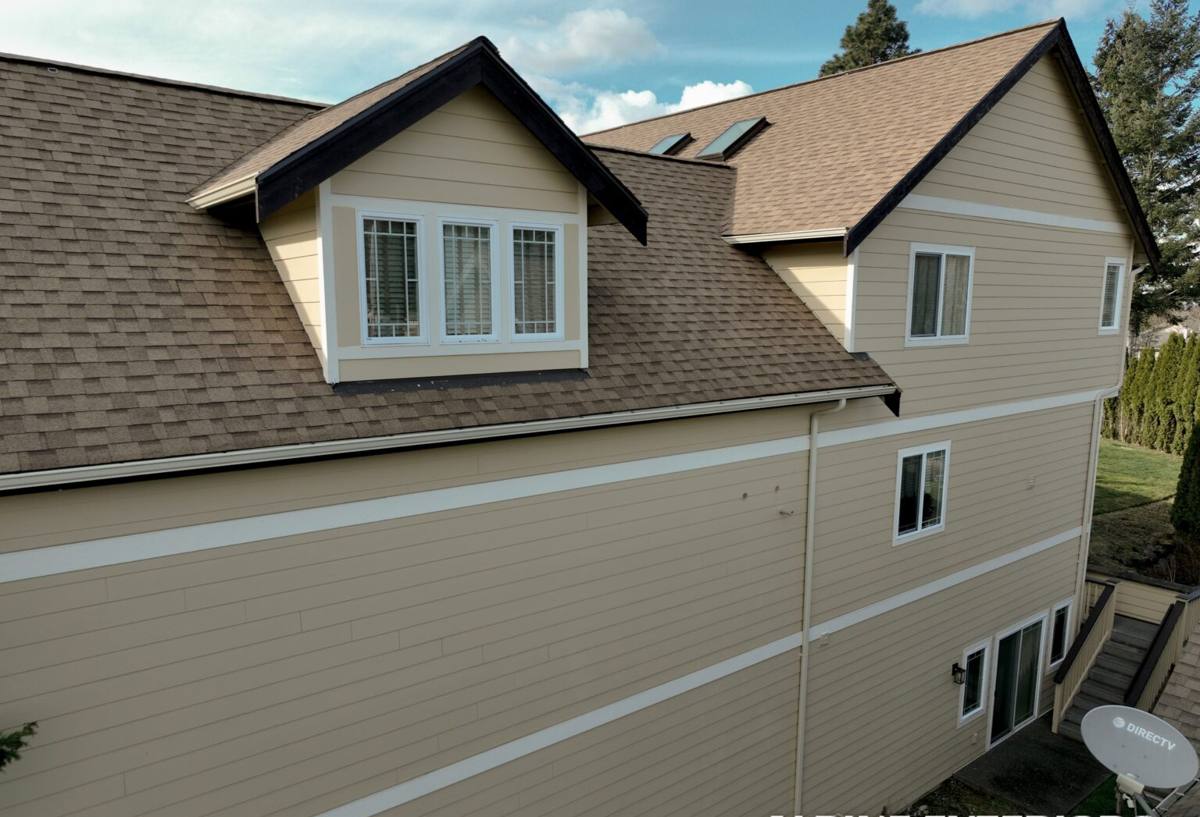
Why Cordata's Climate Puts Board & Batten to the Test
Whatcom County sits in a marine climate — long stretches of steady, driving rain rather than short heavy downpours, mild temperatures that never fully dry things out, and enough shade and moisture on north- and west-facing walls to grow moss and algae for a good part of the year. Homes near the water pick up salt-laden air on top of that, which accelerates wear on fasteners, trim, and any siding material that isn't built to handle it.
Board and batten siding has more vertical seams per square foot than standard lap siding, and those seams run with the water flow instead of shedding it the way overlapping horizontal boards do. That's fine when the installation includes a real drainage plane and correctly lapped flashing. It's a problem when a crew treats board and batten like a decorative overlay and skips the water management underneath. Add a long moss season on top of that, and any siding product with a soft or porous surface starts showing green streaking and soaked-in grime within a couple of years — long before the siding itself is actually worn out.
What This Means for the Batten Layer Specifically
The battens themselves — the narrow vertical strips that cover the panel joints — are the most exposed part of the whole system. They catch runoff, they catch direct rain on windward walls, and they're the first thing to show failure if the fastening or caulking behind them isn't right. On a home in Cordata, we treat batten placement and fastening as the part of the job that determines whether this siding style survives the climate or becomes a maintenance headache.
What a Correct Board & Batten Installation Actually Involves
A lot of the difference between board and batten siding that lasts and board and batten siding that fails happens behind the panels, where a homeowner can't see it. Here's what we consider non-negotiable.
A Real Rainscreen Gap
Fiber cement board and batten should be installed over a drainage gap — typically furring strips or a purpose-built rainscreen product — not fastened flat against the weather-resistive barrier. That gap lets any moisture that gets past the outer surface drain and dry instead of sitting against the sheathing. In a climate with as much sustained damp weather as ours, skipping this step is one of the most common causes of hidden rot behind board and batten walls.
Batten Spacing and Fastening
Battens need consistent spacing over the panel joints, with fastening that goes into structural framing or properly blocked furring — not just into the panel edge. Fasteners that are overdriven, underdriven, or placed too close to a panel edge create weak points where water intrudes and the fiber cement can eventually crack. This is manual, careful work; it isn't a job that goes faster by rushing the layout.
Flashing, Trim, and Transitions
Every window, door, roofline, and outside corner is a place where water wants to get behind the siding. Correct flashing — installed in the right order, lapped the right direction, sealed with the right materials — matters more on a vertical siding profile than almost anywhere else, because water traveling down a board and batten wall has fewer horizontal breaks to interrupt it. We treat flashing details as part of the siding installation, not an afterthought handled by whoever gets to it.
Bottom Termination and Ground Clearance
Board and batten that runs too close to grade, a deck, or a patio surface stays wet longer and is more exposed to splash-back, moss, and soil moisture. Correct termination height and a starter strip that lets water drain out from behind the first course are basic requirements we don't skip, even when it means adjusting a detail the original plans didn't account for.
James Hardie vs. Other Board & Batten Materials
Board and batten siding can be built out of several different materials, and the choice matters more with this style than with most, because of how much surface area is vertical and exposed. Here's how the common options compare for a Whatcom County installation.
| Material | Behavior in Sustained Rain & Moss | Maintenance Over Time |
|---|---|---|
| James Hardie fiber cement | Non-combustible, dimensionally stable, factory ColorPlus finish resists moss and mildew staining better than painted surfaces | Occasional wash-down; no repainting needed under normal conditions |
| Engineered wood (LP-type) | Wood-based core is more vulnerable to sustained moisture at cut edges and panel joints | Edge sealing and touch-up become an ongoing task in a wet climate |
| Vinyl board and batten | Sheds water on the surface but seams and battens are typically hollow trim pieces, not solid material | Low maintenance but prone to fading, warping, and a less substantial look over time |
| Cedar or primed spruce | Natural material, attractive when new, but the most moisture-sensitive option in this climate | Regular refinishing, sealing, and moss treatment required to prevent rot |
We install only James Hardie fiber cement, and board and batten is one of the clearest cases for why. This is a siding style that lives or dies on how well the vertical joints and battens handle sustained moisture, and Hardie's fiber cement composition combined with a factory-applied ColorPlus finish gives it a real advantage over wood-based or vinyl alternatives in exactly the conditions Cordata sees most of the year. It won't rot, it won't need repainting on the schedule a wood product does, and it holds its color and edges through repeated wet-dry cycling far better than a painted surface.
Our Process for a Cordata Board & Batten Project
- On-site assessment — we walk the home, check existing wall condition, drainage, roofline transitions, and sun/shade exposure that affects moss growth.
- Design and layout — panel and batten spacing is planned to the specific wall dimensions, not stretched or compressed to fit stock material.
- Removal and prep — old siding comes off, sheathing is inspected for hidden damage, and any rot or water intrusion found is addressed before new siding goes up.
- Weather-resistive barrier and rainscreen — a correctly lapped barrier and drainage gap go in before a single panel is fastened.
- Panel and batten installation — fiber cement panels and battens are installed to Hardie's fastening specifications, with attention to spacing, penetration depth, and edge clearance.
- Flashing and trim — windows, doors, corners, and roof transitions are flashed and trimmed before final caulking and touch-up.
- Final walkthrough — we go over the finished work with the homeowner and point out anything worth knowing for upkeep.
Living With Board & Batten Through Whatcom County's Wet Seasons
Even a correctly installed board and batten system benefits from a little seasonal attention, especially on walls that stay shaded and damp for months at a time. None of this is difficult, but it's worth knowing.
- Rinse moss and algae buildup off shaded or north-facing walls once or twice a year with a garden hose — avoid high-pressure washing directly at panel joints or battens.
- Keep gutters and downspouts clear so water isn't sheeting down wall sections during heavy rain.
- Trim back landscaping that keeps siding shaded and damp, since reduced airflow is one of the biggest drivers of moss growth.
- Check caulking at trim and window transitions every year or two, and have any cracked or missing sealant addressed before the wet season sets in.
- Watch for staining or soft spots near the bottom courses, which can signal a drainage or grading issue worth checking early.
Cost Factors for a Board & Batten Project in Cordata
Every home is different, so we don't publish flat pricing, but the same handful of factors drive cost on most board and batten projects in this area:
| Factor | Why It Affects Cost |
|---|---|
| Wall square footage and complexity | More corners, gables, and dormers mean more cutting, flashing, and batten layout work |
| Condition of existing sheathing | Hidden rot or water damage found during removal adds repair scope before new siding can go on |
| Full replacement vs. accent application | An accent gable or entry feature costs less than a full-home board and batten exterior |
| Trim and flashing detail | Homes with more windows, doors, and roof transitions require more flashing labor |
| Access and site conditions | Steep lots, limited access, or two-story walls affect equipment and labor time |
Why Hiring a Crew That Already Works in Cordata Matters
Board and batten siding done wrong doesn't usually fail in year one — it fails in year six or eight, quietly, behind a wall that looked fine the whole time. A crew that already works in Cordata and understands what Whatcom County's rain patterns and moss season do to a wall over time is going to make different decisions on your job than a crew installing this style for the first time: where the rainscreen gap goes, how tight the batten spacing runs, how much clearance the bottom course gets off the deck or patio. Those are judgment calls built from having already seen what does and doesn't hold up locally, not something that shows up in a spec sheet.
We install James Hardie fiber cement exclusively because it's the product we trust to hold up to this climate without cutting corners on the installation side to compensate for a weaker material. Board and batten is one of the styles where that choice shows the most.
If you're considering board and batten siding for a home in Cordata, we're happy to take a look and talk through what your specific walls need — no pressure, no obligation. Use the form below to request a free estimate.