 Sudden Valley Siding
 Siding Built for What Cordata Actually Deals With
Cordata sits in a part of Whatcom County where siding doesn't get an easy life. Between wind-driven rain off the Sound, salt-laden air, and a moss season that can stretch from October well into spring, exterior walls here take a slower but steadier beating than they would in a drier inland climate. Most siding failures we get called out to inspect aren't dramatic — they're the result of years of moisture finding small gaps, algae and moss holding dampness against a wall, and fasteners or finishes that were never rated for this kind of exposure in the first place.
This page is about one job, done one way, in one area: fiber cement siding installed correctly on homes in and around Cordata. Not a general overview of siding materials — a straight look at what this climate demands, what a correct installation actually involves, and why the crew doing the work matters as much as the product itself.
What Local Conditions Actually Do to a Wall Assembly
Driving Rain and Wind-Driven Moisture
Whatcom County storms don't just fall straight down — wind pushes rain sideways into wall assemblies, especially on exposed elevations and around window and door openings. Siding that isn't installed with proper flashing, laps, and clearances gives that water a path behind the cladding, where it can sit against sheathing for weeks at a time during our wetter months. The material matters less here than the detailing; even a premium siding product will let water in in if the flashing and laps underneath it are wrong.
Salt Air and Metal Fasteners
Proximity to marine air means faster corrosion on unprotected metal — fasteners, flashing, and trim hardware all degrade quicker here than they would 50 miles inland. Streaking, staining, and eventually fastener failure are the visible results. It's a slow process, which is exactly why it gets overlooked until a homeowner notices rust bleed at nail heads or a trim board that's started to separate.
Moss, Algae, and Extended Shade
Cordata's tree cover and marine cloud layer mean long stretches where siding stays damp and shaded, which is exactly what moss and algae need to establish. Once organic growth takes hold on a wall, it holds moisture against the surface far longer than open air would, softening paint film, degrading caulk, and — on materials that aren't dimensionally stable — contributing to swelling, cupping, or rot over time.
Why We Install Only James Hardie Fiber Cement Here
We made a deliberate decision to install exclusively James Hardie fiber cement siding, and we don't install vinyl, LP SmartSide, Cemplank, Allura, primed spruce, or cedar. That's not a marketing position — it's a standard we hold because of what we've seen these products do (and not do) in this specific climate over time.
Wood products, even primed, need an unbroken paint film to keep moisture out; once that film cracks or the end grain is exposed, water gets in and rot follows — and in a climate this wet, that film gets tested constantly. Vinyl is inexpensive and low-maintenance in the short term, but it's a thin material that can warp in direct sun, crack in cold snaps, and it simply can't be painted to refresh a look without specialty products. LP SmartSide is a wood-strand product with a factory finish that performs reasonably in moderate climates, but strand-based products are more sensitive to sustained moisture exposure at cut edges and joints than cement-based ones. Other fiber cement brands exist, and some are reasonable products — our decision to standardize on Hardie comes down to its HZ5 climate-engineered formulation, factory-cured ColorPlus finish, and a warranty structure we're comfortable standing behind on every job we do.
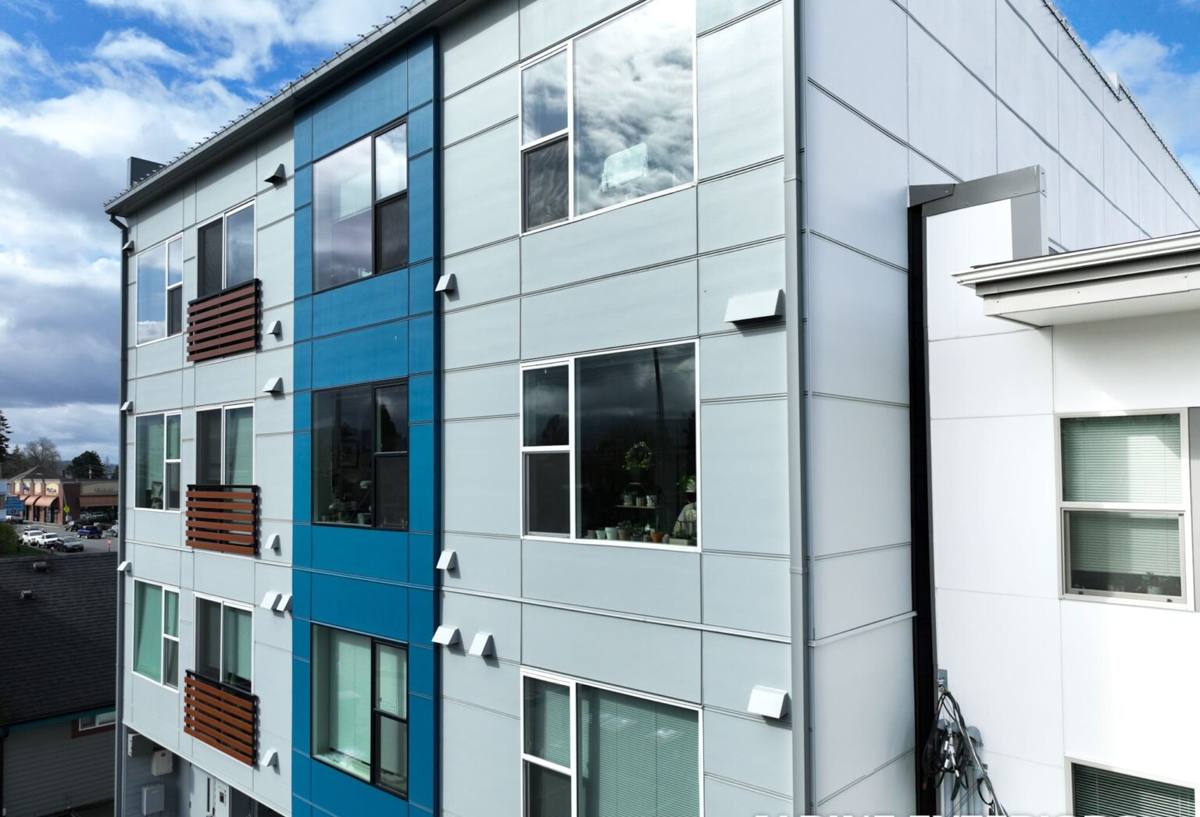
Fiber cement itself is non-combustible, dimensionally stable across our temperature swings, and doesn't feed moss and algae the way wood fiber does. It won't rot. Installed correctly, with the right flashing and clearances underneath it, it's the material best suited to what Cordata's climate throws at a house year after year.
What a Correct Fiber Cement Installation Actually Involves
The siding itself is only part of the system. Most of the long-term performance — or failure — comes down to what happens before the first board goes up and the details most homeowners never see once the job is finished.
Tear-Off and Sheathing Inspection
We don't install new siding over old problems. Once the existing siding is off, we inspect the sheathing for soft spots, prior water intrusion, and any rot that needs to be cut out and replaced before anything new goes on. Covering up damaged sheathing is one of the most common shortcuts that leads to callbacks a few years later.
Weather-Resistive Barrier and Flashing
A correctly lapped weather-resistive barrier, paired with proper flashing at every window, door, and penetration, is what actually keeps wind-driven rain out of the wall — not the siding surface itself. Every opening gets flashed so water sheds outward and down, never inward.
Rain Screen / Drainage Gap
Given how much rain this area sees, we install with a drainage gap behind the siding rather than fastening it flat against the barrier. That gap lets any incidental moisture drain and dry instead of sitting trapped against the back of the board — a detail that matters more here than in drier parts of the state.
Fastening and Clearances
James Hardie specifies fastener type, spacing, and penetration depth for a reason — get it wrong and you compromise both the warranty and the board's ability to move with temperature and moisture changes. We also hold proper clearance from grade, decks, and roof lines, since siding installed too close to the ground or to horizontal surfaces stays wet longer and is the first place we see problems on older homes.
ColorPlus Finish and Caulk Discipline
Hardie's ColorPlus finish is factory-baked for consistency and UV resistance, which also means it doesn't need to be painted at install and holds color far longer than field-applied paint. We use caulk sparingly and only where Hardie's install specs call for it — over-caulking joints that are designed to allow movement is a common mistake that traps moisture instead of shedding it.
Fiber Cement vs Other Siding Options for This Climate
| Factor | James Hardie Fiber Cement | Vinyl | Wood / Primed Spruce / Cedar |
|---|---|---|---|
| Moisture resistance | Excellent when installed to spec; won't rot | Good, but seams and gaps can trap water behind panels | Requires intact paint film; vulnerable once compromised |
| Moss / algae resistance | Doesn't feed organic growth; factory finish resists staining | Can develop surface algae, especially in shaded areas | Wood fiber is more susceptible to sustained moss and rot |
| Salt air performance | Stable; fasteners and trim need proper corrosion-resistant hardware | Can become brittle over time in coastal exposure | Finish and fasteners both need more frequent attention |
| Maintenance | Occasional wash; repaint only if ever desired, decades out | Low, but limited repair and no repaint option | Regular repainting and sealing required |
| Fire resistance | Non-combustible | Combustible | Combustible |
Our Process for a Cordata Installation
- On-site assessment — We walk the home, check existing siding and trim condition, and note drainage, shade patterns, and any prior moisture damage specific to that property.
- Scope and product selection — We recommend the Hardie plank, panel, or shingle profile and HZ series suited to the home's exposure, then walk through ColorPlus options.
- Tear-off and sheathing repair — Old siding comes off, sheathing is inspected, and any damaged material is replaced before moving forward.
- Barrier, flashing, and drainage gap installation — The weather-resistive barrier, flashing at every opening, and rain screen furring go on before a single piece of siding.
- Siding installation — Boards or panels go up to Hardie's fastening and clearance specifications, with attention to laps, joints, and grade clearance.
- Trim, caulk, and final detailing — Trim is installed, caulk is applied only where specified, and every opening and penetration is checked.
- Walkthrough — We go over the finished work with the homeowner and flag anything worth keeping an eye on going forward.
Cost Factors for a Cordata Siding Project
We don't quote pricing without seeing a home, but the factors that actually move a project's cost up or down are consistent from job to job:
- Condition of existing sheathing — hidden rot or water damage found during tear-off adds repair scope before new siding can go on.
- Home size and number of stories — more wall area and taller elevations both add material and labor time.
- Trim and architectural complexity — homes with more corners, dormers, and window/door openings take longer to flash and finish correctly.
- Siding profile and finish choice — lap width, shingle-style siding, and certain ColorPlus finishes carry different material costs.
- Site access — landscaping, fencing, decks, and tight lot lines can all affect how efficiently a crew can work.
Maintenance Checklist for Fiber Cement in This Climate
Fiber cement is low-maintenance compared to wood, but "low" isn't "none" — especially with Cordata's moss season and salt air. A few habits go a long way toward getting the full life out of the material:
- Rinse siding down once or twice a year to clear pollen, dust, and early moss growth before it establishes.
- Trim back vegetation and tree limbs that keep sections of the wall in constant shade and dampness.
- Check caulk lines at trim and openings annually for cracking or separation, and have any gaps addressed before winter rains set in.
- Keep gutters and downspouts clear so overflow isn't running directly down the siding face.
- Watch for rust streaking at fastener heads or trim, which can signal it's time to have hardware inspected.
- Maintain clearance between siding and grade, mulch beds, or deck surfaces that have crept upward over time.
Why a Crew That Already Works This Area Matters
A lot of what makes a siding job hold up here isn't in the spec sheet — it's judgment calls made on-site. Knowing which elevations in Cordata take the worst of the wind-driven rain, which lots hold shade and moisture longer because of tree cover, and how salt air exposure changes fastener choices closer to the water are all things a crew learns by working this specific area repeatedly, not by reading a general installation manual. A crew unfamiliar with Whatcom County's marine climate can still install fiber cement — but they're more likely to miss the details that only show up as a problem years later, once the warranty conversation gets complicated and the original installer is long gone.
We install one product, to one standard, because we've seen what happens when either of those slips. If you're weighing a siding replacement or repair in Cordata, we're glad to take a look at your home and give you a straight, no-pressure estimate — fill out the form below and we'll go from there.