 Sudden Valley Siding
 Metal Roofing in Cordata: A Different Climate Problem Than Most Roofers Admit
Cordata sits in a part of Whatcom County where the weather doesn't take a season off. Homes here deal with salt-laden air moving in off the water, long stretches of driving rain, and a moss season that can run most of the year under tree cover. None of that is unusual for this corner of Washington, but it does mean a roof spec that works fine in a drier climate can fail here years ahead of schedule. Metal roofing, installed correctly for this specific environment, holds up better than most alternatives — but "installed correctly for this environment" is doing a lot of work in that sentence, and it's where a lot of roofing jobs quietly go wrong.
This page is about metal roofing specifically for Cordata homes: what the local climate actually does to a roof over time, what a correct installation looks like, and how we approach these projects as a crew that works in this area regularly rather than passing through once.
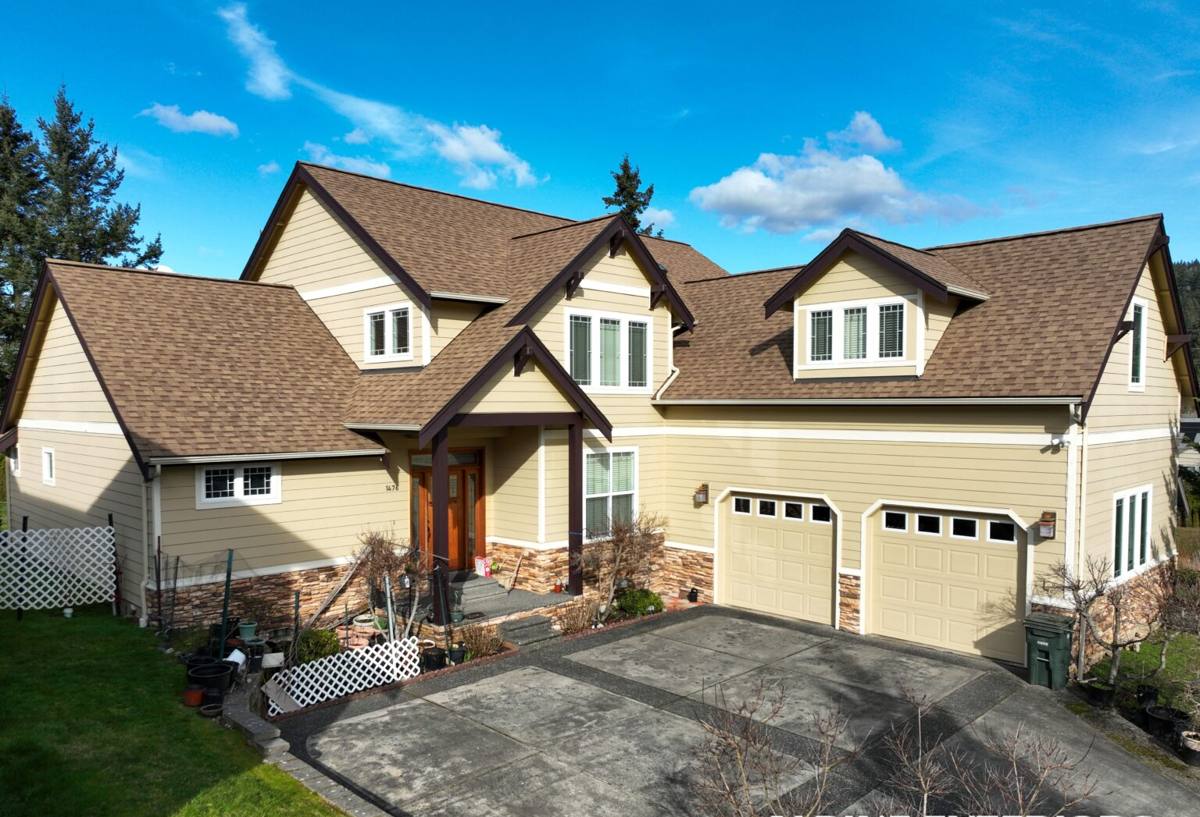
What Whatcom County Weather Does to a Roof Over Time
Three conditions matter more than anything else for a roof in this area:
Salt Air
Moisture-laden marine air carries salt that accelerates corrosion on unprotected or poorly finished metal fasteners, flashing, and panel edges. This doesn't mean metal roofing is a bad choice here — it means the specific alloy, coating, and fastener hardware matter more than they would somewhere inland and dry.
Driving Rain
Rain in this region rarely falls straight down. Wind-driven rain gets pushed sideways and upward under eaves, around penetrations, and into laps and seams that aren't detailed properly. A roof that only sheds water moving in one direction will eventually leak here.
Moss Season
Shade, moisture, and mild temperatures make this a place where moss and algae establish quickly on roof surfaces, especially on north-facing slopes and under tree canopy. Moss holds moisture against a roofing surface far longer than open sun-exposed sections dry out, which accelerates deterioration underneath it — even on materials that don't rot, like metal.
None of these three conditions is dramatic on its own. Together, over a decade or two, they're what separates a roof that ages gracefully from one that needs early repairs.
Why Metal Roofing Is a Strong Fit for This Climate
Metal roofing doesn't solve every problem automatically, but it has real advantages for a house in this environment when it's specified and installed right:
- Steep, smooth metal panel profiles shed moss and debris far more readily than shingles, since there's no granulated surface for spores and organic material to grip.
- A quality metal roofing system with proper coatings resists the corrosion risk from salt-laden air far better than untreated or low-grade metal hardware.
- Panel seams, when installed correctly, handle wind-driven rain better than lapped shingle systems because water has fewer horizontal edges to work into.
- Metal roofing typically outlasts asphalt shingles by a wide margin, which matters on a roof that's dealing with near-constant moisture exposure rather than a handful of wet months a year.
Standing Seam vs. Exposed-Fastener Panels
Not all metal roofing is the same, and the difference matters most in exactly the conditions Cordata sees. Here's how the two common approaches compare for a home in this climate:
| Factor | Standing Seam | Exposed-Fastener Panel |
|---|---|---|
| Fastener exposure | Concealed clips, no exposed screws through the panel face | Screws penetrate the panel face directly |
| Long-term weather-tightness | Higher — no gasketed screws to fail over time | Depends on gasket condition, which degrades with age and sun/rain cycling |
| Upfront cost | Higher | Lower |
| Best fit | Primary roofs, longer ownership horizon | Outbuildings, budget-driven projects, shorter horizon |
| Maintenance | Minimal fastener maintenance | Gaskets and screws should be checked periodically |
We'll walk you through which one makes sense for your specific roof rather than defaulting to one option — pitch, budget, and how long you plan to stay in the home all factor in.
What a Correct Metal Roofing Installation Actually Involves
The panels themselves get most of the attention, but the parts you don't see are what determine whether the roof performs in this climate for the next thirty-plus years:
Underlayment and Water-Resistive Layer
A high-temperature-rated synthetic underlayment, with self-adhered ice-and-water membrane at eaves, valleys, and around every penetration, gives the roof a real second line of defense if wind-driven rain ever gets past the panel laps.
Flashing at Every Transition
Chimneys, skylights, wall-to-roof intersections, and valleys are where the overwhelming majority of roof leaks originate — on any roofing material. Metal roofing depends on properly formed, properly lapped flashing at these transitions even more than shingle roofs do, because there's no forgiving overlap of small shingle courses to compensate for a sloppy detail.
Ventilation
Trapped attic moisture condensing against the underside of a metal roof deck is a common and avoidable problem. Balanced intake and exhaust ventilation keeps that moisture moving out instead of sitting against wood sheathing.
Fastener and Coating Selection
Given the salt air this area sees, fastener hardware and panel coatings need to be matched to a coastal-influenced marine environment, not just a generic "rain climate" spec. This is one of the most commonly skipped details on lower-bid roofing jobs.
Our Process for a Cordata Metal Roofing Project
- On-site inspection. We look at your existing roof deck, ventilation, flashing points, and any moss or moisture staining before quoting anything, since those conditions change the scope.
- Tear-off vs. overlay decision. Metal roofing can sometimes go over an existing roof in the right conditions, but we'll tell you honestly when a tear-off is the better call — usually when there's existing moisture damage or an incompatible deck.
- Material selection. We go over panel profile, gauge, and coating options suited to this climate, along with the standing seam vs. exposed-fastener tradeoff above.
- Installation. Deck prep, underlayment and ice-and-water membrane, panel installation, and flashing detailing at every transition point.
- Final walkthrough. We review the completed roof with you, including what maintenance (if any) it needs going forward.
Cost Factors for Metal Roofing in Cordata
Metal roofing costs more upfront than asphalt shingles, and the final number depends on more than just square footage. Broad, honest ranges depend heavily on these factors:
| Factor | Why It Moves the Price |
|---|---|
| Panel type (standing seam vs. exposed-fastener) | Standing seam requires more labor and material cost per square |
| Roof pitch and complexity | Steeper pitches, multiple valleys, and dormers add labor time and flashing detail |
| Tear-off vs. overlay | Removing and disposing of an existing roof adds cost but is sometimes unavoidable |
| Deck condition | Rotted or moss-damaged sheathing found during tear-off needs repair before panels go on |
| Ventilation upgrades | Adding proper intake/exhaust venting where it's currently inadequate |
| Access | Steep sites, limited staging area, or tree cover can affect labor time |
We give a real, itemized number after the on-site inspection — not a guess based on square footage alone.
Maintenance: What Metal Roofing Still Needs in a Mossy Climate
Metal roofing needs far less maintenance than shingles, but "far less" isn't "none," especially in an area with this much shade and moisture. A simple annual routine keeps a metal roof performing the way it's supposed to:
- Clear debris (needles, leaves, small branches) from valleys and around penetrations at least once a year.
- Check gutters and downspouts for buildup that can back water up under the eave edge during heavy rain.
- Look for moss or algae starting to establish on shaded slopes, and address it early rather than letting it spread.
- Inspect flashing at chimneys, skylights, and wall intersections for any sign of separation or sealant breakdown.
- On exposed-fastener panels, check that screws and gaskets are still seated and haven't backed out or degraded.
- After any major windstorm, do a visual check for lifted panels or dislodged flashing.
Why Hiring a Crew That Already Works in Cordata Matters
A roof spec that's correct for Arizona or even for eastern Washington isn't automatically correct here. Crews that work primarily in this part of Whatcom County understand, without having to relearn it on your roof, how much wind-driven rain a given exposure sees, how aggressively moss establishes under the tree cover common in this area, and which fastener and coating choices actually hold up against the salt air moving through the region. That local track record shows up in the small decisions — flashing details, underlayment choices, ventilation sizing — that don't show up on a proposal sheet but determine whether the roof is still performing well in twenty years.
If you're weighing metal roofing for a home in Cordata, we're happy to take a look and give you a straightforward, no-pressure estimate based on what your specific roof actually needs — use the form below to get started.