 Sudden Valley Siding
 Building Decks for Geneva's Lake Whatcom Climate
Geneva sits close enough to Lake Whatcom and the broader Whatcom County weather pattern that a deck here takes a different kind of beating than one built inland or in a drier climate. Salt-tinged air moving in off the water, driving rain that comes in sideways during fall and winter storms, and a moss season that can stretch from October through April all work against a deck's finish, fasteners, and framing at the same time. None of that means you can't build something that lasts — it means the deck has to be built with those specific conditions in mind from the footings up, not just finished to look good on a sunny day.
We've built and repaired decks throughout Sudden Valley and the surrounding Geneva area long enough to know which shortcuts show up as problems in year three, not year one. This page walks through what a deck in this area actually needs, what a correct build looks like, and how we approach the work.
What Geneva Homes Need From a Deck
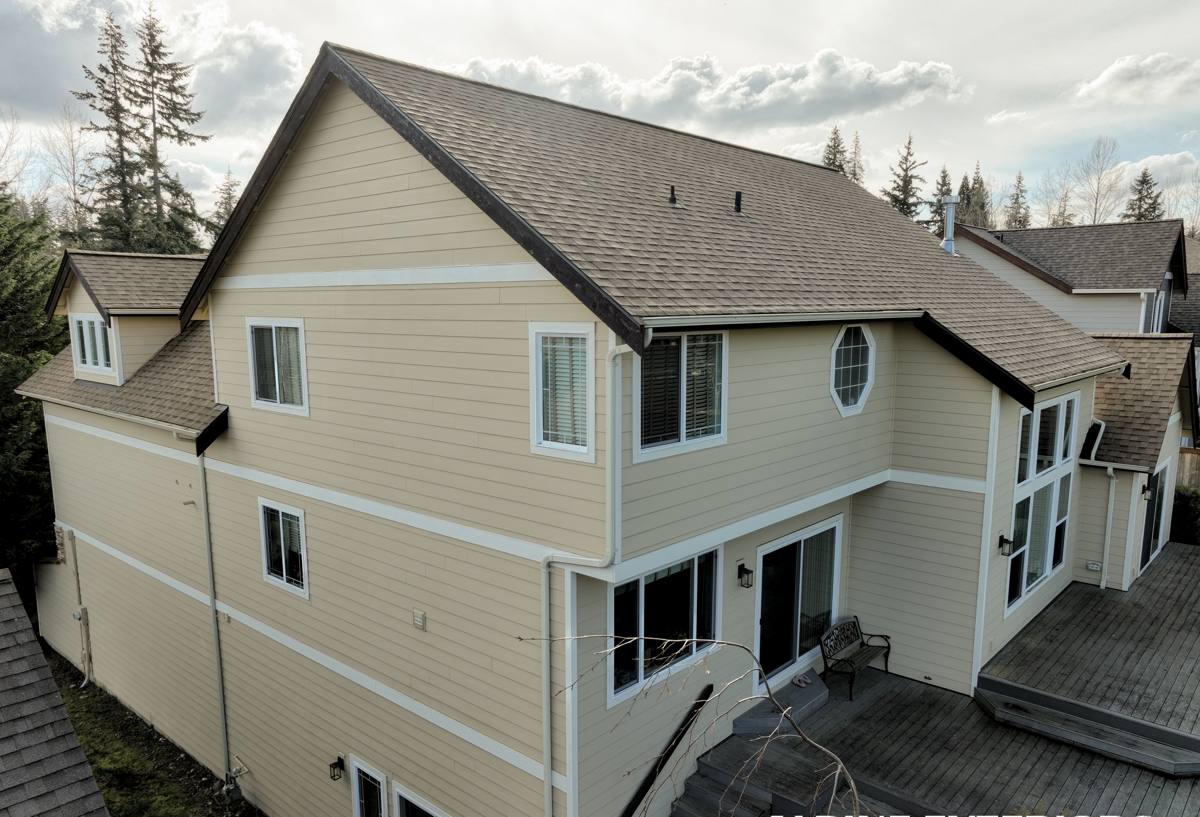
A lot of homes in this part of Whatcom County were built to take advantage of the lake and the tree line, which means decks here are often elevated, attached to a walkout level, or built to catch a view — not simple ground-level platforms. That raises the stakes on a few things:
- Elevated structures need footings and framing sized correctly for the height and load, not just the deck surface
- Ledger connections to the house have to be flashed properly, since this is the single most common point of water intrusion into the house itself
- Railings and stair systems need to meet current code, especially on decks more than a few feet off grade
- Board spacing and airflow underneath matter more here than in a dry climate, because wet wood that can't dry out is what starts rot and moss growth
A deck that ignores any of these can still look fine for a season or two. The problems tend to show up underneath, where nobody's looking, until a board is soft or a railing post is loose.
Material Choices for This Climate
There's no single "right" decking material for every home — it depends on budget, how the deck is used, and how much upkeep you want to take on. Here's how the common options actually perform under salt air, driving rain, and a long moss season:
| Material | How it holds up here | Maintenance reality |
|---|---|---|
| Pressure-treated wood | Solid structurally if properly sealed and maintained; moss and algae will grow on it if not cleaned periodically | Needs re-sealing every 1-2 years and regular cleaning to stay ahead of moss |
| Cedar | Naturally more rot-resistant and handles moisture well, but the surface still grays and can host moss without upkeep | Periodic cleaning and oil or stain to maintain color and shed water |
| Composite decking | Very stable in wet, humid conditions and doesn't absorb moisture the way wood does, which limits rot risk | Occasional washing to keep surface algae and moss film from building up; no sealing or staining |
| PVC decking | Fully synthetic, essentially immune to rot and highly resistant to moisture-driven damage | Lowest maintenance of the group; periodic cleaning only |
We don't push one material on every job. A wood deck built and maintained correctly can last for decades in this climate. A composite or PVC deck trades a higher upfront cost for a lot less time spent cleaning and resealing over the years. What matters more than the surface material is what's underneath it, which is where most deck failures actually start.
Fasteners and Hardware
Whatever decking material you choose, the fasteners and structural hardware holding it together need to be corrosion-resistant — stainless steel or a coated fastener rated for ground contact and treated lumber. In an area with salt-influenced air and near-constant seasonal moisture, standard hardware corrodes faster than homeowners expect, and a corroded joist hanger or ledger bolt is a structural problem, not a cosmetic one.
The Parts of a Deck That Actually Fail First
When we get called out to look at an aging or failing deck in this area, it's almost never the decking boards themselves that caused the original damage. It's usually one of these:
Ledger Flashing
The ledger board is where the deck attaches to the house, and it's the single highest-risk point for water intrusion. If it isn't flashed correctly — with flashing that actually sheds water away from the house framing rather than trapping it behind the ledger — water works its way into the rim joist and wall framing over time. This is invisible from the deck surface and often isn't caught until there's visible rot or a soft spot years later.
Joist Protection
Exposed joist tops hold water like a wick, especially under decking that doesn't have enough gap to let air and water through. Protecting joist tops with a proper flashing tape before decking goes down is a small step during construction that prevents a much bigger repair later.
Moss and Organic Buildup
Moss doesn't just look bad — it holds moisture against the deck surface and any structural wood beneath it, extending the time the wood stays wet after every rain. In a climate where dry stretches are short, that constant dampness is what accelerates rot in wood decking and framing that isn't well protected. Regular cleaning and good airflow underneath the deck are the practical defenses.
Fastener Corrosion
As covered above, this is often overlooked because it's out of sight. A deck can look structurally sound while the hardware holding it together is quietly weakening.
Permits, Code, and Footings in Whatcom County
Most attached decks and any deck built above a certain height off grade require a permit through Whatcom County, along with footings sized and placed to meet current code for frost depth and load. This isn't paperwork for its own sake — footings that are too shallow or undersized are a real problem on a sloped or elevated lot, which describes a lot of properties around Geneva and Sudden Valley. We handle the permitting and inspections as part of the build so you're not left managing that process yourself.
Our Process
- Site visit and consultation: we look at the lot, the grade, the house connection point, and talk through how you actually plan to use the deck
- Design and material discussion: honest pros and cons of wood versus composite versus PVC for your budget and maintenance preference, sized and laid out for the space
- Permitting: we prepare and submit what Whatcom County requires for your specific project
- Footings and framing: footings set to proper depth, ledger flashed correctly, joists protected before decking goes down
- Decking, railings, and stairs: installed to current code with attention to fastener choice and spacing for drainage and airflow
- Final walkthrough: we go over the finished deck and what maintenance it needs going forward
Why Hire a Crew That Already Works in Geneva
A contractor who mostly works in a different climate — drier, less rain, no moss season — doesn't always think about ledger flashing, joist protection, or fastener corrosion the same way a crew working Whatcom County year-round does. We've seen what driving rain and a long wet season actually do to a deck that wasn't built with those conditions in mind, and we build to avoid those specific failure points, not generic ones. That's the difference between a deck that needs major repair in year five and one that's still solid decades later.
Keeping a Deck Sound Once It's Built
Whatever material you choose, a few habits go a long way in this climate:
- Sweep off standing leaves and debris regularly, especially in fall when moss growth accelerates
- Clean moss and algae film off the surface at least once or twice a year rather than letting it build up
- Check that gaps between boards haven't filled in with debris, which blocks drainage and airflow underneath
- Reseal or re-stain wood decking on the schedule it needs — don't wait until it's visibly gray and dry
- Have the ledger connection and any visible framing checked periodically for signs of moisture damage
If you're planning a new deck or need an existing one evaluated in the Geneva or Sudden Valley area, we're happy to take a look and give you a straightforward assessment. Reach out for a free, no-pressure estimate using the form below.