 Sudden Valley Siding
 Building Decks for Alger's Weather, Not Against It
A deck in Alger lives outside year-round, and this part of Western Washington doesn't go easy on outdoor structures. Salt-tinged air moving in off the water, long stretches of driving rain, and a moss season that can run for months put real stress on framing, fasteners, and decking surfaces. A deck built the same way you'd build one in a dry inland climate will show problems here faster than most homeowners expect — soft spots at the ledger, black streaking on boards, corroding hardware, and slick, moss-covered surfaces by the second or third winter.
None of that is inevitable. It's a function of material choice, fastener grade, and how the deck is detailed to shed water instead of holding it. This page is about what a deck built specifically for the Alger area needs to hold up — not a generic overview of deck building, but what actually matters when the structure has to survive this climate for decades.
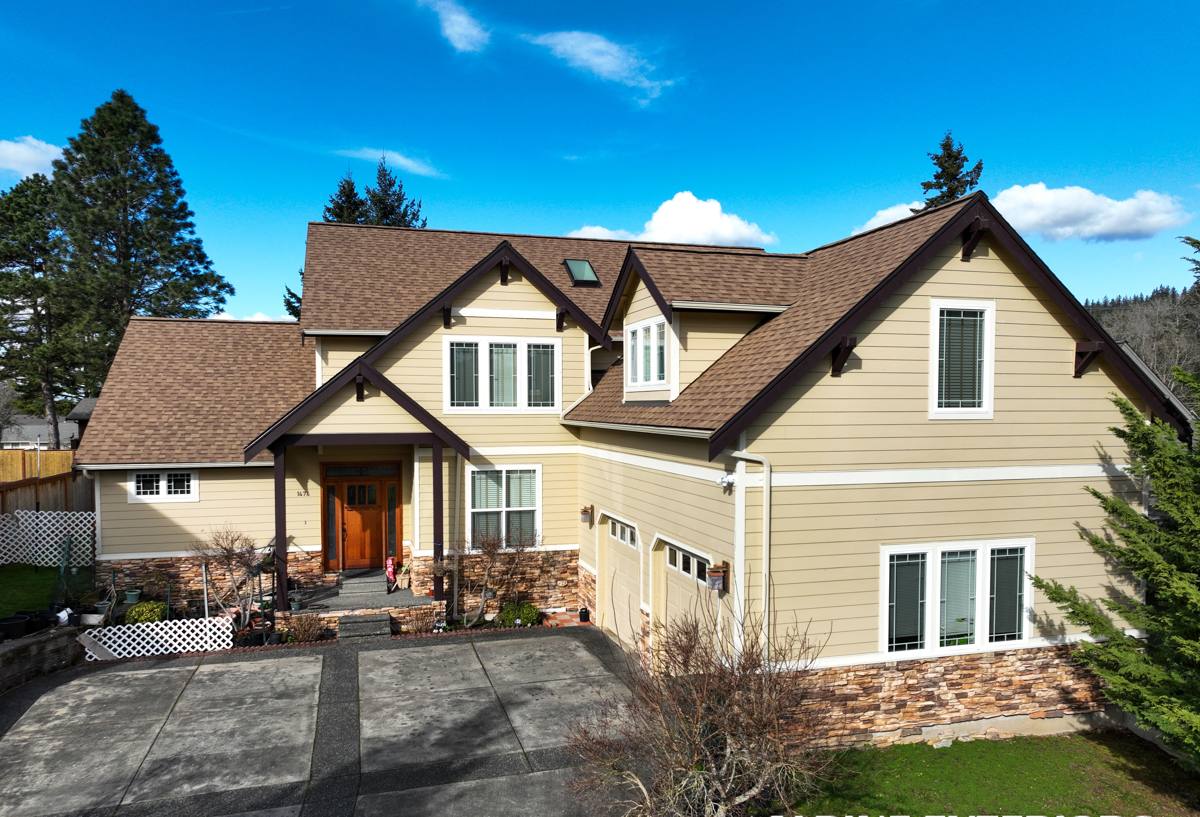
What This Climate Actually Does to a Deck
It helps to understand the failure points before talking about the fix. Three things drive almost every deck problem we see in this area:
Driving Rain and Trapped Moisture
Rain here rarely falls straight down — wind pushes it sideways into ledger connections, under poorly flashed rim joists, and into any gap where end grain is exposed. Wood doesn't rot because it gets wet; it rots because it stays wet. A deck with no drainage gap between boards, no flashing behind the ledger board, or no way for water to escape the frame will trap moisture against the wood for days after a storm passes.
Salt Air and Metal Corrosion
Even a few miles inland, moisture carrying salt content accelerates corrosion on anything less than a properly rated fastener. Standard electro-galvanized screws and joist hangers can start showing rust streaks within a couple of seasons in this kind of air, and once a fastener starts to corrode, its holding strength drops long before it looks obviously bad.
Moss, Algae, and Slick Surfaces
Shade, moisture, and mild temperatures are exactly what moss and algae need to take hold, and a lot of decks around here have both. Horizontal wood surfaces that don't get much sun or airflow — under trees, on the north side of a house — grow a moss film that isn't just cosmetic. It holds moisture against the board and makes the surface genuinely dangerous to walk on when wet.
Decking Material Comparison for This Area
There's no single "best" decking material — there's a best material for how a given deck is shaded, how much upkeep the homeowner wants to do, and what budget makes sense. Here's how the common options actually perform in Alger's conditions:
| Material | Moisture & Moss Resistance | Maintenance Needed | Notes for This Climate |
|---|---|---|---|
| Pressure-treated fir/hem-fir | Fair — needs sealing to perform | Annual cleaning, periodic sealing | Lowest upfront cost; most exposed to moss buildup if not maintained |
| Cedar | Good — naturally rot-resistant | Cleaning and occasional oiling to hold color | Handles moisture well but still needs surface care to resist moss film |
| Composite (e.g. Trex, TimberTech) | Very good — won't rot | Periodic washing to clear surface algae | Won't absorb water into the board, but moss/algae can still grow on the surface film and needs washing |
| PVC/capped polymer | Excellent | Lowest — occasional rinse | Most resistant to moisture and staining; highest material cost |
Composite and PVC decking have become popular in this region for good reason — they take the wood-rot question off the table entirely. That said, we still install wood decks regularly, and for the right homeowner, a well-built and properly maintained cedar or treated deck is a perfectly sound choice. Our job is to lay out the real trade-offs, not steer everyone toward the most expensive option.
What a Correctly Built Deck Involves Here
Whatever decking surface you choose, the parts you don't see are what determine whether the deck lasts. A deck built correctly for this climate includes:
- Ledger board flashing that directs water away from the house rim joist, not just a bead of caulk
- Footings sized and set to local frost depth and soil-bearing requirements
- Joist tape or an equivalent moisture barrier on top of framing lumber to stop end-grain water absorption
- Stainless steel or hot-dip galvanized fasteners and hardware rated for the corrosion exposure in this area — not standard electro-galvanized
- Consistent board spacing that allows water to drain through rather than pool on the surface
- Guardrails, stair stringers, and baluster spacing built to current code, not just what looks close enough
- Ventilation underneath the deck so airflow can dry out framing after rain instead of leaving it damp for days
Skip any one of these and the deck may look fine for a year or two before the problems show up underneath — usually right around the time it's expensive to fix.
Our Deck Building Process
Site Visit and Design
We start by looking at the actual site — sun exposure, tree cover, drainage patterns, and how the deck ties into the house. Shaded, north-facing decks near mature trees get treated differently than a sunnier layout, because that's exactly where moss and moisture become long-term maintenance headaches.
Permitting and Structural Planning
Deck permitting requirements vary by jurisdiction and by the size and height of the structure. We handle figuring out what's required for your specific project and build to the load and safety requirements that apply, rather than leaving that as a surprise partway through the job.
Construction
Footings, framing, flashing, and fastener selection all follow the same standard regardless of decking material — because that's the part of the deck that determines whether it's still solid in ten or twenty years. The visible decking material goes on last, once the structure underneath is right.
Final Walkthrough
Before we consider the job done, we walk the deck with you — railings, stairs, drainage, and finish — so you know what you're looking at and what (if anything) it needs from you going forward.
Living With Moss Season: Maintenance That Actually Matters
Every deck in this area needs some seasonal attention — the difference between a deck that lasts and one that doesn't often comes down to a short list of habits:
- Sweep leaves and debris off the surface regularly in fall, before they trap moisture against the boards
- Clean visible moss or algae film off the decking surface at least once a year, before it gets slick
- Check that gaps between boards are clear so water can drain instead of pooling
- Inspect fasteners and hardware periodically for rust streaking or loosening
- Keep gutters and downspouts near the deck clear so runoff isn't dumping extra water onto or under the structure
- Re-seal wood decking on the manufacturer's recommended schedule, not "whenever it looks dry"
None of this is complicated, but skipping it is the single biggest reason decks in this climate age faster than they should.
Why a Crew That Already Works in This Area Matters
A contractor who mostly builds in drier climates can still frame a deck that looks correct — square, level, well-fastened. What they're less likely to get right on the first job is the detailing that only matters here: how aggressively to flash a ledger board, which fastener grade actually holds up against this air, and where moss is going to become a problem based on how a yard is shaded. A crew that already works this area has seen which decks age well and which ones don't, and builds accordingly from the start instead of learning it on your project.
Cost Factors to Expect
Deck pricing depends on more than square footage. The main variables we walk through with homeowners are:
| Factor | Impact on Cost |
|---|---|
| Decking material (treated wood vs. cedar vs. composite vs. PVC) | Largest single factor — material cost per square foot varies significantly |
| Height above grade and footing depth required | Taller decks and difficult soil conditions increase framing and footing cost |
| Railing style and stair complexity | Custom railings and multiple stair runs add labor |
| Site access and existing structure removal | Tear-off of an old deck or tight site access adds time |
| Permitting and engineering requirements | Larger or taller decks may require engineered plans |
We'd rather walk your specific site and give you real numbers than throw out a broad estimate that doesn't reflect your project.
Get a Free Estimate for Your Alger Deck
If you're planning a new deck or replacing one that's showing its age, we're happy to come take a look and talk through what makes sense for your site, your budget, and the way this climate treats outdoor structures. There's no pressure and no obligation — just a straight answer about what your project involves. Use the form below to request a free estimate.