 Sudden Valley Siding
 Deck Repair Built for Yew Street's Conditions
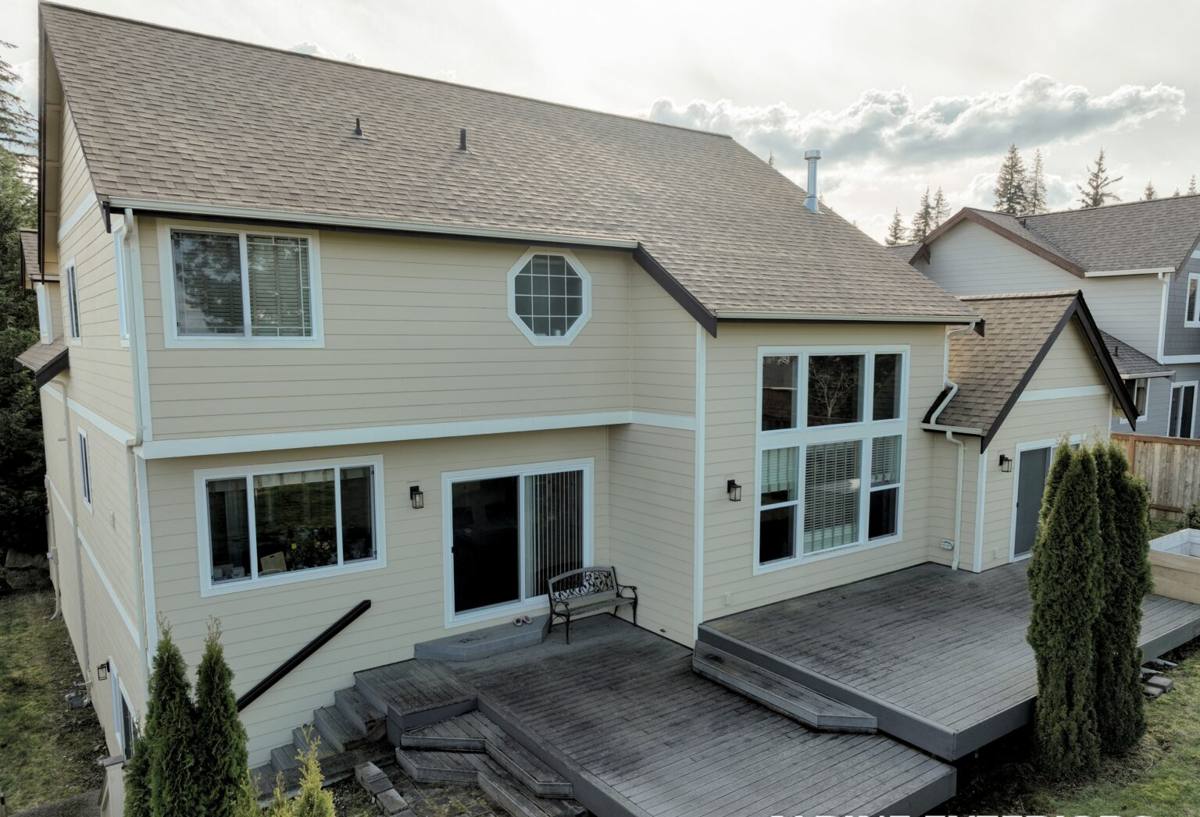
Decks in the Yew Street area of Sudden Valley take a beating that a lot of homeowners underestimate until a board gives way underfoot or a railing starts to wobble. Between salt-tinged marine air moving up from the Sound, driving rain that comes in sideways during fall and winter storms, and a moss season that seems to stretch longer every year, an untreated or aging deck in this part of Whatcom County ages faster than the same structure would in a drier climate. Deck repair here isn't just about patching what's broken — it's about understanding why it broke in the first place and fixing that root cause so the repair actually holds.
We work on decks throughout Sudden Valley regularly, and the failure patterns we see on Yew Street properties are consistent: ledger boards pulling away from the house where flashing was skipped or installed wrong, joists soft with rot under boards that still look fine from the top, railing posts loose because the original fasteners rusted or the wood around them went punky, and stair stringers cracking from years of freeze-thaw cycling combined with constant moisture. None of these are surprising once you understand the climate. They're also all fixable — but only if the repair addresses the underlying moisture path instead of just swapping out the board that finally failed.
Why This Climate Wears Decks Down Faster
Whatcom County's Pacific Northwest weather pattern is tough on any exterior wood or composite structure, but a few specific factors hit decks especially hard.
Salt Air and Metal Fasteners
Proximity to marine air accelerates corrosion on screws, joist hangers, and structural connectors. Once a fastener starts rusting, it loses holding strength long before it looks obviously bad. A deck can appear structurally sound while its hardware is quietly failing underneath.
Driving Rain and Water Intrusion
Rain that comes in at an angle finds its way into joints, end grain, and any gap where flashing or sealant has failed. Water doesn't need a big opening — a hairline gap at a ledger board or a missing drip edge is enough to start feeding rot into structural framing over a few seasons.
Extended Moss and Algae Season
Moss and algae hold moisture against the deck surface for weeks at a time instead of letting it dry between rain events. On horizontal surfaces like deck boards and stair treads, that constant dampness is exactly the environment wood rot and slippery surface buildup need to take hold.
Freeze-Thaw Cycling
Sudden Valley sees enough cold snaps each winter that trapped moisture in wood fibers or hairline cracks can freeze, expand, and widen the damage. It's usually not one hard freeze that does the damage — it's the repeated cycling over several winters.
What a Correct Deck Repair Actually Involves
A repair that's done right starts with an honest structural assessment, not just a visual pass over the decking boards. We check the parts of the deck that are hardest to see and easiest to ignore.
- Ledger board attachment and flashing at the house — the single most common source of hidden rot
- Joists and beams from underneath, probing for soft spots with an awl rather than just looking
- Post bases and any wood-to-concrete contact points, where moisture wicks up from below
- Railing posts and connections, checked for lateral movement, not just visual wobble
- Stair stringers and treads, especially at the ground contact point
- Fastener condition — rust staining around screw heads is an early warning sign, not just cosmetic
- Drainage and slope, making sure water is actually shedding away from the house and not pooling
Once we know what's actually failing, the repair plan separates into two categories: what can be sistered, reinforced, or spot-repaired, and what genuinely needs to be replaced. We're straightforward about which is which. Sistering a joist next to a rotted one is a legitimate repair when the damage is limited and the rest of the structure is sound — but it's not the right call when rot has spread through multiple structural members or the ledger connection itself is compromised. In those cases, patching around the problem just delays a bigger failure and costs more in the long run.
Common Repairs We Handle on Yew Street Decks
Board Replacement
Individual decking boards that have cupped, split, or gone soft get pulled and replaced, matched as closely as possible to the surrounding material. If the deck is old enough that exact matches aren't available, we'll talk through options rather than installing something that looks obviously patched.
Railing and Guard Repair
Loose or failing railings are a safety issue first and a cosmetic one second. We reset or replace posts at their connection point, not just tighten what's already stripped out, and we check that guard height and baluster spacing meet current code if the work triggers that requirement.
Ledger and Flashing Correction
Where the deck attaches to the house is the highest-consequence spot on the whole structure, because failure there can mean the deck separating from the building. We re-flash and properly fasten these connections rather than caulking over a symptom.
Joist and Framing Repair
Rotted framing gets sistered with new lumber or replaced outright depending on the extent of damage, always rated for exterior/ground-contact use where applicable.
Stair and Landing Repair
Stringers, treads, and landings see concentrated foot traffic and moisture exposure. We rebuild these to hold up under both.
Surface Restoration
Moss and algae removal, cleaning, and re-sealing or refinishing to protect the wood going forward — this is maintenance work, but it's often bundled with a repair visit since we're already on-site.
Repair vs. Replace: How We Help You Decide
Not every deck problem calls for a full rebuild, and not every deck is worth repairing indefinitely either. We walk homeowners through the trade-offs honestly rather than defaulting to the bigger job.
| Factor | Favors Repair | Favors Replacement |
|---|---|---|
| Structural framing | Isolated soft spots, most joists sound | Widespread rot across multiple joists or the ledger |
| Age of deck | Under 12-15 years, built to a reasonable standard | Older deck nearing end of typical service life |
| Fastener condition | Localized rust, hardware otherwise intact | Corrosion throughout, hangers failing broadly |
| Original construction quality | Sound design, isolated moisture entry point | Undersized framing or missing flashing from day one |
| Budget priorities | Targeted fix extends life for a fraction of rebuild cost | Repeated repairs are starting to add up to rebuild cost anyway |
When a deck is a borderline case, we'll give you our honest read rather than steering toward whichever job is bigger. Sometimes the right answer really is a straightforward repair that buys another decade of use.
Our Process for Yew Street Deck Repair Calls
- Assessment: We inspect the deck structurally, not just cosmetically, including underneath and at all connection points.
- Honest scope: You get a clear explanation of what's failing, why, and what it will take to fix it correctly — including what we'd recommend skipping if a full repair isn't necessary.
- Written estimate: A straightforward quote with the actual scope of work, not a vague range.
- Repair work: Done to correct the moisture or structural issue at its source, using fasteners and materials suited to this climate.
- Final check: We confirm railings are solid, boards are secure, and drainage is doing its job before we call it done.
Why a Crew That Already Works This Area Matters
A contractor who works Sudden Valley regularly already knows what the marine air and moss cycle do to decks here, which means less time spent diagnosing and more time spent fixing the actual problem. We're familiar with the housing stock in this part of Whatcom County and the kinds of original construction shortcuts — missing flashing, undersized ledger fasteners, decking installed tight with no drainage gap — that tend to show up in decks of a certain age. That local pattern recognition matters when you're trying to figure out whether a soft board is a one-off repair or a sign of something bigger happening underneath.
It also means we're not guessing at what materials and fastening hold up here versus what looks fine on paper but fails early in this climate. We use fasteners and hardware rated for the corrosion exposure this area sees, not the minimum spec that works fine in a drier region.
Simple Maintenance That Extends the Life of a Repair
Once a deck is repaired correctly, a little seasonal upkeep goes a long way toward making that repair last, especially given how long moss season runs here.
- Sweep debris off the deck surface regularly so moisture doesn't sit trapped underneath leaves or needles
- Clean moss and algae off boards and stairs before they get slick, ideally before winter rains set in
- Check railings for movement once or twice a year — catching a loose post early is a small fix, not a rebuild
- Keep an eye on the ledger board area at the house for staining or gaps that suggest water is getting behind flashing
- Reseal or refinish on the schedule appropriate for your decking material, since UV and moisture exposure both break down finishes over time
If you're dealing with a soft spot, a loose railing, or a deck that just doesn't feel as solid as it used to, we're happy to take a look and give you a straight answer about what it needs. Reach out for a free, no-pressure estimate using the form below.