 Sudden Valley Siding
 Ferndale Decks Take a Different Kind of Beating
Ferndale sits close enough to the water and low enough in the Nooksack valley that decks here age differently than they would fifty miles inland. Salt-laden air off the Strait works its way into fastener heads and joist hangers. Long stretches of driving rain in the fall and winter push moisture into every joint that isn't properly flashed. And then there's the moss — Whatcom County's mild, wet climate gives it months to establish itself on horizontal wood surfaces, and once it's rooted in, it holds water against the decking around the clock.
None of that is unusual for this part of Washington. But it means a deck built to a generic national spec, or repaired piecemeal over the years, tends to fail here faster than the same deck would in a drier climate. When we replace a deck in Ferndale, we're not just swapping old boards for new ones — we're building for the specific combination of moisture, salt exposure, and moss growth this area throws at outdoor structures year after year.
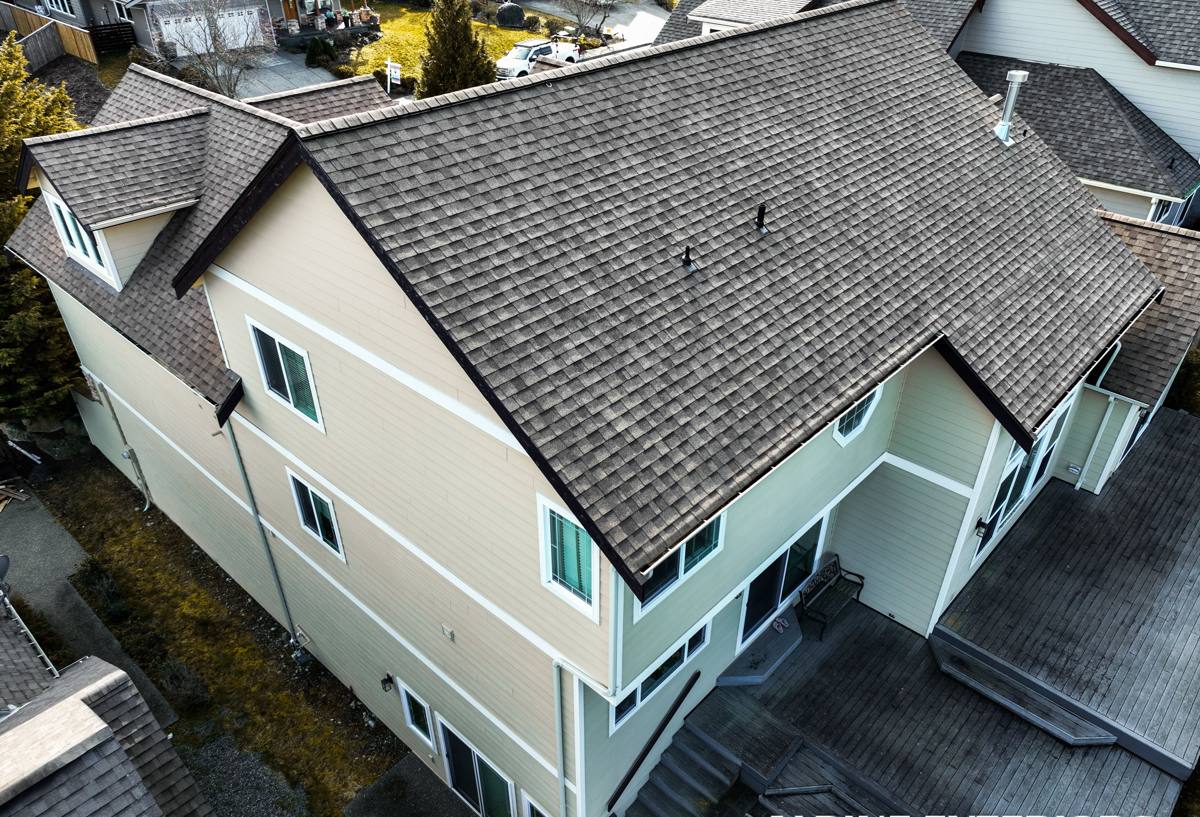
Signs a Ferndale Deck Needs Replacing, Not Patching
Homeowners often call us for a repair and end up with a replacement quote instead, and that's not an upsell — it's what an honest inspection turns up. Surface problems (a few soft boards, loose railing balusters, faded finish) are usually fixable. Structural problems are not something we patch around, because a deck is only as good as its framing.
- Soft or spongy decking in more than a few isolated spots, especially near the house
- Rot or dark staining where the ledger board meets the house wall
- Joist hangers or fasteners showing heavy rust, streaking, or corrosion
- Footings that have shifted, settled, or heaved, making the deck feel uneven or bouncy
- Persistent moss or algae growth that returns within weeks of cleaning
- Railings that flex or feel loose when leaned on
- A deck older than 15-20 years that has never had the ledger flashing inspected
If what you're seeing is limited to a handful of boards on an otherwise sound frame, repair is usually the right call and we'll tell you that. If the framing, ledger connection, or footings are compromised, repair is a short-term fix on a structure that's already failing underneath.
The Ledger Board Is Usually Where It Starts
The single most common failure point we find on older decks in this area is the ledger board — the piece that bolts the deck to the house. If it was installed without proper flashing, or with flashing that's degraded over time, rainwater tracks behind it and into the house's rim joist. By the time it shows up as a soft spot or staining, there's often been years of hidden moisture intrusion. This is also the single most important thing to get right on a replacement, because it's the connection everything else depends on.
What a Correct Deck Replacement Actually Involves
A deck replacement isn't just new boards on the old frame. Done right, it touches every layer of the structure, from the ground up.
Footings and Framing
We check footing depth and condition against current code requirements before deciding whether to reuse or replace them. In Whatcom County's wet, clay-heavy soils, footings that were undersized or poured too shallow originally are a common source of the settling and bounce homeowners notice years later. Joists and beams get sized for the actual load and span, not just matched to whatever was there before — a lot of older Ferndale decks were framed lighter than current code calls for.
Flashing and Water Management
Every point where the deck meets the house, and every fastener that penetrates decking, is a place water can get in. We flash the ledger board properly, use corrosion-resistant fasteners rated for exterior and coastal-influenced exposure, and detail the decking so water sheds off rather than pooling at seams. This is the part of the job that doesn't show once it's finished, but it's the part that determines whether the deck is still solid in fifteen years.
Decking Material
This is the visible layer, and the one homeowners usually have the strongest opinions about. We'll walk through the honest trade-offs below, but the right choice depends on your budget, how much upkeep you want to do, and how much sun versus shade the deck gets — shaded decks in Ferndale hold moisture and grow moss noticeably faster than sun-exposed ones.
Decking Material Options: Honest Trade-Offs for This Climate
| Material | Upfront Cost | Maintenance | How It Handles Moss & Moisture |
|---|---|---|---|
| Pressure-treated lumber | Lowest | Needs cleaning and re-sealing every 1-2 years | Prone to moss and mildew if not kept sealed and clean; performs well when maintained |
| Cedar | Moderate | Regular sealing/staining to hold color and resist rot | Naturally rot-resistant but still needs upkeep in constant damp shade |
| Composite decking | Higher | Occasional washing; no sealing or staining | Resists moisture absorption well; still needs cleaning to prevent surface moss/mildew in shaded spots |
We don't push one material as the "right" answer for every project. Pressure-treated lumber is a legitimate, budget-friendly choice as long as the homeowner is realistic about the maintenance commitment. Composite costs more upfront but trades ongoing sealing and staining for occasional washing — worth it for homeowners who want to spend less time on deck upkeep. Cedar sits in between and rewards homeowners who like the look and are willing to stay on top of it. What we won't do is install a product in a location where it's set up to fail — for example, a low-maintenance composite laid over framing with poor drainage will still trap moisture underneath, so the framing and flashing work matters regardless of which decking you choose on top.
Our Deck Replacement Process
- On-site assessment. We inspect the ledger connection, footings, framing, and existing decking to determine what's actually failing and what a replacement needs to correct.
- Written estimate. You get a clear scope and price before any work starts — no surprise change orders for things we should have caught in the assessment.
- Permit handling. Deck replacements involving structural changes typically require a permit through Whatcom County or the City of Ferndale; we handle that paperwork so you don't have to chase it down.
- Demolition and disposal. Old decking, railing, and any compromised framing come out, and we haul debris off-site.
- Framing and footing work. Footings are corrected or replaced as needed, framing is built to current span and load requirements, and the ledger is properly flashed.
- Decking, railing, and finish work. Your chosen decking material goes down, railings are installed to code, and fasteners and hardware are selected for exterior exposure.
- Final walkthrough. We go over the finished deck with you, including basic maintenance guidance specific to the material you chose.
Cost Factors for a Ferndale Deck Replacement
Every deck is different, so we don't quote sight-unseen prices — but the factors that move the number the most are consistent across projects.
| Factor | Why It Matters |
|---|---|
| Deck size and shape | Square footage and the number of corners, steps, or level changes directly affect labor and material |
| Decking material chosen | Pressure-treated, cedar, and composite have significantly different material costs per square foot |
| Condition of footings and framing | Reusing sound footings costs far less than excavating and pouring new ones |
| Railing style and code requirements | Height, spacing, and material requirements vary and affect both labor and material cost |
| Site access | Decks that are hard to reach with equipment or materials take longer to build |
| Permit and inspection scope | Structural changes trigger more inspection steps than a straightforward like-for-like rebuild |
Broadly, a straightforward pressure-treated rebuild on sound footings sits at the lower end of the range, while a larger composite deck with new footings and railing work sits at the higher end. We'll give you a specific number after we've actually looked at your deck, not before.
Permits and Whatcom County Considerations
Most deck replacements that involve new footings, structural framing changes, or a deck attached at a new height require a permit. Whether that goes through Whatcom County or the City of Ferndale depends on your property's exact location, and we confirm that before pulling any permit. Skipping this step isn't a shortcut worth taking — an unpermitted deck can complicate a home sale down the road and, more importantly, skipping inspection means nobody but the builder ever checked the structural work.
Why Hire a Crew That Already Works Ferndale
A deck replacement is a structural project as much as a cosmetic one, and the details that matter most — footing depth for local soil conditions, ledger flashing that accounts for the region's rain volume, fastener selection for salt-influenced air — are things a crew learns by building and repairing decks in this specific area, not by working from a generic national spec sheet. We've seen how decks in Ferndale and the surrounding Whatcom County communities actually fail over time, which shapes how we frame, flash, and finish every replacement we build. That's the difference between a deck that looks good for a season and one that's still solid in twenty years.
If you're not sure whether your deck needs a repair or a full replacement, we're glad to take a look and give you a straight answer either way. Reach out for a free, no-pressure estimate using the form below.